US Spacewalk 95: NASA astronauts Jessica Meir and Chris Williams replace faulty Canadarm2 on ISS
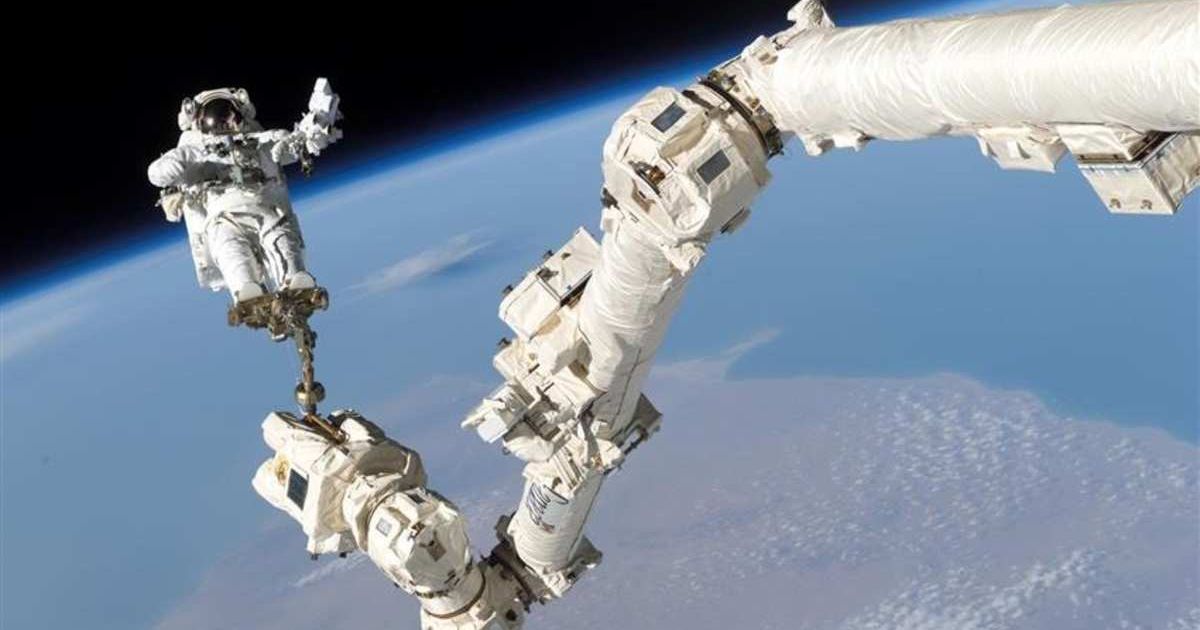
Astronauts aboard the International Space Station (ISS) on Tuesday successfully replaced a faulty part of Canadarm2 during the 95th U.S. spacewalk dedicated to station maintenance. NASA determined that this extravehicular activity (EVA) was the best course of action after discussing the issue with the Canadian Space Agency (CSA), following a malfunction on May 27, 2026, when the 25-year-old robotic arm failed to move as commanded. NASA Flight Engineers Jessica Meir and Chris Williams were tasked with carrying out the replacement, and the operation ultimately took 40 minutes longer than planned. Here are the details.
Astronauts Chris Williams and Jessica Meir completed a 7-hour, 20-minute spacewalk at 3:40 p.m. EDT today after replacing a malfunctioning wrist joint on the Canadarm2 robotic arm. More... https://t.co/KLpldoLE5U pic.twitter.com/UMR98FXghs
— International Space Station (@Space_Station) June 30, 2026
Preparation
With the help of European Space Agency (ESA) astronaut Sophie Adenot and NASA's Jack Hathaway, Meir and Williams suited up and completed an in-suit light exercise (ISLE) to remove excess nitrogen from their blood prior to their EVA. Because the spacesuits operate at a lower pressure than the interior of the ISS, sudden depressurization can cause nitrogen to bubble up in the astronauts' tissues, leading to decompression sickness, also known as 'the bends'. To prevent this, 100% oxygen is pumped into the spacesuits, which the astronauts 'pre-breathe' before an EVA. After completing the procedure, Meir and Williams moved into the Quest airlock, which was depressurized to allow its outer hatch to safely open to the vacuum of space.
Airlock egress and translation to site
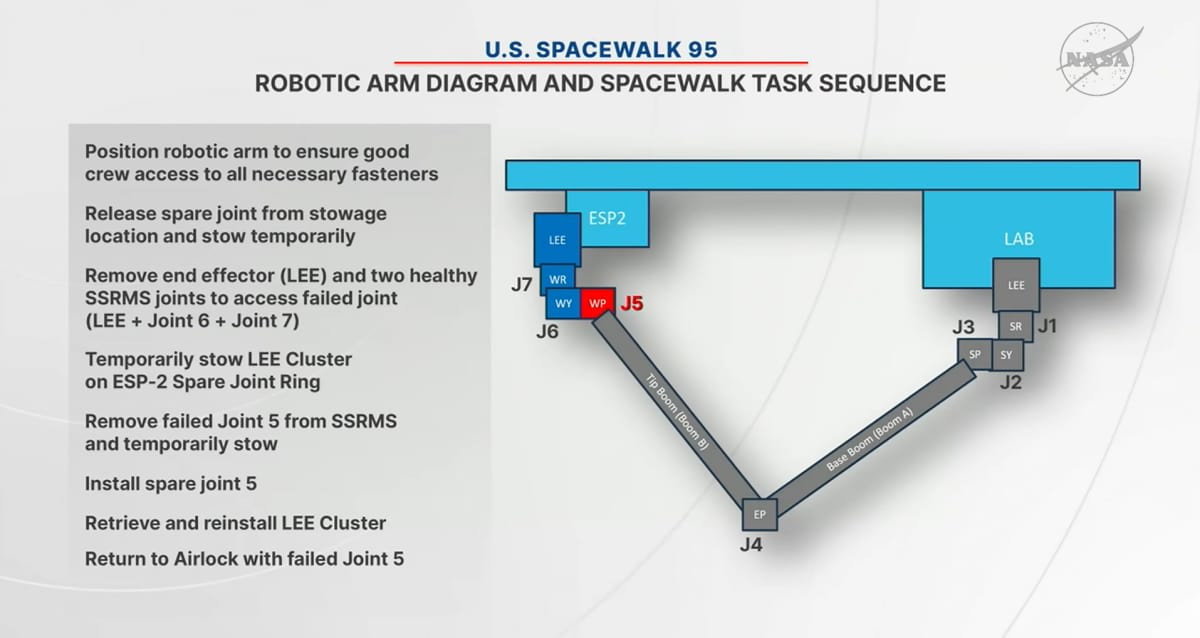
The spacewalk officially began at 8:20 a.m. EDT on June 30 when Meir and Williams switched their spacesuits to operate on internal battery power. Shortly afterwards, the Expedition 74 crew members exited the airlock, with Meir following Williams. Once both astronauts were outside, they performed a standard 'buddy check' to inspect each other's suits and tethers, before confirming their readiness with ground controllers and proceeding to the work site. Meanwhile, from inside the station, Adenot carefully moved Canadarm2 into position make sure it was accessible to the two spacewalkers. Meir and Williams then retrieved the spare wrist joint and temporarily stowed it nearby.
Astronauts Chris Williams and Jessica Meir set their spacesuits to battery power at 8:20 a.m. EDT today signifying the start of their spacewalk. They will spend about six hours and 40 minutes replacing a wrist joint on the Canadarm2 robotic arm live on @NASA+. More...… pic.twitter.com/Ki4IdLzn44
— International Space Station (@Space_Station) June 30, 2026
Replacement of the faulty wrist joint
To carry out the replacement, the astronauts first had to remove one of the arm's latching end-effectors (LEE)—hand-like devices on either end of Canadarm2—to gain access to the wrist joint that had malfunctioned. Meir and Williams subsequently removed the failed joint on Canadarm 2 and swapped it for the spare. Just over four hours into the spacewalk, the replacement part was secured into place using the astronauts' pistol-grip tools, and over the next few minutes, ground controllers provided step-by-step instructions as the final bolts were driven in to firmly connect the new hardware.
Spacewalks may happen in space, but they’re powered from Houston. 🧑🚀
— NASA's Johnson Space Center (@NASAJohnson) June 30, 2026
Inside Mission Control at Johnson Space Center, flight controllers track every moment of a spacewalk with precision, monitoring suit performance, guiding procedures, and coordinating each step with the crew… pic.twitter.com/GGYTIhcRXQ
Cleanup post replacement and return inside
Following the installation, the previously removed LEE was reattached, and mission controllers in Houston confirmed that power and data were successfully flowing through Canadarm2. Williams then transported the faulty wrist joint back to the airlock, where it will be kept before an eventual return to Earth to be inspected and potentially refurbished for future use. He then headed back out to help Meir clean up the work site, gathering all tools, tethers, and foot restraints. The duo then began their ingress into the orbital outpost. The spacewalk concluded at 3:40 p.m. EDT—seven hours and twenty minutes after it began—stretching 40 minutes past NASA's initially scheduled duration.
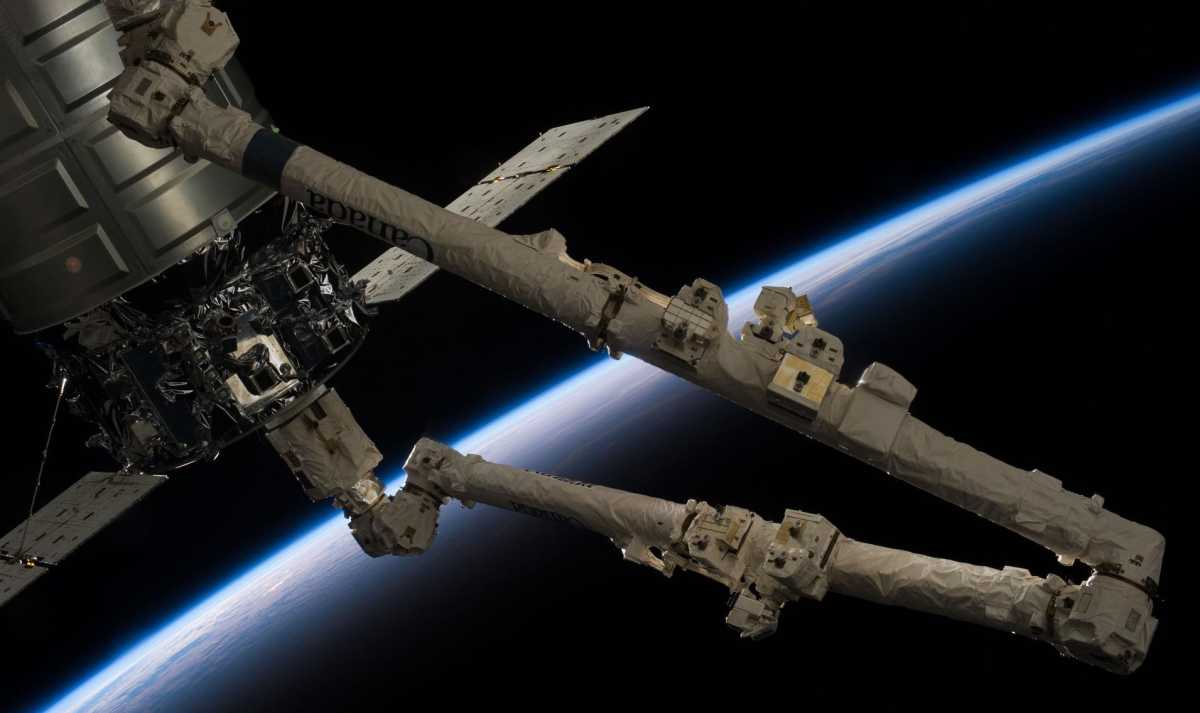
After the EVA ended, Adenot and Hathaway helped repressurize the Quest airlock and assisted their crewmates out of their bulky suits. Williams expressed his gratitude toward Meir for her leadership during the lengthy activity, while Meir noted the success of the repair arriving just in time for Canada Day on July 1. "The arm was key to the construction of our orbiting laboratory and continues to be a workhorse that we rely on," said Williams. This marked the second spacewalk for the duo as a pair, pushing both astronauts into double-digit EVA hours for their careers. Over the coming days, ground teams will continue to test Canadarm2's articulation before returning the robotic workhorse to its critical, routine duties.
More on Starlust:
Expedition 74 cosmonauts complete 279th spacewalk in support of ISS—here’s everything they did
NASA conducts fifth all-female spacewalk in latest milestone outside the ISS