Two extreme stars collided in an unexpected location—and NASA caught it
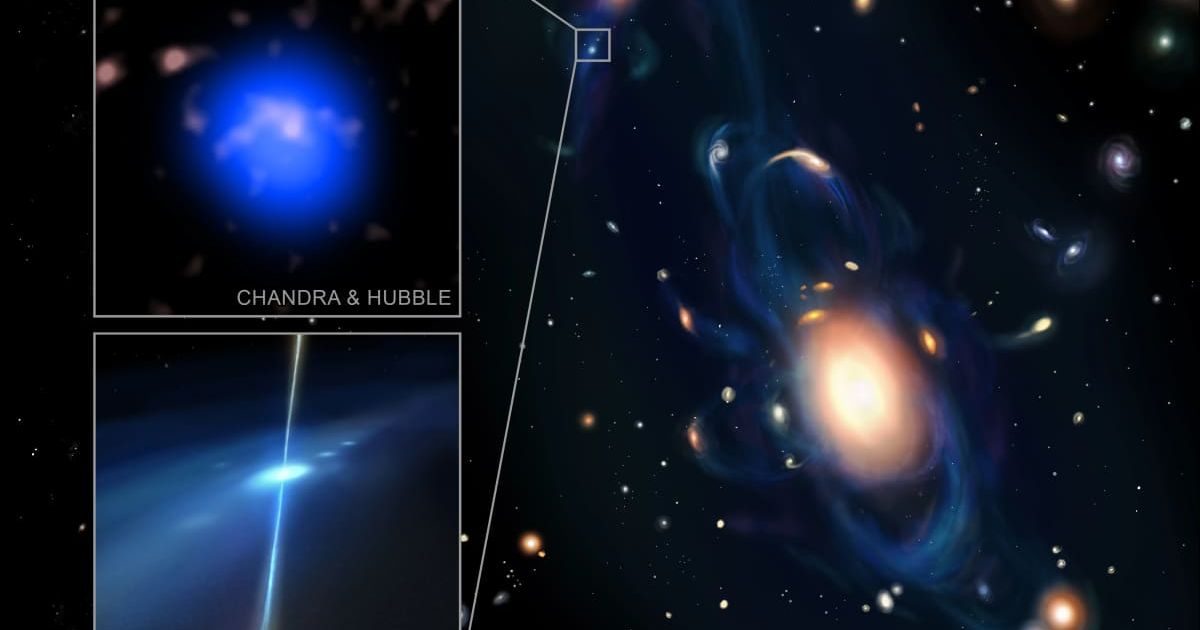
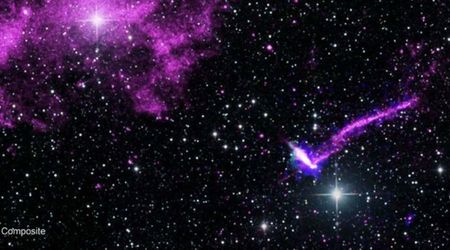
Two ultradense stars collided and merged in a distant galaxy about 4.7 billion light-years away from Earth. The event, dubbed GRB 230906A, produced a short-lived gamma-ray burst that was detected by the Fermi Gamma-ray Telescope. This detection alerted a team of astronomers who then used the Chandra X-ray Observatory, the Neil Gehrels Swift Observatory and the Hubble Space Telescope to zoom in on the source. They found that the burst originated from the merger of two neutron stars in a rare cosmic event. The merger happened in a faint galaxy that is shrouded by a large stream of gas, according to a research paper that is soon to be published in The Astrophysical Journal Letters and is available on the arXiv preprint server.
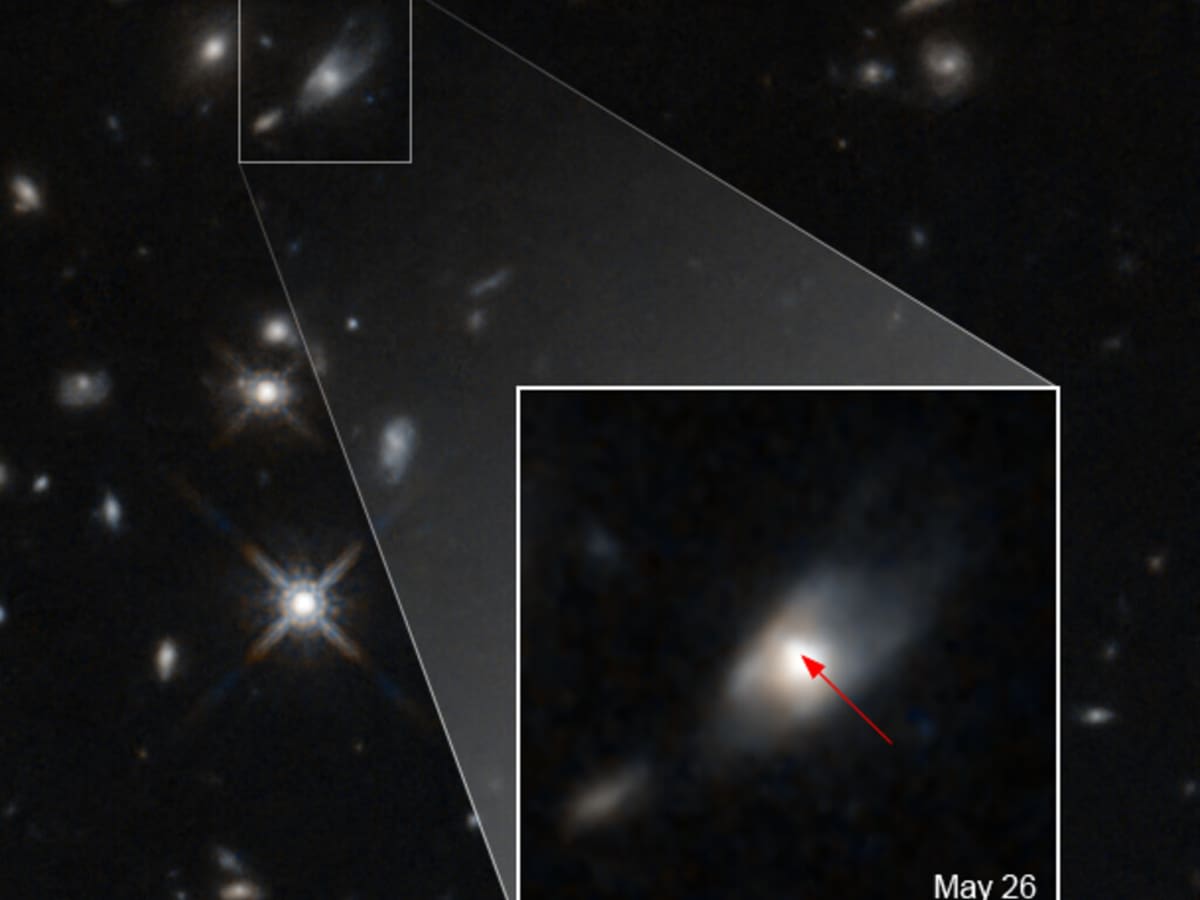
A neutron star is born when a star, much heavier than the Sun, runs out of its nuclear fuel and collapses under its gravity. These objects are the densest known stars astronomers have ever found in the universe. Despite being only about 12 miles (20 kilometers), a neutron star can hold more mass than the Sun in that tiny space. Previous research shows the merger of two neutron stars in mid-sized or large galaxies. However, the new study reveals that such mergers could also happen even in a tiny galaxy. "Finding a neutron star collision where we did is game-changing," said lead researcher Simone Dichiara of Penn State University, in a statement by NASA. "It may be the key to unlocking not one, but two important questions in astrophysics." This discovery resolves a long-standing puzzle by showing that gamma-ray bursts, particularly ones that are emitted by the merger of two neutron stars, don’t always originate from the center of a galaxy. It also provides clues about how heavy elements such as gold and platinum are formed, suggesting that these materials can be created in regions far from a galaxy's core.
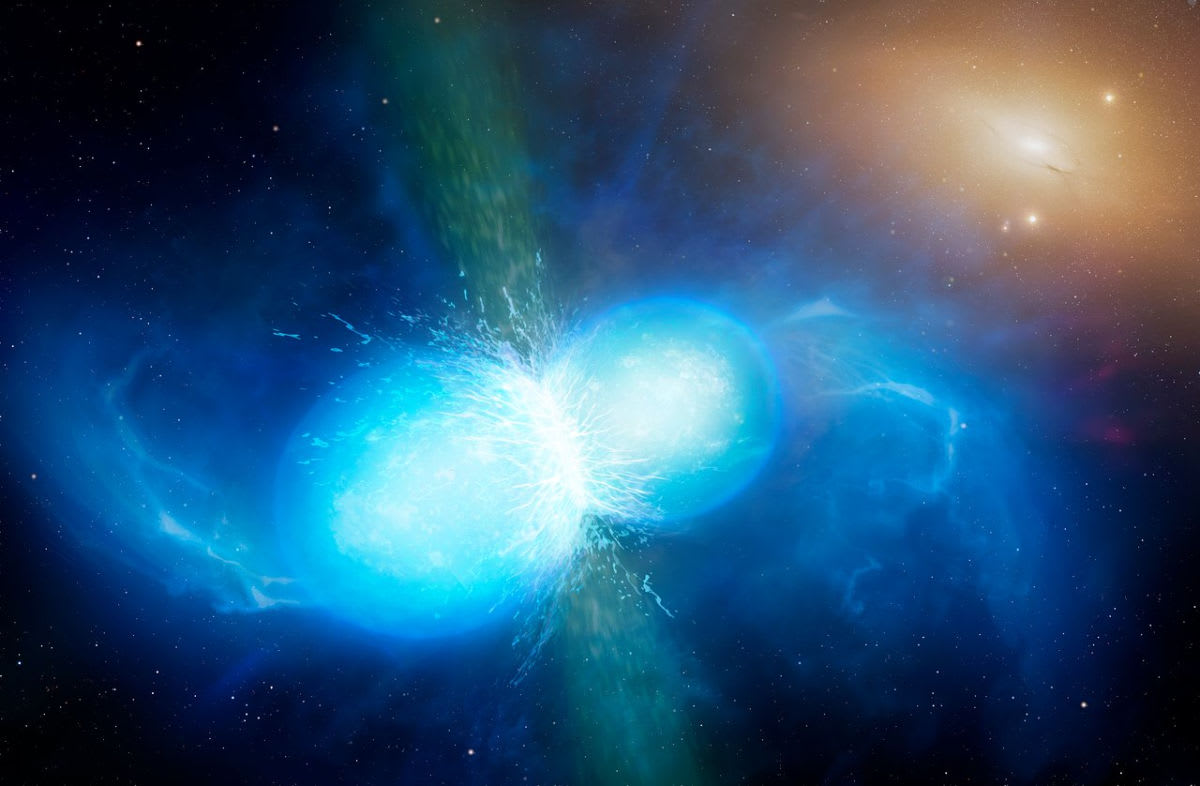
The faint galaxy in which the merger happened lies embedded in a vast stream of gas and dust that spans some 600,000 light-years across. This is far larger than the Milky Way, which spans about 100,000 light-years. Astronomers believe that this enormous stream of gas and dust formed when a group of galaxies collided hundreds of millions of years ago. The collision stripped gas and dust from the galaxies and deposited them in the intergalactic space. "We found a collision within a collision," said co-author Eleonora Troja of the University of Rome in Italy in the statement. "The galaxy collision triggered a wave of star formation that, over hundreds of millions of years, led to the birth and eventual collision of these neutron stars."
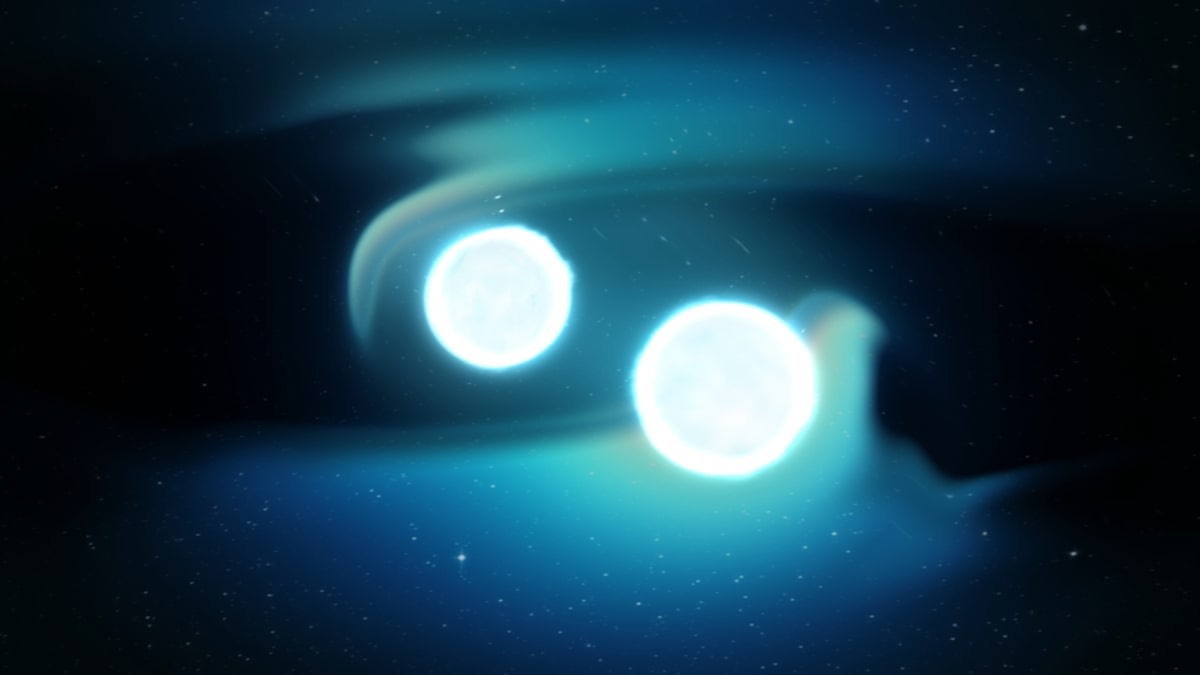
This discovery points out that we shouldn’t always expect moderate or big galaxies to produce gamma-ray bursts. Some bursts may even originate from host galaxies that are too small or faint to be detected using ground-based optical telescopes. With the discovery of events like GRB 230906A, astronomers have found an alternative mechanism that stars use to produce heavy elements like gold and platinum. Such elements are eventually spread toward the edge of galaxies and appear in future stars. This shuns the need for a supernova explosion that is known to make such elements.
More on Starlust
HETDEX astronomers spot hidden galaxies and gas from up to 11 billion years ago
MeerKAT uncovers record-setting cosmic laser in a galaxy 8 billion light-years away