Giant 50-meter observatory could pierce interstellar dust, revealing the hidden half of the cosmos
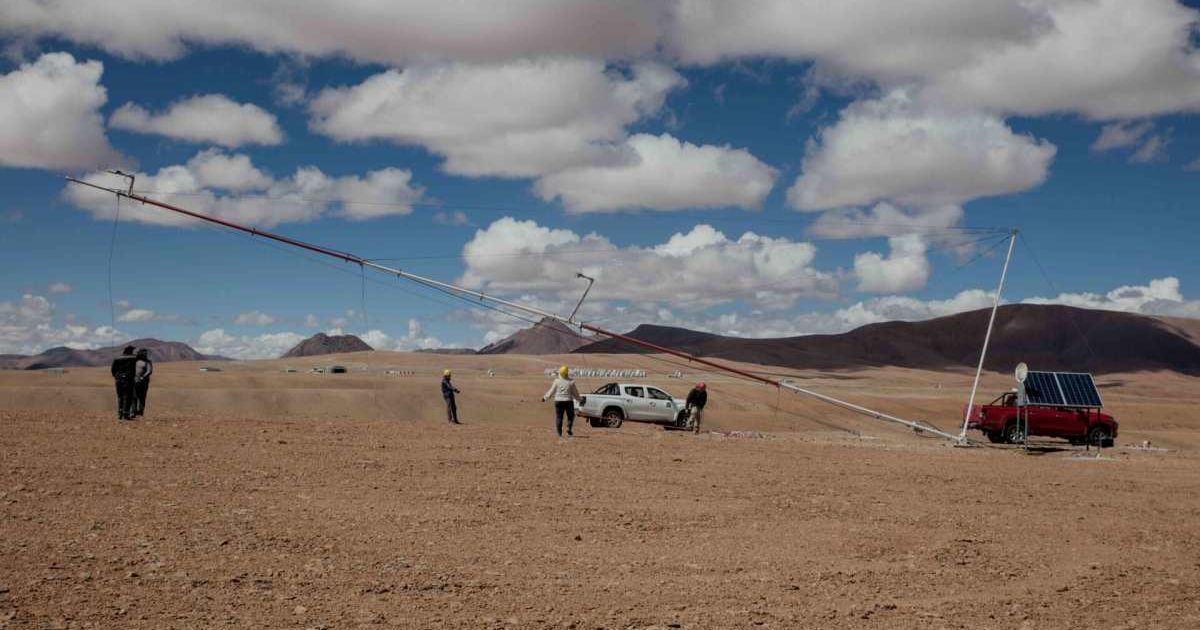
Astronomers are designing a telescope that they hope will help uncover the half of the universe that remains shrouded in dust. The telescope has been named the Atacama Large Aperture Submillimeter Telescope (AtLAST)—a giant 50-meter observatory. It will sit at a location near the existing ALMA array, high in Chile's Atacama Desert, and peer into dust-covered regions that cannot be seen with ordinary telescopes. Unlike other mega-science projects, AtLAST’s creators want to operate the facility entirely without relying on fossil fuels.

Interstellar dust hides a vast swathe of the universe. The best way to illuminate such obscured regions is to use a gigantic submillimeter-wave telescope designed to detect electromagnetic radiation resting exactly between radio waves and infrared light. "Without submillimeter [data], we're getting a very biased picture of what's out there," said Claudia Cicone, an astrophysicist at the University of Oslo in Norway, in a statement. "We are missing the regions of space that are most obscured by dust." Telescopes like ALMA in Chile have already probed some of these dust-laden regions, but astronomers want to go further with AtLAST. The early design and prototyping phase, known as AtLAST2, will run until 2028. To make the initiative sustainable, researchers from Europe, Chile, South Africa, Canada, Taiwan, Thailand, New Zealand, Japan, and the U.S. are heavily collaborating.
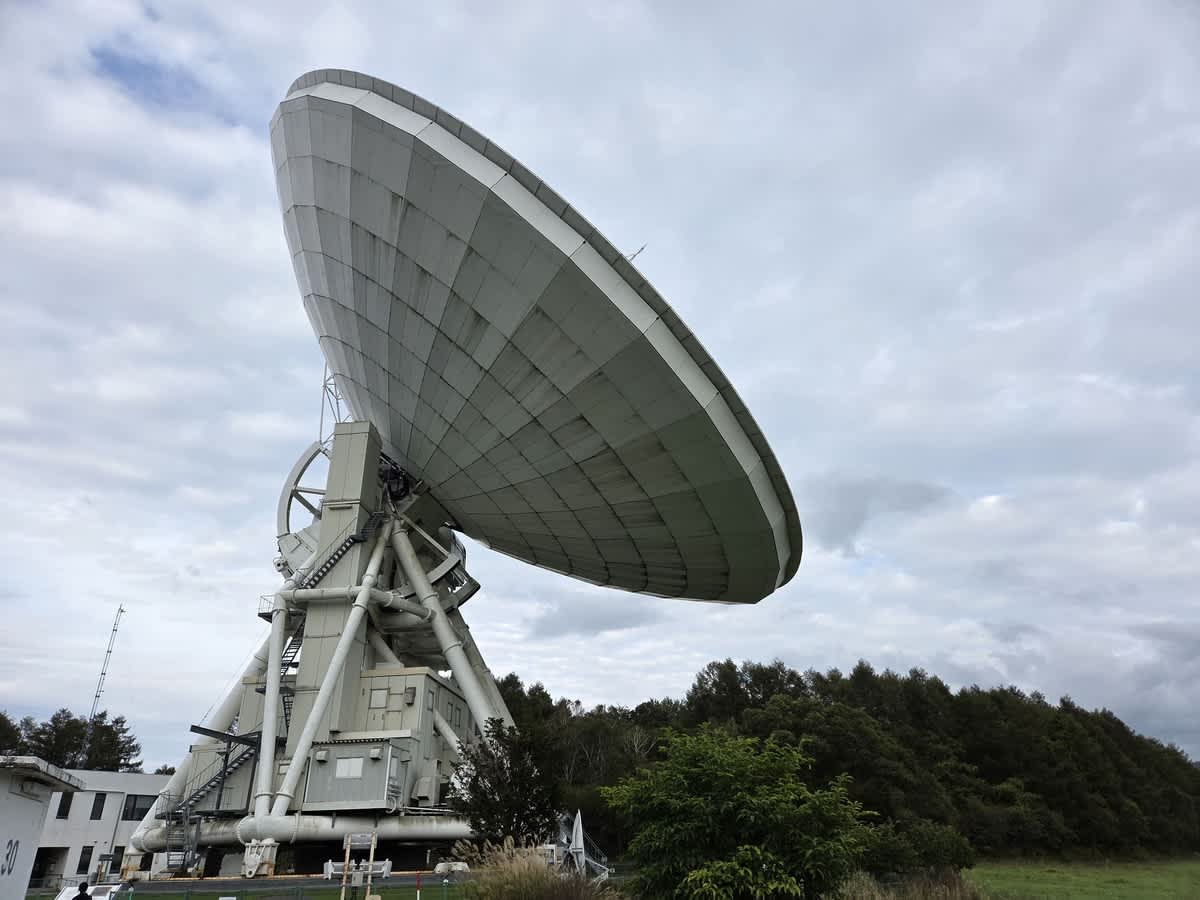
They want to bring the cloudy, hidden universe to light. "With previous submillimeter facilities, we're observing the tip of the iceberg," said Cicone, one of the leads on the telescope. "With AtLAST, we will answer the question of where all the gas and dust in the universe is." ALMA captures dusty parts of the universe where stars and planets form, but it acts like a high-powered microscope. Compared to it, AtLAST will function as a wide-angle camera, focusing on broad censuses of dusty locations across the universe. "ALMA can only see an area thousands of times smaller than the Moon's surface on the sky in any given observation," said Tony Mroczkowski, an astronomer at the Institute of Space Sciences in Spain and another of AtLAST's leads.
"ALMA is powerful, but you can't map the sky with a microscope. In comparison, AtLAST will image an area up to 16 Moons in size with every observation, so we can map the hell out of the universe," he said. To map the sky at that scale, the telescope will "need to move fast to map back and forth," said Mroczkowski. "With a huge field of view, we would create a pretty large map of the sky quickly." AtLAST has a primary 50-meter dish designed with aluminum panels in the mirror and a massive structure backed by steel. Weighing about 4,400 tonnes, it will use a 12-meter secondary mirror to gather and focus faint submillimeter radiation coming from distant locations. Perched in the exceptionally thin and dry atmosphere at an altitude of over 5 kilometers, it will give us a pristine, moisture-free window into the universe.
It is always difficult to run a power-hungry 50-meter observatory in such a remote location. To avoid fossil fuels, researchers are testing combinations of solar power, advanced battery arrays, solid-state metal hydride energy storage, as well as kinetic regeneration to recover the telescope's braking energy as it decelerates from sweeping scans. The team has set a benchmark by planning to use near-zero-carbon power to produce the steel and aluminum. It means that ambitious mega-science can be done without harming the climate. What could AtLAST achieve? It could shed light on cold gas and dust that aid star formation, while also looking closer to home. "We can study the solar atmosphere and the variability of solar flares as has never been done before," said Cicone.
When peering into deep space, astronomers often hit a wall known as the "confusion limit," where the sheer density of background objects causes their light to blur together. "You don't know if the light is coming from one galaxy, 10 galaxies, or 1,000 galaxies," said Cicone. "AtLAST will recover these missing galaxies," she said. It has the potential to find up to 50 million previously unseen galaxies in just 1,000 hours of observations. Besides stars and galaxies, AtLAST is capable of spotting complex molecules that might be the building blocks of life embedded within star-forming debris disks. As Mroczkowski noted, mapping these regions could ultimately help astronomers answer how life emerges in the universe, and how it develops and evolves.
More on Starlust
James Webb Space Telescope provides never-seen-before map of the universe