The Blaze Star could explode this year, but will it be visible from Earth? Here's all you need to know
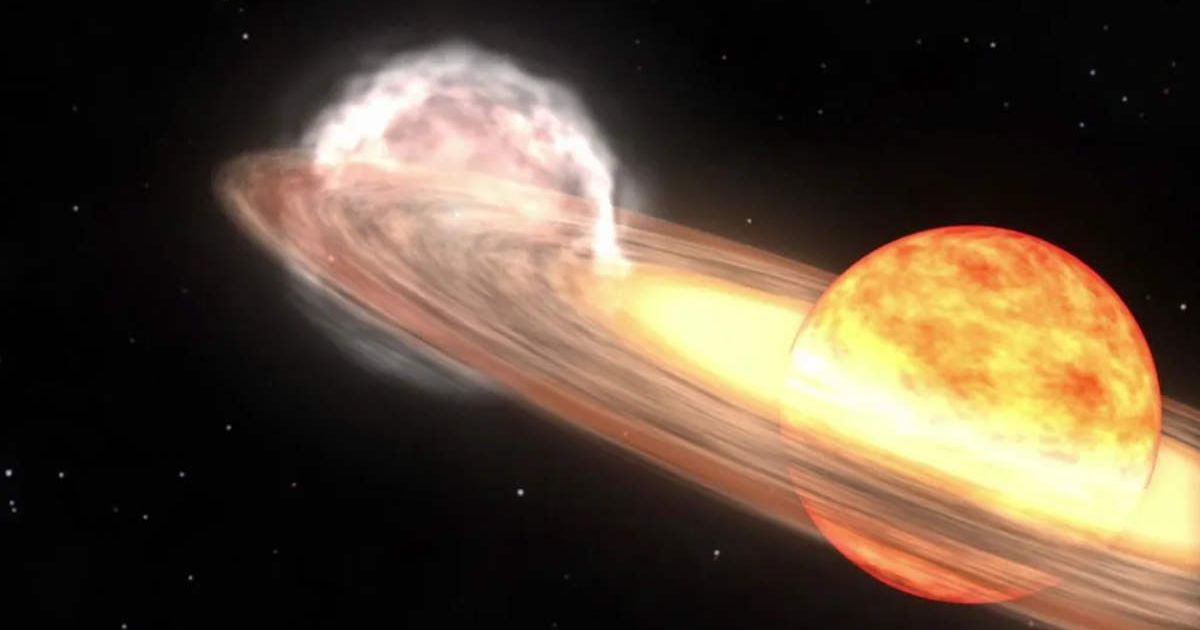
Observing a dip in the light curve of the Blaze Star (T Coronae Borealis, or T CrB) in 2023, astronomer Jean Schneider from the Paris Observatory had predicted that the recurrent nova would explode again between March and November 2025 or later. The study was published by the American Astronomical Society in 2024. And while the explosion didn't take place last year, chances are that this year could see the system go "boom."
What exactly is a recurrent nova?
While a classical nova erupts only once in a human lifetime, a recurrent nova, as the name suggests, erupts more than once. A nova is also different from a supernova (which completely annihilates the star) too, in that the former always involves a binary star system. whereas the latter can take place in a system with a singular star as well.
What is the Blaze Star?
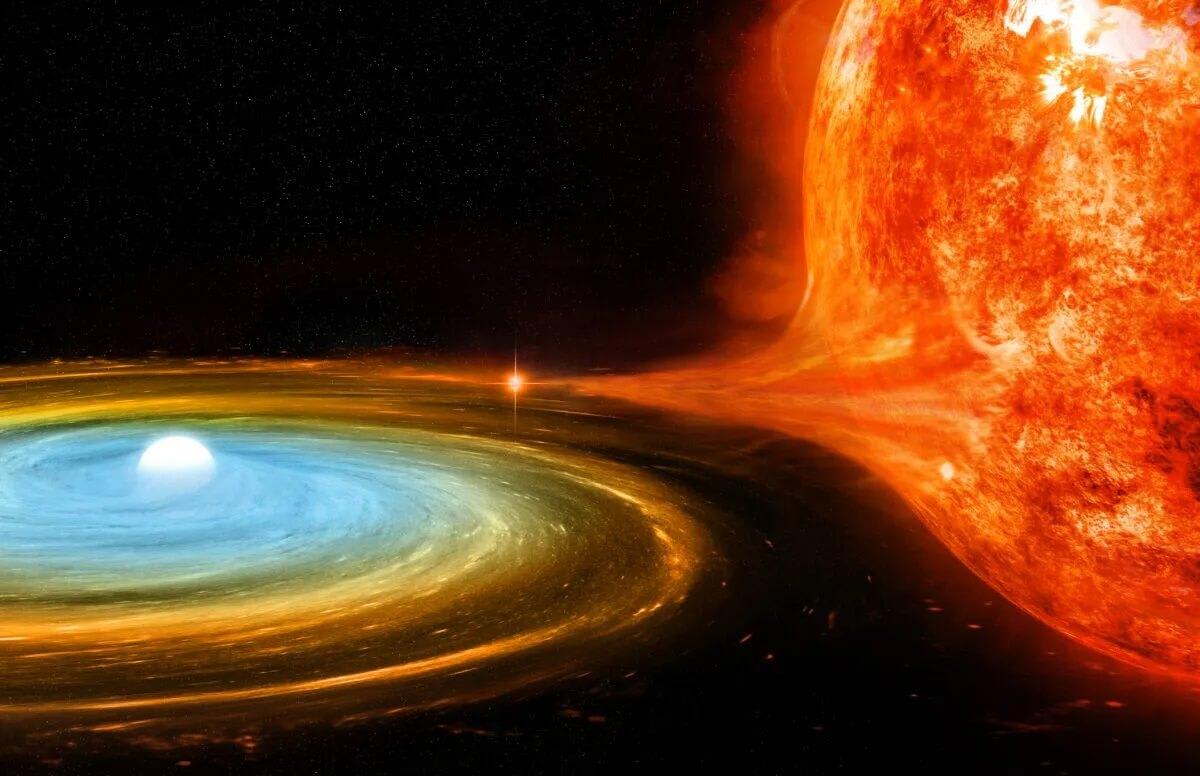
Located around 3,000 light-years away in the Corona Borealis constellation, or the "Northern Crown," is a binary system consisting of a dense white dwarf and a red giant star. The hydrogen being pulled from the red giant builds up on the surface of the white dwarf, causing an immense increase in pressure and heat, which eventually sets off a thermonuclear reaction big enough to eject all that accreted material.
T Coronae Borealis is known to have exploded in the years 1217, 1787, 1866, and 1946, according to a report on aavso. And while the 80-year gap between the last two known eruptions indicates that we might finally be able to see the star explode, there's really no way to predict exactly when it may happen. “Recurrent novae are unpredictable and contrarian,” said Dr. Koji Mukai, an astrophysics researcher at NASA Goddard, in a statement two years ago. “When you think there can’t possibly be a reason they follow a certain set pattern, they do—and as soon as you start to rely on them repeating the same pattern, they deviate from it completely. We’ll see how T CrB behaves.”
Will the Blaze Star explosion be visible from Earth?
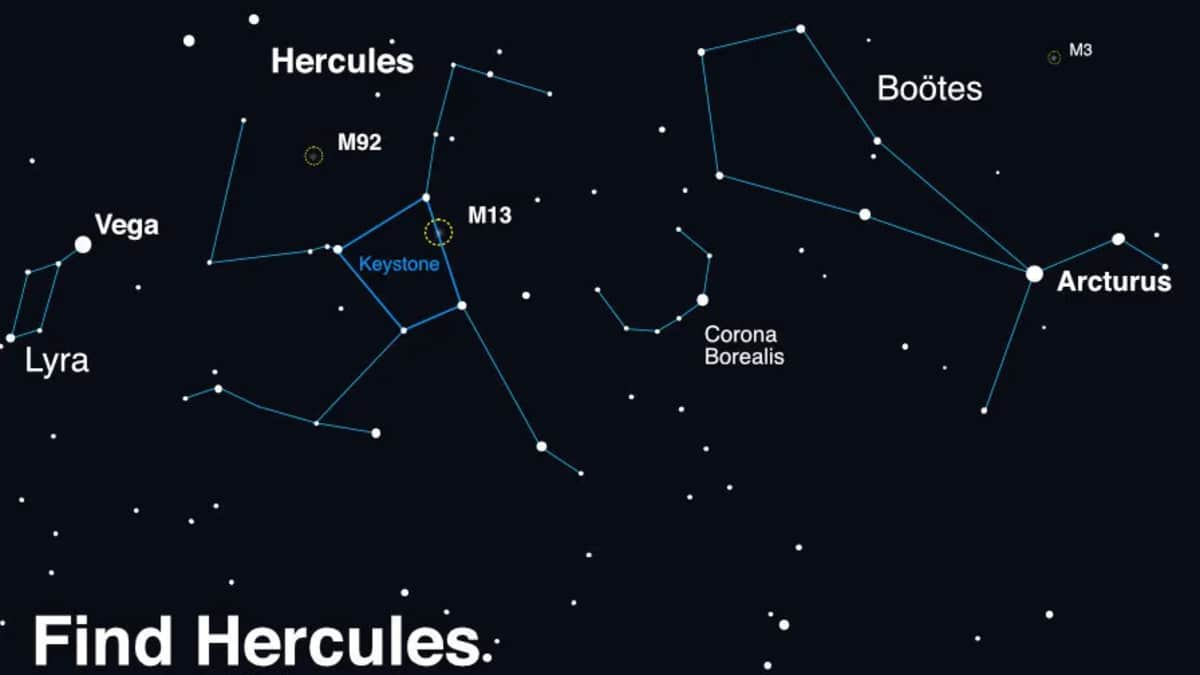
Should the explosion take place this year, it is expected to be bright enough to be visible from Earth. According to EarthSky, the brightness could reach an apparent magnitude of 2, which is comparable to Alphecca, the brightest star of the Northern Crown. The nova should be visible for days at peak brightness before it dims again, possibly for decades. The trick to spotting it would be to make note of the position of the Corona Borealis constellation beforehand. Skywatchers should look for the horseshoe-shaped group of stars west of the Hercules constellation. A good starting point will be Arcturus and Vega, the two brightest stars in the Northern Hemisphere. Drawing a straight line between the two will ultimately lead to Hercules and the Corona Borealis.

As far as getting to know about the explosion on time is concerned, look out for social media alerts from citizen scientists and fellow space enthusiasts. Several NASA missions, including the Fermi Gamma-ray Space Telescope, are also poised to study the explosion when it is detected.
More on Starlust
NASA's IXPE provides new insight into a 2,000-year-old supernova
Failing to go supernova, an Andromeda supergiant star quietly collapsed into a black hole