Like 300 tons of TNT: Meteor explosion over U.S. rattles residents
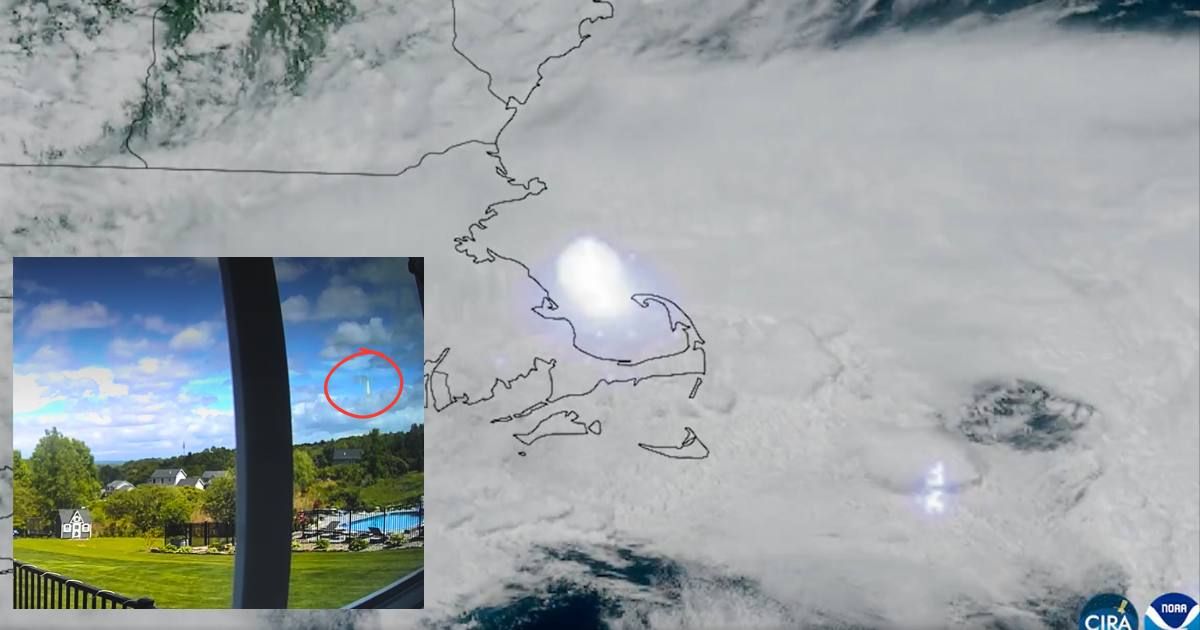
A meteorite explosion over the skies of Massachusetts, close to Boston, shook several towns and cities across the northeastern United States on Saturday, March 30, with loud sonic booms shaking buildings and leaving residents alarmed. The widely reported airburst explosion, which caused no damage, was equivalent to about 300 tons of TNT, as per NASA.
A bolide exploded high above New England in Earth's atmosphere on Saturday afternoon, creating a loud booming noise that was heard across the region.
— CIRA (@CIRA_CSU) May 31, 2026
The flash of the exploding meteor was detected from the GOES-19 weather satellite's GLM instrument. pic.twitter.com/QHP2FWCucZ
Saturday's explosion, confirmed using satellite data from the National Oceanic and Atmospheric Administration (NOAA) and designated as event number 3867-2026 by the American Meteor Society (AMS), took place at 2:06 PM local time, with the AMS estimating the meteor to be around three feet wide. NASA stated that the meteor's fragmentation took place at an altitude of 40 miles above the surface, before debris travelled due southeast for tens of miles. Whatever survived the initial airburst—small meteorite fragments that may not have instantly vaporized—are suspected to have fallen directly into the Cape Cod Bay in the Atlantic Ocean.
#MeteorSighting: Eyewitnesses in New England and @NOAA’s GOES-19 satellite reported a bright fireball on Saturday, May 30, at 2:06 p.m EDT accompanied by a loud noise. The meteor appears to have fragmented at an altitude of 40 miles over northeast MA and southeast NH. The energy…
— NASA Space Alerts (@NASASpaceAlerts) May 30, 2026
Fireball followed by loud bangs
As the meteor, travelling at speeds in excess of 70,000 miles per hour, slammed into the Earth's atmosphere, it produced a visible fireball, born of ram pressure and the violent compression of air, that was also captured on video. Imagery from NOAA's GOES-19 satellite also showed cloud tops glowing as this occurred.
It came from outer space. Last night, @NOAA’s #GOESEast (#GOES19) 🛰️ captured a meteor ☄️ so bright that it registered as a lightning bolt! New Yorkers were awoken by a loud boom as the meteor broke up in our planet’s atmosphere. pic.twitter.com/6ZM1nvMoEd
— NOAA Satellites (@NOAASatellites) May 28, 2026
While the fireball was seen first, due to light travelling faster than sound, what followed were loud bangs. These acoustic shockwaves shook buildings in the area, so much so that there were more than 400 reports on the US Geological Survey's 'Did You Feel It?' portal, which is typically used for reporting seismological disturbances. Although there were some reports of rumblings and of windows rattling, no damage to lives or property was recorded.
Although the fragments of this space rock fell into the ocean, it is not unheard of for a meteorite to end up in populated areas: earlier this year, in March, a meteor scattered fragments over western Germany, famously tearing through a house ceiling.
Why couldn't we detect it before atmospheric entry?
Surprises like the arrival of 3867-2026 often prompt the question: why didn't astronomers see it coming? A common myth is that NASA currently only has the provisions and the technology to detect near-Earth objects (NEOs) larger than 140 meters. Although NASA is congressionally mandated to catalog 90 percent of near-Earth objects of that size—the threshold for catastrophic regional damage—the agency routinely discovers much smaller space rocks.
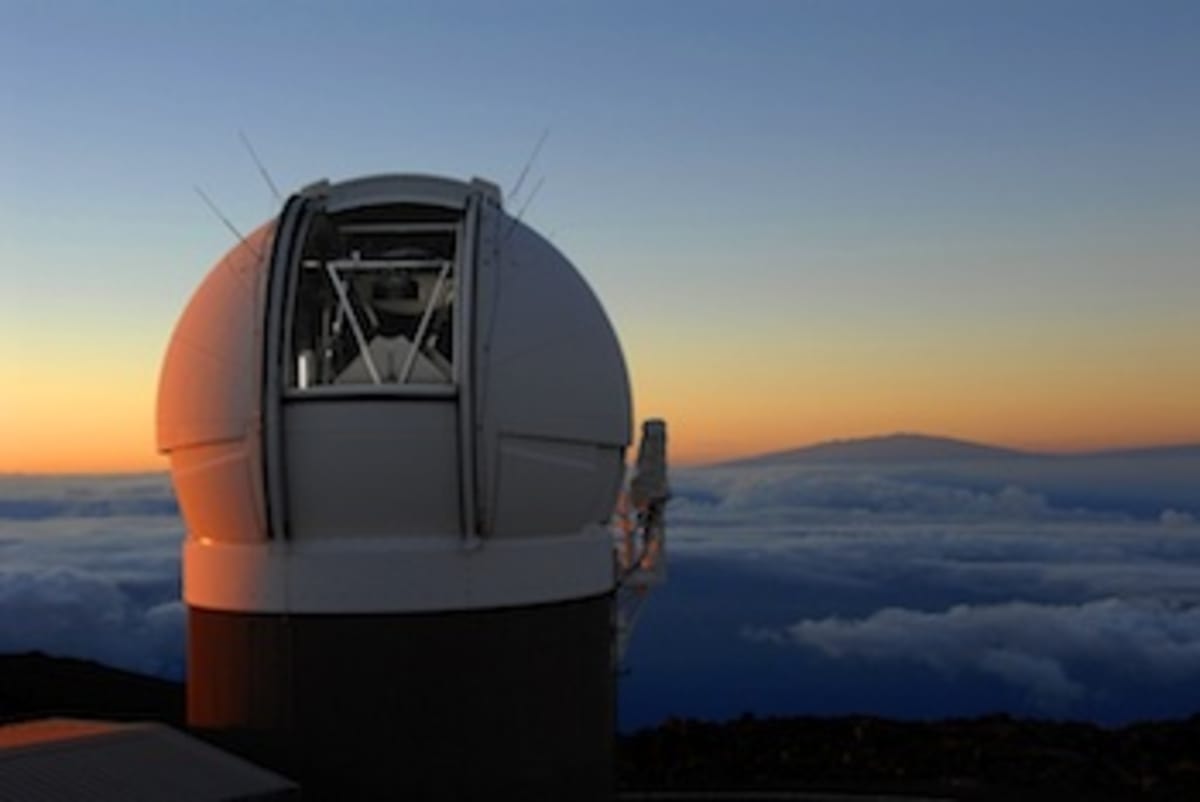
Yet, some small space rocks slip past NASA, as evidenced by Saturday's explosion. The reason for these misses is not the lack of capability, but observational hurdles due to albedo or reflectivity: a 3-foot rock floating through the blackness of space reflects almost no sunlight, thereby remaining virtually invisible to our telescopes right up until the moment they strike the atmosphere. Since these objects are primarily tracked using Earth-based telescopes observing the night sky, there also exists a massive blind spot: NEOs approaching Earth from the direction of the Sun get completely blocked out by daylight glare.
More on Starlust
Meteor breaks apart and causes a loud ‘boom’ over Ohio, fireball seen across multiple US states
Century-old meteorite from Azerbaijan reveals new clues about Mercury