Skywatching tips for May 2026: What's next after the Flower Moon and the Eta Aquariids?
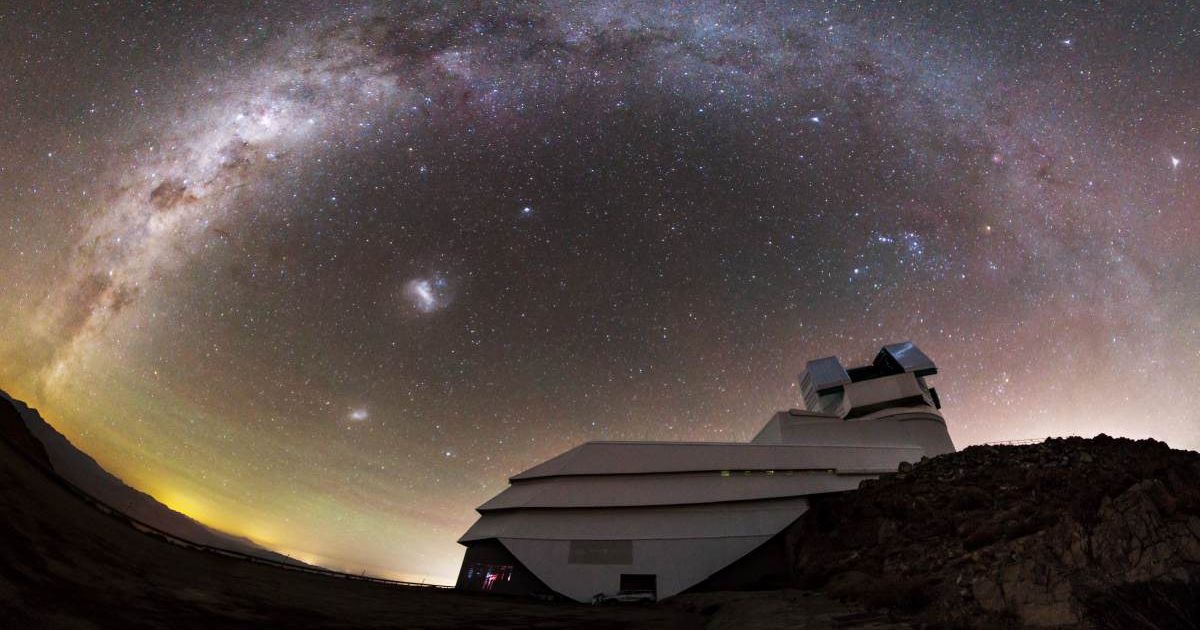
Here are the four events that skywatchers should look forward to as the month of May nears its halfway mark.
Vera C. Rubin Observatory observes the Chilean night sky above Cerro Pachón. (Cover Image Source: NSF–DOE Rubin Observatory/NOIRLab/SLAC/AURA/P. Lago)

While the Flower Moon and the Eta Aquariid meteor shower may be behind us, the May sky still has a lot to offer. Here are the four events that skywatchers should look forward to as the month nears its halfway mark.
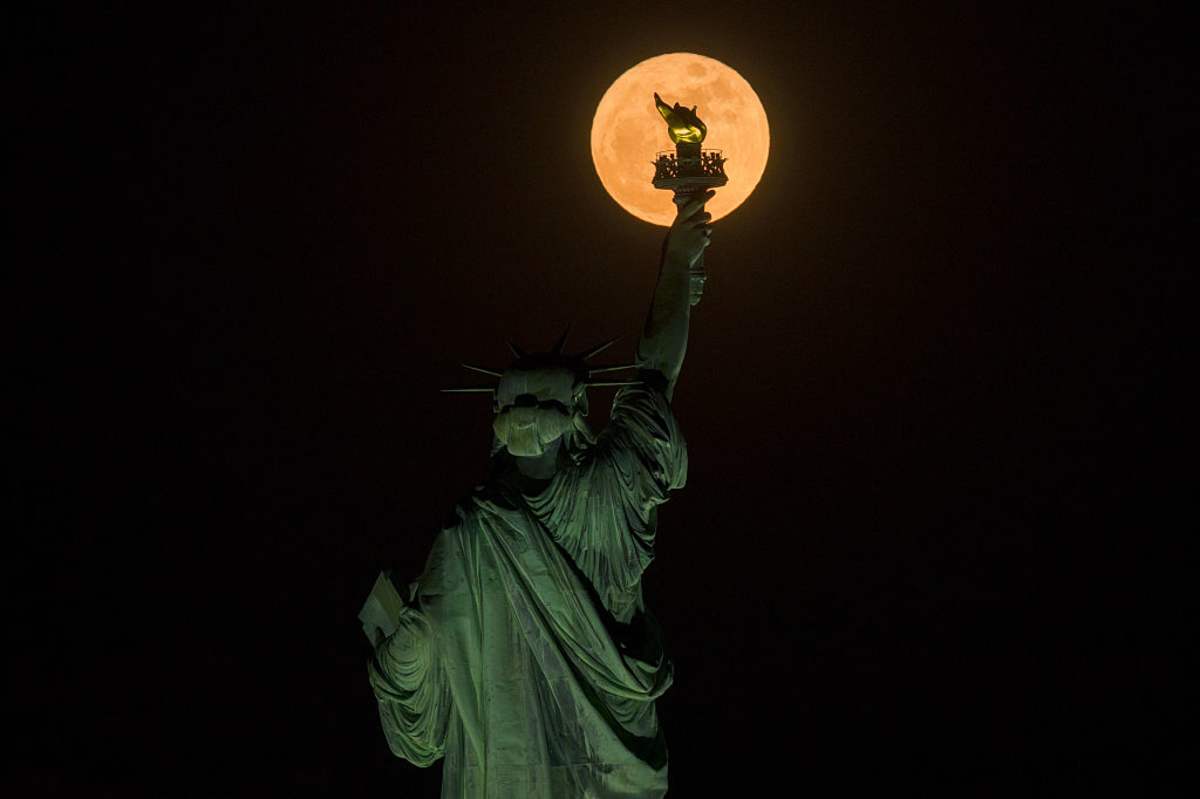
The full Flower Moon rises behind the Statue of Liberty in New York City on May 1, 2026, as seen from Jersey City, New Jersey. (Image Source: Gary Hershorn/Getty Images)

May 12 and 13—An alignment of Mars, the Moon, and Saturn

In the early hours, about an hour before sunrise on May 12 and 13, Mars, Saturn, and the Crescent Moon will align low in the eastern sky, per National Geographic. While May 12 and 13 will see the alignment at its most optimal, the trio, featuring an even thinner Moon, will also be seen clustered together in a pyramid-like shape on May 14. Either way, to spot the alignment, make sure you have an unobstructed view of the eastern sky.
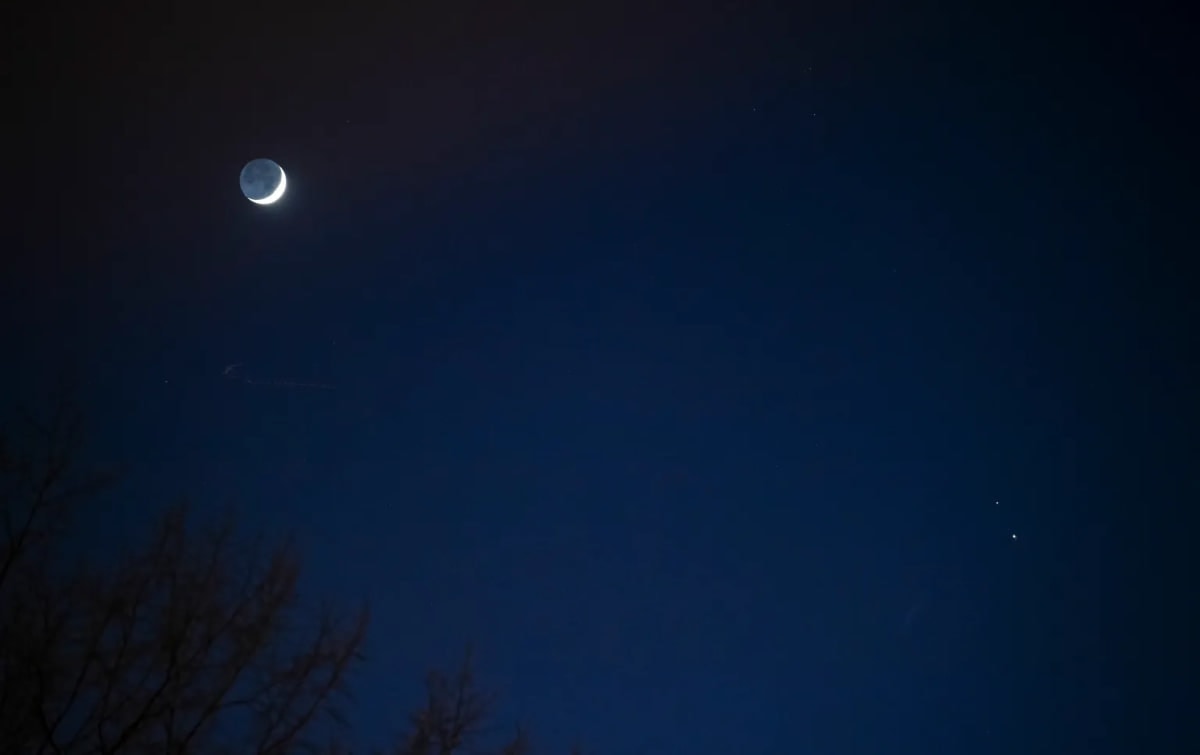
The Moon, left, Saturn, upper right, and Jupiter, lower right, are seen after sunset from Washington, DC, on Dec. 17, 2020 (Representative Image Source: NASA | Aubrey Gemignani)

May 16—The core of the Milky Way

With the New Moon hardly offering any illumination, the night of May 16 will be the ideal time to view the core of the Milky Way galaxy at its brightest, provided you are willing to get away from city lights as well. The best views of the core will be on offer between midnight and dawn. Skywatchers can also use the opportunity of the moonless night by trying to observe the Whirlpool Galaxy and the Sombrero Galaxy via telescopes.

Milky Way rising over the walls of Crater Lake. (Cover Image Source: Getty | Tony Rowell)
The Milky Way is rising over the walls of Crater Lake. (Representative Image Source: Getty | Tony Rowell)

May 18—Venus and Moon conjunction

On May 18, just after sunset, the Moon and Venus will shine as a pair on the western horizon for roughly two hours. Mercury will also make an appearance in the west once the sky starts to darken. Jupiter, too, will be visible above the conjunction.
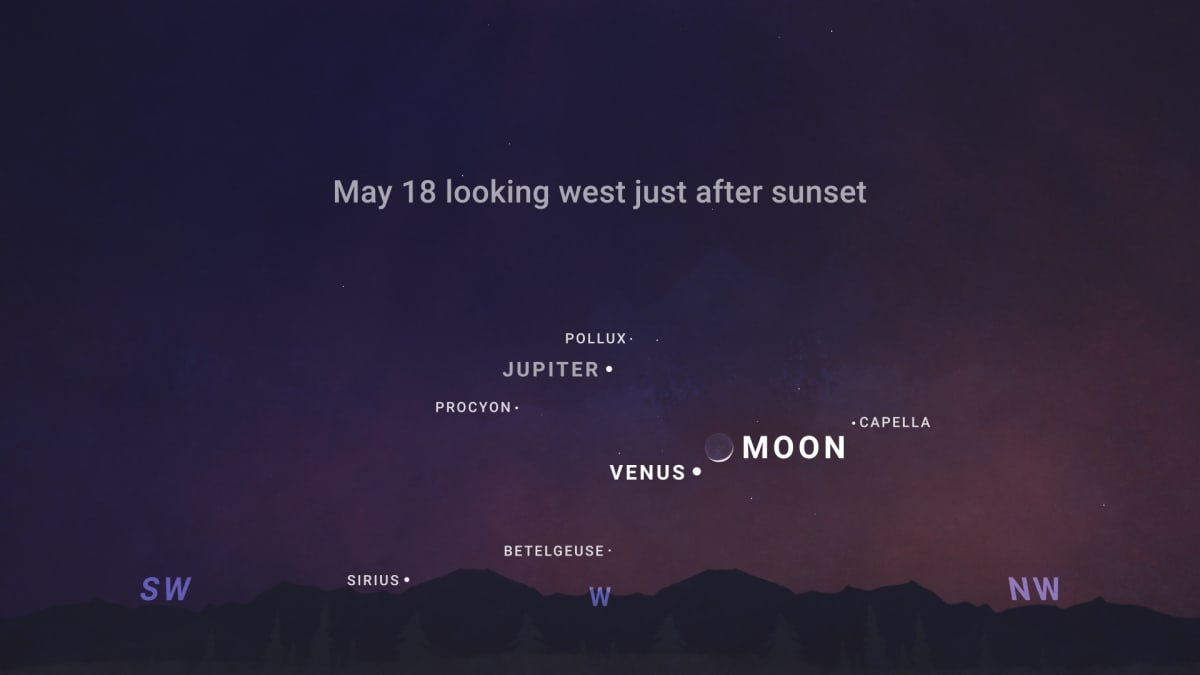
The sky after sunset on May 18, 2026. (Representative Image Source: NASA/JPL-Caltech)

May 31—The Blue Moon

Contrary to what the name 'Blue Moon' may suggest, the Moon on May 31 will not be blue in color. 'Blue Moon' is actually the term given to the second Full Moon that appears in a single calendar month (the first one of this month was the Flower Moon on May 1). It happens every two to three years, per NASA, and this is where the phrase 'once in a Blue Moon' comes from. 
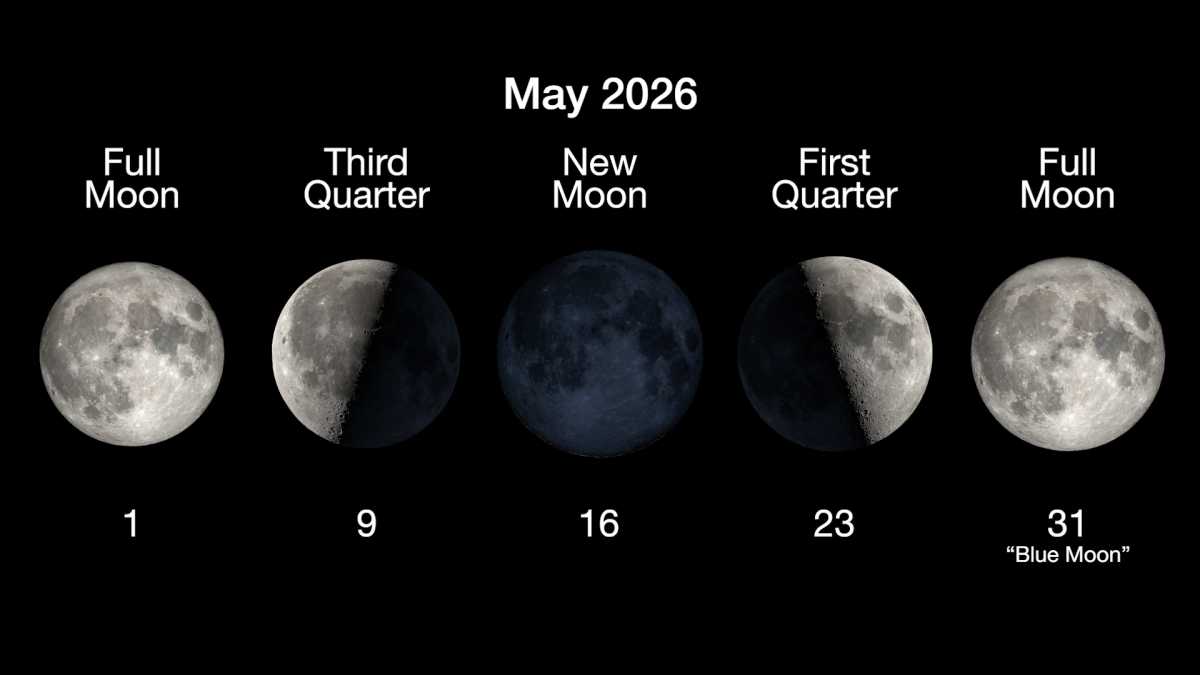
The phases of the Moon in May 2026. (Representative Image Source: NASA/JPL-Caltech)

All in all, May is not a bad time at all to turn your attention skywards. June, too, will bring its own set of skywatching events, the chief among which will be the conjunction between Venus and Jupiter, during which the planets will appear a little more than 1 degree apart from each other. That's about the width of a thumb held at arm's length. 

More on Starlust 

Why it's 'almost impossible to track' meteoroids in space, NASA explains

Scientists may have finally uncovered why the Moon appears lopsided
MORE STORIES

Moonlight may affect the visibility of the Eta Aquariids meteor shower this year. Check details here
5 days ago
Here's how you can spot Jupiter, Venus, and Mercury in the May evening sky.
7 days ago
The shower is best seen in the Northern Hemisphere with low moonlight and bright fireballs.
Apr 16, 2026
The meteorite was spotted all across northern Europe at about 00:24 BST on Monday.
Apr 14, 2026
This occurs when the Moon’s 29.5-day cycle doesn’t align exactly with the calendar month, allowing two full moons to fall within the same month.
Apr 13, 2026
The SLS rocket will be visible up to 70 seconds after launch depending on where observers are.
Apr 1, 2026
From the Pink Moon, bright Mercury, and a meteor shower to a comet streaking across the sky, April is filled with exciting sights for skywatchers.
Apr 1, 2026
After Ohio fireball sparks panic, NASA says meteor surge is normal.
Mar 31, 2026
Castor and Pollux, the Gemini twins, will be visible alongside Jupiter and will provide skywatchers with a celestial show.
Mar 26, 2026
Tonight on March 24, about 44% of the Moon's visible side will be illuminated by the Sun.
Mar 24, 2026