Strange behavior in Uranus’ outer rings points to hidden moons influencing their structure
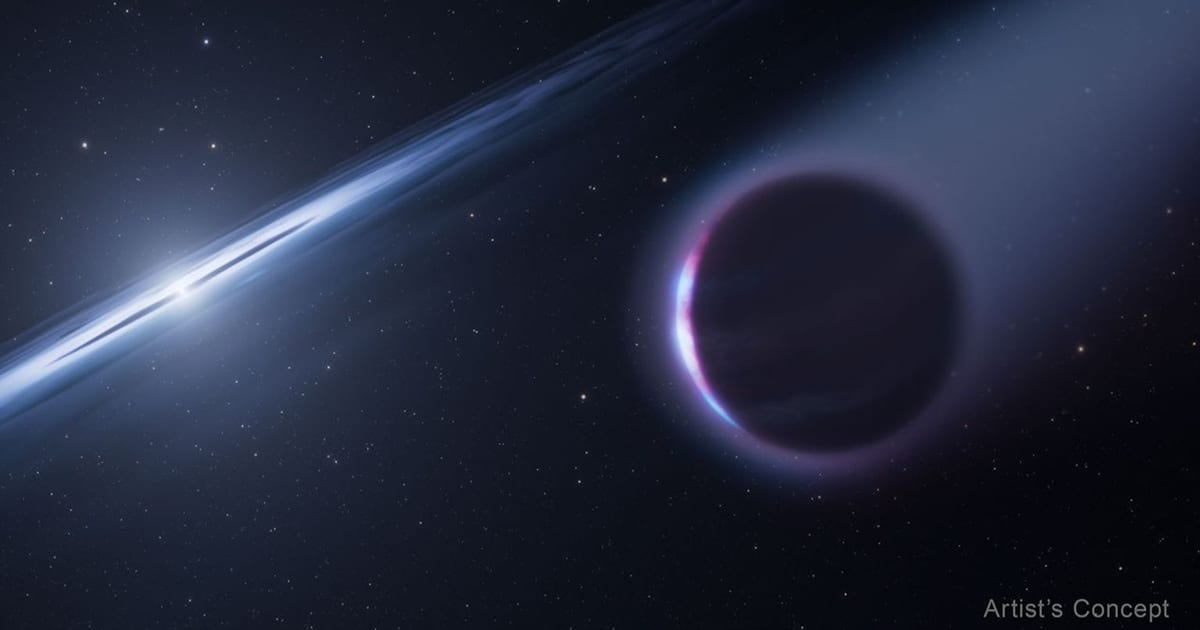
New observations of Uranus are pointing to something hidden in plain sight. Back in 1977, the rings of Uranus blocked the light of distant stars, which resulted in its discovery through stellar occultation. While the faint outer rings of the planet are in all probability shaped by moons, scientists now feel that one of these distant rings possesses qualities which cannot be explained by the other 29 existing satellites of the Ice Giant. Research published by the W.M. Keck Observatory hints at a more complex and crowded system.
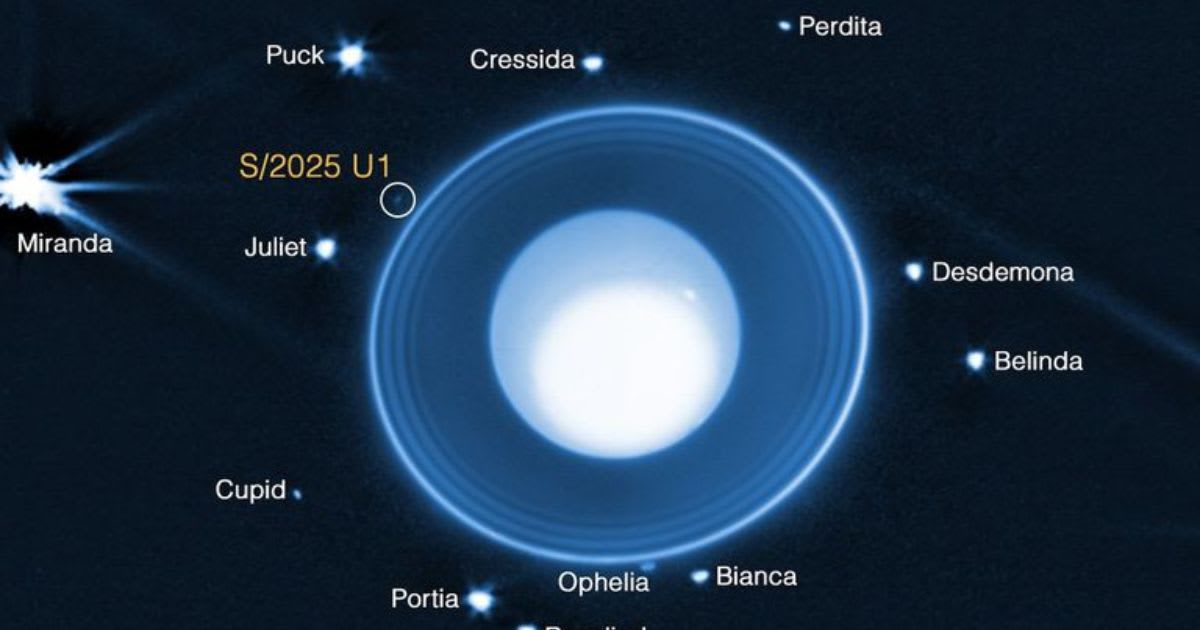
Although Uranus possesses rings, they are not as structured and bright as the rings of Saturn. They are rather dark, narrow, and tough to study. However, recent observations suggest that the composition and behavior of these rings are directed by small moons. Now, according to the science experts, these moons are significantly different from the known moons. They are irregular and constantly supply dust and debris, which raises new questions about how the system formed and evolved.
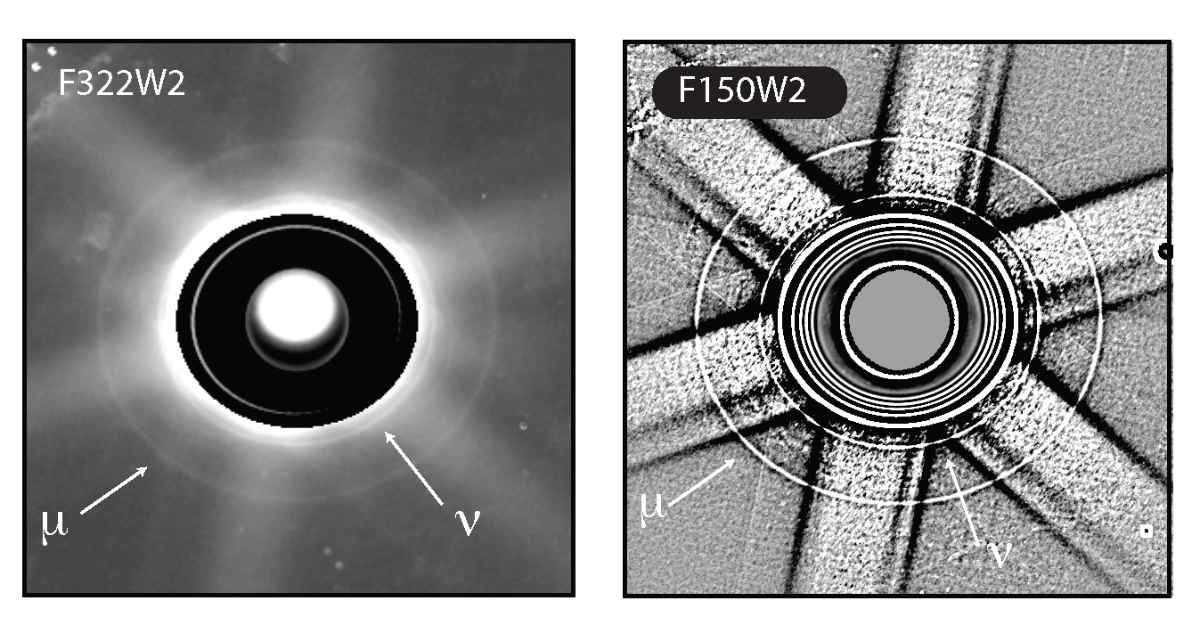
Back in January 1986, Voyager 2 could capture the first images of Uranus’s rings while crossing the planet. Following that, the Hubble Space Telescope and the ten-meter telescopes at W. M. Keck Observatory on Mauna Kea in Hawaii noticed the faint rings, which were named after the Greek alphabet. However, the outermost rings of Uranus, aka the mu- and nu-, were observed way later, during 2003 and 2005, by a team led by the SETI Institute's Mark Showalter. The outer rings turned out to be complex. The mu- ring was bluer in appearance while the nu-ring had a reddish tint. Observing the colors, the scientists studied the composition of these rings and revealed that the mu- rings had small particles in them and the nu- rings hinted towards dust.
A new look at Uranus 👀
— NASA (@NASA) December 18, 2023
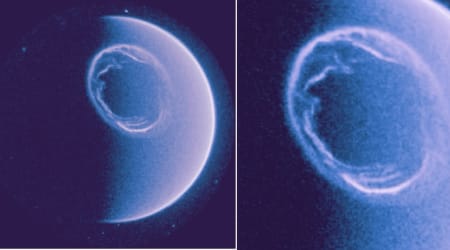
@NASAWebb observed the unique planet in new detail, highlighting features such as rings, moons, storms, and a seasonal polar cap. Webb’s infrared vision and sensitivity expand on a version taken by the telescope earlier this year: https://t.co/de3EhIqvvJ pic.twitter.com/TRVQX1yuIc
While the difference in nature and properties of these rings was unraveled, scientists failed to conceive their origin. They resorted to the James Webb Space Telescope and added infrared data to their old observations. A team led by Imke de Pater of the University of California, Berkeley, and including Showalter, delves into this observation and could construct the first complete reflectance spectrum of the rings, which refers to how they reflect sunlight. This spectrum, in turn, provided some hints about their origin.

“By decoding the light from these rings, we can trace both their particle size distribution and composition, which sheds light on their origins, offering new insight into how the Uranian system and planets like it formed and evolved,” stated Imke de Pater, sharing updates of their observations. The five large moons of Uranus, namely, Miranda, Oberon, Titania, Umbriel, and Ariel, orbit the planet’s outer end. But 14 smaller moons orbit even closer to the planet than those five, and the mu- and nu- are a part of these fourteen moons.
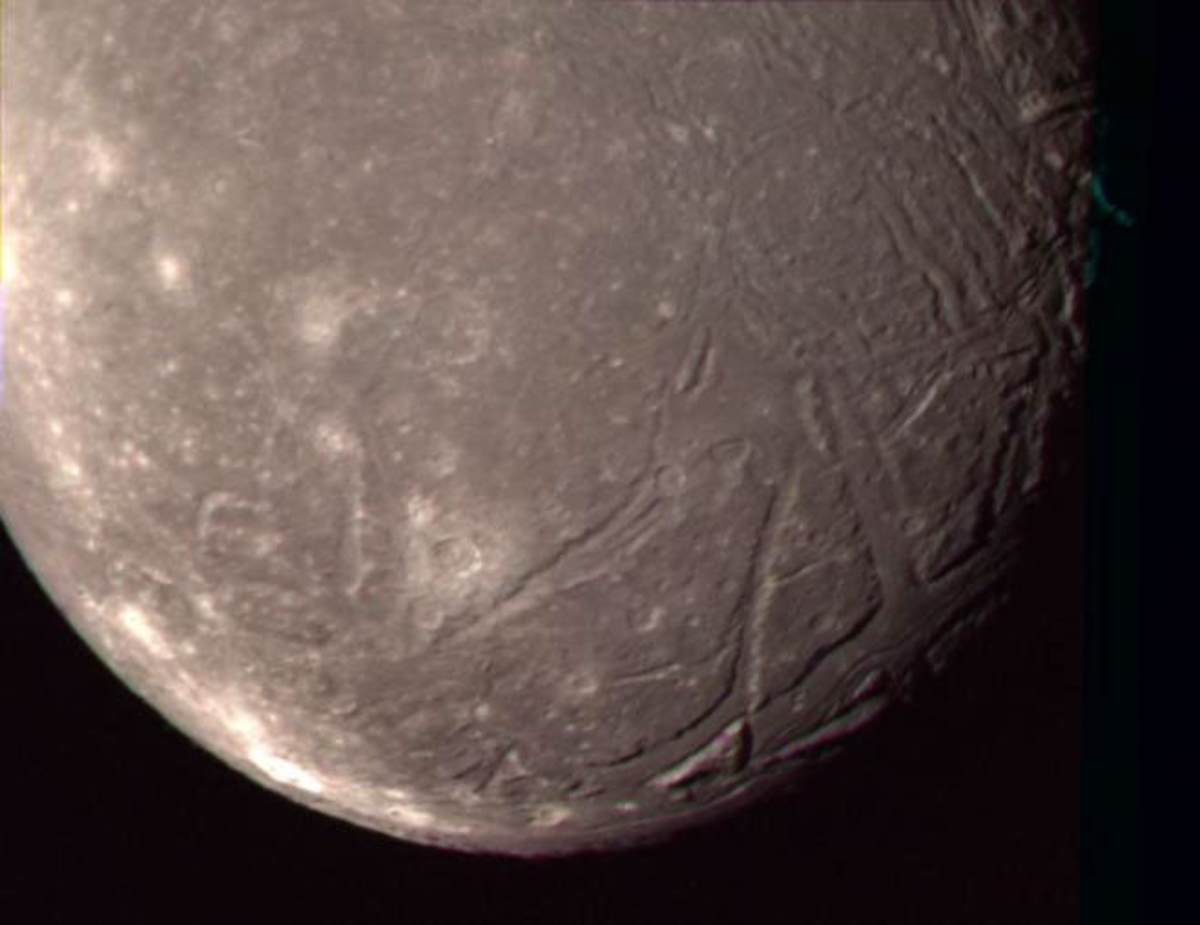
Four of Uranus’ largest moons—Ariel, Umbriel, Titania, and Oberon—may have oceans beneath their icy crusts, according to a re-analysis of Voyager 2 data. https://t.co/LyivnJCThe pic.twitter.com/WvDf2uVLvF
— NASA (@NASA) May 5, 2023
Throwing light on their composition and property, de Pater said, "The nu-ring material is sourced from micrometeorite impacts on and collisions between unseen rocky bodies rich in organic materials, which must orbit between some of the known moons. One interesting question is why the parent bodies sourcing these rings are so different in composition.” Studying the spectrum, the scientists understood that the mu- ring is composed of particles of water ice. This composition makes it similar to the other blue ring of the solar system, aka Saturn’s E-ring.
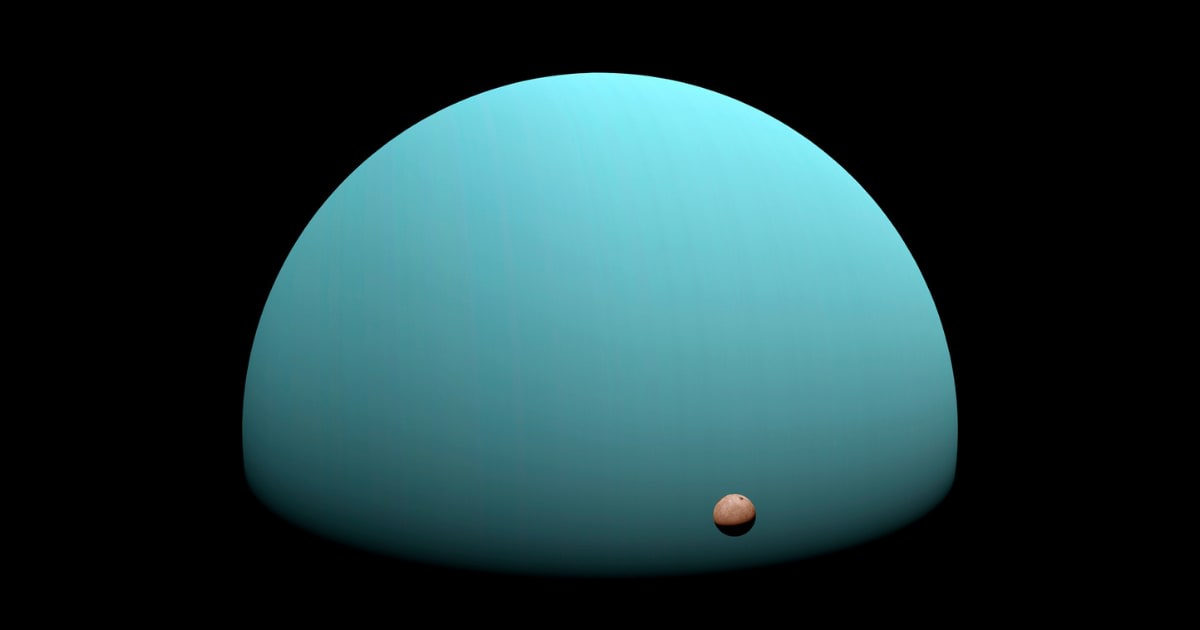
These icy particles in Uranus’s μ-ring have been traced back to Mab, a small 12-km-wide moon, which is reported to be their source. Mab is rich in ice, which is probably because the impacts on its surface keep releasing fresh, clean ice into space, preventing it from becoming dusty and rocky like most other inner moons. On the other hand, the nu-ring is older and dirtier. Its composition has 10 to 15% of its carbon-rich organic compounds, which are features of the cold environs of the outer solar system.

While the observations have been revealing details about the complex composition and the change in brightness of the mu- ring, scientists would need clearer images from a future mission spacecraft to answer more questions about the Icy Giant.
More on Starlust:
'Listen' to Jupiter, Saturn and Uranus ahead of the six-planet parade on February 28
James Webb Space Telescope maps Uranus’s upper atmosphere for the first time ever