Hidden waves in Mars' ionosphere reveal secrets of the planet’s magnetic field
A research article from the Monthly Notices of the Royal Astronomical Society published on April 9, 2026, says that scientists provide the first quantitative evidence of atmospheric waves on Mars that can significantly change its ionosphere’s electron content and these changes depend on the type of wave and the direction of the magnetic field which further help scientists to detect wave activity and map Mars’ hidden magnetic structure.
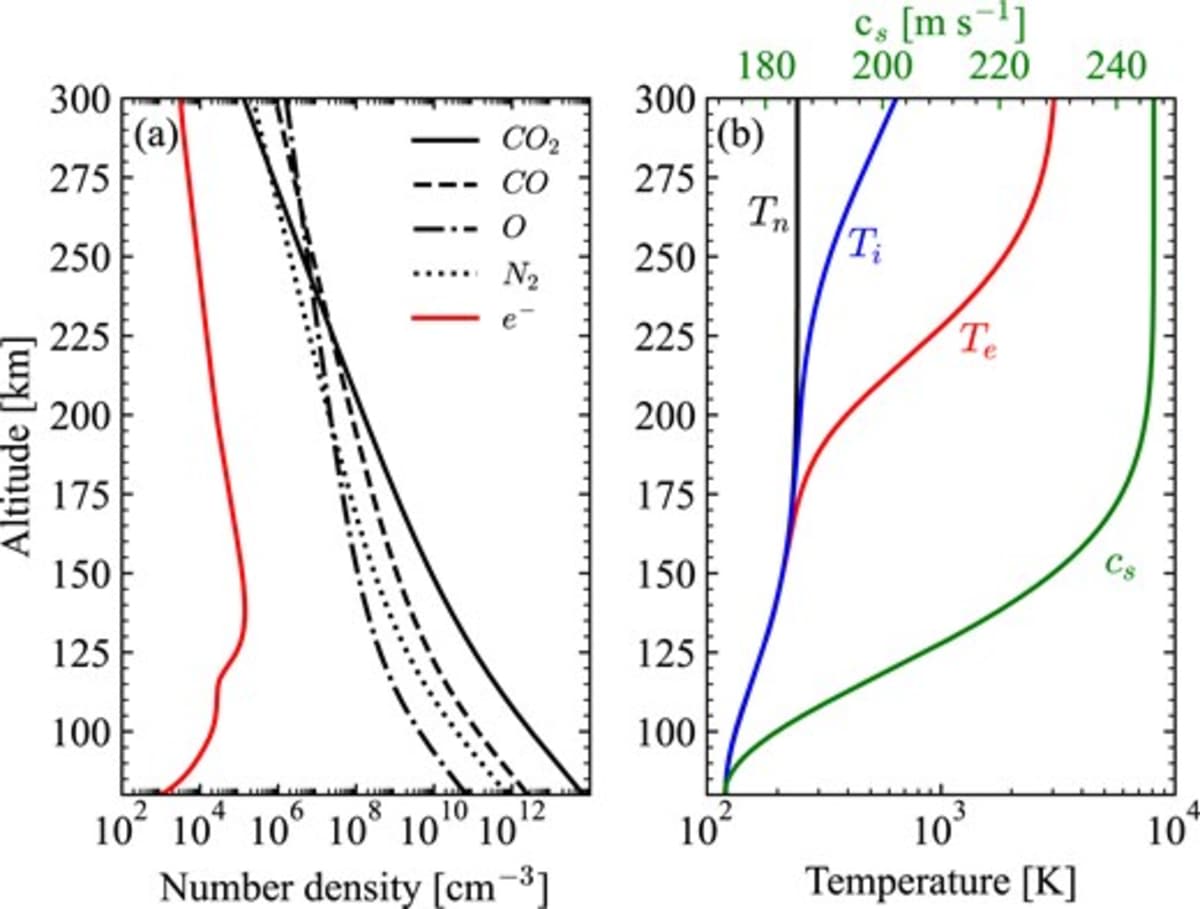
The scientists Xing Wang, Jun Cui, Zhaoguo He, et al are just beginning to understand how Mars doesn’t have a strong, global magnetic field like Earth. Rather, it has infrequent, disordered magnetic areas dispersed on its surface. Simultaneously, the planet's ionosphere or upper atmosphere is loaded with electrically charged particles (electrons). Researchers use the concept of total electron content (TEC) to analyze the behavior of this atmospheric layer. They believe that acoustic–gravity waves (AGWs), moving through the Martian atmosphere, can travel upward into the thermosphere and ionosphere, subtly reshaping the distribution of charged particles. These disturbances directly affect the planet’s TEC, a crucial measure used to understand the structure and variability of the ionosphere. In the figure below, the vertical profile of the Mars atmosphere shows how conditions change with altitude when no acoustic–gravity waves are present. It includes the number density of major neutral gases (like CO₂, CO, O, and N₂) and electrons, which decrease with height. It also shows temperature variations of neutral particles, ions, and electrons, which can differ due to energy inputs like solar radiation. Additionally, the local sound speed is indicated, which depends on temperature. Together, these profiles provide a baseline picture of Mars’ atmosphere, helping scientists understand how disturbances, like waves, later alter density, temperature, and ionospheric behavior.
Using a sophisticated linear coupled wave model, researchers can determine the kind of waves traveling across the atmosphere as well as the configuration of the magnetic field in that area by monitoring the way the electron layer moves. The study shows these effects depend on wave type and magnetic field orientation, and that total electron content measurements can be used to infer both atmospheric wave behavior and the planet’s complex magnetic field structure. "This study provides the first quantitative investigation of the effects of AGWs on TEC in the Martian ionosphere, revealing multilayer coupling processes and suggesting that TEC measurements can infer wave properties and local magnetic field topology," reads the article 'Effects of acoustic–gravity waves on the total electron content of the Martian ionosphere'.
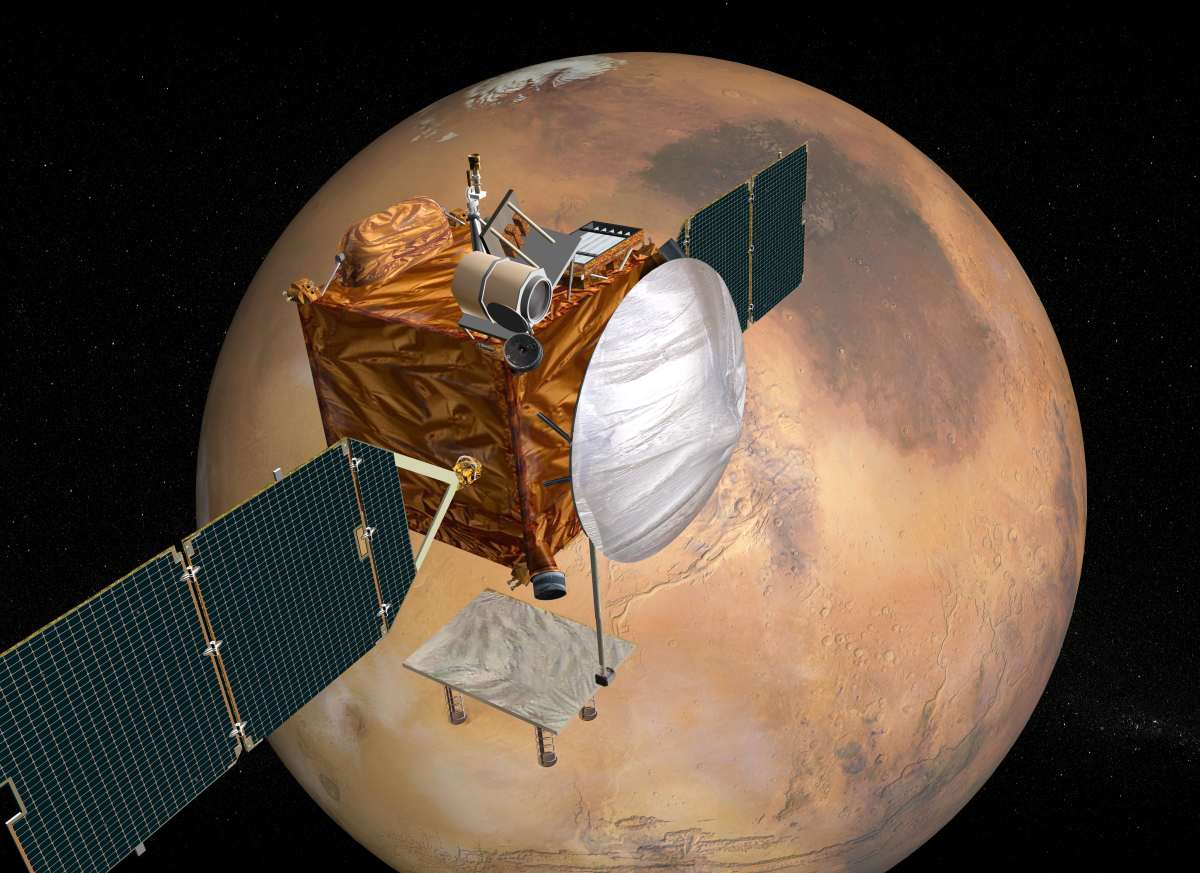
According to the scientists, it is surprising to see how much these tiny waves can do. Faster waves cause only small changes. But slower waves can significantly shake things up, sometimes changing the electron content. Even more interesting is how Red Planet's magnetic field affects this process. In areas where the magnetic field runs sideways, electrons are pushed unevenly, creating lopsided patterns. But in regions where the magnetic field is vertical, the electron layer stays more stable and evenly spread. This means scientists can use these changes as clues for further investigation.
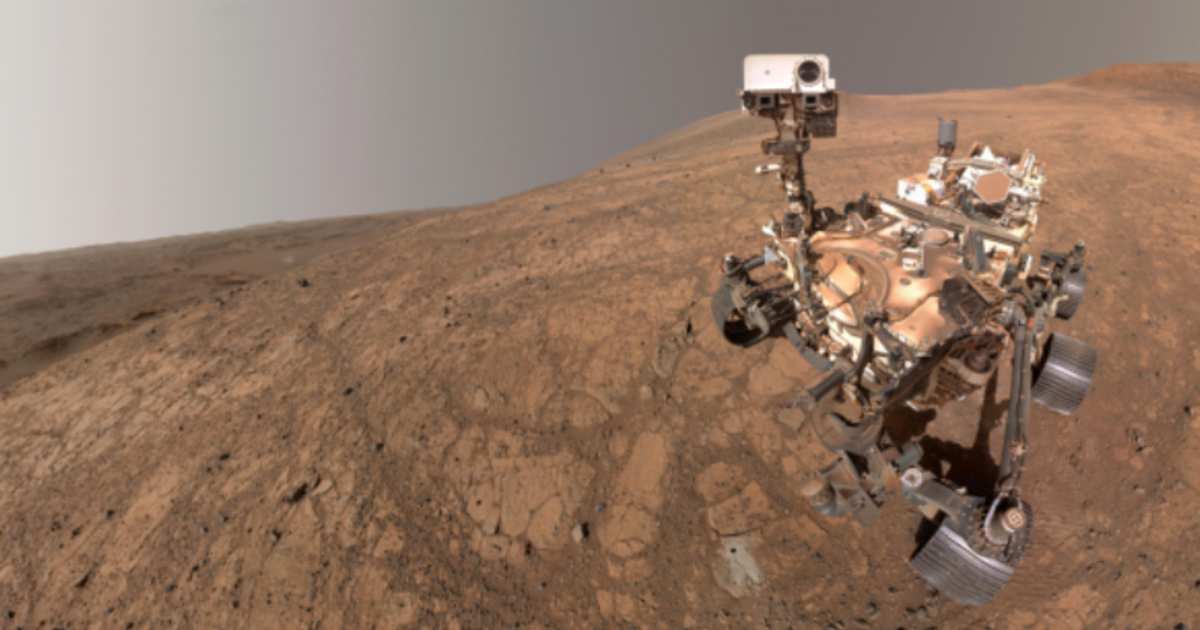
Studies conducted by researchers at the Swedish Institute of Space Physics (IRF) and Umeå University offered new perspectives on how solar wind dynamics affect the planet’s atmosphere and magnetic field, with implications for atmospheric loss on Mars, as per Daily Galaxy. The study revealed Mars' induced magnetosphere can break down under certain solar wind conditions, potentially accelerating atmospheric loss. Mars’ atmosphere is constantly “whispering” information through these invisible waves, and by listening carefully, scientists may finally decode how the Red Planet’s strange magnetic system really works.
More on Starlust
Atypical Martian dust storm provides clues about how some of the water on the Red Planet was lost