How a citizen science project could reveal 10,000 new examples of warped spacetime
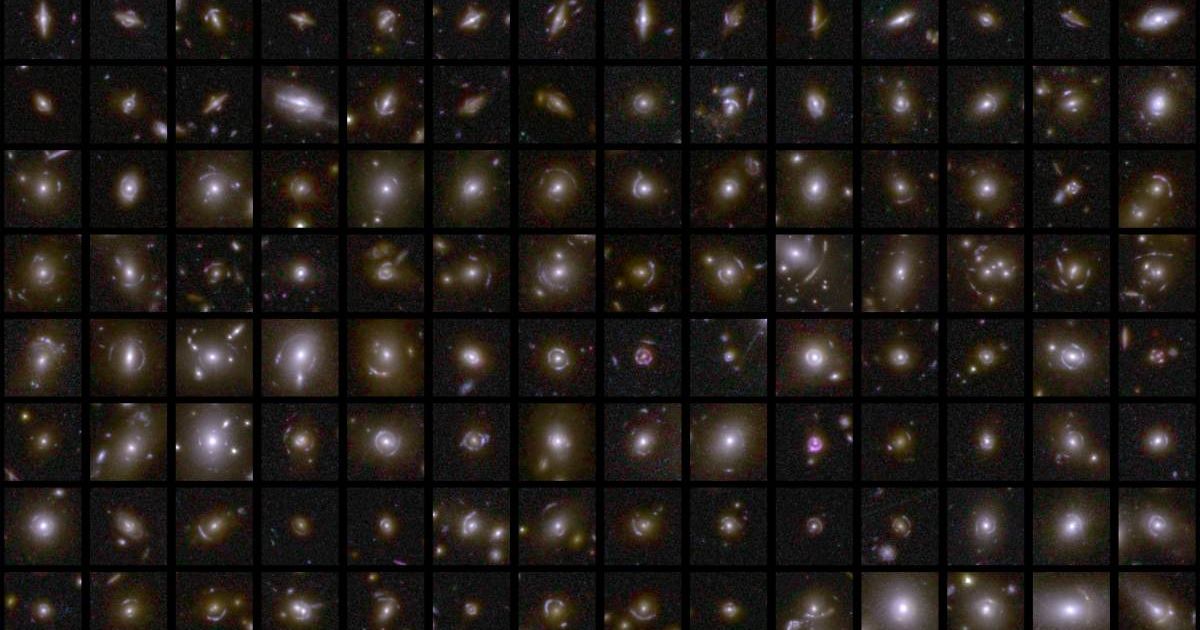
According to the European Space Agency, an ambitious new citizen science project, called Space Warps, is underway to find 10,000 new examples of warped spacetime called gravitational lensing. This search will be carried out utilizing data from ESA’s Euclid telescope, which began observations on February 14, 2024. And while the data, which will be part of Euclid Data Release 1, has not been made public yet, citizen scientists participating in the project will get early access to the new images of galaxies captured by the telescope.
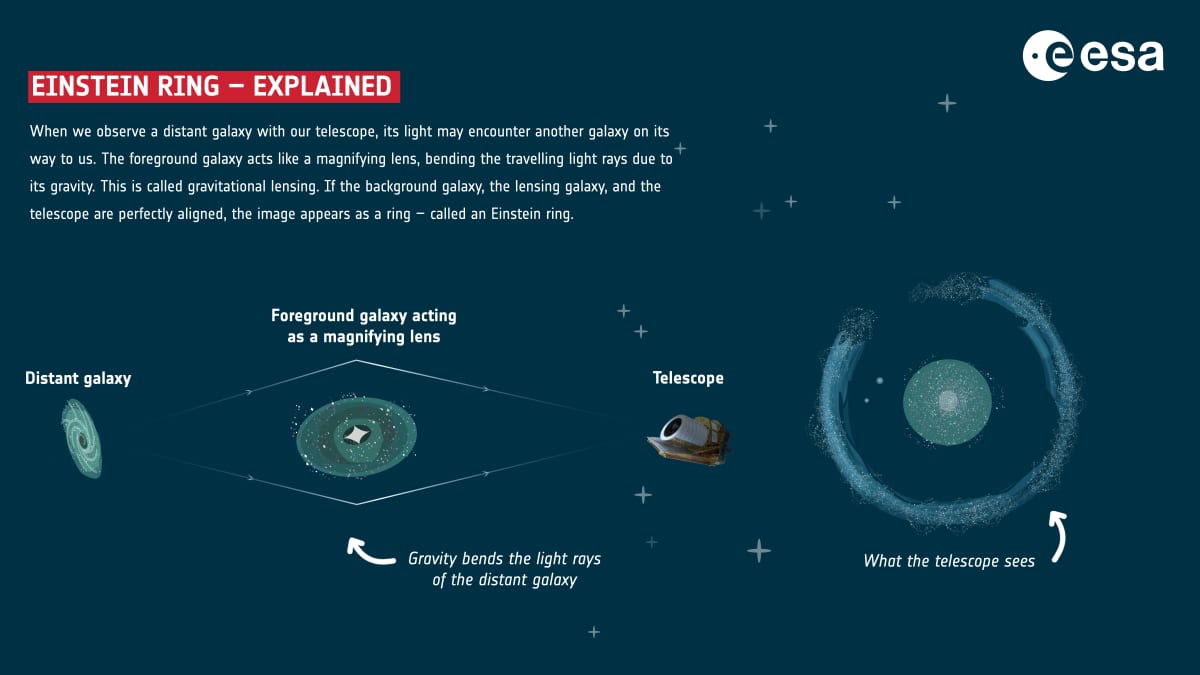
Warping of spacetime involves the immense gravity of an enormous object, such as a galaxy cluster, distorting the light coming from a background source, causing it to curve, produce multiple images, or even a complete ring referred to as an "Einstein ring." As the foreground object warps spacetime, it essentially acts as a magnifying glass for what lies behind it. The study of strong gravitational lensing has been boosted by Euclid's ability to provide sensitive imaging over large areas of the sky with unprecedented detail. While the first discovery of a gravitational lens occurred nearly 50 years ago, the single project is expected to find four times more lenses than the number of gravitational lenses identified in all of the decades since.
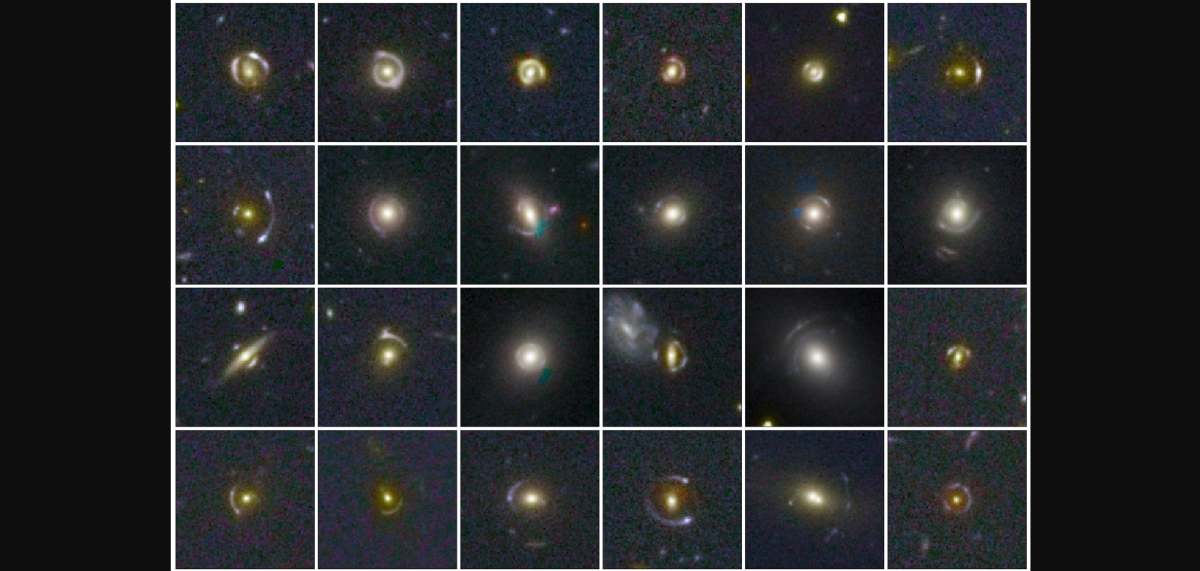
As many as 500 galaxy-galaxy strong lenses were found in March 2025 in just the first 0.04% of Euclid data. Now, the project is moving to a much larger data set, using artificial intelligence to pre-select the 300,000 highest-ranked candidates from a pool of 72 million galaxies. “In this brand new DR1 data, 30 times larger than the initial search and together with our improved AI algorithms, we are expecting to find more than 10,000 high-quality lens candidates," said Aprajita Verma, the co-founder of Space Warps and project lead at the University of Oxford, UK.
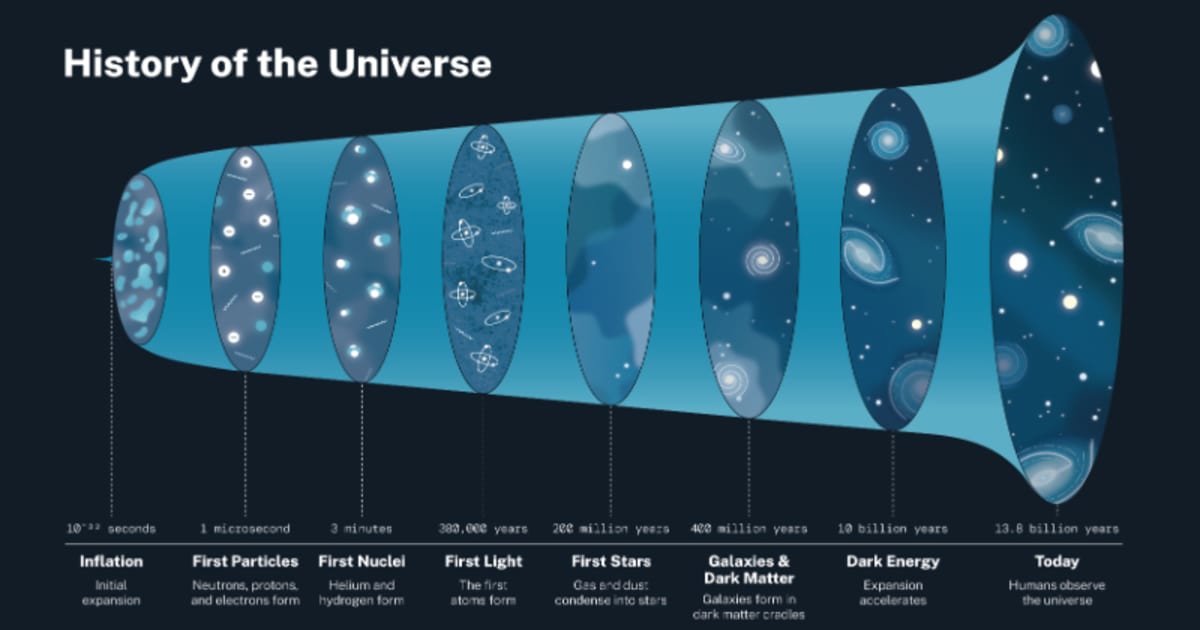
With the Euclid telescope sending approximately a hundred gigabytes of data to Earth every single day, scouring through such a large dataset requires a massive collaborative effort to inspect the most promising lens candidates. By identifying these lenses, citizen scientists can help researchers “weigh” individual galaxies, as well as galaxy clusters. This process allows scientists to trace the distribution of both light and dark matter, which in turn will provide essential clues about the expansion of the universe and its apparent acceleration. Euclid primarily uses methods like weak lensing and baryonic acoustic oscillations to explore these mysteries.
Moreover, the combination of citizen scientists and automated systems is a duo that has been tried and tested. “We’ve already seen the success of combining AI with visual inspection by citizen volunteers and scientists on Space Warps, efficiently finding hundreds of high‑probability lens candidates in an initial small Euclid search in 2024," explained Verma. Methods employed by the Space Warps project combined with future missions like the Nancy Grace Roman Space Telescope by NASA are expected to allow scientists to map the expansion and structure of the universe with a level of precision that was previously impossible.
More on Starlust
Clumps of apparently 'collisionless' dark matter may explain certain cosmic puzzles
NASA's James Webb Telescope captures stunning image of warped 'Butterfly Star' 525 light-years away