Comet R3 PanSTARRS to make closest approach to Sun and Earth this week—all you need to know
April skies light up as a comet with bright tail and rare visibility reaches perihelion.
PUBLISHED 2 HOURS AGO
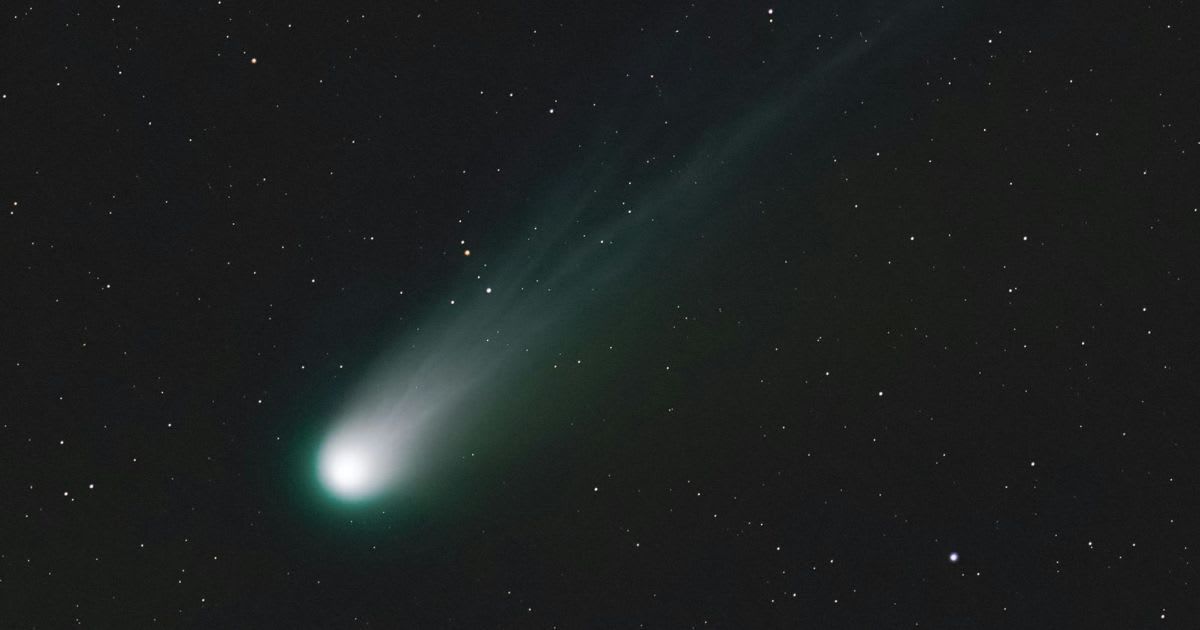
A bright comet with a glowing head and long tail streaking across a star-filled night sky. (Representative Cover Image Source: Pexels / Scott Lord)

Comet C/2025 R3 Pan-STARRS is passing perihelion on April 19 i.e. making its closest approach to the Sun. Following this, the comet will have its closest approach to the Earth, within 44 million miles of the planet, on April 27, according to NASA. The Pan-STARRS sky survey in Hawaii discovered the comet back on September 8, 2025, and is currently exhibiting a 170,000-year orbit inbound. The comet is expected to have originated from the Oort cloud, a thick bubble around the edges of our Solar System.
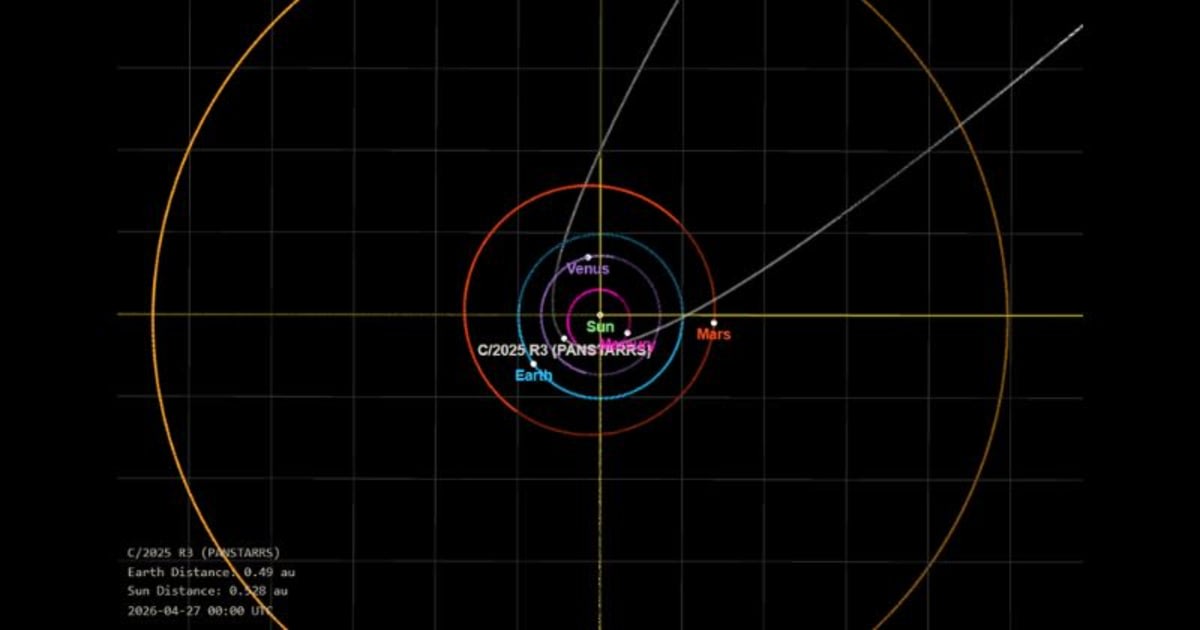
The predicted orbital path of Comet C/2025 R3 (PanSTARRS) through the inner solar system at the time of perihelion. (Image Source: NASA's JPL Small-Body Database Lookup)

R3 Pan-STARRS is expected to be heading towards the Earth's general direction along our line of sight before it reaches perihelion, narrowly avoiding Mercury’s orbit. After that, the comet is expected to loop back out of the solar system, drifting away from Earth. While observing the comet closely, a needle-thin dust tail could be spotted, as seen in this picture. The tail also shows traces of a green-glowing coma, coupled with cyanogen gas. This was one of the biggest reasons why this particular comet had better visibility in the night sky.
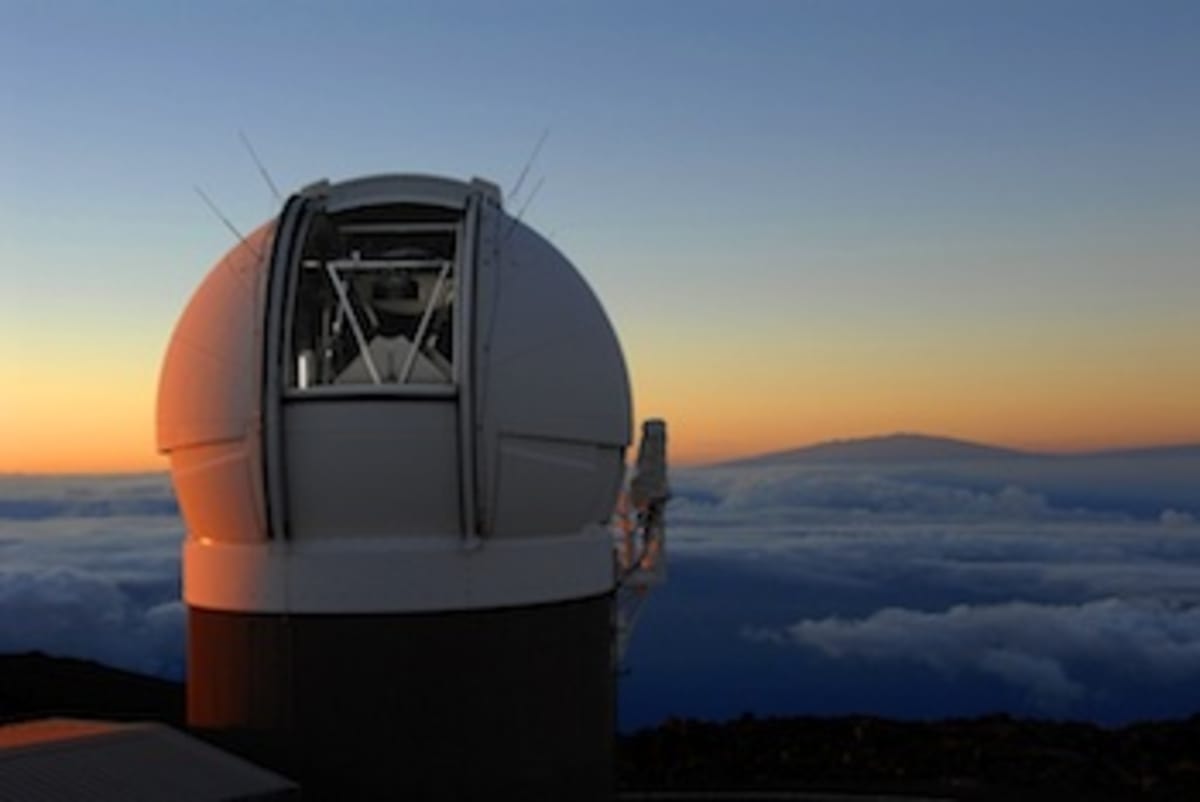
Pan-STARRS is the largest single research project at the Institute for Astronomy (Image Source: Institute of Astronomy)
Pan-STARRS is the largest single research project at the Institute for Astronomy (Representative Image Source: Institute of Astronomy)

Due to its dust tail, the comet will follow an unusual trajectory. For the uninitiated, a dust tail is swept back from the coma by the solar wind. Thus, Comet R3 Pan-STARRS’ tail will lead the way, surging ahead of the comet following its trip to perihelion. These aspects sure make the object an exciting sight for stargazers. After all, when the comet was spotted near the dormant Haleakala volcano summit on the island of Maui last year, scientists had little idea it would turn out to be such a phenomenon.
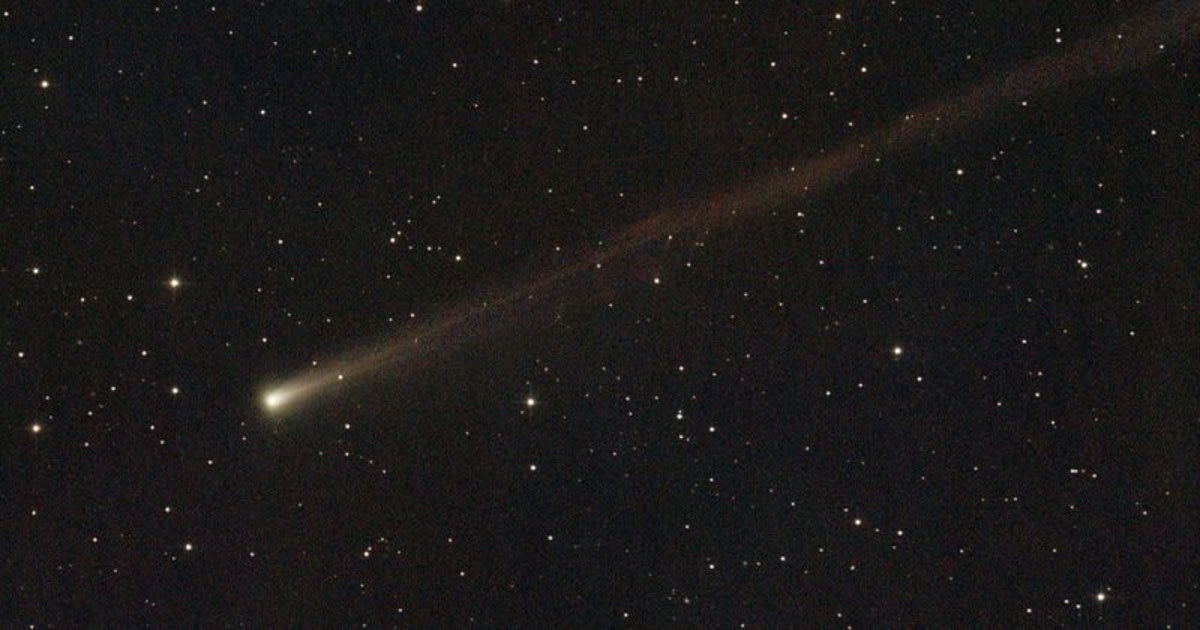
Comet C/2025 K1 (ATLAS) survives perihelion, showing a rare orange ion tail. This image, taken Oct. 29, 2025 (02:15 UTC), reveals a bright coma and a thin tail over a degree long. (Image source: Dimitrios Katevainis, CC BY-SA 4.0)
Comet C/2025 K1 (ATLAS) survives perihelion, showing a rare orange ion tail. This image, taken Oct. 29, 2025 (02:15 UTC), reveals a bright coma and a thin tail over a degree long. (Representative Image source: Dimitrios Katevainis, CC BY-SA 4.0)

According to the Comet Observation Database (data from April 18), the Pan-STARRS comet flaunted an impressive magnitude of +4.3. This is why it can be spotted right away in the night sky without the need for viewing equipment. Astronomers use magnitude as a measure to assess the brightness of an object in the sky. As a rule of thumb, an average human eye can spot objects with magnitudes as high as +6.5.
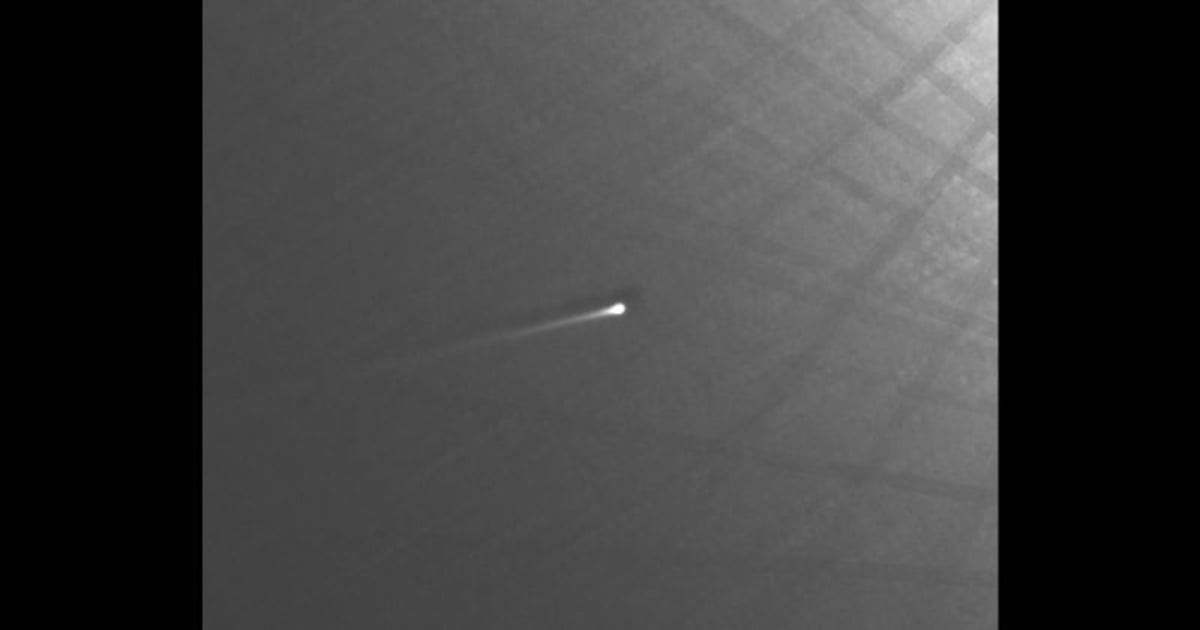
NASA’s PUNCH mission captured this view of comet MAPS on April 1, before the comet’s fateful approach to the Sun. This image is a composite of multiple images taken by PUNCH on April 1. (Image Source: NASA/PUNCH/SwRI)
NASA’s PUNCH mission captured this view of comet MAPS on April 1, before the comet’s fateful approach to the Sun. This image is a composite of multiple images taken by PUNCH on April 1. (Representative Image Source: NASA/PUNCH/SwRI)

For the ones in the Northern Hemisphere, April 13 to April 15 was arguably the best opportunity to catch the bright wanderer in the sky. Appearing near the constellation Pegasus, the comet was best visible above the eastern horizon. Next up, viewing conditions are expected to improve, following April 17’s New Moon as the comet reaches perihelion. However, by April 27, while the comet will be at its peak brightness, the sun’s glaring rays will make visibility next to impossible. Just recently, Kreutz sungrazing comet C/2026 A1 (MAPS) also made headlines as it plunged toward the Sun and disintegrated. 

More on Starlust:

Counting the comets: 2025’s discovery tally so far

Comet 29P/Schwassmann-Wachmann brightens 100-fold after eruption, releases fossil-like debris
MORE STORIES

Scientists predict wave behavior using factors like gravity, atmosphere and liquid composition.
2 hours ago
Parker Solar Probe has uncovered new details about how magnetic reconnection on the Sun flings charged particles at insane speeds.
1 day ago
Maintaining liquid surface water is one of the preconditions that a planet has to meet in order to support life as we know it.
1 day ago
SOHO, STEREO, and PUNCH show different perspectives of the Kreutz sungrazing comet’s dramatic end.
1 day ago
A study finds atmospheric waves alter electron content, helping scientists map the hidden magnetic fields on Mars.
1 day ago
Scientists propose a new method to find alien life by studying planetary patterns, moving beyond traditional biosignature searches.
2 days ago
A supermassive black hole feeding on a star is accompanied by intense radiation that can briefly outshine the galaxy where the event is taking place.
2 days ago
About 4.5 billion years ago, a Mars-sized object, named Theia, slammed into a proto-Earth to create the Moon.
2 days ago
NASA’s Chandra study hints Sun’s early X-ray drop may have helped Earth become habitable.
3 days ago
Scientists have long been puzzled by the haze that hangs low above Venus' surface.
3 days ago