SpaceX's Starship Super Heavy V3 fires all 33 engines for the first time—Flight 12 now closer than ever
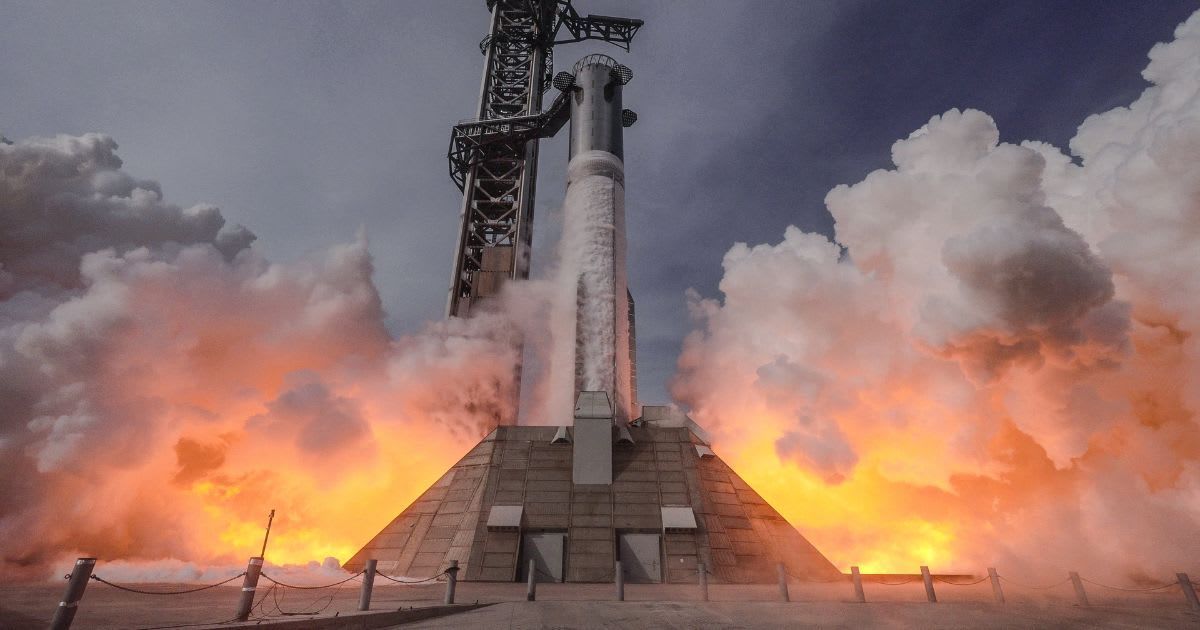
On Wednesday, April 15, SpaceX announced the completion of the first-ever 33-engine static fire test of its V3 Super Heavy booster. With this major step cleared, Starship flight 12 is closer than ever, with the next-generation vehicle expected to take its first flight as early as May.
First 33-engine static fire for Super Heavy V3 pic.twitter.com/m3swZHF7iQ
— SpaceX (@SpaceX) April 16, 2026
During the test at Starbase’s Pad 2 in Texas, Booster 19 ignited all 33 Raptor 3 engines for a brief, aggressive-looking burn that released massive plumes. An initial activation campaign for the Super Heavy booster involving the ignition of only 10 Raptor 3 engines was carried out in March. And while all the engines had seen successful startup during the test, the static fire had ended early due to a ground-side issue. The month of March also saw Starship's upper stage, Ship 39, undergo cryoproof operations. More recently, on April 14, the upper stage also went through its first full-duration static fire test, the Elon Musk-led company said.
Full-duration static fire for the first time on Starship V3 pic.twitter.com/Q1HZIX53HB
— SpaceX (@SpaceX) April 15, 2026
The aerospace giant aims to get the next-gen rocket fully prepared in time for NASA’s Artemis III, which is scheduled to take off in mid-2027 under the program's revised roadmap. On the mission, astronauts will test docking the Orion capsule with lunar landers—either the Starship HLS or Blue Origin's Blue Moon or even both in low-Earth orbit, depending on hardware readiness. Going forward, Artemis IV and V will also use the contracted vehicles to take humans to the surface of the Moon.
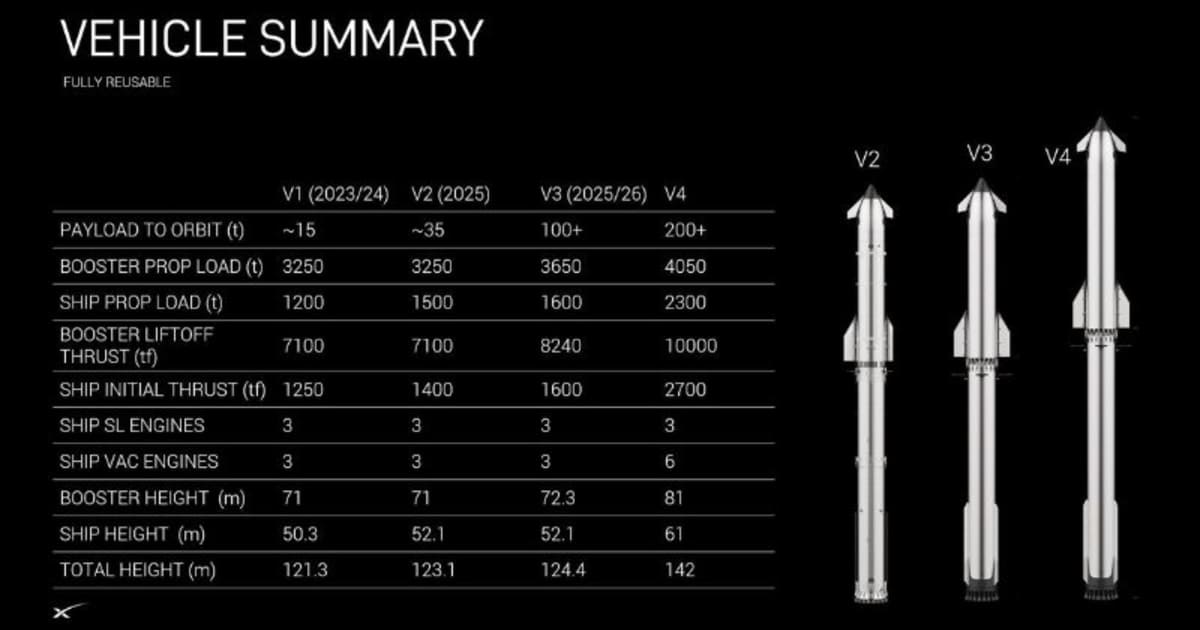
Standing 408.1 feet (124.4 meters) tall, SpaceX’s next-gen Starship V3 is the vehicle’s most advanced version, thanks to its new Raptor engines. It can carry a payload of more than 100 tons to low Earth orbit, which is a significant jump from V2’s capacity of about 35 tons. These features are what make Starship the poster boy for SpaceX's goal of "making life multiplanetary."
More on Starlust
SpaceX launches Transporter-16 rideshare mission, putting 119 payloads in low Earth orbit
How is Artemis II SLS rocket different from Apollo era's Saturn V and SpaceX's Starship?