SpaceX launches 25 Starlink satellites into low-Earth orbit aboard its Falcon 9 rocket
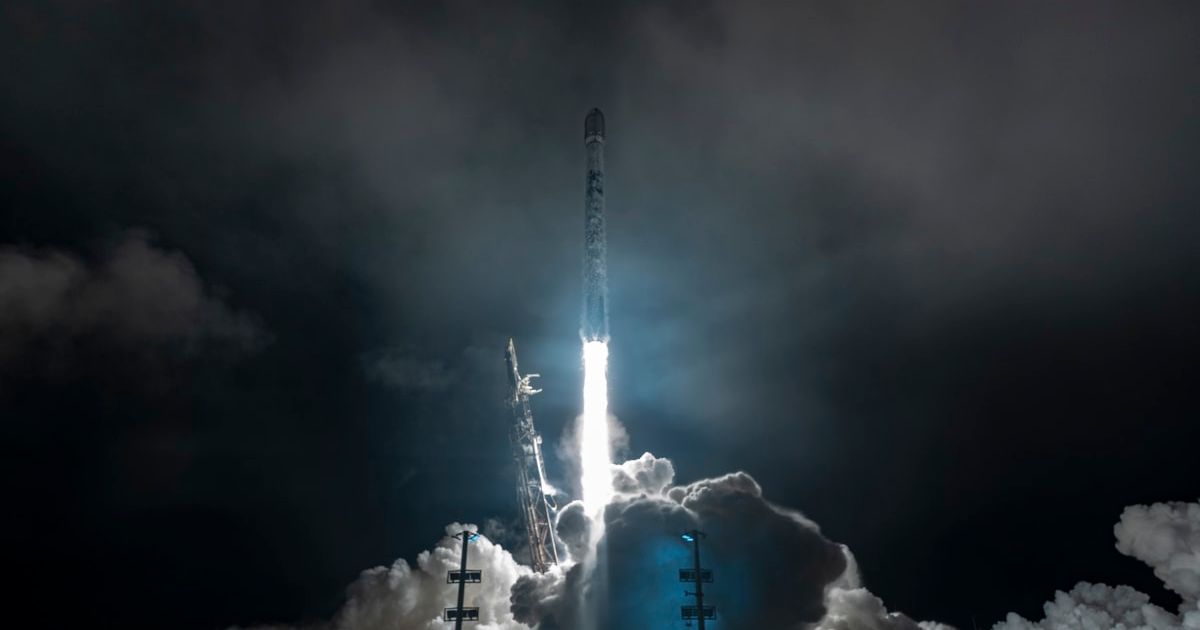
SpaceX shows no signs of slowing down in 2026, as a Falcon 9 rocket successfully carried a batch of 25 Starlink satellites into low-Earth orbit on January 21, 2026. The mission designated Starlink 17-30 launched from the Space Launch Complex 4 East (SLC-4E) at the Vandenberg Space Force Base in California. The satellites were yet another addition to the firm’s megaconstellation in space and marked its sixth Starlink mission in 2026.
Falcon 9 launches 25 @Starlink satellites from California pic.twitter.com/Vs89VYvUqy
— SpaceX (@SpaceX) January 22, 2026
The Falcon 9 lifted off at 9:47 p.m. PST, and just over 8 minutes after liftoff, the first-stage booster, with the tail number 1093, successfully returned to Earth. This was its 10th flight, after previously launching SDA T1TL-B, SDA T1TL-C, and seven Starlink missions. The first-stage booster performed a precise vertical landing on the droneship Of Course I Still Love You, stationed in the Pacific Ocean, according to SpaceX. This was the 172nd landing on this vessel and the 562nd orbital booster landing for SpaceX, per Spaceflight Now.
Falcon 9 launches 25 @Starlink satellites from California pic.twitter.com/Vs89VYvUqy
— SpaceX (@SpaceX) January 22, 2026
The recovery of this stage is the highlight of SpaceX missions that promote reusability to lower the cost of accessing space. As for the satellites, they were successfully deployed in their intended orbit 1 hour, 2 minutes, and 8 seconds after liftoff. Upon launching from the pad, the rocket was observed to be on a southerly trajectory. SpaceX conceded that people living in Santa Barbara, San Luis Obispo, and Ventura counties may have heard a sonic boom or two during the launch because of their proximity to the site. However, their experience was largely contingent upon the weather conditions and other factors. A live stream of the launch, which began 5 minutes prior to liftoff, was available on the SpaceX website, on X@SpaceX, and could be webcast on the X TV app as usual.
Watch Falcon 9 launch 25 @Starlink satellites to orbit from California https://t.co/5Ld9qG3Mhh
— SpaceX (@SpaceX) January 22, 2026
The mission was part of a rather busy stretch of launches set to take place in California, with quite a few SpaceX launches scheduled over the next few weeks. The first is scheduled for as early as January 25 and will see a Falcon 9 rocket deploy another 25 Starlink satellites into low-Earth orbit. January 29 will also see a batch of 25 Starlink satellites lift off, while another launch scheduled for February 2 will have 24 more sent to orbit.
More on Starlust
NASA’s SpaceX Crew-11 astronauts come home as Dragon achieves safe splashdown
When is SpaceX's next Starship test flight? Everything you need to know