Falcon 9 to launch more Starlink satellites as SpaceX builds on two successful missions this year
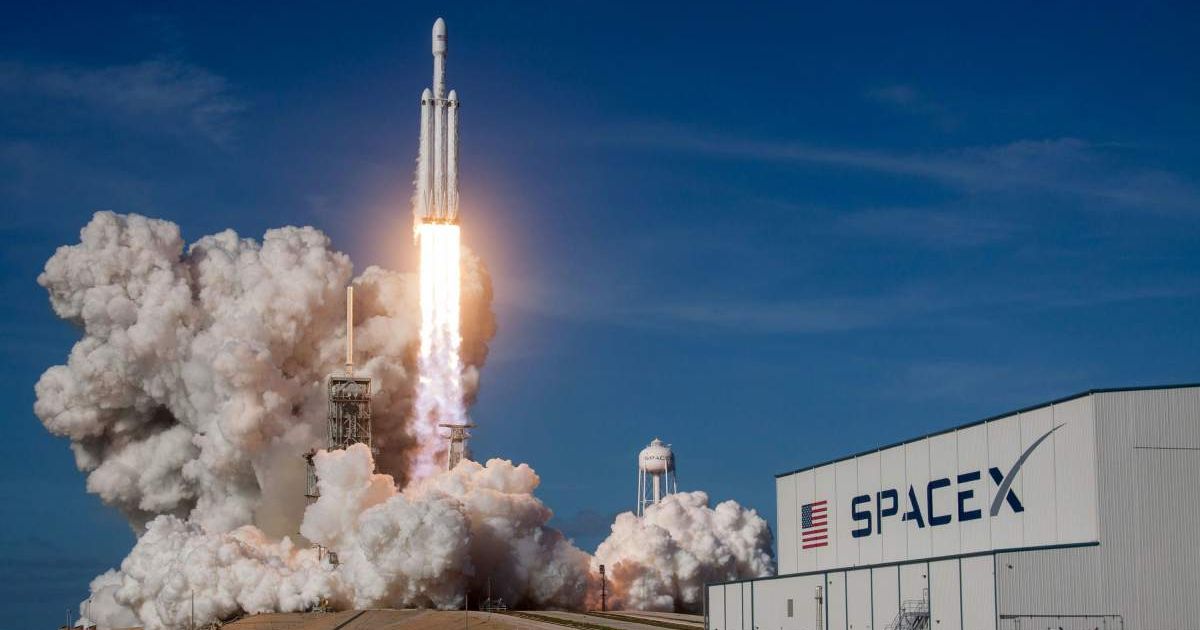
The mission will see 29 more Starlink satellites deployed in low-Earth orbit.
A picture of SpaceX's Falcon heavy demo mission. (Cover Image Source: Unsplash | SpaceX)

SpaceX is preparing to launch another batch of Starlink satellites as its Falcon 9 rocket stands ready at Space Launch Complex 40 (SLC-40) at Cape Canaveral Space Force Station in Florida. The mission is scheduled for the evening of January 8, 2026, and will see the launch of 29 Starlink satellites into low-Earth orbit, continuing the company's steady launch cadence early this year.  According to SpaceX, the launch is targeting a window that opens at 3:29 PM EST and closes at 7:29 PM EST on January 8.
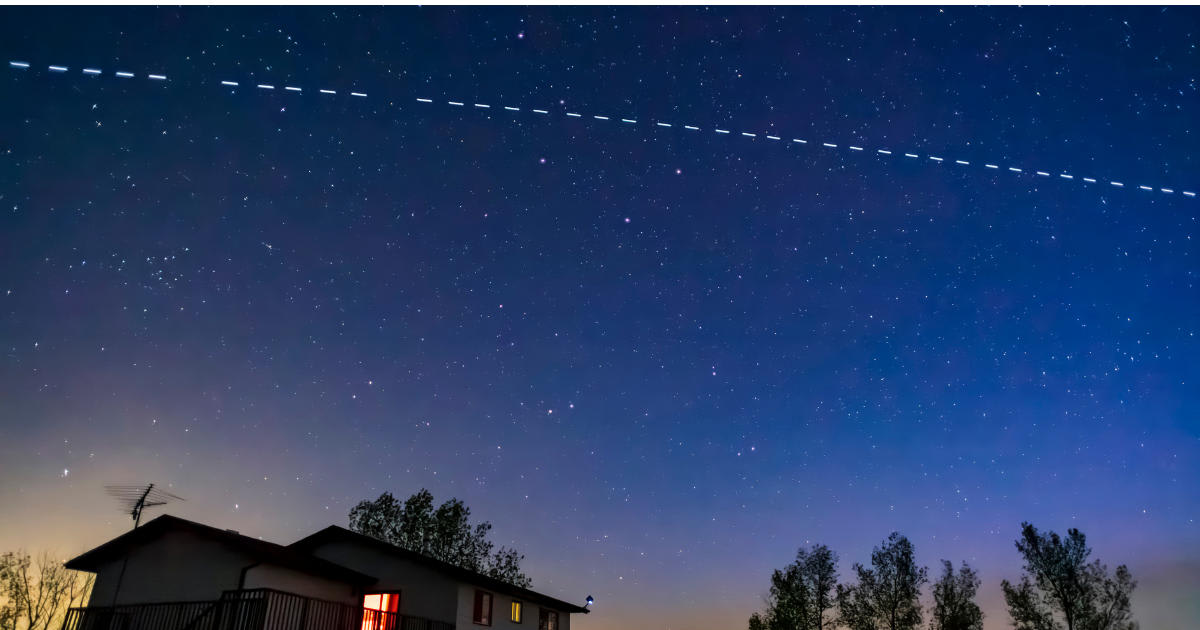
An image of the SpaceX G2-9 Starlink group with the satellite chain after five days of launch from Vandenburgh Air Force Base in California. This is looking northwest toward the Big Dipper at top. The satellite train is traveling from left to right here, from southwest to north (Cover Image Source: Getty Images | Alan Dyer/Stocktrek Images)
An image of the SpaceX G2-9 Starlink group with the satellite chain after five days of launch from Vandenburgh Air Force Base in California. This is looking northwest toward the Big Dipper at top. The satellite train is traveling from left to right here, from southwest to north (Representative Image Source: Getty Images | Alan Dyer/Stocktrek Images)

A live webcast of the mission will begin approximately five minutes before liftoff on SpaceX's website and via @SpaceX on X. This mission also marks another milestone for the Falcon 9 reuse program. The first-stage booster assigned to this flight will be flying for the 29th time, showing SpaceX's commitment to rapid reusability. The booster has previously supported missions including the CRS-24, Eutelsat HOTBIRD 13F, OneWeb 1, SES-18, and SES-19.
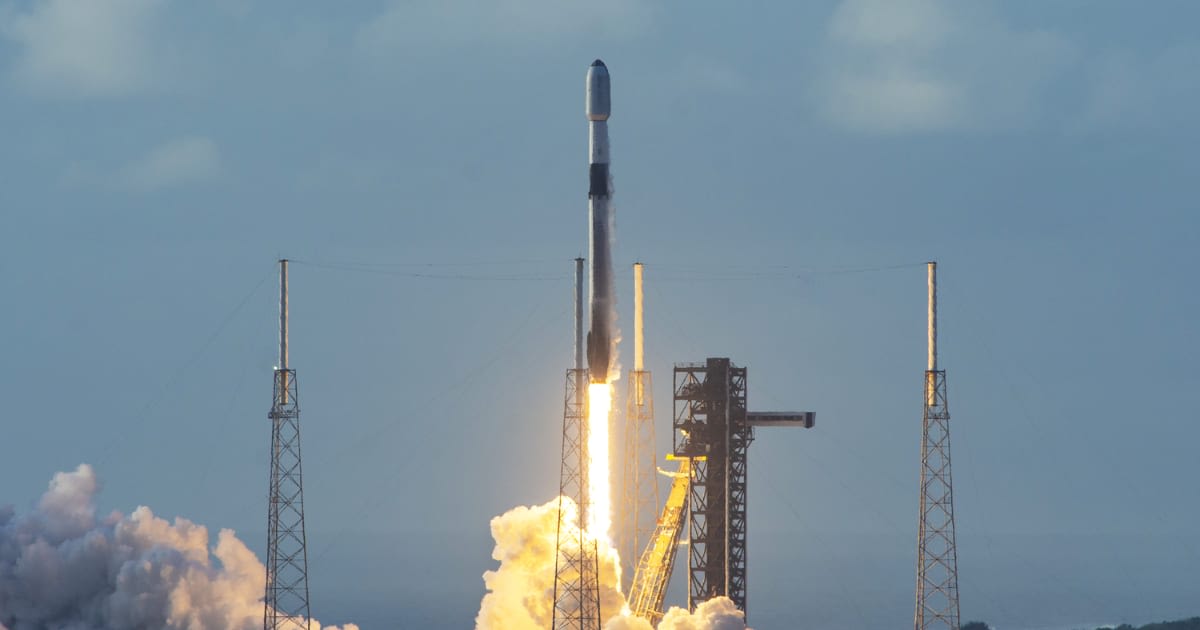
Falcon 9 launching 28 Starlink satellites from Florida on September 3, 2025. (Representative Cover Image Source: X| SpaceX)
Falcon 9 launching 28 Starlink satellites from Florida on September 3, 2025. (Representative Image Source: X| SpaceX

The deployment of the 29 Starlink satellites is expected to take approximately 1 hour, 4 minutes, and 58 seconds after the launch, marking the successful completion of the primary mission objective. This mission closely follows on the heels of the previous Starlink Group 6-88 launch, which was carried out on January 4, 2026, at approximately 1:48 AM EST. SpaceX says on that mission, Falcon 9 deployed 29 Starlink satellites into their intended low-Earth orbit, further enhancing SpaceX's Starlink network that delivers high-speed internet across the globe. 

SpaceX launches Falcon 9 Fram2 Mission, from Launch Complex 39A of NASA's Kennedy Space Center on March 31, 2025 in Titusville, Florida. (Photo by Miguel J. Rodriguez Carrillo/Getty Images)
SpaceX launches Falcon 9 Fram2 Mission, from Launch Complex 39A of NASA's Kennedy Space Center on March 31, 2025, in Titusville, Florida. (Representative Image Credit: Miguel J. Rodriguez Carrillo/Getty Images)

The mission preceding the Group 6-88 was not a part of the Starlink constellation but was equally significant. On January 2, 2026, at 9:09 PM EST, SpaceX successfully launched the COSMO-SkyMed Second Generation FM 3 from Vandenberg Space Force Base in California. Per SpaceX, on this mission, a Falcon 9 rocket carried the Italian Earth-observing satellite to low-Earth orbit for the Italian Space Agency and the Italian Ministry of Defense
An illustration of a COSMO-SkyMED Second Generation satellite above Earth (Representative Image Source: ESA)

The ESA states that this satellite is equipped with a synthetic aperture radar designed to collect critical data across multiple applications, including emergency management, environmental monitoring, defense, and agriculture. "CSG represents a step ahead to bring the best advantages of the space observation to the largest number of people, to improve the integrity of the environment, quality of life, safety and security," the ESA explains. 

A SpaceX Starlink delivery, setting up communication anywhere, even in wilderness spots (Representative Photo by AdrianHancu / Getty Images)

Meanwhile, two more Starlink missions are lined up from Space Launch Complex 40 (SLC-40) in Florida, both using Falcon 9 rockets and targeting booster landings on a droneship stationed in the Atlantic Ocean. The first launch is scheduled within a window opening at 3:34 p.m. EST on January 10, 2026, and closing at 7:34 p.m. EST the same day. This will be followed by another Starlink mission with a launch window running from 3:01 p.m. EST to 7:01 p.m. EST on January 14, 2026. The closely spaced missions underscore SpaceX’s sustained launch cadence as it continues to expand its Starlink low-Earth-orbit broadband constellation.

More on Starlust

The Artemis II crew: All about the people powering NASA’s return to the Moon

China launches twin satellites to test detection technology in space
MORE STORIES

“Fusion doesn’t want to work in an atmosphere. Space is a far more logical, sensible place to do fusion, because that’s where it wants to happen anyway.”
5 hours ago
The 26 satellites were released by the upper stage Ship 41 when it reached space for the first time.
17 hours ago
This annual event which runs till October 10 focuses on educating people on space via various programmes held across the world.
19 hours ago
The crew is now completing a mission filled with research that could help shape future space missions.
1 day ago
This breakthrough may help astronauts prepare food without having to bring their meals on long term missions.
2 days ago
With NROL-97, SpaceX has completed three high-stakes missions within a span of 13 hours.
2 days ago
At 7 hours and 55 minutes, this trip to the station was the fastest ever experienced by astronauts on an American spacecraft.
2 days ago
SpaceX's second launch of the day carried 130 payloads to orbit, including a Google AI pathfinder.
3 days ago
The next milestone is docking with the ISS at 7:00 p.m. EDT, with the crew expected to enter the station at 8:45 p.m. EDT.
3 days ago
The three liftoffs scheduled today can be watched live. Here's when and where to watch them.
3 days ago