Scientists surprised to learn ghostly particles inside collapsing star may hold the key to black hole formation
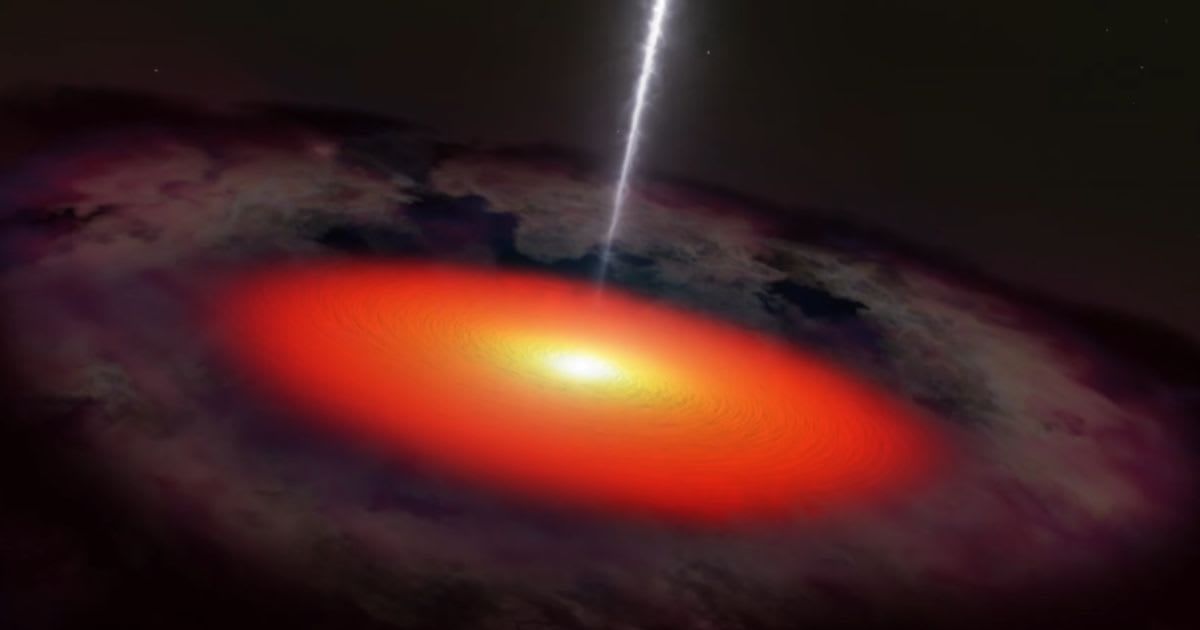
New theoretical research suggests that the elusive "ghost particles" known as neutrinos, often considered negligible, may play a surprisingly critical role in determining the ultimate fate of collapsing stars: whether they become neutron stars or the even more enigmatic black holes. This unexpected finding, published June 18, 2025, in Physical Review Letters, challenges long-held assumptions about these cosmic entities, per UC San Diego.
Traditionally, neutrinos, elementary particles existing in electron, muon, and tau "flavors" are known for their incredibly weak interactions, making them notoriously difficult to study. Their propensity to slip through matter has made it nearly impossible to observe their self-interactions in laboratory settings, leaving a significant gap in our understanding of their adherence to the Standard Model of particle physics or the existence of much-debated "secret" interactions.
However, a collaborative team from the Network for Neutrinos, Nuclear Astrophysics, and Symmetries (N3AS), including researchers from UC San Diego, has proposed a novel concept: collapsing massive stars act as natural "neutrino colliders." Their calculations reveal that as these enormous stars lose thermal energy to neutrinos, they contract dramatically, accelerating electrons to near light-speed and initiating a catastrophic collapse. Crucially, as the stellar core reaches extreme densities, neutrinos become trapped, forced into collisions with one another. The research indicates that if only Standard Model interactions are at play, the resulting neutrino population would be predominantly electron-flavored, leading to a relatively "cold" core and the likely formation of a neutron star.
Conversely, the study posits that if "secret" neutrino interactions — those that can alter neutrino flavor — occur, the outcome is drastically different. Such interactions would generate neutrinos of all flavors, resulting in a "hot" core primarily composed of neutrons. This superheated, neutron-rich environment, the scientists suggest, could be the crucial precursor to the formation of a black hole. This groundbreaking theory could be put to the test by upcoming experiments such as the Fermi National Accelerator Lab's Deep Underground Neutrino Experiment (DUNE). Future astronomical observations of neutrinos or gravitational waves emanating from collapsing stars may also provide the empirical evidence needed to confirm or refute these intriguing predications.
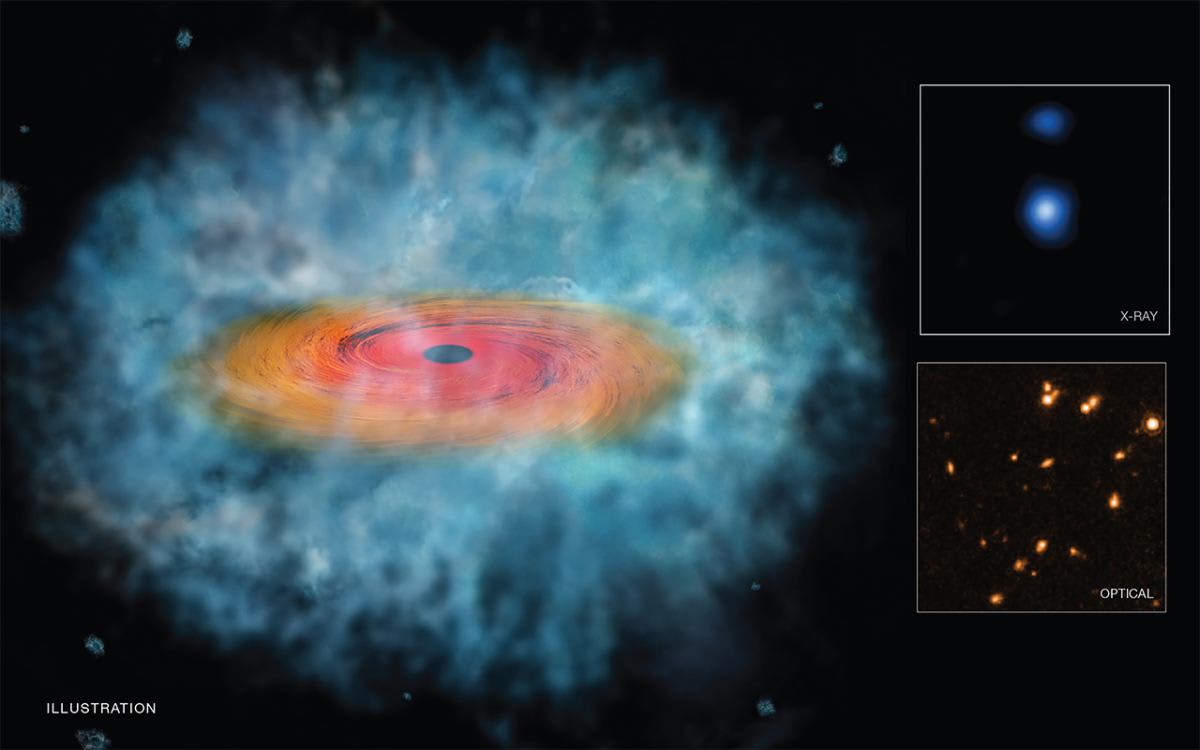
Adding another layer to the neutrino enigma, observations from the IceCube Neutrino Observatory, buried deep within the Antarctic ice, are puzzling scientists and suggesting entirely new mechanisms for neutrino production, according to UCLA. This vast detector, a cubic kilometer of ice embedded with 5,160 sensors, acts as a unique telescope, searching for signs of neutrinos as they interact with the ice and create charged particles. “We have telescopes that use light to look at stars, but many of these astrophysical systems also emit neutrinos,” explains Alexander Kusenko, professor of physics and astronomy at UCLA and a senior fellow at Kavli IPMU. “To see neutrinos, we need a different type of telescope, and that’s the telescope we have at the South Pole."
IceCube has detected a remarkably strong neutrino signal originating from the galaxy NGC 1068, also known as the Squid Galaxy. What makes this observation perplexing is the accompanying, surprisingly weak gamma-ray emission. Typically, energetic neutrinos from active galactic centers are thought to arise from interactions between protons and photons, a process that should simultaneously produce gamma rays of comparable intensity. Theoretical physicists from UCLA, the University of Osaka, and the University of Tokyo's Kavli Institute for the Physics and Mathematics of the Universe (Kavli IPMU, WPI) are now using these puzzling observations to propose a completely new route for neutrino generation.