Telescopes in Chile make historic detection of earliest cosmic light — revealing the Universe's 'Cosmic Dawn'

Astronomers are gaining unprecedented insights into the Universe's "Cosmic Dawn," the era when the first stars and galaxies formed roughly a billion years after the Big Bang. While space-based observatories like the Hubble Space Telescope (HST) and the James Webb Space Telescope (JWST) have been instrumental in this research, new advancements are allowing ground-based telescopes to push the boundaries of cosmic observation, per Universe Today.
Webb observed these little green galaxies in Pandora’s Cluster. Were they the cause of a massive cosmic makeover?
— NASA Webb Telescope (@NASAWebb) June 12, 2025
In the universe’s first billion years, it was immersed in a fog of neutral hydrogen gas. Today, this gas is ionized (stripped of its electrons). Which cosmic objects… pic.twitter.com/5DJ8NjxlIn
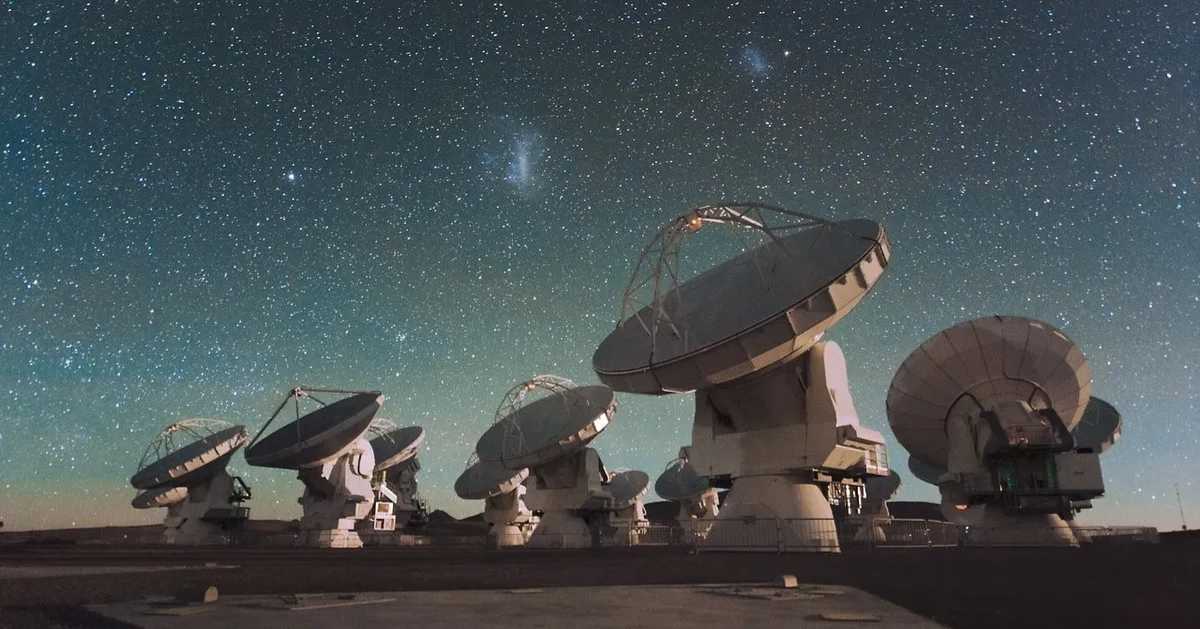
Traditionally, Earth's atmosphere has limited ground-based telescopes from observing such distant and faint phenomena. However, sophisticated technologies like adaptive optics and interferometry are enabling these instruments to overcome atmospheric interference. In a recent breakthrough, an international team utilizing the Cosmology Large Angular Scale Surveyor (CLASS) announced a historic achievement: the first-ever detection of radiation from the cosmic microwave background (CMB) interacting with the Universe's earliest stars. This groundbreaking discovery offers crucial new data on one of the most mysterious periods in cosmological history, providing valuable clues about the formation and evolution of large-scale structures in the Universe.

The study, recently published in the Astrophysical Journal, was spearheaded by Yunyang Li, an observational cosmologist affiliated with both the Kavli Institute for Cosmological Physics and the William H. Miller III Department of Physics and Astronomy at Johns Hopkins University (JHU). Li collaborated with a diverse team of astrophysicists from JHU, the National Institute of Standards and Technology, the Argonne National Laboratory, the Los Alamos National Laboratory, the Harvard-Smithsonian Center for Astrophysics, the Massachusetts Institute of Technology (MIT), the NASA Goddard Space Flight Center, and various other esteemed universities.
The world’s most powerful space telescope has done it again.
— NASA Webb Telescope (@NASAWebb) May 30, 2024
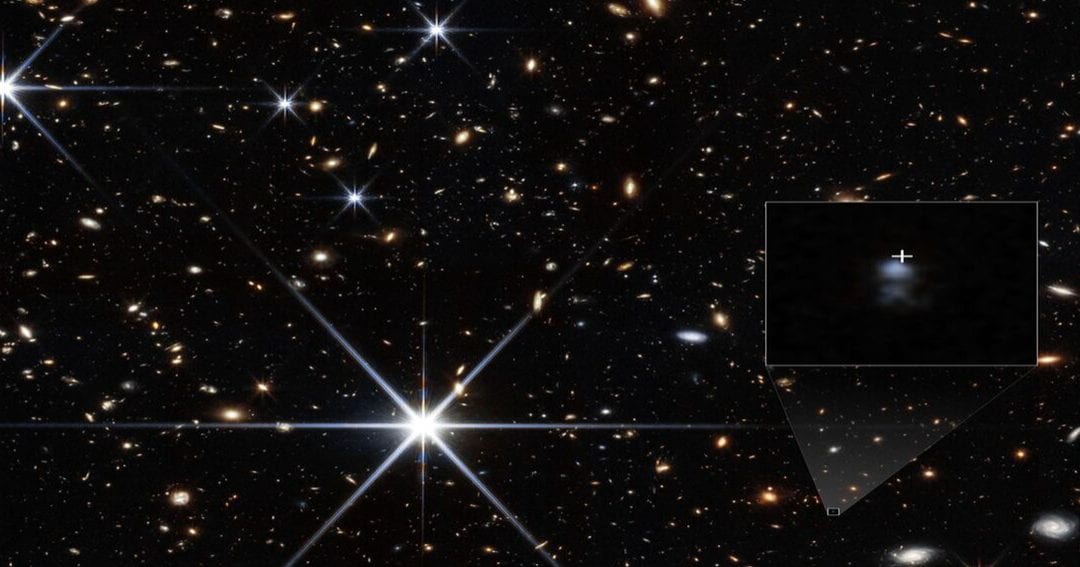
Webb has discovered what appears to be a new record-holder for the most distant known galaxy — shattering its own previous record. This galaxy existed only 290 million years after the big bang: https://t.co/6JN3L2CvRG pic.twitter.com/pbshZ2H0GC
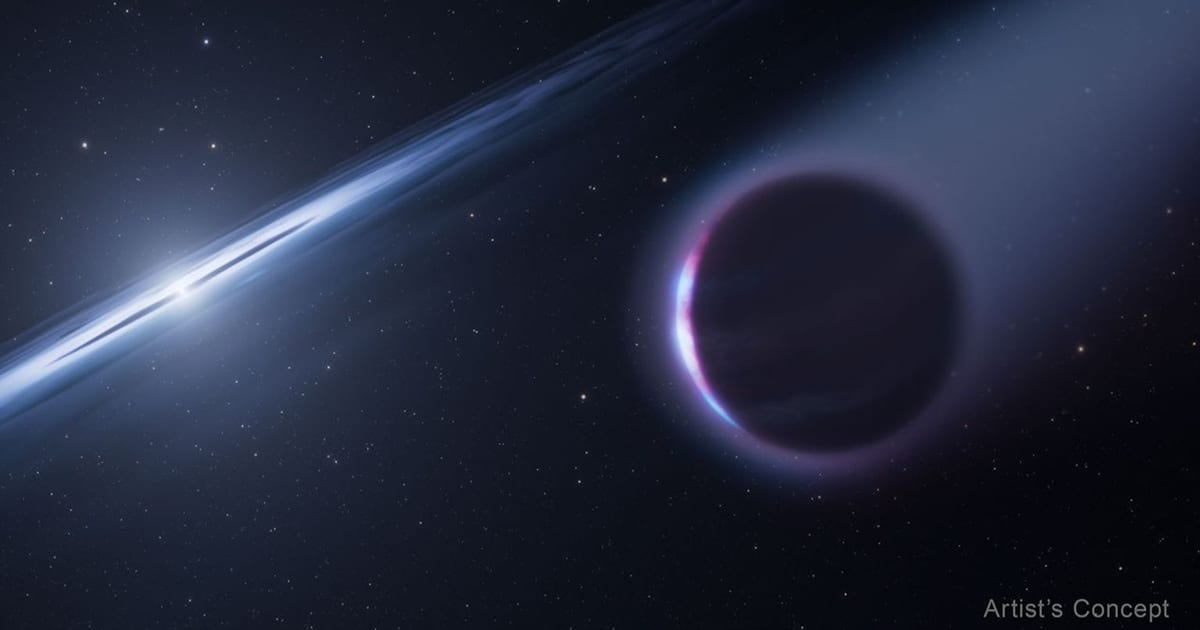
Investigating the "Cosmic Dawn" epoch has long presented a formidable challenge for astronomers, regardless of the instrumentation used. This period is the Universe's early history, which was characterized by a pervasive veil of neutral hydrogen. The only photons accessible to modern instruments were the cosmic microwave background (CMB), relic radiation from the Big Bang, and those emitted during the reionization of neutral hydrogen atoms. This reionization was triggered by the immense ultraviolet (UV) energy released from the very first stars that formed during Cosmic Dawn. This energetic output ionized the surrounding hydrogen clouds, releasing free electrons that subsequently scattered and collided with other particles. The pivotal event effectively marked the conclusion of the "Cosmic Dawn Ages" and rendered the Universe "transparent," allowing its light to become visible to present-day instruments.
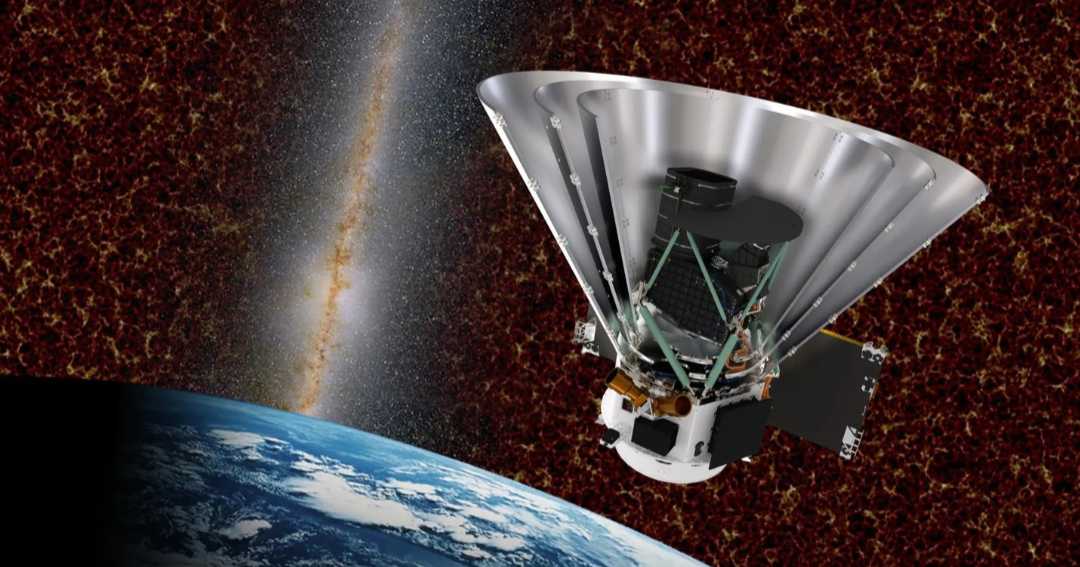
Observing the faint echoes of the "Cosmic Dawn" from Earth presents significant challenges. Cosmic microwaves, with their millimetric wavelengths, are already incredibly subtle. Polarized microwave light, which results from light scattering after interacting with another object, is a staggering million times fainter. Compounding this difficulty is the persistent interference and noise from Earth-based radio transmissions, including satellites, radar, and other microwave signals. These factors necessitate exceptionally sensitive equipment to measure polarized microwaves, even under optimal conditions. Historically, only space-based observatories like NASA's Wilkinson Microwave Anisotropy Probe (WMAP) and the European Space Agency's Planck mission were capable of detecting this elusive light, as mentioned by the outlet.
#OTD in 2001, the Wilkinson Microwave Anisotropy Probe (WMAP) headed into space to take a “baby picture” of the universe. 📸👶 By collecting the oldest light in the cosmos, WMAP helped us learn about the structure of the universe around us today. pic.twitter.com/YzDJC5xJeK
— NASA Universe (@NASAUniverse) June 30, 2021
"People thought this couldn't be done from the ground," stated Tobias Marriage, the leader of the CLASS project and a professor of physics and astronomy at JHU. "Astronomy is a technology-limited field, and microwave signals from the Cosmic Dawn are famously difficult to measure. Ground-based observations face additional challenges compared to space. Overcoming those obstacles makes this measurement a significant achievement."
From an almost perfect Universe to the best of both worlds: final data release of our @Planck mission confirms the standard model of cosmology... but with a few details to puzzle over ➡️ https://t.co/mgVkyFspH7https://t.co/ryOsjmJNOj
— European Space Agency (@esa) July 17, 2018
For their study, the research team analyzed the probability of a Big Bang photon encountering a free electron released by ionized gas, causing it to scatter off course. By cross-referencing data from the CLASS telescope with information from the Planck and WMAP space missions, the researchers were able to identify and isolate the polarized microwave light signal from other interference. "When light hits the hood of your car and you see a glare, that's polarization. To see clearly, you can put on polarized glasses to take away glare," explained Li. "Using the new common signal, we can determine how much of what we're seeing is cosmic glare from light bouncing off the hood of the Cosmic Dawn, so to speak."