Scientists finally know whether the Sun's activity alters its oxygen levels
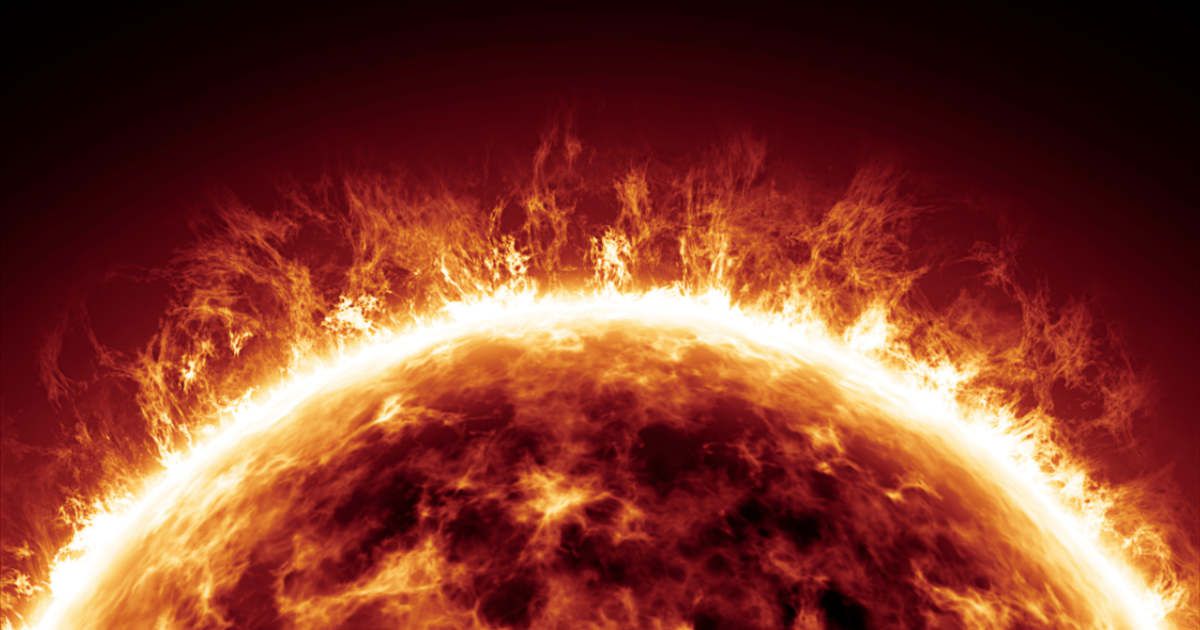
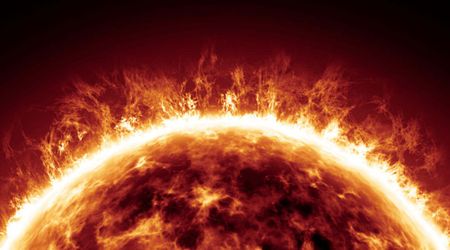
The Sun is midway through its life, pouring out radiation by fusing hydrogen into helium and oxygen’s abundance plays a role in this fusion. It shapes the overall chemical composition of the star, as well as its atmospheric structure. Now, a study, published in Astronomy & Astrophysics, has found that the oxygen abundance is changing over the 11-year solar activity cycle. “The Sun uses the oxygen as a catalyst,” says lead author Alex Pietrow at the Leibniz Institute for Astrophysics Potsdam in Germany in an exclusive interview with Starlust.org. “So, knowledge of its abundance will help us understand the evolutionary history of the Sun as well as other stars.”
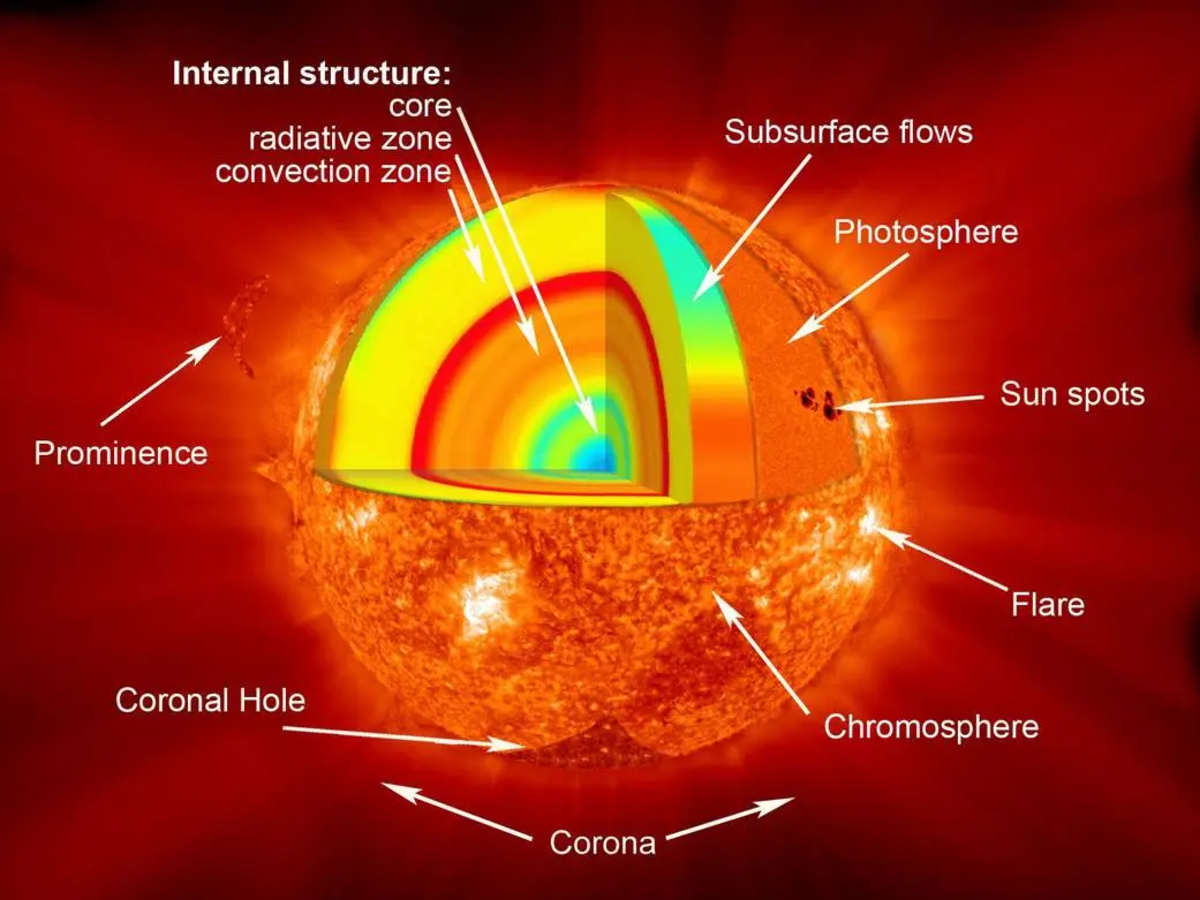
Oxygen’s contribution is not just confined to stars; it is also important for planets and asteroids. “They all come from stars, so looking at their oxygen abundance, and comparing it with that of the Sun helps us date them and determine where they come from,” he adds. In astrophysics, it is challenging to determine solar oxygen abundance. Previous research probed it by tracking and measuring the oxygen infrared triplet of active stars. This form of oxygen arises from atomic oxygen, specifically in the solar photosphere. It generates specific light signals and is crucial for analyzing stars’ atmospheres. To better understand solar oxygen abundance, the researchers analyzed synoptic disk-integrated Sun-as-a-star datasets of two decades from various spectrographs with a focus on the infrared triplet.
They looked at the oxygen abundance in the solar atmosphere through spectra. “The technique uses certain spectral lines which are sensitive to elemental oxygen to determine how much of it is there. This works because the light from the Sun travels through the atmosphere and gets attenuated by it,” Pietrow explains. On the Sun, the amount of oxygen atoms stays largely the same. “This means that the solar cycle is either removing elemental oxygen and changing it into something else, or changing the spectral lines which we use to study the oxygen abundance,” Pietrow says.
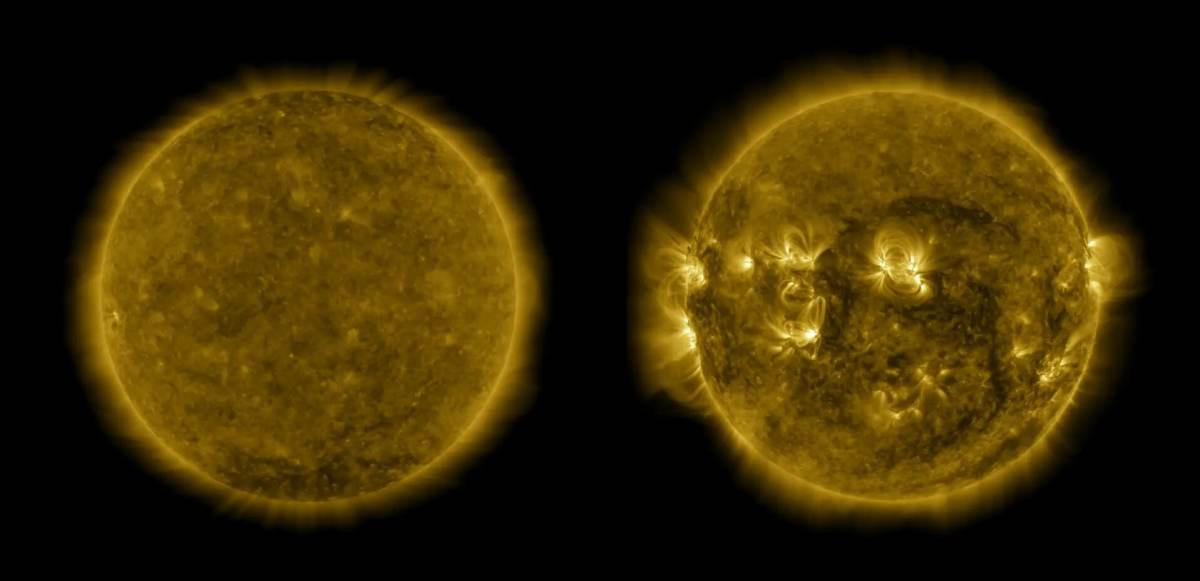
“We can lose elemental oxygen in the atmosphere if it heats to the point where it ionizes, or cools to the point where it forms molecules, and both of these processes have been seen on the Sun,” he notes. “In hot active regions, elements get ionized, and in cold sunspots, we can measure the presence of water molecules in the form of super-heated steam.” According to him, this would mean that the oxygen is still there, but not as elemental oxygen, which is what our method is sensitive to measuring.
The researchers say that the magnetic fields affect the accurate determination of the solar oxygen abundance. They found that the solar oxygen abundance in terms of particles is 0.049% of the total. “Our measured change is a 2.3% change of this number. Over the course of the solar activity cycle, the inferred solar oxygen abundance changes between 0.0501% and 0.0479% of the total,” Pietrow contends. The variations on the Sun are rather small, and thus don’t significantly affect current methods of determining the oxygen abundance. “However, this effect turns out to be important in other stars that are more active than the Sun,” he adds.
More on Starlust
Are slow solar winds really that slow? ESA's Proba-3 makes surprising revelation