Saturn's largest moon Titan to cast a shadow on the planet's face on September 3—how to watch
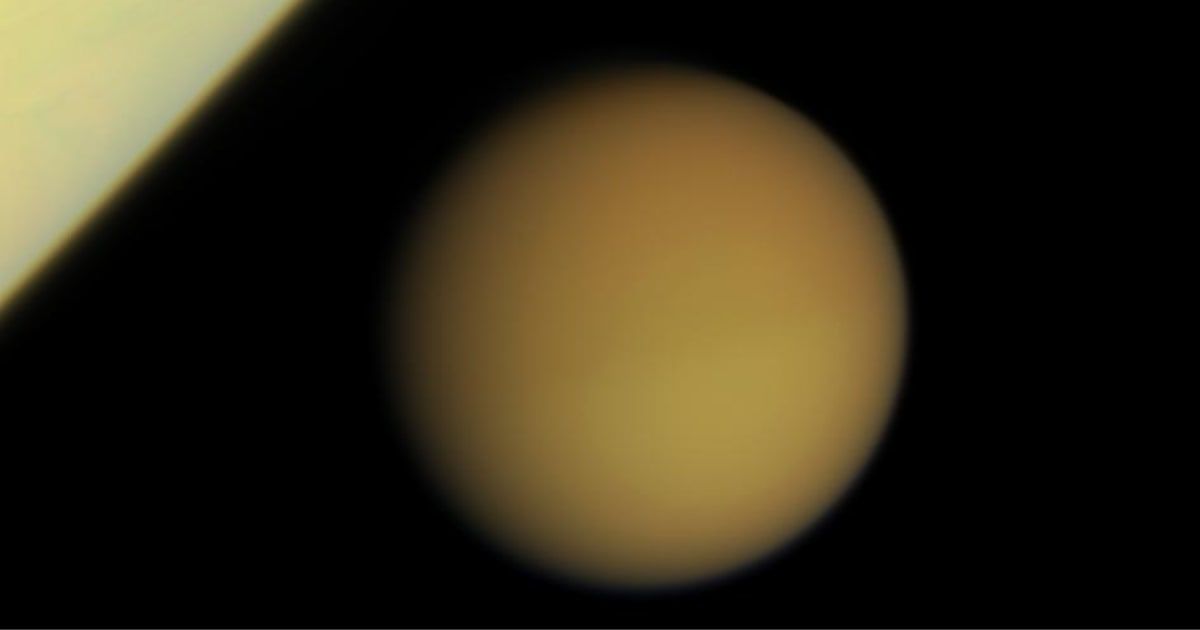
On September 3, skywatchers have a rare chance to witness a celestial ballet as Saturn's largest moon, Titan, casts its shadow directly onto the ringed planet's face. This dramatic event, a "transit," occurs only once every 15 years, and this current series of passes is nearing its end, according to Sky & Telescope.
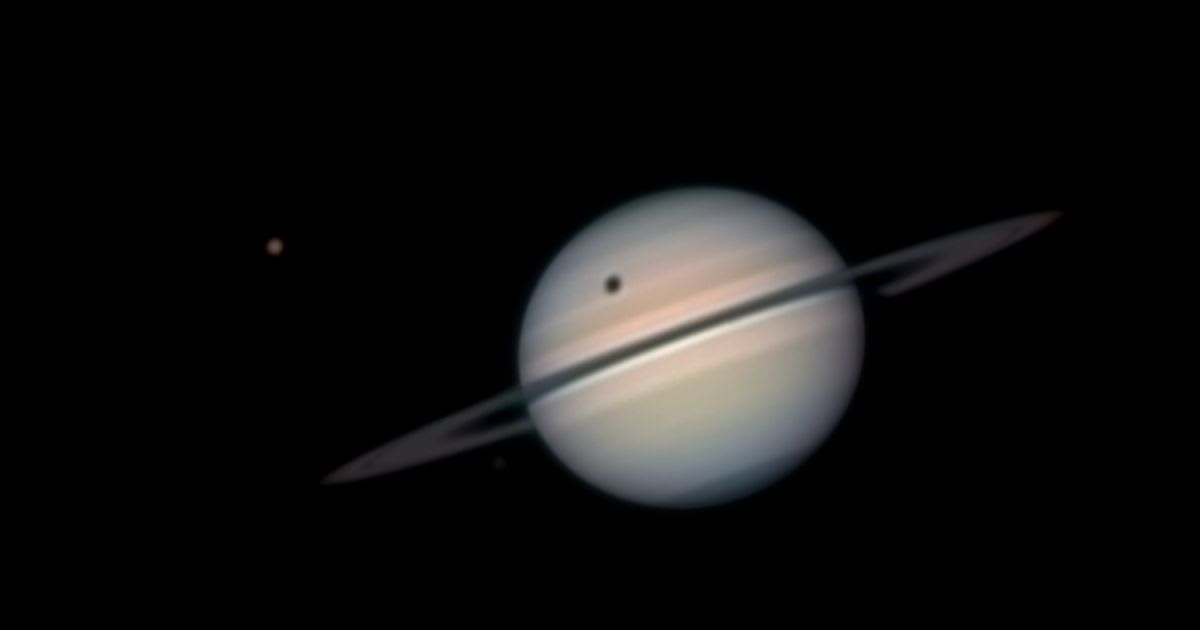
The shadow, appearing as a tiny black dot, will glide across Saturn's northern hemisphere. The transit will begin at 1:25 a.m. EDT and continue until 4:50 a.m. EDT, making it visible from much of North and Central America. For those on the West Coast, the event starts at 10:25 p.m. PDT and concludes at 1:50 a.m. PDT. Although Saturn is currently visible for most of the night, the best viewing conditions are typically after midnight when the planet is highest in the sky and atmospheric interference is at a minimum.
Those familiar with observing Jupiter's moons should be aware that seeing Titan's shadow requires more powerful magnification. Saturn is nearly twice as far from Earth as Jupiter, and despite its size, Titan is not large enough to cast a shadow as prominent as those of Jupiter's moons.
Just last month, on August 19, an equally rare astronomical event took place as Titan's massive shadow traversed the gas giant’s clouds for four hours, beginning at 1:52 a.m. ET (05:52 GMT). This striking alignment, where the moon's shadow appeared to transit across Saturn's golden clouds, is a fleeting phenomenon visible only from Earth when the planet's rings are positioned edge-on to us, an event that occurs once every 15 years.

This precise cosmic choreography allowed Titan's immense shadow to become a moving dark spot on Saturn's face. The opportunity to witness such an event is a rare one, as this viewing period will conclude later in the year, and the next series of shadow transits of this kind won't be seen again until the mid-2040s. For viewers across North and South America, the timing was ideal to observe the shadow as it slowly moved across Saturn’s atmosphere, creating the illusion of a cosmic eclipse and serving as a powerful reminder of our solar system's precise mechanics.
For those hoping to catch a glimpse of this cosmic event, preparation is key. A clear, dark sky is essential, and a telescope is necessary to see the shadow. Observers will need an instrument with at least an 8-inch aperture and around 200x magnification. This high level of power is crucial because Saturn is a staggering 807 million miles away from Earth, making Titan’s shadow appear as a minuscule, moving dot against the vast planet. For those without access to a telescope, many observatories and astronomy clubs will be hosting public viewing events or live streams. Digital platforms, such as NASA's "Eyes on the Solar System," also offer real-time visualizations of the transit.
More on Starlust
Titan darkens Saturn on August 19 in a rare spectacle visible every 15 years.
Titan’s shadow to transit Saturn on July 18 in a rare event — how and when to watch
NASA observes peculiar red glowing formation floating on Saturn's biggest moon