No alien invasion for now? Study says life on nearby planets may not be advanced enough to attack Earth
If you’re concerned about an impending alien invasion, then worry not, because life on nearby exoplanets may not be advanced enough for that to happen. This claim has been made in a new study, published in the International Journal of Astrobiology. Led by Northern Arizona University (NAU) econinformatics professor Chris Doughty, it hypothesizes that the evolutionary advancement of alien life is dependent on the cumulative plant energy available on a given planet. While it's intuitive to think that older potentially habitable exoplanets would be more likely to have advanced forms of life due to the long passage of time, this study argues that how much life advances is likely more tied to plant energy than the age of planet.
Life on Earth is rich where it’s warm and wet, and sparse in regions that are cold and dry. Researchers believe this should be the case on alien worlds as well. In other words, younger, warmer, and wetter exoplanets are likely to be ahead in life's evolutionary development in comparison to an old world that is cold and dry. "This paper suggests that our exoplanet stellar neighborhood may be quiet because most Earth-like planets near us are likely to be evolutionarily behind us and still at the microbial stage,” lead author Doughty said in a statement. “Which means we can sleep well, because if life on those exoplanets evolved just like on Earth, most of those planets will just be filled with microbes and not advanced aliens.”
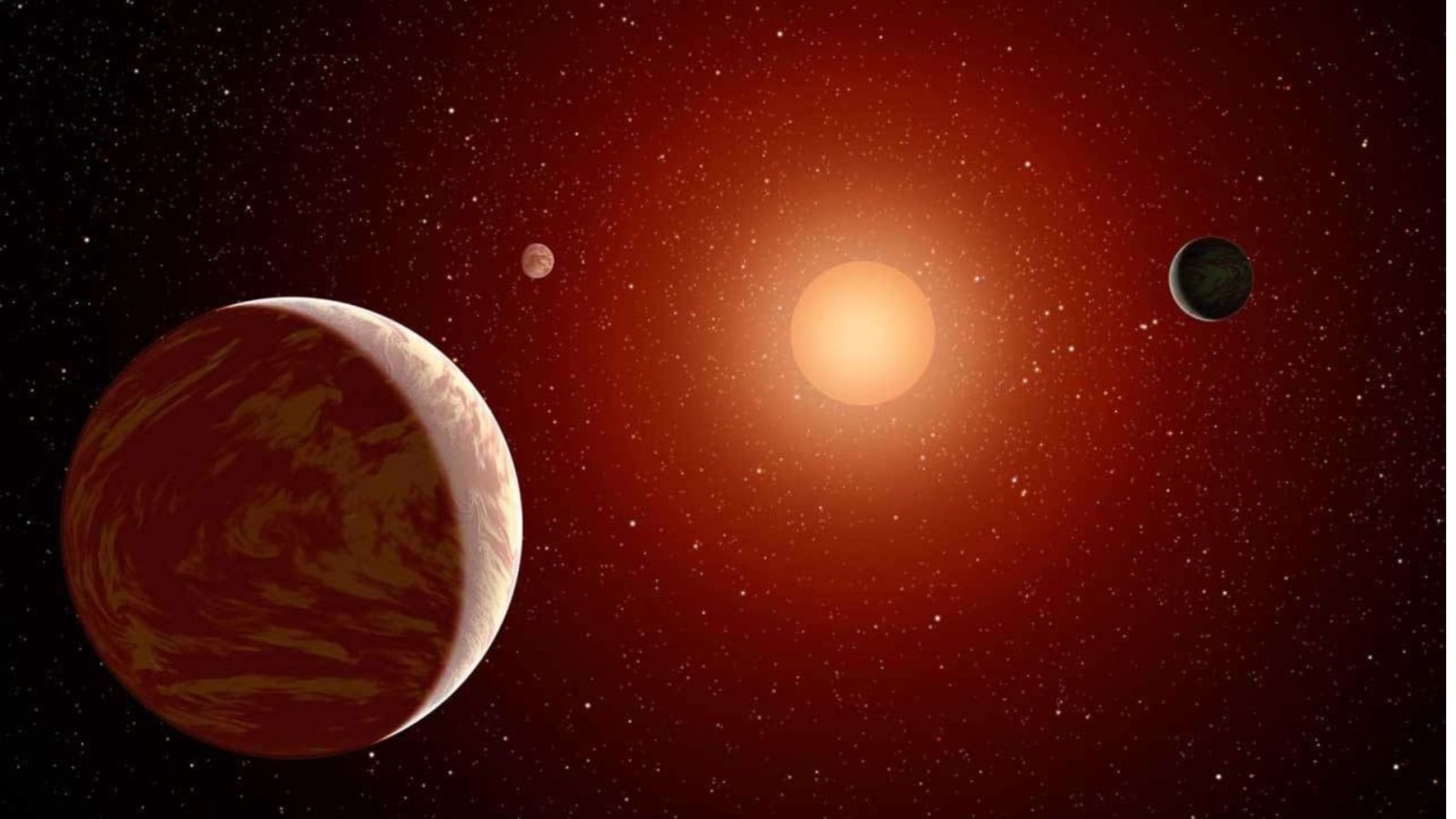
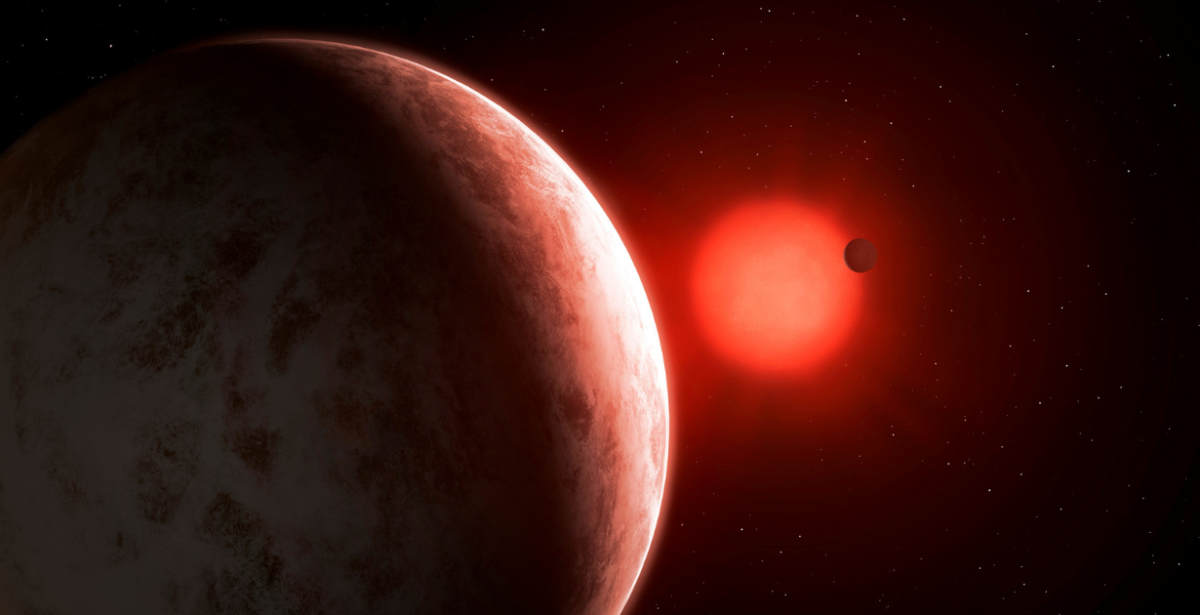
Photosynthesis plays a huge role in letting life thrive on Earth, and it’s likely to have a major role as well in dictating where life on an alien planet is currently in its evolutionary stage. Among the candidates that are most likely to have life are planets around red dwarf stars, which are the most common in the universe. Many of these stars are ancient and have planets that are far older than Earth. However, exoplanets orbiting close to red dwarfs are often tidally locked, which leaves one side of the planet in perpetual darkness, thereby reducing available area for photosynthesis. Further, red dwarfs are usually extremely dim compared to our Sun, so even the light on the star-facing side may not be enough.
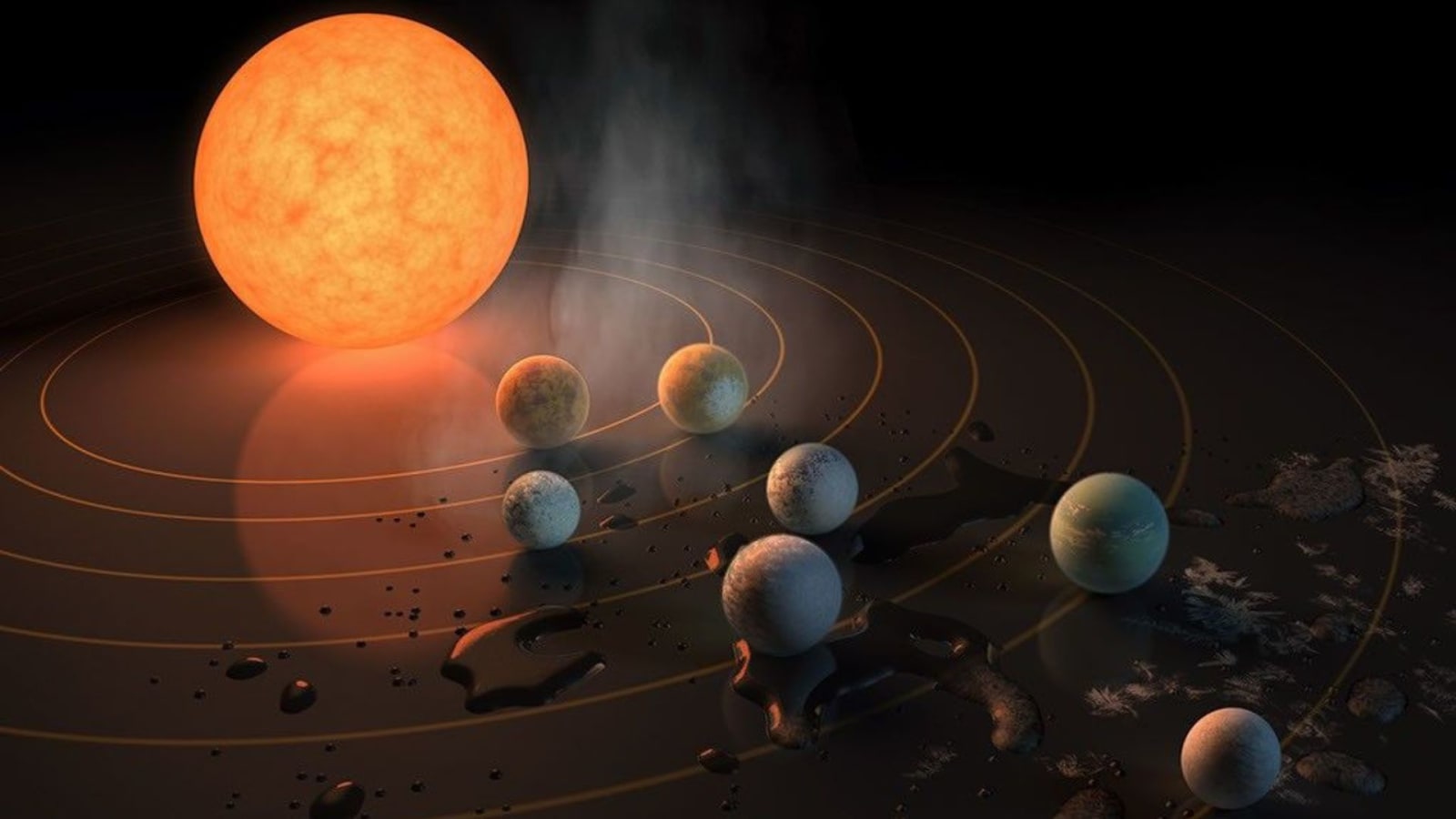
“If photosynthetic life evolved on these planets, that life has been photosynthesizing for potentially billions of years longer than on Earth,” said co-author Michael Gowanlock, an associate professor of informatics at NAU. “However, the total annual photosynthesis is likely lower because there is less light and half the planetary surface area available for photosynthesis."
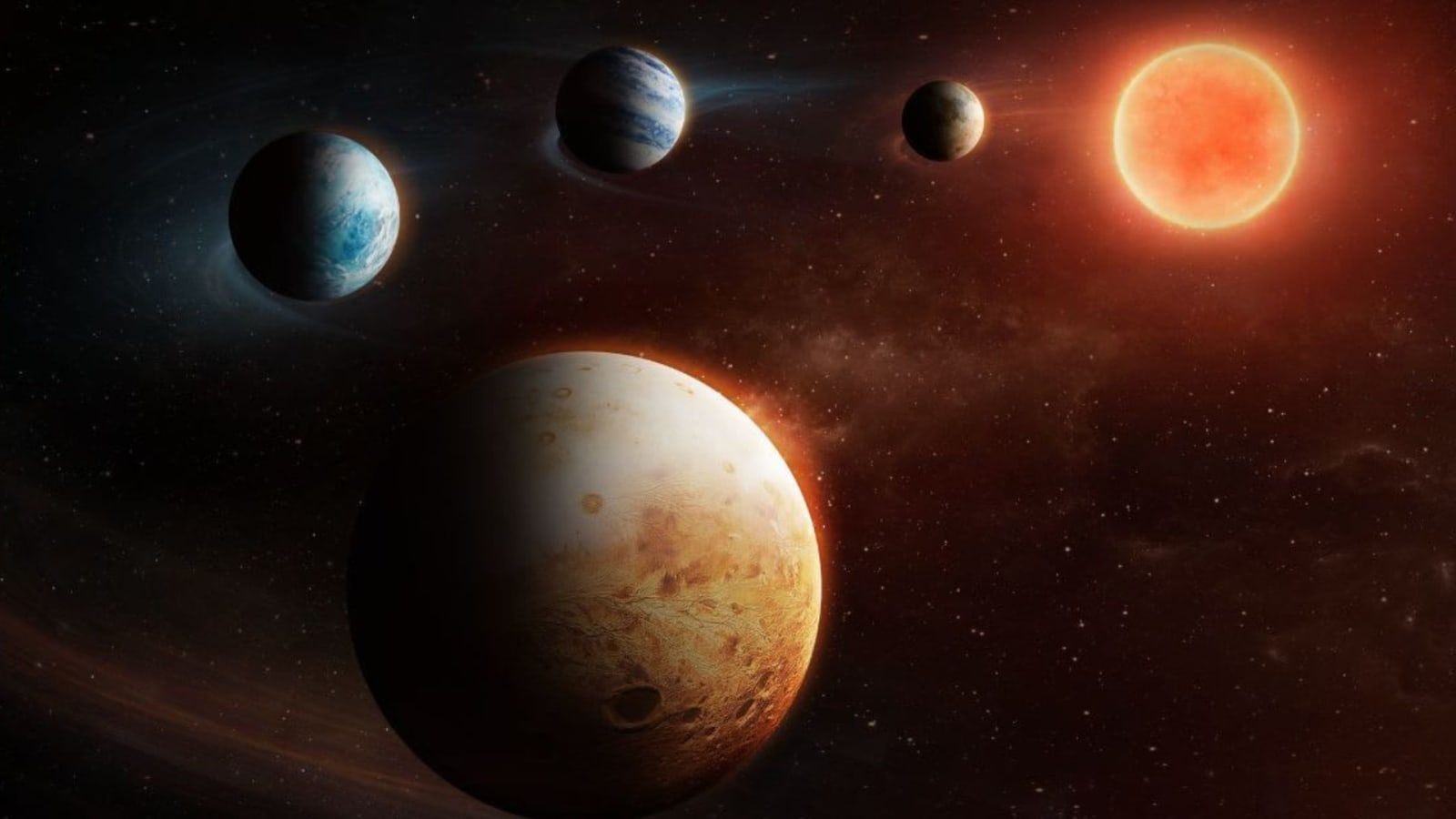
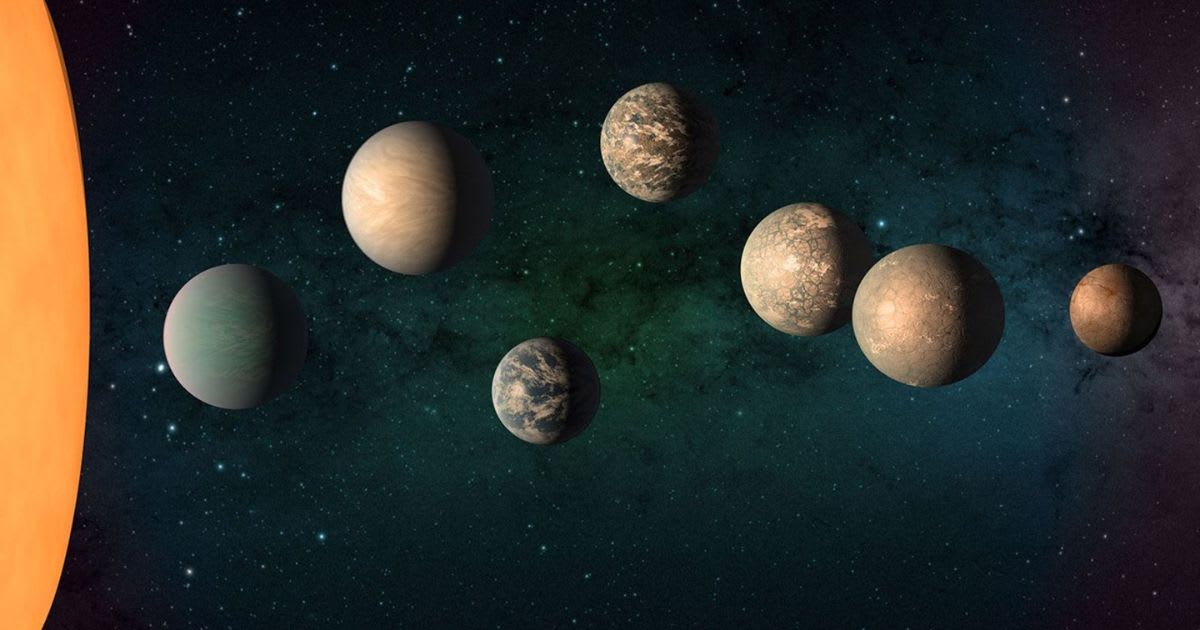
As part of the study, the researchers studied climate simulations on 29 exoplanets (potentially with liquid water), showing maps of variables like temperature, light, and precipitation that help predict plant growth on Earth. Based on the maps, they estimated that one of these exoplanets, TRAPPIST-1e—which was widely considered a leading candidate for alien life—has fixed only 21 percent of Earth's total carbon despite being several billion years older than our planet. This suggests, according to co-author Cameron Hrabak, that life there might still be in the microbial stage.
Overall, of the 29 exoplanets studied, only two exoplanets—GJ 1061c and K2-3d—are likely to have life that has evolved ahead of Earth. Life on three other exoplanets in the sample meanwhile, is likely to be in the level of complexity equivalent to Earth's Mesozoic era, or the age of dinosaurs. Life on all other exoplanets in the sample, if it at all exists, is likely to be in the microbial stage. The authors also believe that the factors that limit plant growth on Earth, namely light, temperature, and precipitation, would also limit the evolution of life on other planets, and they hope that future observations by the James Webb Space Telescope (JWST) will shed more light on what stage of evolution the aforementioned planets are at.
More on Starlust
Contact with 'advanced aliens' may not end well for Earth, warned Stephen Hawking
Contacting aliens could be our "biggest mistake in human history," warns physicist; here's why