Nine flybys and six billion miles: ESA shares thrilling footage from BepiColombo's eight-year voyage
The BepiColombo entered its tricky 'Mercury arrival phase' just last week after eight long years of interplanetary journey. So far, it has completed nine planetary flybys and traveled around 9.9 billion kilometers (6.15 billion miles), according to the European Space Agency (ESA), which built the mission with Japan Aerospace Exploration Agency, or JAXA. To celebrate the nearly a decade-long transit, ESA has shared a thrilling selfie video from the spacecraft and the planets it encountered on its way.
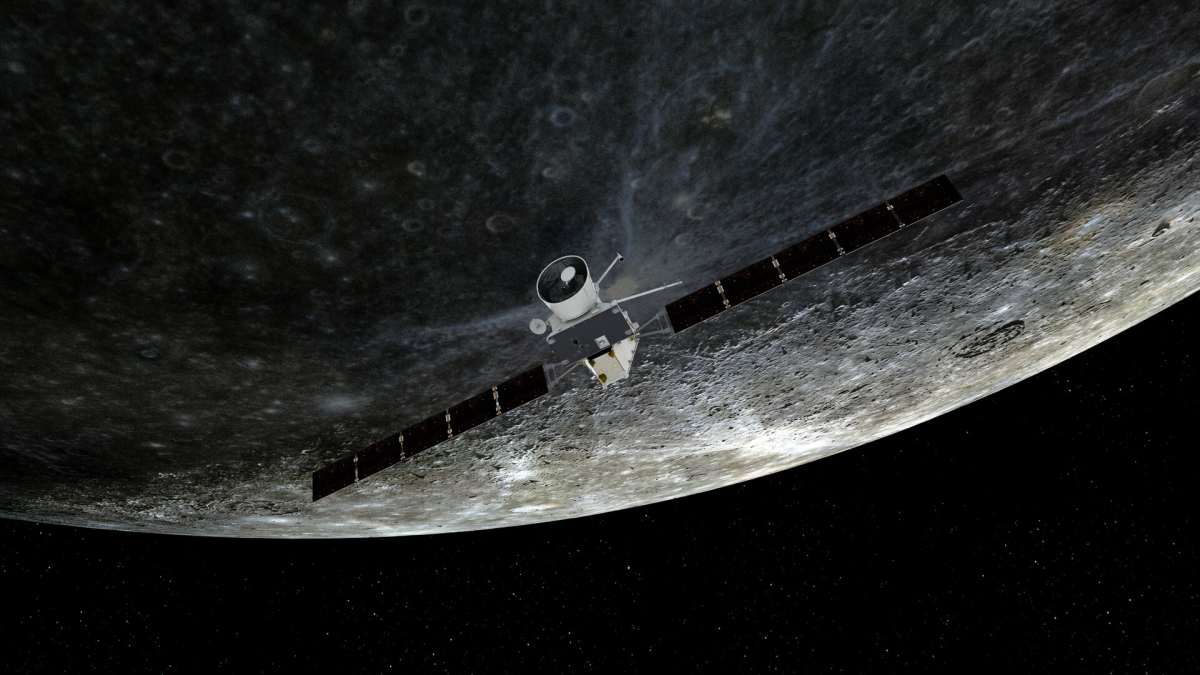
BepiColombo flew past Earth once, Venus twice, and Mercury six times before its arrival phase began. These flybys were necessary because a spacecraft must shed its velocity while approaching the planet—that's what makes reaching Mercury really difficult. Besides, the Sun's gravity also makes it very hard to place a spacecraft in a stable orbit. In the arrival phase, BepiColombo has so far achieved the milestone of separating the Mercury Transfer Module (MTM)—the power source—from Japan’s Mercury Magnetospheric Orbiter (MMO or Mio) and Europe’s Mercury Planetary Orbiter (MPO) joined together. On November 21, the sequence of orbital insertion will begin, and the two orbiters will separate in December to occupy their designated orbits.
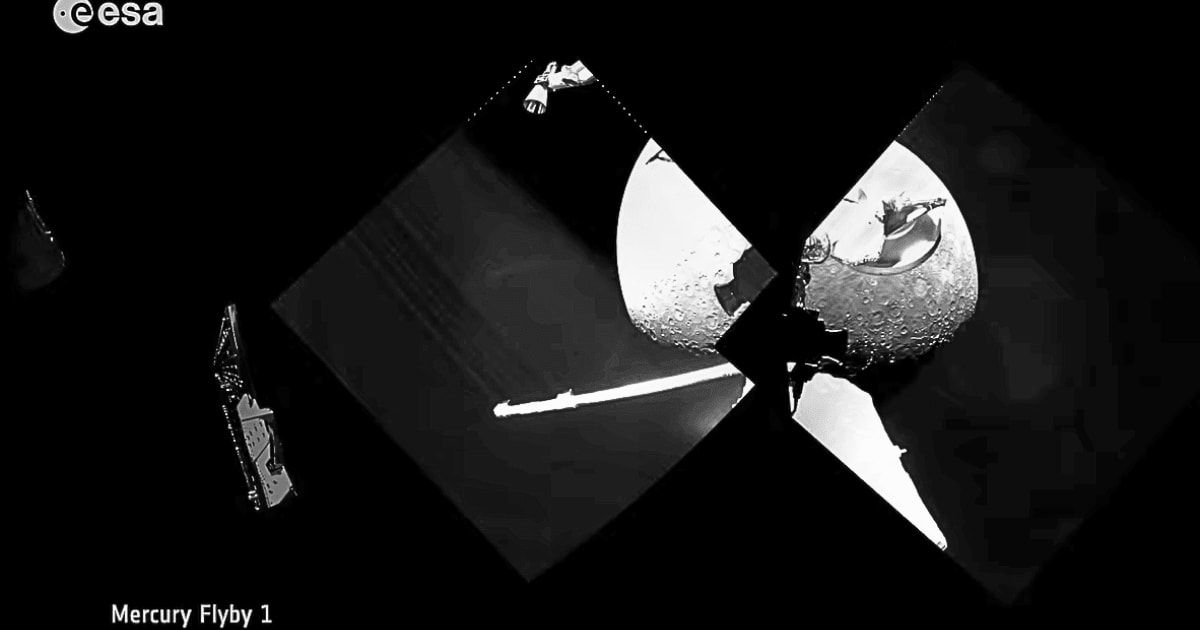
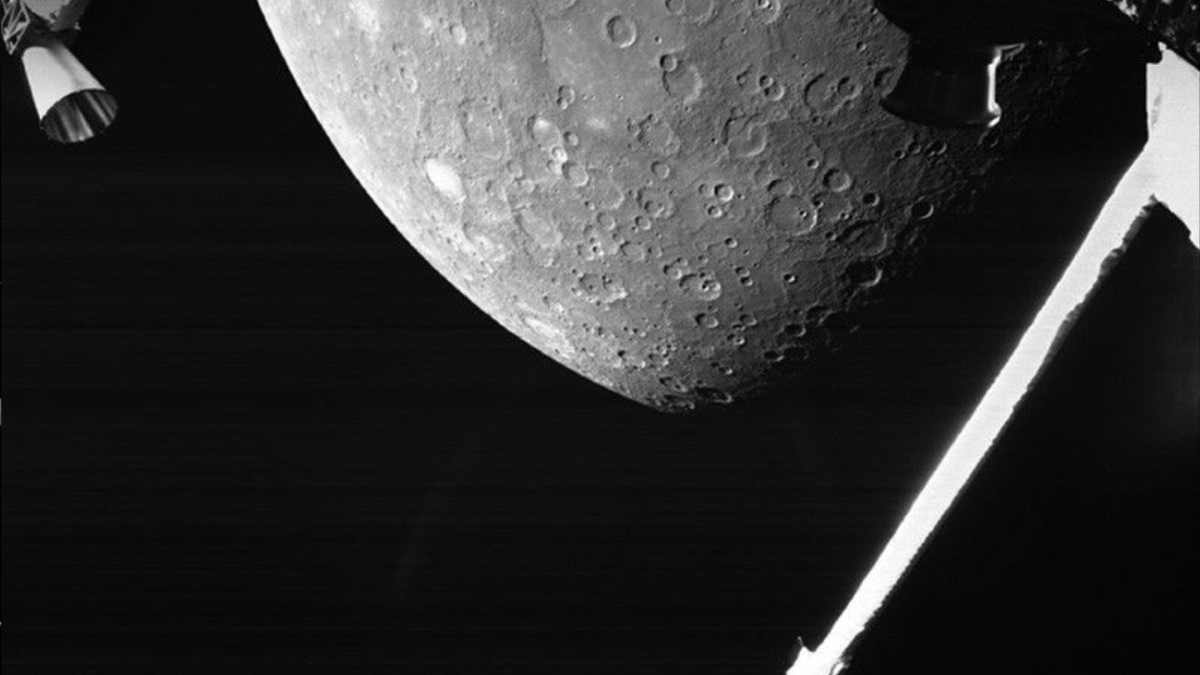
The video above was captured by BepiColombo’s three monitoring cameras, or M-CAMS on the Mercury Transfer Module between October 2018 and September 2026. ESA says that it is the first time images from the module have been compiled into a video. It features one of MTM's solar arrays, MPO's medium-gain antenna and magnetometer boom, and MPO's high-gain antenna with Earth, Venus, and Mercury making stunning appearances.
“The monitoring cameras were designed to keep an eye on the spacecraft itself," ESA said in a statement. The images have been positioned and oriented to approximately reflect the relative fields of view of the three M-CAMs.”
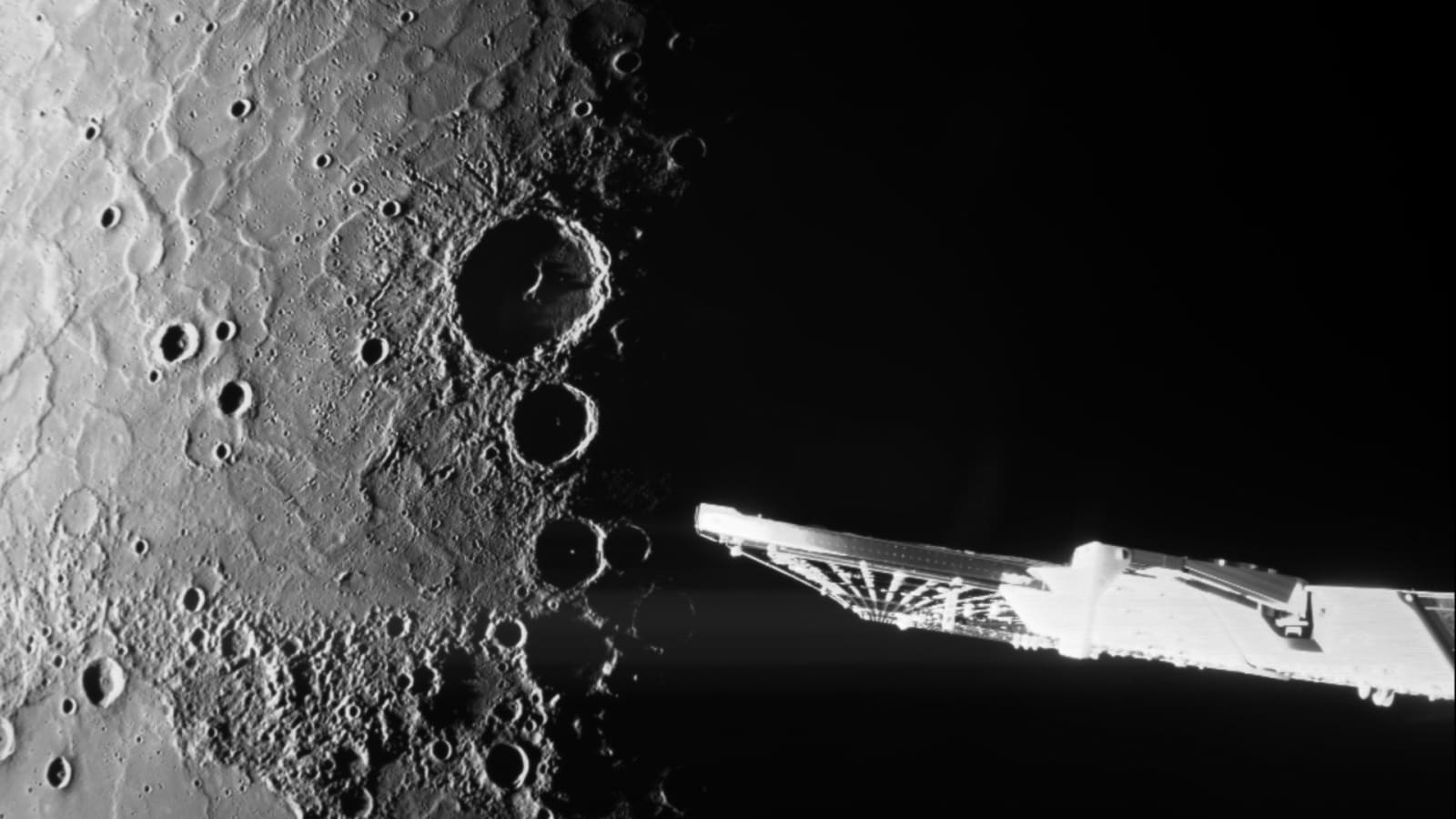
When the two stacked orbiters separate, BepiColombo will become the first mission with two probes at Mercury. As for the MTM, ESA says it has no computer to control itself and lacks an antenna to communicate with Earth, so it will circle the Sun indefinitely. The MTM will pass by Mercury at a distance of around 130,000 km in late October before entering interplanetary space—it will be the closest it gets to the planet. BepiColombo launched in October 2018, and its objectives are to look into the planet's origin and evolution, study its magnetosphere and its interaction with the solar wind, and investigate its interior structure and surface processes like cratering, tectonics, polar deposits, and volcanism, among other features. Once the two orbiters are in their designated orbits, they will begin their operations in April 2027.
More on Starlust
China to beat NASA? Tianwen-3 plans to bring back Mars samples by 2031 to search for signs of life
NASA-funded "Slingshot" concept aims to map minerals on the Moon and beyond