NEO Surveyor update: 20-foot tall sunshade for NASA's asteroid hunter now ready
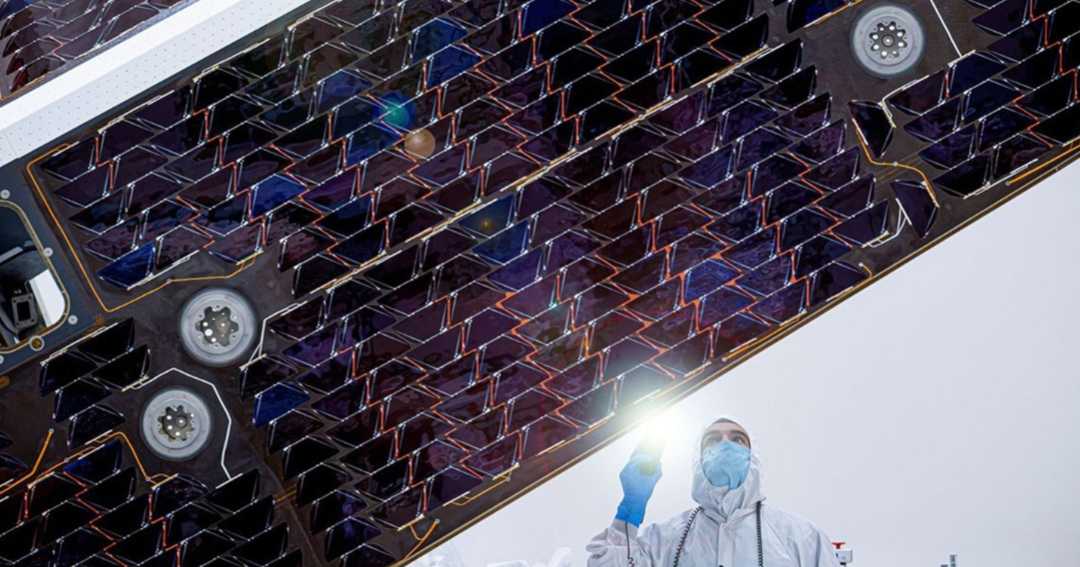
NASA’s Near-Earth Object (NEO) Surveyor is another step closer to its mission. Teams have finished integrating solar arrays onto the telescope’s sunshade, according to an update by the agency on Monday. The overall process was performed at BAE Systems Space & Mission Systems in Boulder, Colorado. The structure will play a crucial dual role: shielding the telescope from the Sun’s glare and generating power for the spacecraft as it searches for potentially hazardous asteroids and comets.
The sunshade for the NEO Surveyor mission is ready for its day in the sun! 😎 NASA's Near-Earth Object (NEO) Surveyor will hunt for potentially hazardous asteroids and comets that cross Earth’s path. ½ https://t.co/GpA8Hvt0rC
— NASA Solar System (@NASASolarSystem) October 26, 2026
The first space-based telescope aimed at detecting a large number of asteroids and comets that could pose a threat to Earth, NEO Surveyor is scheduled for launch in September 2027. Standing at a height of approximately 20 feet and having a width of 8 feet at its base, the sunshade is the biggest component of the spacecraft. Its two flat panels are joined at an angle of 23.5 degrees and carry 864 interconnected solar cells.
Teams have completed work on integrating solar arrays onto the spacecraft’s sunshade. The 20-foot-tall (6-meter-tall) structure is primarily designed to block the Sun’s glare as NEO Surveyor's telescope scans for its elusive targets. Look into the details: https://t.co/sgfhi2yoGm
— NASA Solar System (@NASASolarSystem) October 26, 2026
The sunshade started its journey at Applied Aerospace in Stockton, California, where it was built. It was later moved to SolAero Technologies in Albuquerque, New Mexico, where technicians installed the solar cells onto it in January, giving the array a peak output of 2 kilowatts, which will be enough to charge the batteries onboard the spacecraft. In March, the sunshade passed environmental testing at a facility in El Segundo, California, after which it traveled to BAE Systems Space & Mission Systems in Boulder, Colorado, in May. There, engineers integrated Sun sensors, which will help determine the spacecraft’s orientation, and temperature sensors onto the sunshade, while also putting the solar array through functional and performance testing.
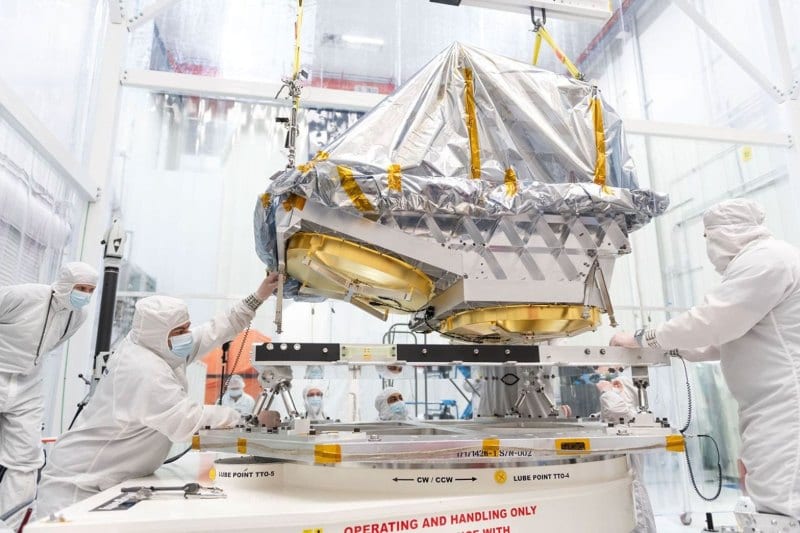
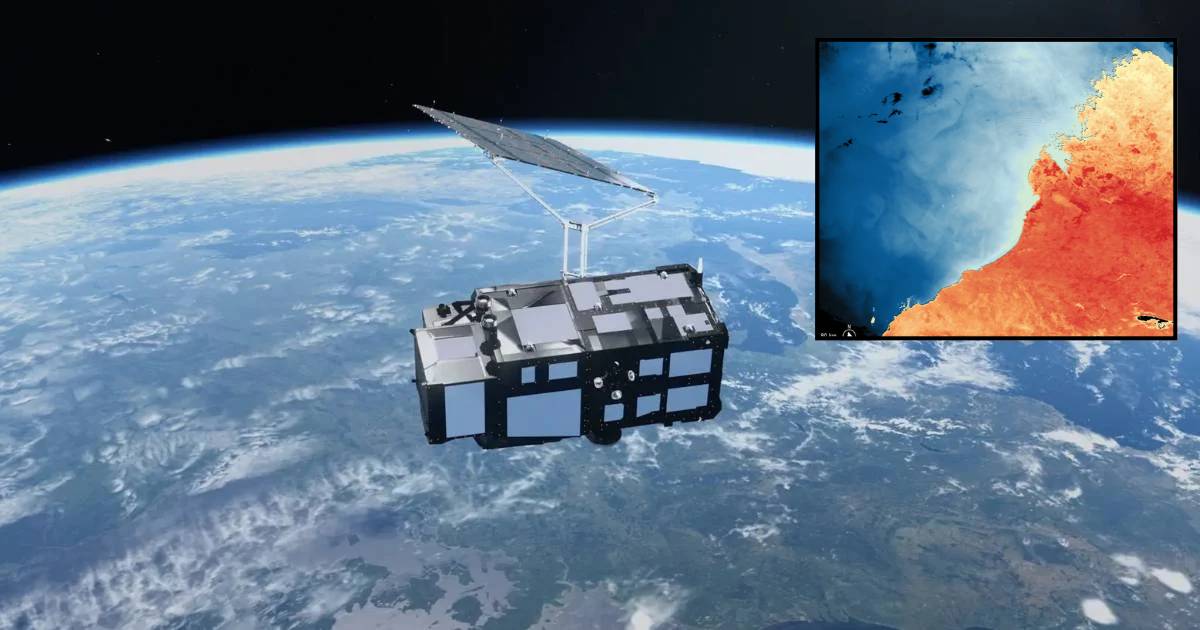
After launch, the spacecraft will travel to the Sun-Earth Lagrange point 1, or L1, located at around 1 million miles (1.5 million kilometers) from Earth. From there, it will survey vast portions of the sky continuously for a minimum of five years, looking for near-Earth objects (NEOs) not yet discovered. NEO Surveyor will view the same region of sky in two infrared wavelength bands, with each of the telescope's pair of detector arrays generating a 16-megapixel mosaic of the sky. A comparison of the data obtained from these two bands will allow scientists to determine an object's temperature, and, from that, its size. Furthermore, these findings can be paired with the target's location and motion readings, and researchers can then assess which near-Earth objects could pose a threat to Earth.
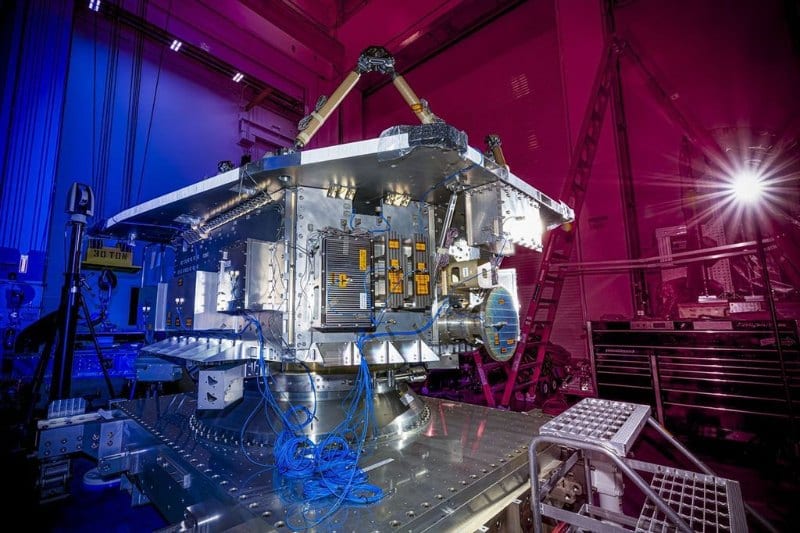
The concept of NEO Surveyor originated when Congress directed NASA in 2005 to find potentially hazardous NEOs. It has been seen that observations conducted from the Earth are incapable of spotting these objects, as they can may not be bright enough, may be small-sized, or maybe shielded by sunlight. NEO Surveyor is specifically designed to overcome this by detecting the infrared glow of objects warmed by the Sun, rather than the reflected visible light that ground-based observations depend on. The goal is to give humanity enough advance warning to respond if needed.
More on Starlust
Asteroid impacts shaped the early Earth's surface, creating conditions conducive for life
Newly detected 40-meter asteroid close to Venus orbit could strike Earth with city-level impact