NASA’s Lucy spacecraft marks 5th launch anniversary—here’s all about the mission exploring ‘Trojan’ asteroids
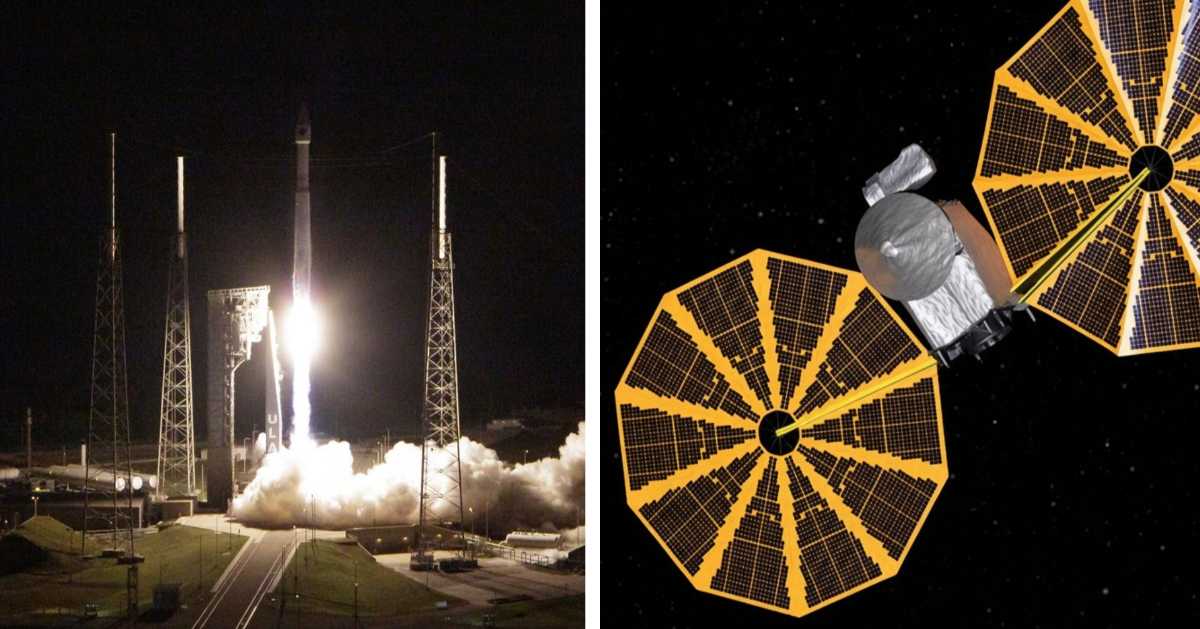
Exactly five years ago today, on October 16, NASA’s Lucy spacecraft launched to find secrets of the early solar system. It lifted off aboard an Atlas V 401 rocket from Florida toward the "Trojans"—a swarm of asteroids sharing their orbits with Jupiter as it goes around the Sun. The spacecraft, in fact, has already flown by three asteroids in the main belt as part of its mission, and it's due to visit its first Trojan target next year. Currently, the spacecraft is more than 550 million miles from Earth, according to a tracker.
What is the Lucy mission about?
The mission is named after a fossilized human ancestor that was found in Ethiopia in 1974, and its objective is to study the asteroids that scientists believe are time capsules from the early solar system. “When we look back on the solar system and our place here on Earth, people often ask, ‘What is our history? How did we get here?’ Lucy is going to try to help answer some of these questions,” Cathy Olkin, Lucy’s deputy principal investigator, said in a statement. Its findings could also help reconstruct the formation of the solar system and how it evolved.
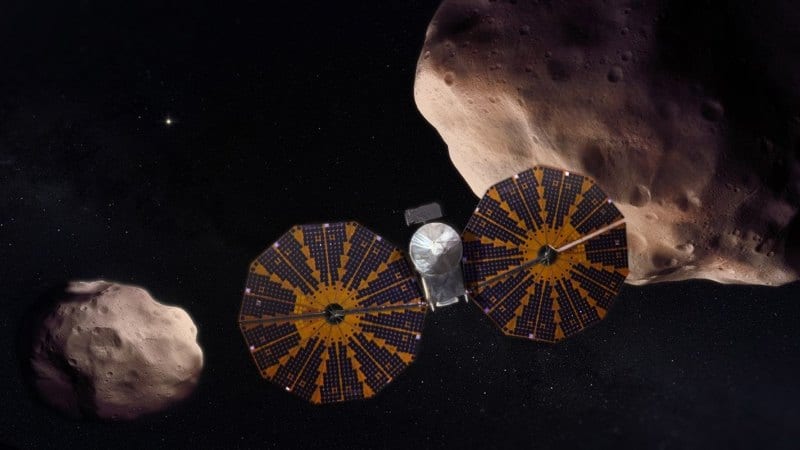
Built for a 12-year primary mission, Lucy has three instruments that will help scientists study target asteroids in order to unravel their history. Lucy is after eight Trojan asteroids that have the same orbital path as Jupiter, and they are positioned in clumps behind and ahead of the gas giant (see picture below). Astronomers think that these Trojans gathered at their current location from different regions of the solar system and got trapped between the gravity of Jupiter and the Sun. As Lucy makes close approaches to its target, it will use the L’Ralph instrument to probe the chemical makeup of the asteroids’ surfaces, whereas the L’LORRI camera will provide the most detailed views of the asteroids' surfaces. The third instrument, L’TES, will measure the temperature and thermal properties of the target’s surface.
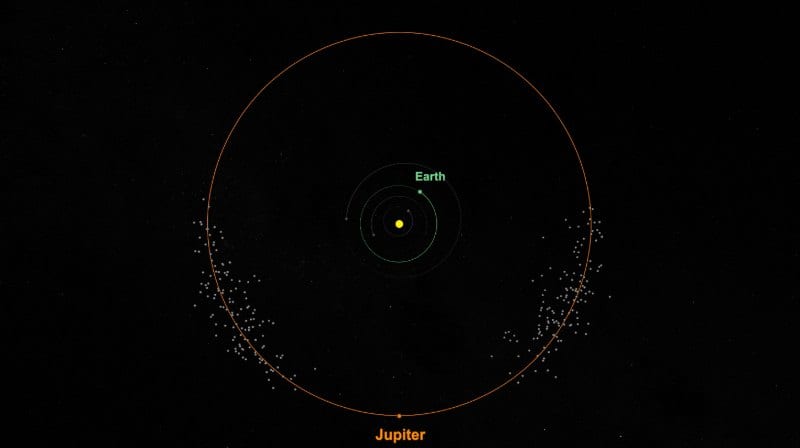
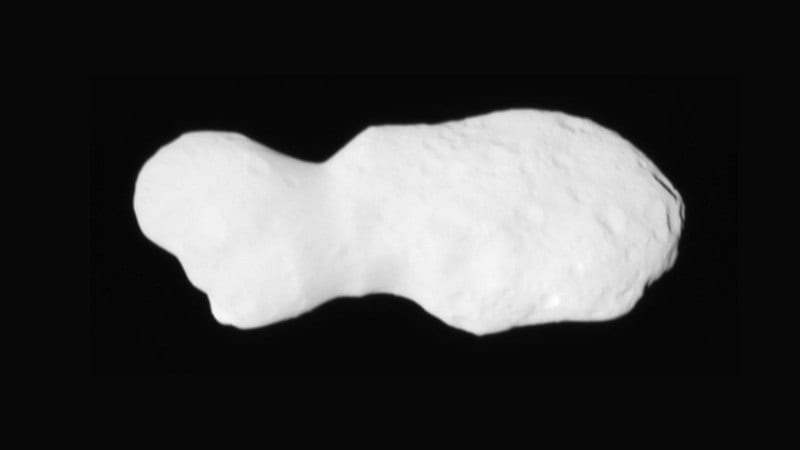
The eight Trojan asteroids on Lucy’s target are Eurybates and its satellite Queta, Polymele and its unnamed satellite, Leucus, Orus and Patroclus and its satellite Menoetius. According to NASA, most of the Trojan asteroids are named after heroes in Homer’s The Iliad. The main belt asteroids that the spacecraft has already flown by are Dinkinesh and its contact binary satellite Selam (November 2023) and the famous peanut-shaped Donaldjohanson (April 2025). Lucy is traveling at an average speed of about 39,000 miles per hour and has a couple of flybys planned next year. It will arrive at Eurybates on August 11, 2027, followed by Polymele on September 14, 2027—that’s when it will slow down to 15,000 miles per hour for the survey. The remaining flybys of Leucus and Orus will take place in 2028, followed by a Patroclus flyby in 2033.
Earlier in August this year, the mission team began testing the L’LORRI camera ahead of next year’s closest approach. Lucy will be within 300 to 600 miles of each of the Trojan asteroids and take pictures in visible and infrared wavelengths. The mission will end in 2033 after the final asteroid has been studied. NASA says the mission team has designed Lucy’s trajectory in such a way that it will not crash into Earth and contaminate any place with potential signs of life for more than 100,000 years. Decades from now, Lucy’s orbit will become stable, and it’s possible that Jupiter’s gravity will send it flying out of our solar system.
More on Starlust
ESA mission to study Didymos: Hera approaches DART target, prepares for 93-minute deceleration burn
Japan’s historic first Martian moon sample collector to launch for Phobos on October 19