Japan’s historic first Martian moon sample collector to launch for Phobos on October 19
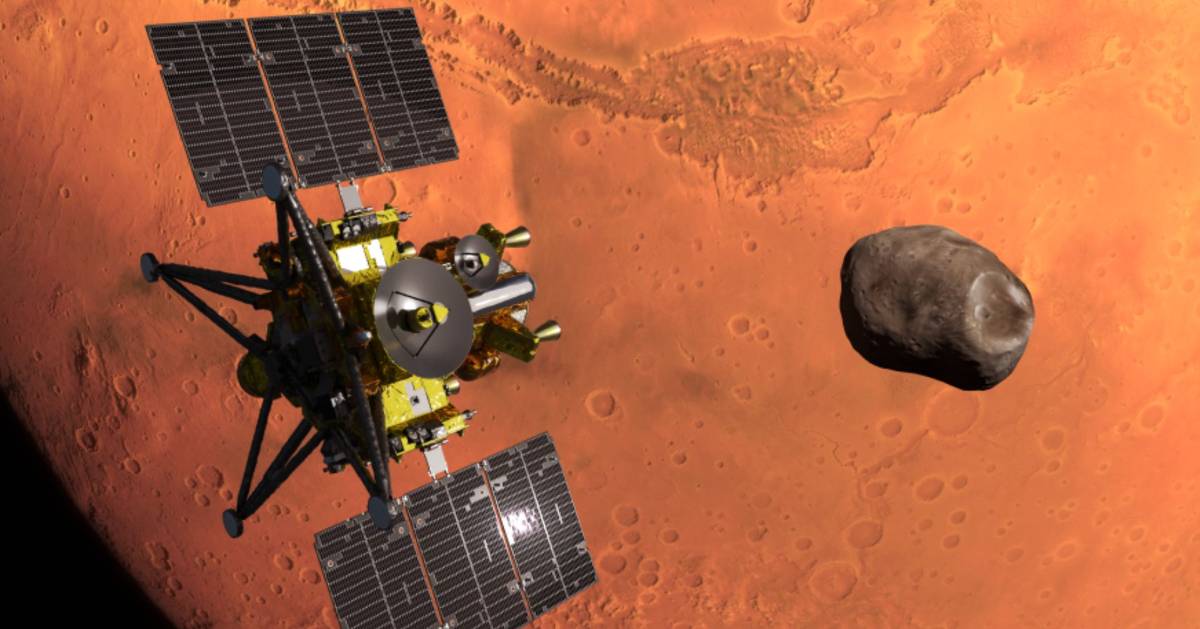
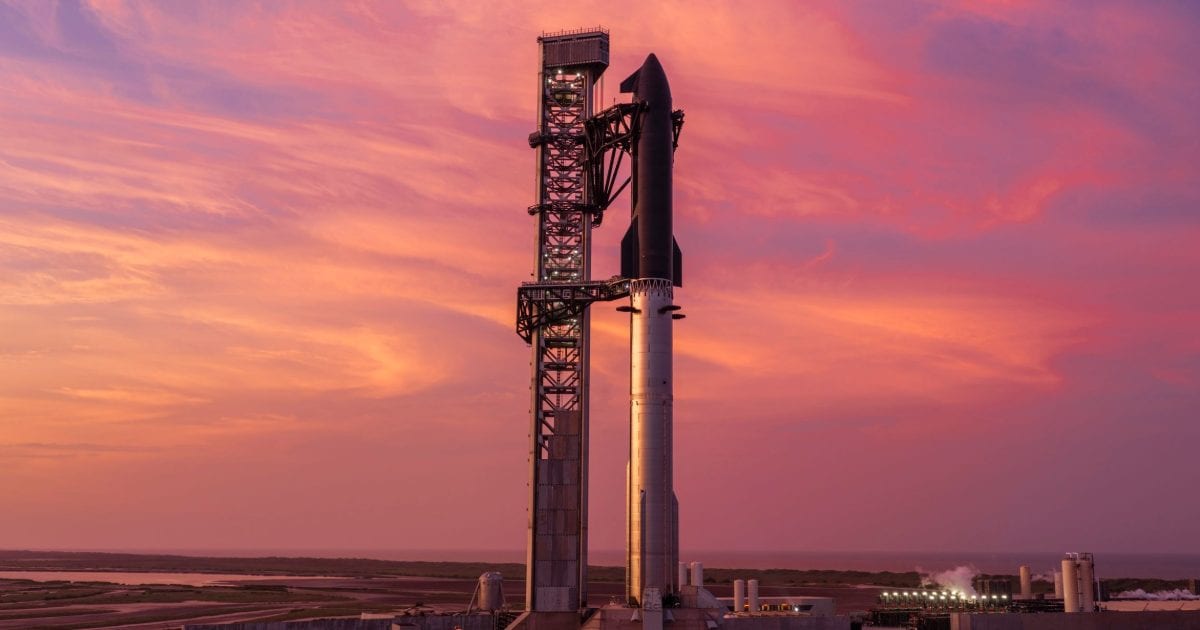
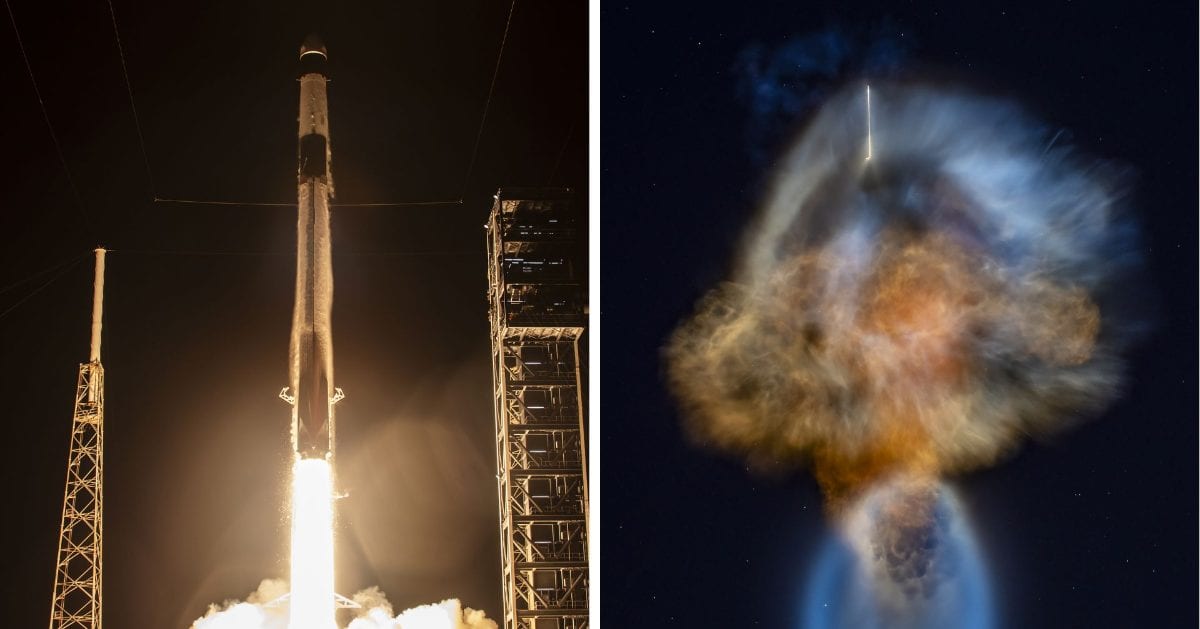
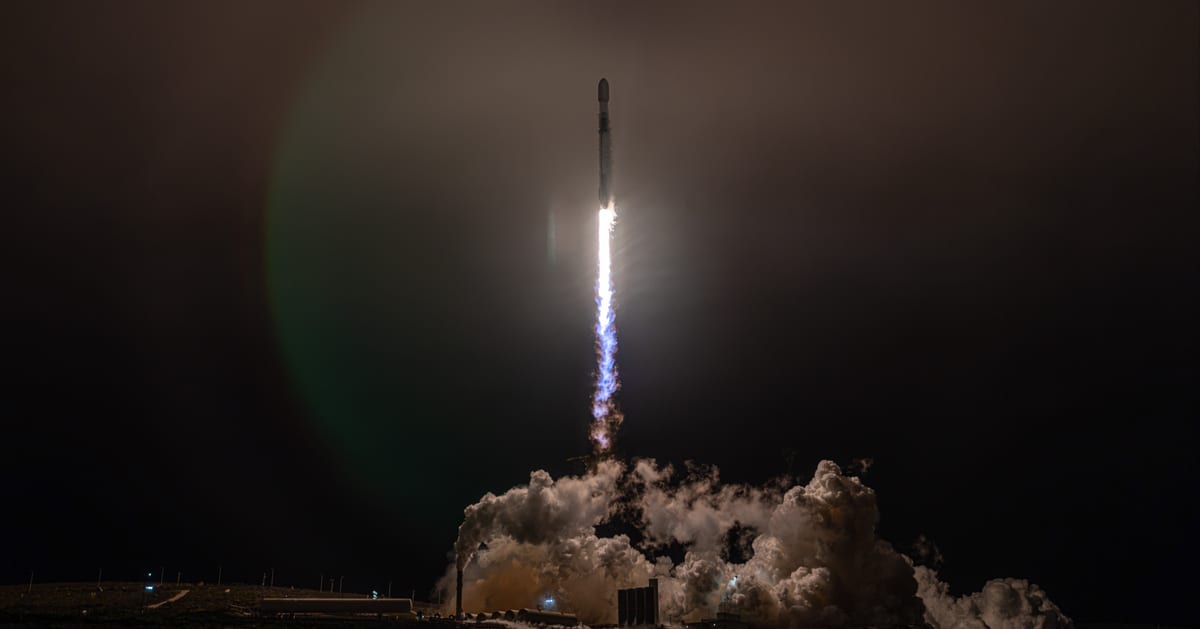
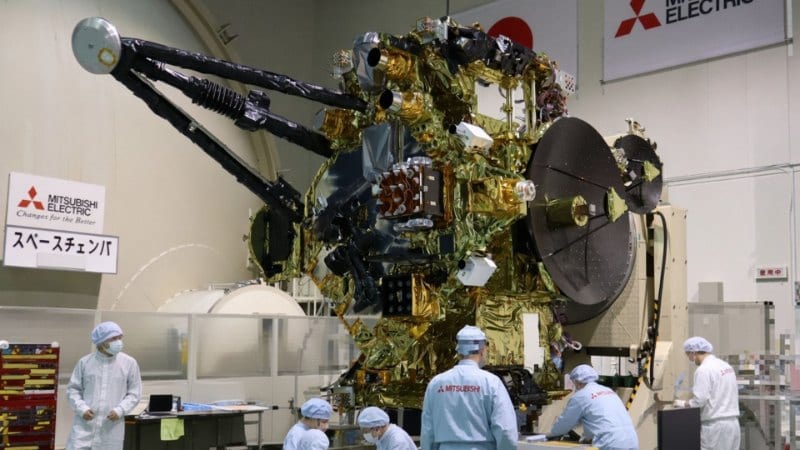
Scientists from Japan will soon attempt to do something that has never been done before. The Japan Aerospace Exploration Agency (JAXA) is set to launch the Martian Moons eXploration, or MMX, mission on October 19 to explore the moons of Mars. The mission will be launched atop an H3 rocket at 3:41 pm EDT (21:41 CEST) from the Tanegashima Space Center—Japan's primary spaceport. Led by JAXA, this mission is set to be the first to land on a moon other than ours, complete a round-trip of the Martian system, and bring back samples for investigation. Agencies such as NASA, the German Aerospace Center (DLR), the European Space Agency (ESA), and the French space agency (CNES) are also key contributors to this mission.
Launching on 19 October, @JAXA_en's Martian Moons eXploration (MMX) mission will attempt a world-first sample return from Mars’s moon Phobos. We're contributing deep-space communication technology and ground station support to help make the mission possible. Read more: https://t.co/BM5j8rEBhw
— European Space Agency (@esa) October 13, 2026
MMX set to script history
MMX is aimed at studying Mars and its moons Phobos and Deimos. The primary objective, however, is to land a spacecraft on Phobos and collect samples for analysis on Earth. According to ESA, the mission intends to bring back at least 10 grams of surface material that will be investigated in laboratories using instruments that cannot be sent into space.
Scientists are deeply interested in the Martian moons because of the mystery surrounding them. It is not yet confirmed if Phobos and Deimos are asteroids that were captured by Mars or if they were born out of a collision between Mars and another celestial object. With MMX, they hope to find out. “The data and samples returned by MMX are a window to study the evolution of Mars and the solar system,” Elliot Sefton-Nash, ESA MMX project scientist, said in a statement.
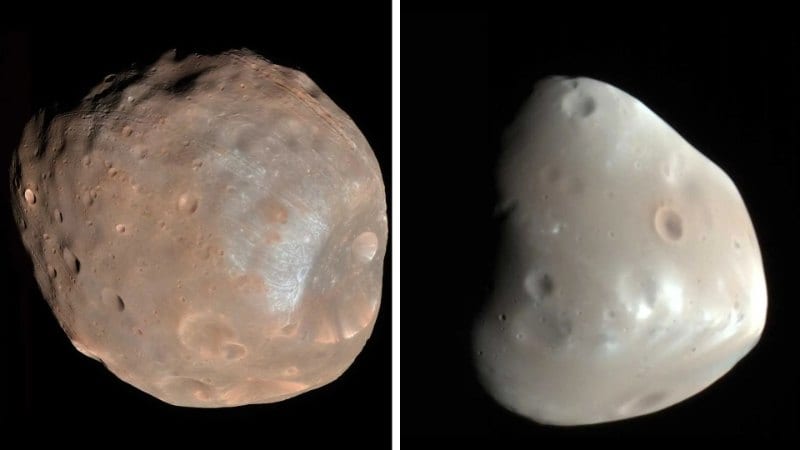
Phobos is the larger of the two Martian moons, and it measures roughly 17 by 14 by 11 miles across. It orbits the red planet three times a day, and it’s falling toward Mars at a rate of six feet every year. Scientists predict that in 50 million years, Phobos will either crash into Mars or break up and form a ring around the planet.
How will the MMX mission unfold?
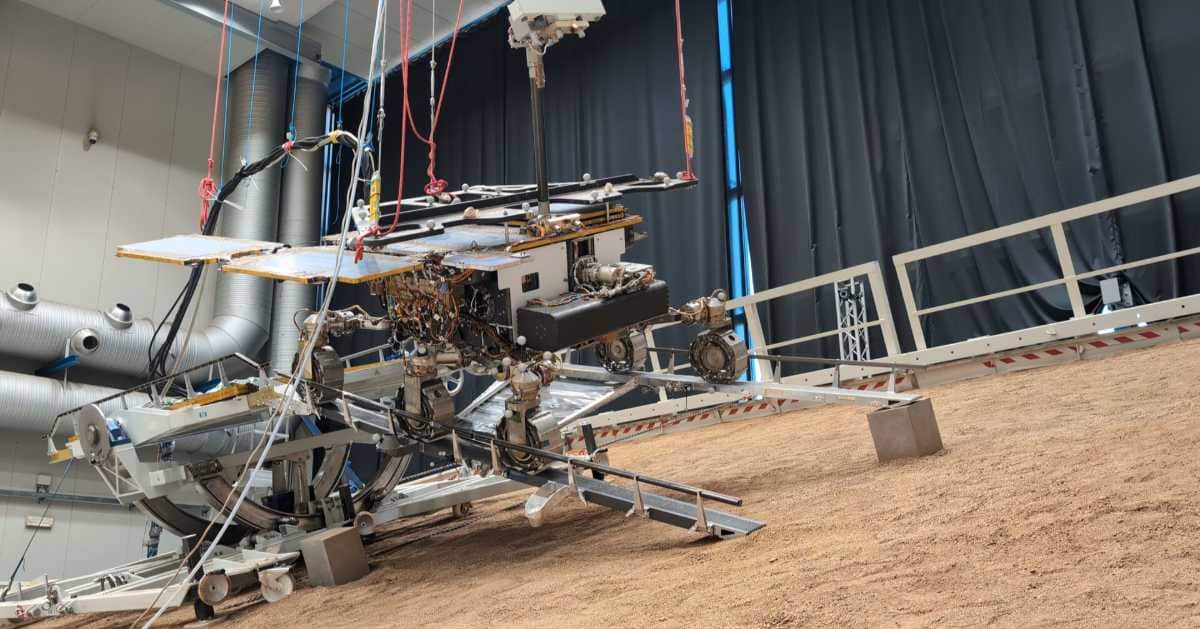
The mission includes a rover and a main spacecraft that will jointly travel to Mars. They are expected to enter Mars orbit in August 2027 and begin orbiting Phobos in September 2027. The integrated spacecraft will study both the moons for nearly 1.5 years before the rover 'Idefix' is released for deployment in early 2029. The objective of the 25-kg rover, which has four instruments, is to analyze the composition and texture of Phobos’s surface and provide necessary information to prepare for the lander’s touchdown. Phobos has extremely low gravity—the rover will weigh the equivalent of just 15 grams on Earth—so engineers have developed special technology to ensure the necessary maneuvers and landing go exactly as planned.
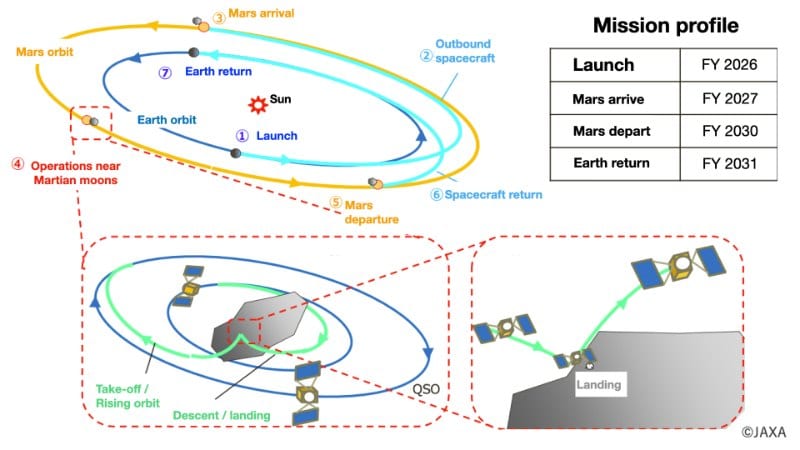
The main spacecraft, equipped with seven instruments, will then touch down to collect samples from two different sites on the moon before departing the Martian system in 2030. These samples will be sealed in a container in the return module that will reach Earth in 2031 and land in the Woomera Prohibited Area in Australia.
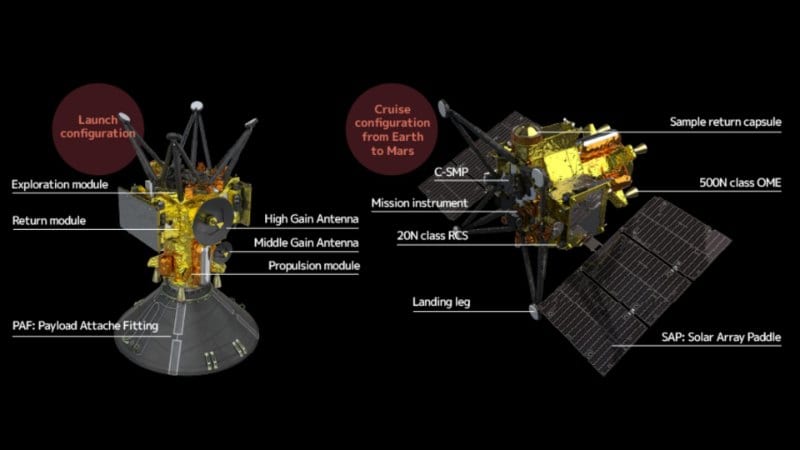
According to JAXA, there are highly anticipated outcomes from this mission. “Remote-sensing observations by the MMX spacecraft and the detailed analyses of the returned sample will determine whether Phobos and Deimos are remnants of early Mars created from debris produced by a giant impact with the young planet,” the MMX mission page says, “or whether the moons are asteroids captured by Mars's gravity that brought material from the outer solar system.” Besides this, the data might also reveal how atmospheric material circulates and escapes into space, providing insights into how these processes changed Mars over billions of years.
More on Starlust
UAE reveals lander for its bold mission to seven asteroids; Launch expected in March 2028
ESA’s Hera spacecraft gets first glimpse of target asteroid Didymos that was hit by NASA