NASA confirms Artemis II crew saw five lunar impact flashes—‘Most ridiculous thing I’ve ever seen’
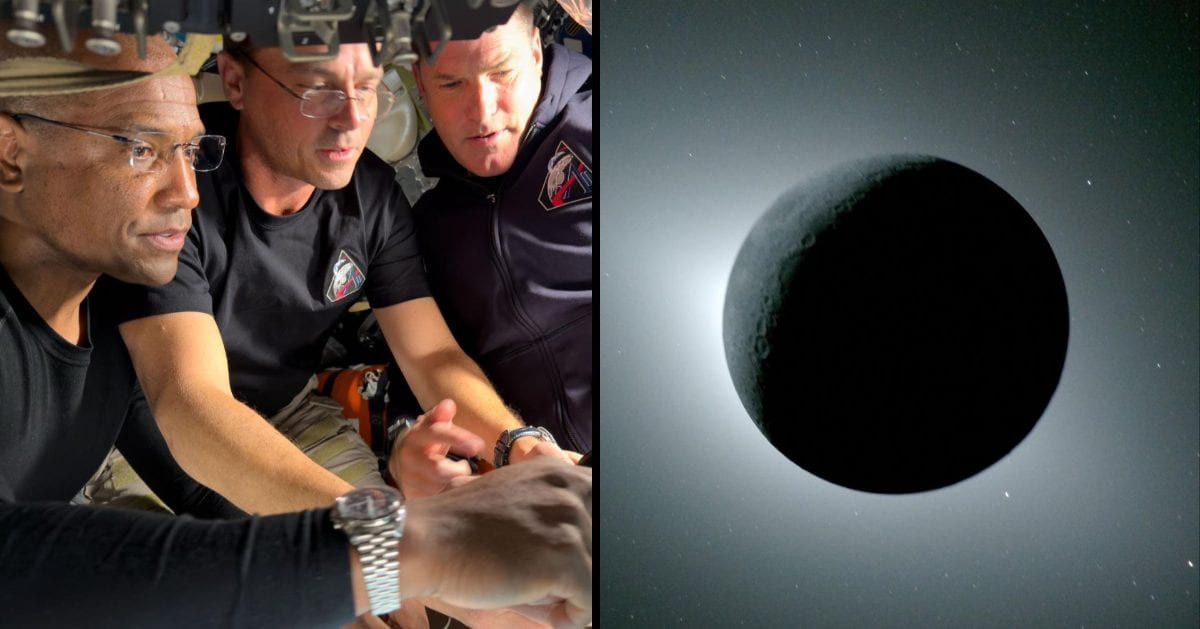
NASA has released a brand-new data set from the historic Artemis II mission, which launched in April. This Preliminary Lunar Science Report, which you can access here, features thousands of new images and hundreds of minutes of crew audio from the time when four humans looped around the Moon for the first time in over five decades. Artemis II lifted off on April 1 with NASA astronauts Reid Wiseman, Victor Glover, Christina Koch, and Canadian astronaut Jeremy Hansen in what was the first crewed mission to the Moon since Apollo 17 in 1972. The mission completed several firsts, and the astronauts were treated to jaw-dropping visuals of Earth, the Milky Way, and a total solar eclipse.
Artemis II update! We just dropped 814GB of observations — including nearly 1,000 new images and 521 minutes of crew audio — in our Artemis II Preliminary Lunar Science Report: https://t.co/qHFSHiJUza https://t.co/vnAC5gByT1
— NASA (@NASA) October 7, 2026
What stood out the most, however, were the impact flashes spotted by the crew as they flew over the far side of the Moon. The astronauts reported seeing tiny flashes of light resulting from meteoroids hitting the lunar surface at high speeds, a phenomenon that had been spotted by Apollo astronauts as well.
‘Really leaves us speechless’: Impact flashes blew away Artemis II crew
On April 6, the Orion spacecraft made its closest flyby and flew behind the far side of the Moon—the side that is not visible from Earth. Among the tasks assigned to the astronauts during the flyby was collecting imagery and taking notes of their observations. While they anticipated the impact flashes and prepared for them in pre-flight training, the audio released by NASA reveals how blown away they were upon seeing them firsthand.
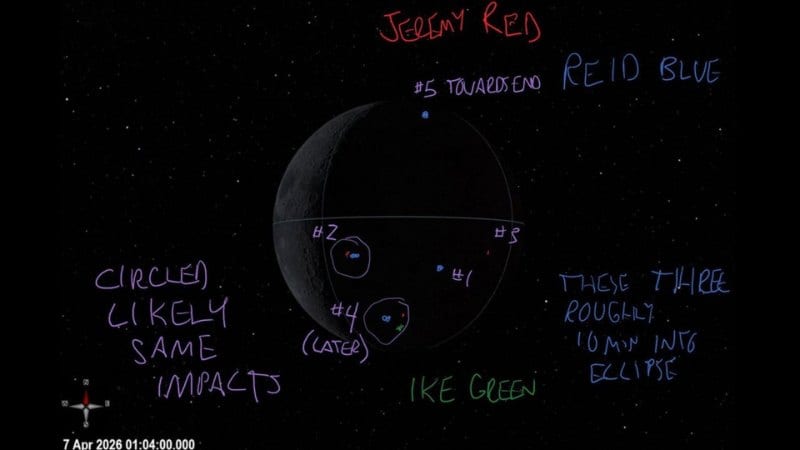
“This is the most ridiculous thing I’ve ever seen in my life,” Artemis II commander Wiseman was heard telling his crewmates. In a radio message to the Lunar Science Team at NASA’s Johnson Space Center, Wiseman confirmed that he and Hansen saw a total of five impact flashes spread across the Moon. “It was not sunglint off of particulate from the thrusters or the purge tanks. It was definitely impact flashes on the Moon,” Wiseman said. The science team later confirmed the sightings after ruling out other sources such as cosmic rays or reflections from the spacecraft.
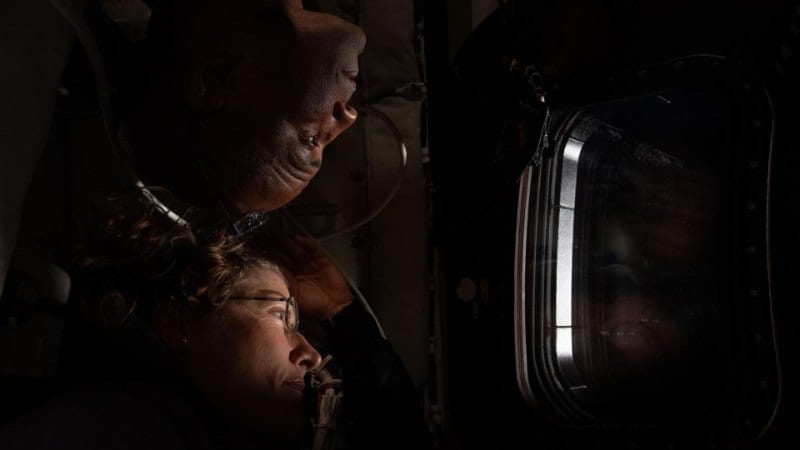
According to NASA, the flashes were observed during a planned loss of communications when Orion was on the far side of the Moon at a distance of about 4,067 miles from the surface. Interestingly enough, these impacts occurred while the Moon had blocked the Sun from the crew’s perspective, creating a solar eclipse that provided ideal conditions for photography.
For nearly an hour, the far side was completely dark, which made spotting the flashes very easy. “The crew’s direct observations of this process on the Moon’s far side provided a rare dataset that will help us understand how often these small impacts occur, which is essential for assessing long-term risks to future lunar habitats and infrastructure,” NASA said in its report.
‘I don’t think the human mind is equipped to look at this’
Another mind-blowing observation by the crew was of the total solar eclipse, which lasted 54 minutes. Unlike on Earth, the Moon blocked the Sun for much longer, and it appeared huge since the astronauts were relatively close to the surface. “I don’t think the human mind is equipped to look at this,” Wiseman said as they photographed the Moon during this once-in-a-lifetime event.
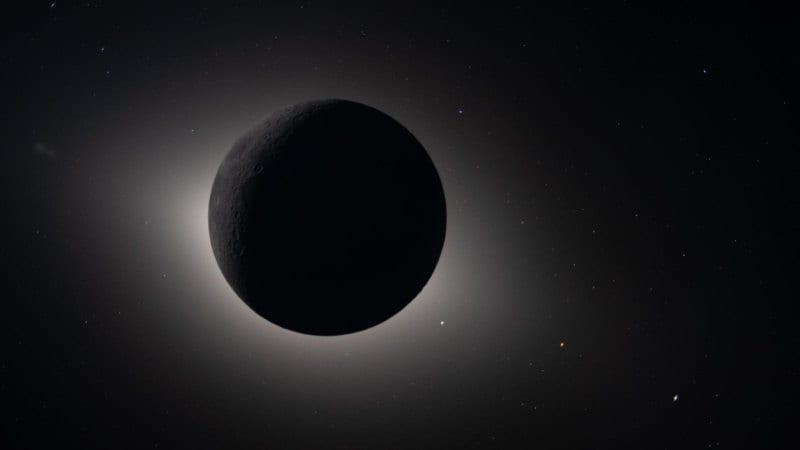
"I don’t even have words for it. It’s like something out of a sci-fi movie. I’m waiting for that thing to like open up and just come and get us or something. It looks so unreal," Glover described the sight. Apart from the flashes and the eclipse, the astronauts also spotted the planets Mars and Saturn, the Milky Way, a dwarf galaxy named the Large Magellanic Cloud, the Carina Nebula, and a star cluster, among other objects, from their windows.
More on Starlust
Artemis II in numbers: 10 facts about NASA’s historic Moon mission