First set of Artemis II lunar flyby photos shows solar eclipse, Earthset, Earthrise and more
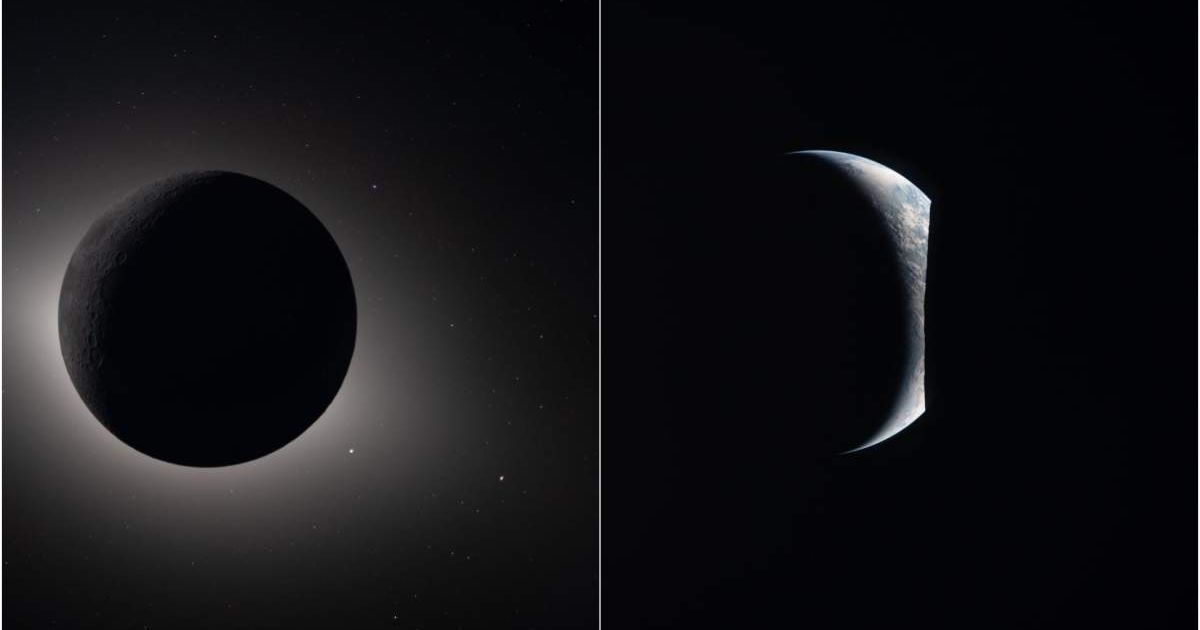
The astronauts captured some never-before-seen lunar views during the historic seven-hour flyby.
(L) The Moon fully eclipsing the Sun during the Artemis II lunar flyby. (Image Source: NASA) (R) Earthrise captured through Orion during the lunar flyby. (Image Source: NASA)

NASA has released the first official images taken by the Artemis II crew during their historic lunar flyby aboard the Orion spacecraft. And they are as scientifically important as they are breathtaking. “Our four Artemis II astronauts—Reid, Victor, Christina, and Jeremy—took humanity on an incredible journey around the Moon and brought back images so exquisite and brimming with science, they will inspire generations to come,” said Dr. Nicky Fox, the associate administrator for Science Mission Directorate, NASA Headquarters in Washington, per a NASA press release.
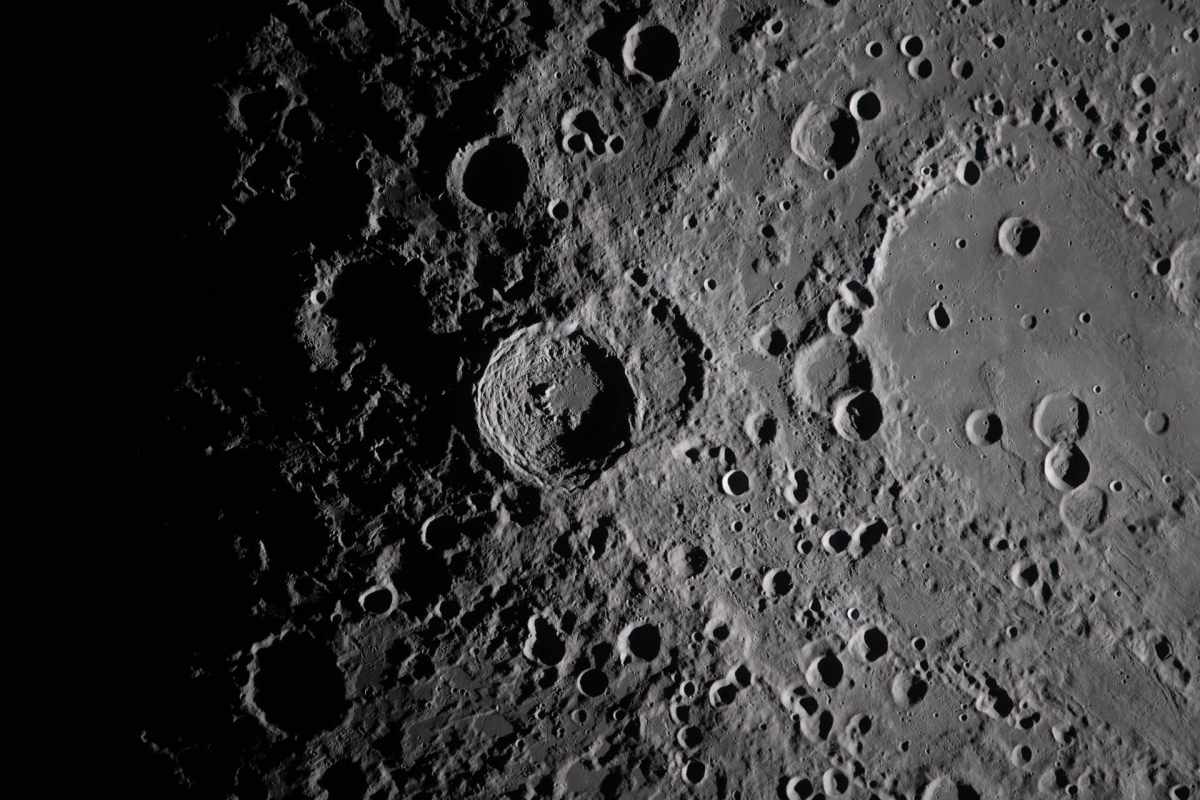
A close-up view taken by the Artemis II crew of Vavilov Crater on the rim of the older and larger Hertzsprung basin on April 6, 2026. (Image Source: NASA)

During the seven-hour-long flyby, the crew captured photos of impact craters, ancient lava flows, and surface fractures, all of which are expected to help scientists get better insights into the Moon's geological evolution. And while images of the Moon aren’t “new” by any means, the Artemis II astronauts are the first humans in over five decades to actually take pictures from the Moon’s vicinity. Over this massive gap in time, photography and imaging equipment have advanced to a large extent in terms of quality, which makes the new images all the more interesting to observe.
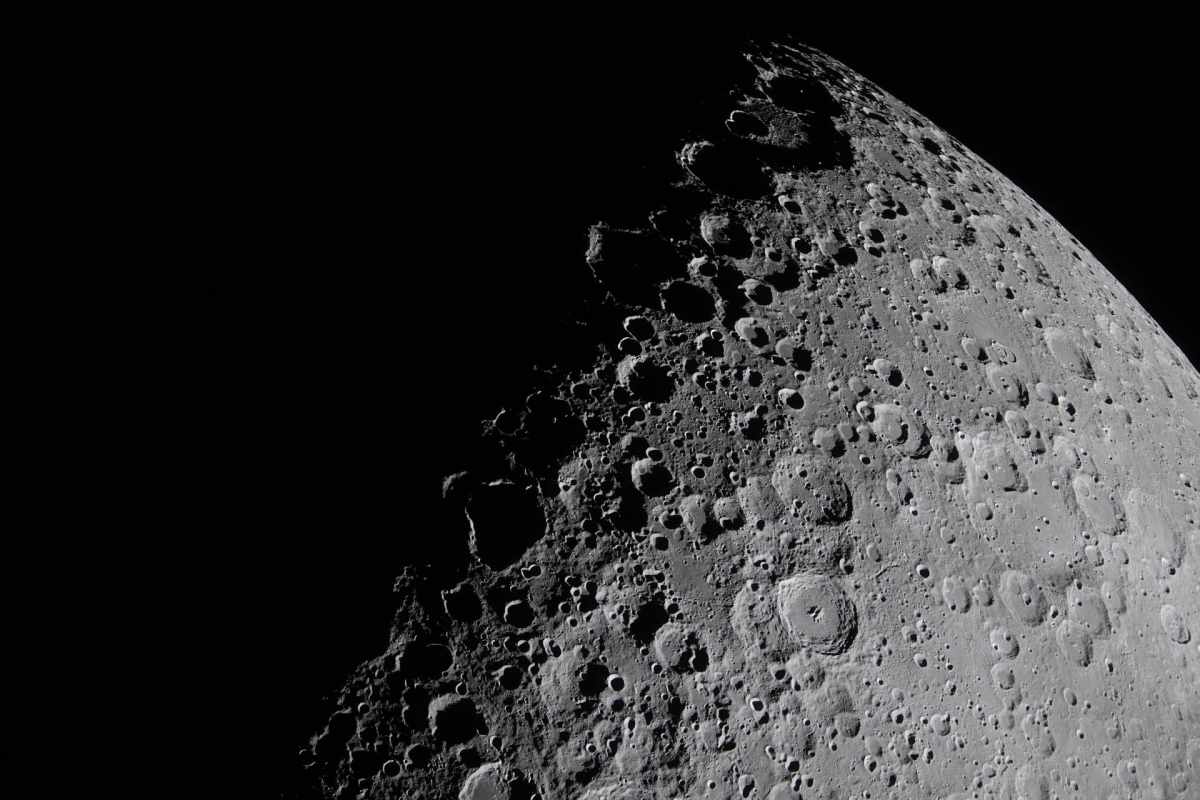
The Artemis II crew captures a portion of the Moon coming into view along the terminator – the boundary between lunar day and night. (Image Source: NASA)
The Artemis II crew captures a portion of the Moon's far side coming into view along the terminator – the boundary between lunar day and night. (Image Source: NASA)

Moreover, previous crewed missions from the Apollo era captured images a little too close to the lunar surface. However, Orion’s closest approach to the Moon was at a distance of 4,067 miles, which gave the astronauts a unique vantage point. NASA describes the Moon’s apparent size from the spacecraft as that of a basketball held at arm’s length. 
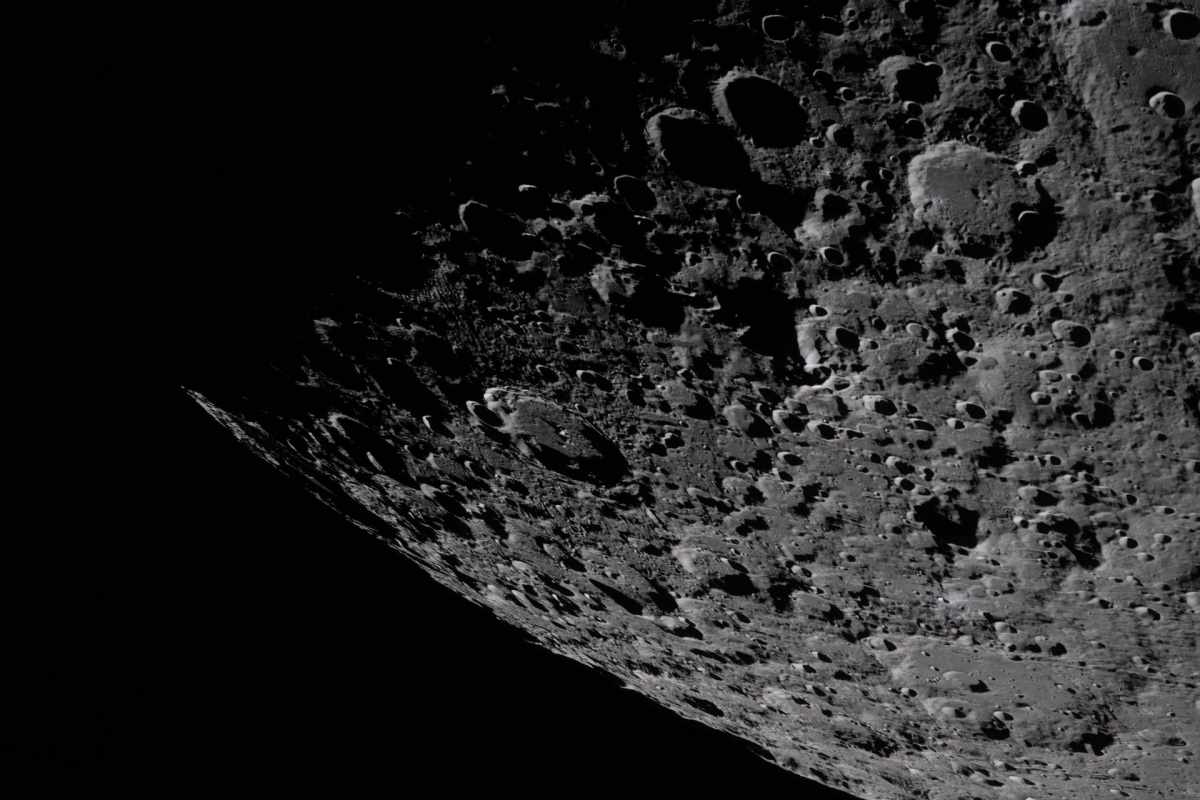
Captured by the Artemis II crew, the heavily cratered terrain of the eastern edge of the South Pole-Aitken basin is seen with the shadowed terminator. (Image Source: NASA)

“At first, their descriptions didn’t quite match what we were seeing on our screens,” said Jacob Bleacher, NASA’s chief exploration scientist at the agency’s headquarters. “Now that higher resolution images are coming down, we can finally experience the moments they were trying to share and truly appreciate the scientific return provided by these images and our other research on this mission.” Scientists will also make use of amateur astronomer observations made from Earth and compare them to the timing and location of the images to refine the Artemis II crew’s findings.
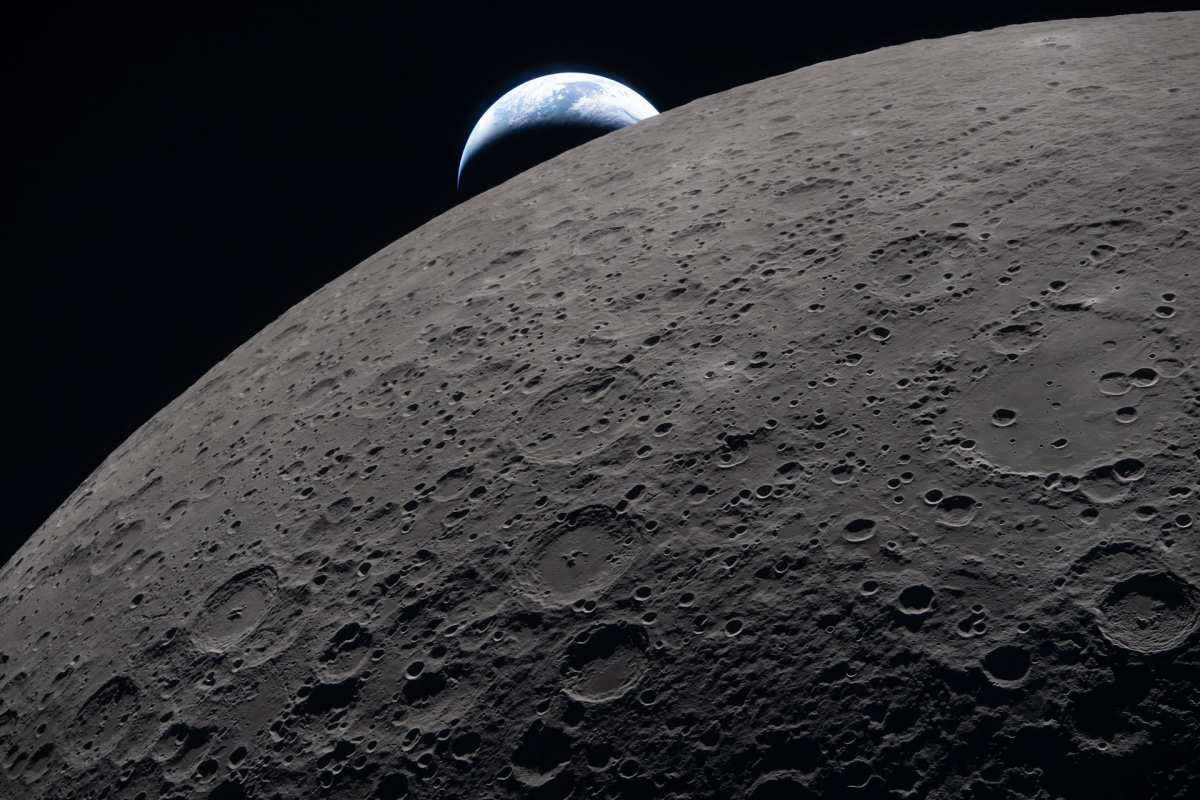
Earthset captured by the Artemis II crew at 6:41 p.m. EDT on April 6, 2026. (Image Source: NASA)

Among other things, Orion's trajectory around the Moon allowed the crew to observe an Earthset and an Earthrise. Moreover, during the flyby, they saw the Moon completely blocking the Sun from their perspective, resulting in a solar eclipse that made the otherwise imperceptible solar corona visible. 
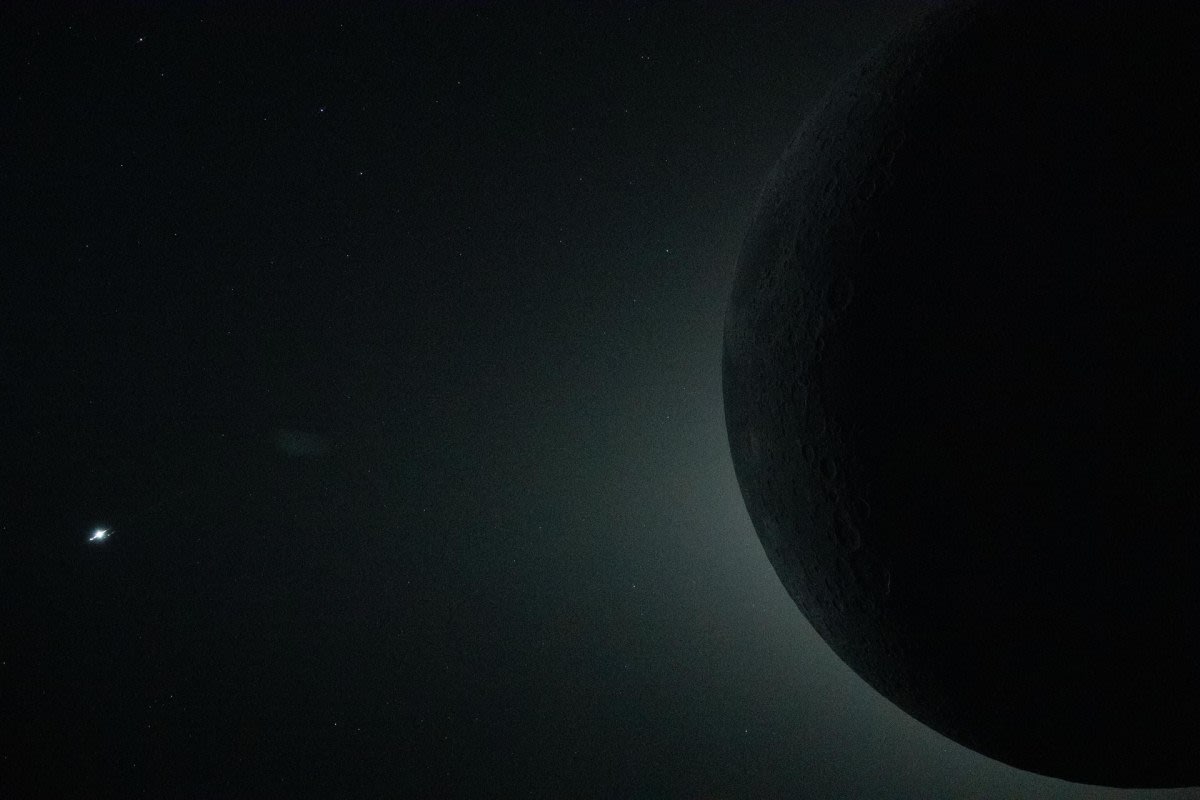
A part of the Moon is visible here in this photo of the total solar eclipse captured by the Artemis II crew. (Image Source: NASA)

NASA also received reports of meteoroid impacts as well as color variations on the surface of the Moon. Of course, more images are expected to arrive as Orion makes its way back to Earth, ready for splashdown on Friday, April 10. 

More on Starlust

Artemis II crew just had a long-distance call with ISS astronauts: Here's what they discussed
‘This time we won't just leave footprints': Donald Trump to Artemis II crew after historic lunar flyby

MORE STORIES

The orbital period of an asteroid provides clues to the shortest path to the Red Planet.
11 hours ago
NASA has invited people from all over the world to help support their Artemis program and future human space exploration through several citizen science projects.
16 hours ago
'Binary stars were once seen as hostile environments for planet formation. What we're finding is that they can actually be extremely productive.'
17 hours ago
The metal deposits date back to a time when Mars' climate was changing from wet to dry
4 days ago
Scientists have found that liquid-water habitable zones can overlap with ultraviolet habitable zones around low-mass stars.
4 days ago
Although Uranus possesses rings, they are not as structured and bright as the rings of Saturn. They are rather dark, narrow, and tough to study.
5 days ago
ISS Expedition 74 aims to boost space health and future medical breakthroughs on Earth.
5 days ago
Citizen scientists will look for warped spacetime using data from the European Space Agency's Euclid telescope.
6 days ago
A boxful of soil-living worms was sent to the International Space Station to assess the dangers.
7 days ago
The ancient ocean on Mars probably occupied a third of its surface.
Apr 20, 2026