All about LISA: NASA and ESA’s million-mile telescope that will detect invisible ripples in space-time
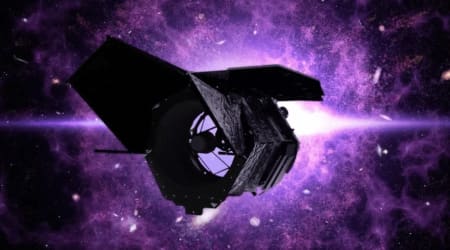
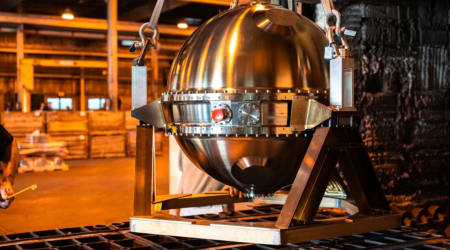
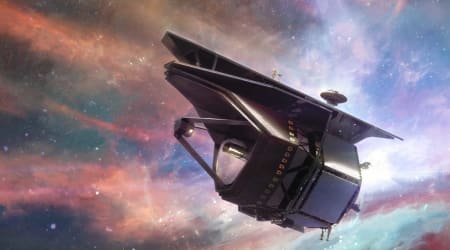
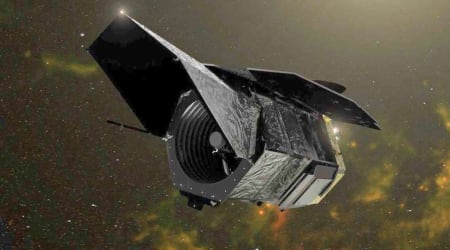
NASA and ESA (European Space Agency) are jointly developing a brand new mission that will detect ripples in space-time called gravitational waves. Scheduled to launch in the mid-2030s, this mission will be led by ESA, whereas NASA will contribute the telescopes and other critical hardware along with engineering and scientific support. On October 8, the American agency announced progress in the development of a new all-glass telescope for the mission, noting that the Engineering Test Unit, a prototype version of the telescopes will be designed, assembled, and integrated by L3Harris Technologies. This will be the final step towards the production of flight hardware.
The LISA mission
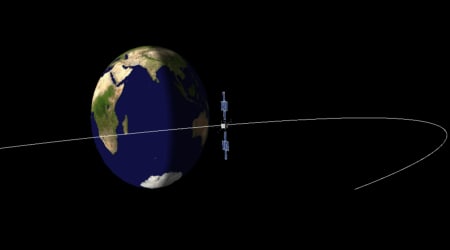
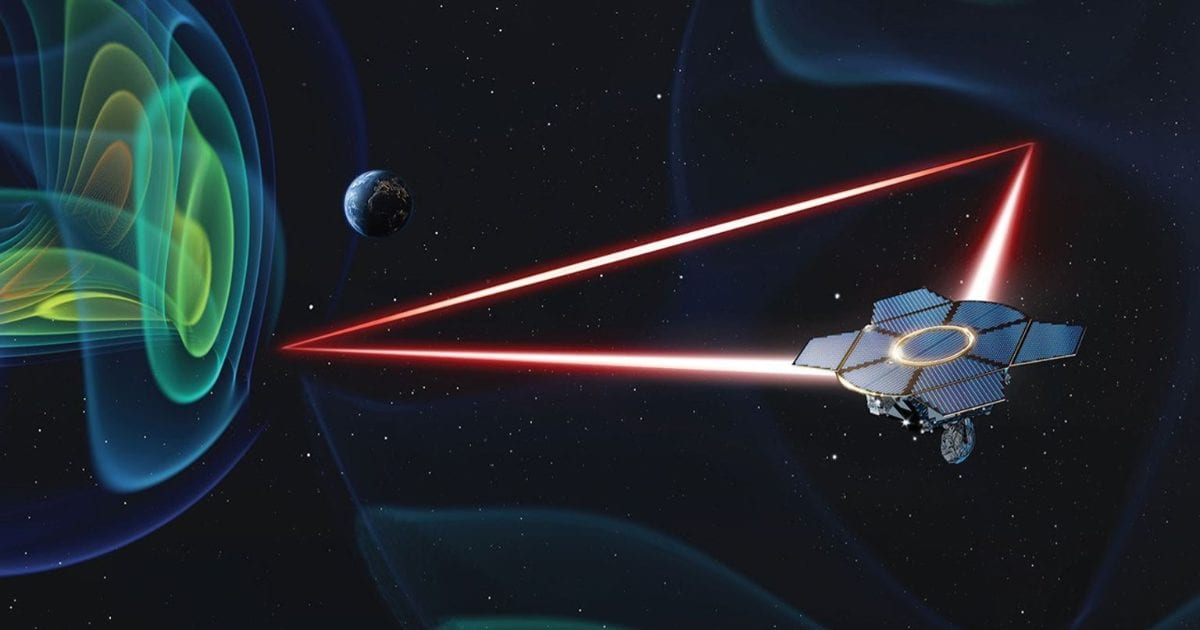
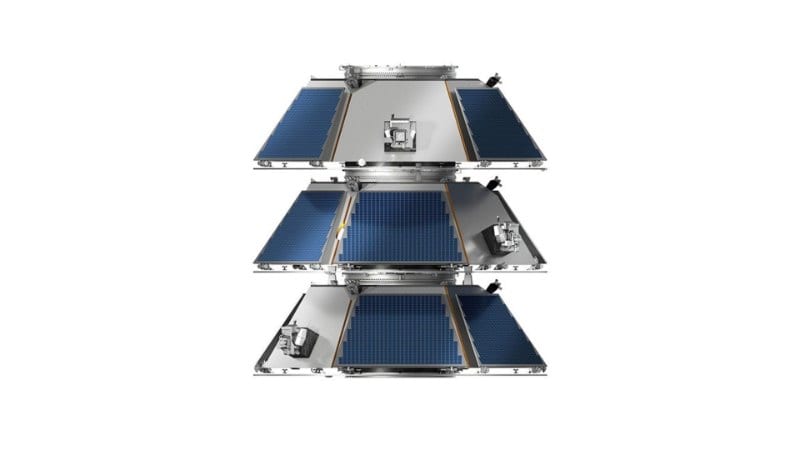
Short for Laser Interferometer Space Antenna, the LISA mission will include three telescope-equipped spacecraft that will be deployed in a heliocentric orbit trailing behind Earth. The satellites will form a giant equilateral triangle in space with each of them separated by a distance of 1.6 million miles. According to NASA, each satellite will have two telescopes, and they will be connected with each other via infrared laser beams. Interestingly, each of the spacecraft will carry two Rubik's-cube-sized, free-floating cubes, and scientists will measure the gravitational waves by noticing the changes in their relative distances caused by the stretching and squeezing of space by said waves. Ira Thorpe, LISA’s project scientist at NASA, said that these changes will be smaller than the width of a helium atom.
But by monitoring these low-frequency changes, which is not possible with facilities on Earth, Thorpe stated LISA will “detect mergers of monster black holes billions of light-years away, map compact pairs of white dwarfs, neutron stars, and stellar-mass black holes in our own cosmic backyard, and perhaps provide new insights into gravity itself.” L3Harris provided a prototype telescope to NASA in 2024, and the agency put it through rigorous testing, the learnings of which the agency will incorporate going forward.
What are gravitational waves?
NASA defines gravitational waves as invisible ripples in space-time that propagate at the speed of light. They were first predicted by Albert Einstein’s general theory of relativity in 1916, and the first detection was made in 2015 by ground-based observatories. These waves are created by energetic cosmic events such as the explosion of a dying star (supernova), the collision of two stellar remnants, black hole mergers, or they might even be waves created in the earliest moments of the universe after the Big Bang.
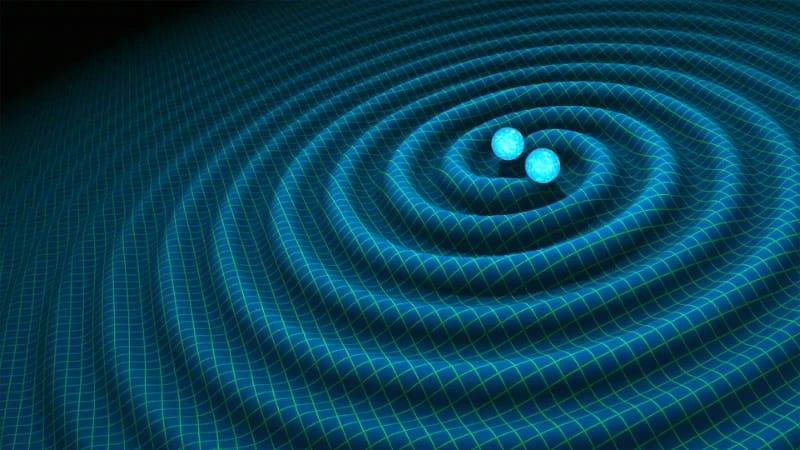
The discovery of gravitational waves was made using the twin Laser Interferometer Gravitational-Wave Observatory (LIGO) detectors, which detected signals from the merger of two black holes from 1.3 billion years ago. It was the first time the collision of two black holes had been observed decades after the prediction. Scientists had announced in 2016 that the black holes that generated the discovered waves were about 29 and 36 times more massive than the Sun. They also revealed that about three times the mass of the Sun was converted into gravitational waves in a fraction of a second, which produced a peak power output of about 50 times greater than the visible universe. With LISA now under construction, astronomers hope that it will open new windows into the study of gravitational waves in ways not possible from Earth.
More on Starlust
NASA's Webb helps pinpoint location of farthest fast radio burst—it's not what scientists expected
Mysterious radio signal potentially from a distant 'Super-Earth' puzzles scientists—is it alien?