Looking ahead at Artemis II Flight Day 2: Translunar injection, video call with crew and more
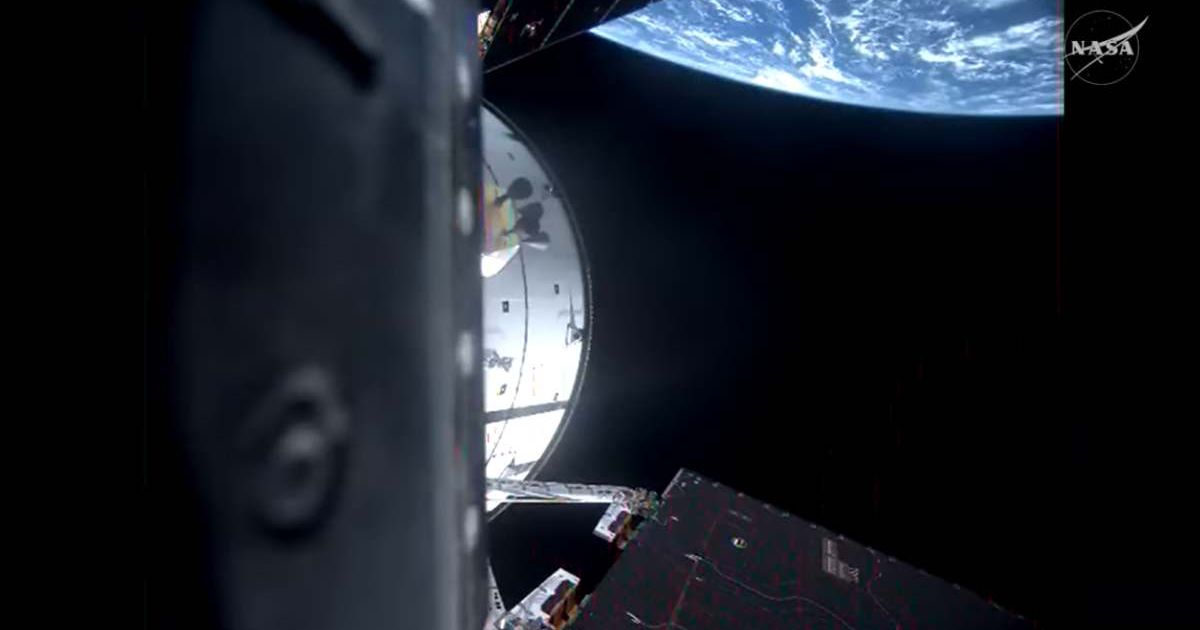
The crew of Artemis II will have quite a few items on the agenda for Day 2 of their flight to the vicinity of the Moon. After wrapping up an eventful Day 1 with a four-and-a-half-hour nap, commander Reid Wiseman and pilot Victor Glover will start the second day setting up and checking out Orion’s flywheel exercise device, on which they will also work out in the first half of the day. Mission specialists Christina Koch and CSA’s Jeremy Hansen will exercise later in the day.
The crew have successfully flown and controlled the Orion spacecraft, demonstrating the capabilities needed for docking with human landing systems. pic.twitter.com/ad1uC9E6AX
— Lockheed Martin Space (@LMSpace) April 2, 2026
One of the most important checkpoints of the mission will be the translunar injection (TLI) burn, which will commit the astronauts to a free return trajectory around the lunar far side, thereby also setting them on a path back to Earth. This means that the crew must inspect the health of all components of their spacecraft during their 23-hour operations in the relative safety of Earth’s orbit. So far the mission has proceeded rather smoothly, barring a communications issue and a brief toilet scare within Orion.

Christina Koch will be the one responsible for setting up Orion’s system to perform the burn. The burn produces over 6,000 pounds of thrust from the European Service Module’s orbital maneuvering system engine. According to NASA, this main engine has the capacity to make a car go from 0 to 60 miles per hour in about 2.7 seconds.
Signal acquired! 📡
— NASA Artemis (@NASAArtemis) April 2, 2026
Engineers at @NASAJPL have confirmed that the Orion spacecraft is communicating with the Deep Space Network. For the first time in over 50 years, we’re receiving a signal from a spacecraft carrying humans toward the Moon. pic.twitter.com/PoqyF7s7W8
After the crew is set on course to the Moon via the TLI, a mission status briefing will be held at around 8:30 p.m. EDT. Thanks to NASA’s communication networks for the Artemis program, including the Deep Space Network, one can then look forward to the downlink event for live updates from the crew from within their quarters. The first one has been planned for 10:24 p.m. EDT tonight and will be available live on NASA's YouTube channel.
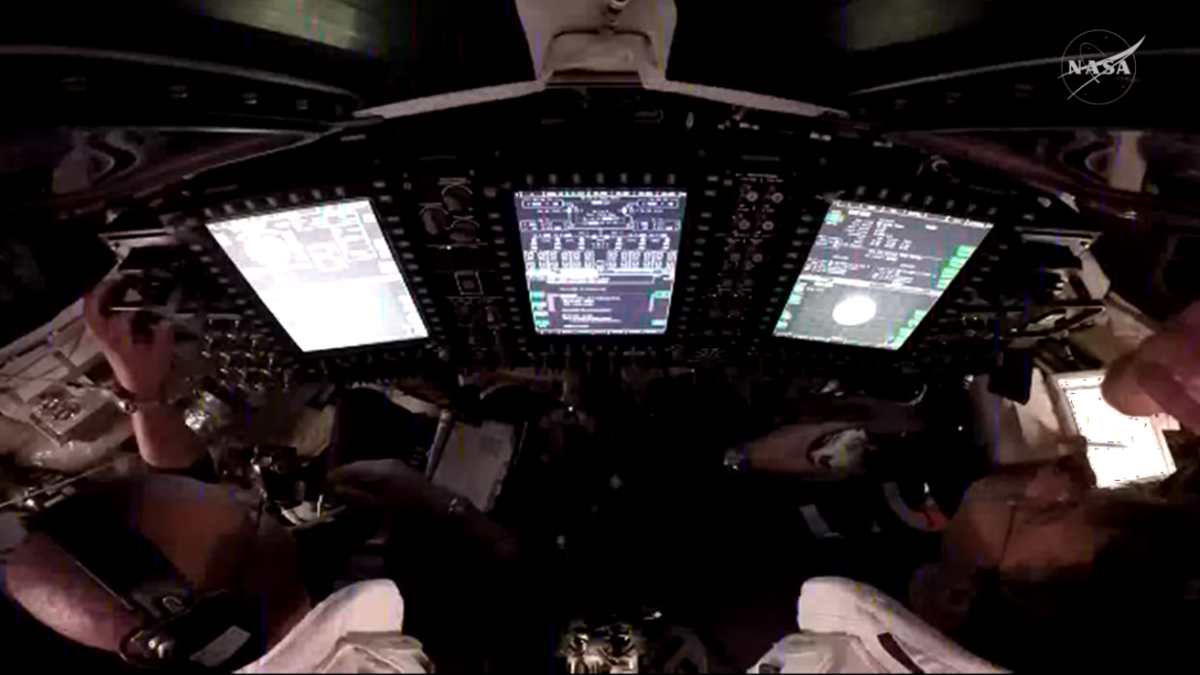
Such downlink events, which also include those to be exclusively hosted by the CSA, will take place across the length of the 10-day lunar mission, except for Day 7—when Orion will exit the Moon's sphere of influence—and Day 10—when the crew will splash down in the Pacific Ocean. Most of these chats have been scheduled for the latter half of the days, but their timings, although already announced by NASA, are subject to change.
More on Starlust
Meet ‘Rise,’ Artemis II’s zero-gravity indicator inspired by an iconic Apollo moment
Artemis II completes proximity operations demonstration; Orion's perigee raise burn to follow