JAXA confirms MMX spacecraft is in good health as it cruises towards Martian moon Phobos
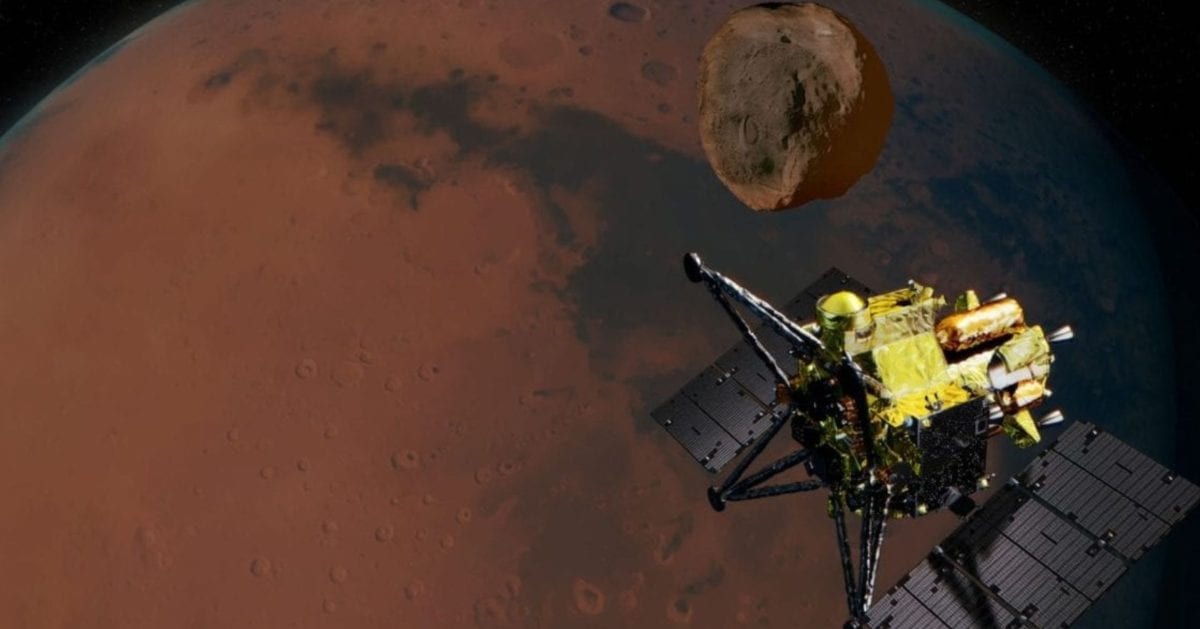
The Japan Aerospace Exploration Agency (JAXA) has shared the first update on its Martian Moons eXploration (MMX) mission, which launched towards Mars on October 19 (EDT). The agency said on Wednesday that the spacecraft is in good health and teams are on track to conduct functional checks in the coming days. In an official statement, JAXA shared, “The critical sequence during the initial operations of the Martian Moons eXploration (MMX) spacecraft, which launched on October 20, was successfully completed and the spacecraft is in good health. This marks the completion of the initial critical operations phase.”
What a moment! #MMX has launched from Tanegashima🚀 A proud milestone for 🇺🇸🇯🇵 cooperation in planetary exploration 💫 Humanity’s next leap in discovery begins now. 🌍🚀 #NASA #JAXA #MarsExploration @usembassytokyo https://t.co/wgkiJMJJrF
— 在福岡米国領事館 (@USConsFukuoka) October 19, 2026
“JAXA will now conduct initial functional checks of the spacecraft’s onboard equipment while preparing for the outbound cruise operations phase toward the Martian system,” the statement further read.
About the MMX mission
The MMX mission launched on Japan’s H3-24L rocket at 3:41 pm EDT on October 19 (4:41 am local time on October 20) from the Tanegashima Space Center, and it will reach Mars in 10 months. It is the world’s first endeavour to collect samples from Phobos, one of the two moons of Mars, and study the history and the evolution of the Martian system. Scientists hope that once the samples reach Earth in 2031, they will be able to pinpoint the origin of the Martian moons, which may be asteroids caught in the red planet’s orbit or may have been born out of a collision.
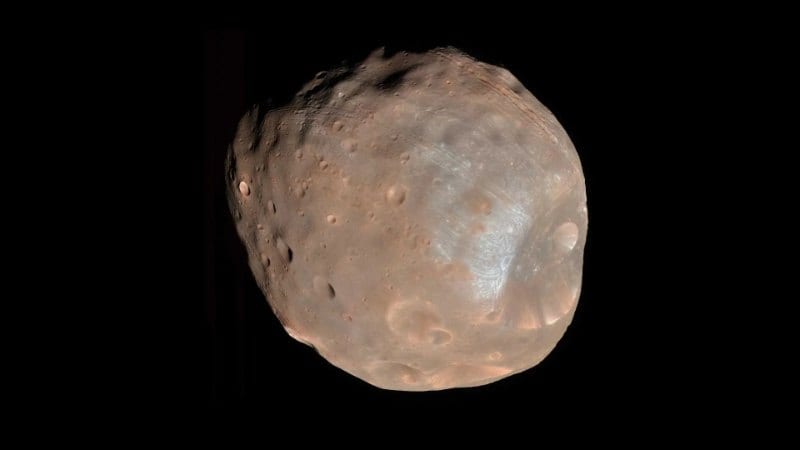
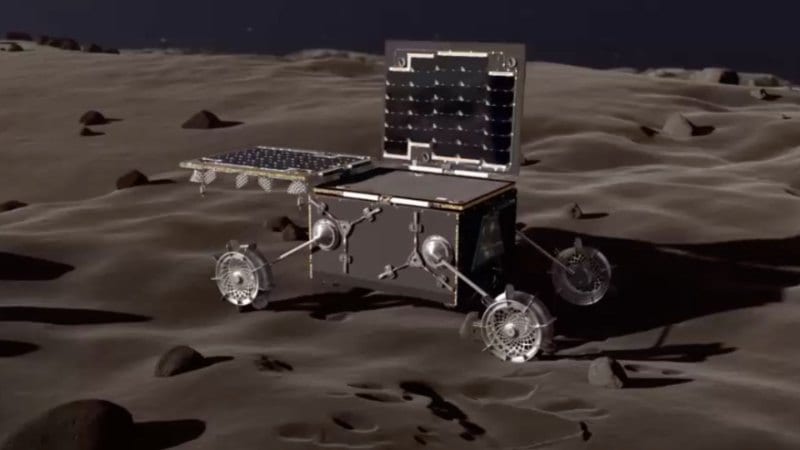
To collect the samples, MMX will land on Phobos in 2029 after releasing a tiny rover earlier that year. It has two sampling tools that will collect at least 10 grams of regolith and store it inside a return capsule that will bring it to Earth. The lander and the rover have a total of 11 instruments that will be used to study topography, mineral composition, chemical composition, radiation, and take high-resolution pictures of Phobos. The mission will also focus on remotely studying Mars and Deimos—the second moon—before heading back to Earth with the samples.
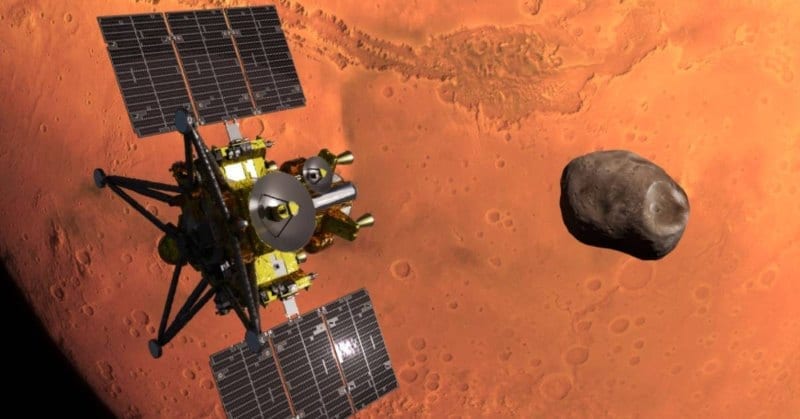
“MMX will be the first mission that returns to Earth after visiting the Mars system,” stated the European Space Agency (ESA), one of the collaborators in this mission. “The ability to make such round trips could be interesting for future robotic missions that bring back samples from Mars itself, and potentially even visiting Mars with humans in the future.” According to JAXA, the spacecraft will enter a quasi-satellite orbit around Phobos and begin detailed observations of the Moon before deploying the rover. The sample collection process will be over by 2030, and it will take approximately a year for the return capsule to reach Earth.
Japan has already had great success before with similar missions. In 2003, it launched Hayabusa towards the asteroid 25143 Itokawa, with the mission becoming the first to bring materials from a near-Earth object in 2010 for analysis on Earth. JAXA did it again in 2014 with Hayabusa2, which brought back samples from the asteroid 162173 Ryugu in 2020.
More on Starlust
Japan’s H3 rocket spotted in space after launching MMX mission to Martian Moon Phobos; watch video
ESA's Mars Express reveals how the most visually striking cloud on the Red Planet forms