Japan’s historic sampling mission to Martian moon Phobos launches today—time and livestream details
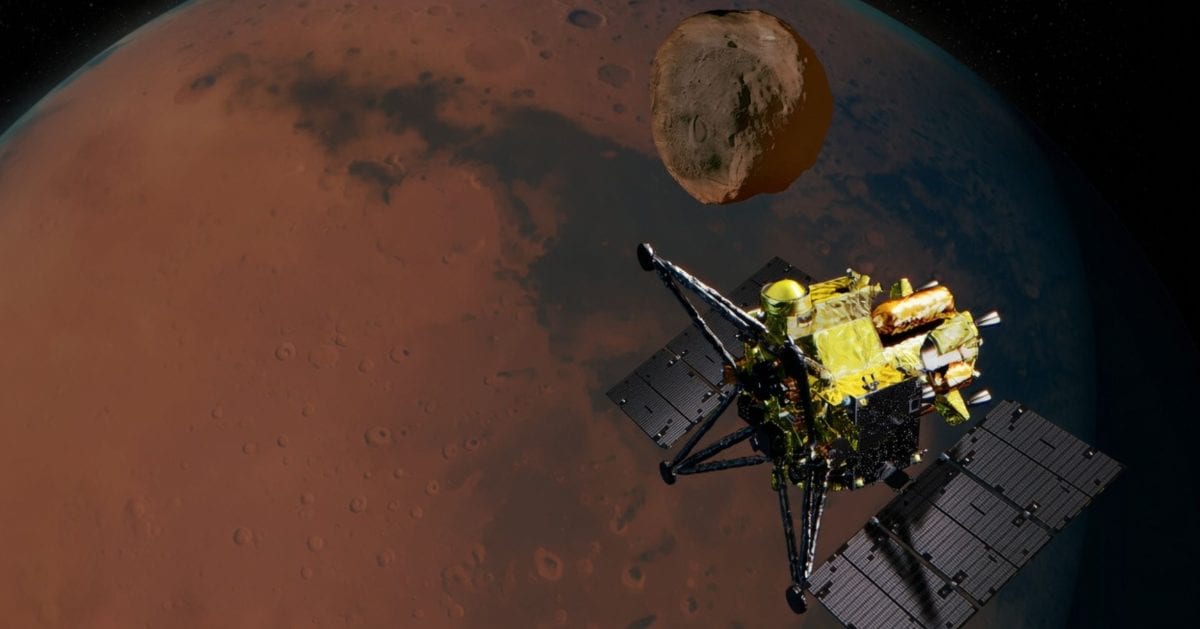
Japan is launching its sampling mission to the Martian moon Phobos today. The H3 rocket is scheduled to lift off on October 19 with the Martian Moons eXploration (MMX) mission at 3:41 pm EDT (21:41 CEST) from the Tanegashima Space Center, kickstarting almost a year-long journey to the neighborhood of Mars. The mission will be the first to collect samples from a moon other than ours and complete a round-trip from the Martian neighborhood.
Martian Moons eXploration (MMX) aboard the H3 Launch Vehicle No. 10 is set to launch on October 20! Watch the launch live via the link below 🔽 https://t.co/UErHam1XcI 🎥 Activity Report Mini #MMX #H3F10 #JAXA https://t.co/tSTDIxyYAA
— JAXA(Japan Aerospace Exploration Agency) (@JAXA_en) October 18, 2026
Where to watch MMX launch livestream?
The Japan Aerospace Exploration Agency (JAXA) has planned a livestream for the launch. The webcast will begin about an hour prior to the scheduled liftoff, at 2:45 pm EDT, and you can watch it live in English on JAXA’s official YouTube channel.
Why MMX matters
The primary objective of the mission is to study Phobos and bring home its regolith to find out how the two moons around Mars formed—whether they’re asteroids caught by the planet’s gravity or if they originated from a giant collision. JAXA says that apart from bringing samples for analysis in laboratories, the mission will investigate the topography, internal structure, composition, and gravity of the moon to decode the history of the Martian sphere and its evolution.
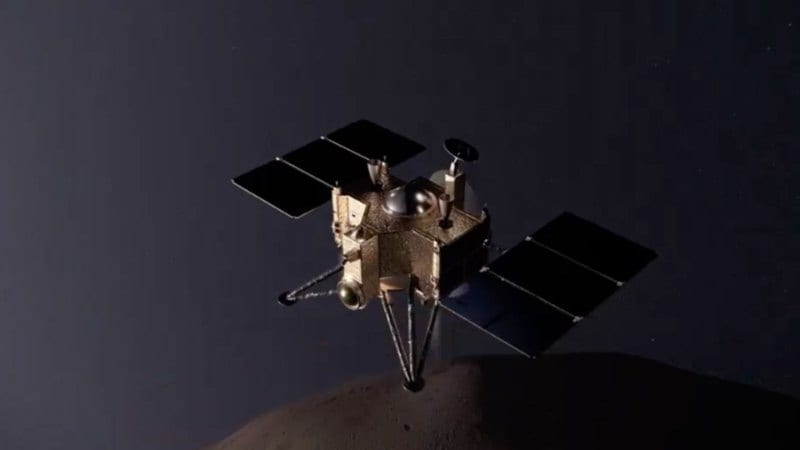
“Through detailed observations and analysis of the samples obtained from Phobos, this mission seeks to clarify the formation of the Martian sphere and the Solar System, explore how life began, and pave the way for future deep-space exploration,” the mission page says. The samples (at least 10 grams) are expected to return to Earth in 2031, but before that, MMX has a lot to accomplish. The spacecraft, which features a lander and a rover, will reach Mars in August 2027 and enter the orbit of Phobos a month later. It will then study the two Martian moons Phobos and Deimos from orbit before releasing the rover ‘Idefix’ in early 2029. Later that year, the lander will finally touch down on Phobos and collect the sample before packing it in a return capsule. It will then lift off from Phobos and depart the Martian system in 2030, eventually releasing the sample capsule, which will land in a remote region in Australia in 2031.
According to JAXA, the MMX spacecraft consists of three modules—the propulsion module which will propel it to Mars, the exploration module with the lander and rover, and the return module that will contain the sample canister. When fully integrated, the spacecraft stands 5.3 meters (17.4 feet) tall and measures 9 meters (29.5 feet) wide when its solar panels are deployed. The mission includes 11 instruments—seven on the lander and four on the rover—for tasks such as collecting data on topography, mineral composition, and chemical composition, measuring radiation, and taking high-resolution pictures of Phobos.

The lander has two sampling instruments that use different approaches to collect the regolith. The first is the C (corer) Sampler, which consists of a robotic arm and cylindrical corer that will collect subsurface material from the Martian moon from a depth of 2 centimeters and store the core soil tube in the sample return capsule. The other is the P (pneumatic) Sampler built by Blue Origin-owned Honeybee Robotics. It uses ultra-pure nitrogen gas to loft material from the surface of Phobos and store it into the sample container. JAXA believes that this mission will not only provide insights into Martian history via the collected samples but also lay the foundation for round-trip missions to the Martian sphere and access to planetary moons.
More on Starlust
ISRO completes critical crew module separation tests ahead of first uncrewed Gaganyaan mission
U.S. startup Reflect Orbital taps India-based Skyroot Aerospace's private rocket for two missions