Jeff Bezos' Blue Origin has a huge role to play in collecting samples from Martian moon Phobos
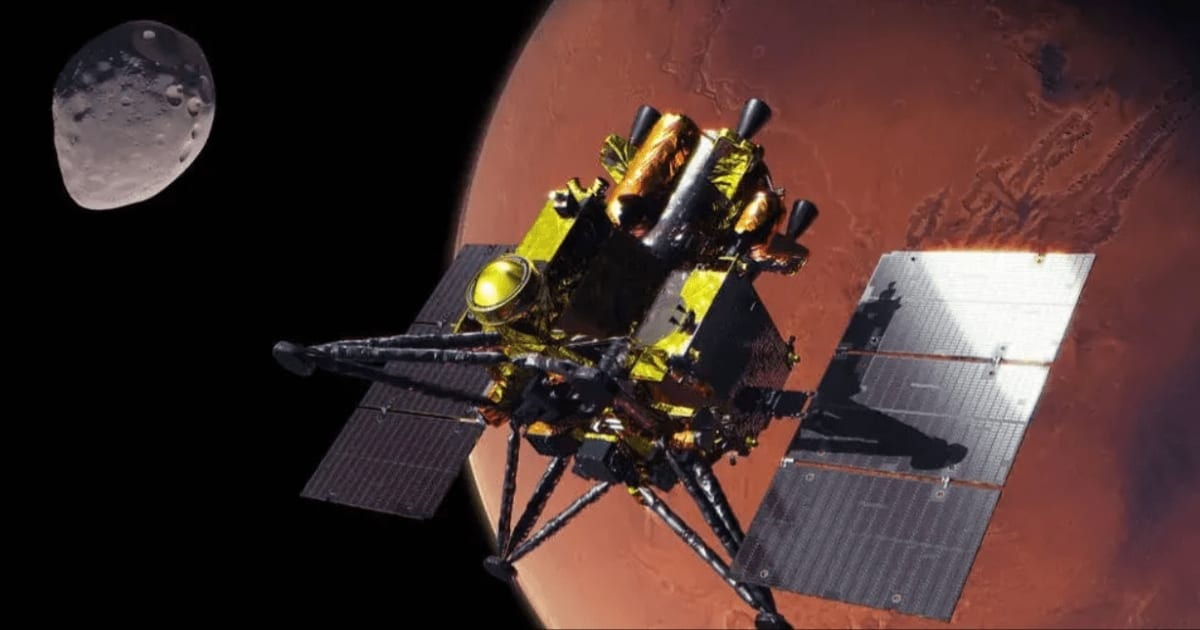
The Japan Aerospace Exploration Agency (JAXA) is preparing to launch the world’s first sample collection mission to Mars' moon Phobos on October 19, and several collaborators have come together to make it happen. Among the biggest contributors is Honeybee Robotics, a subsidiary of billionaire Jeff Bezos' Blue Origin that will help collect the valuable samples. This mission, named Martian Moons eXploration (MMX), aims to land on Phobos and collect material to find clues about how it originated. Mars has two moons (the other being Deimos), but their origin has been a mystery scientists have been trying to solve.
How Blue Origin will help the MMX mission
Engineers at Honeybee Robotics have built an instrument called the Pneumatic Sampler (P-Sampler) that will be installed on the landing leg of the MMX lander. According to a statement dated February 2023, the instrument will begin sampling operations as soon as 5 seconds after landing on Phobos and up to 3 seconds before liftoff. Yuka Matsuyama, the technical program manager of Blue Origin Exploration Systems, explains that the sampler carries a high-pressure ultra-pure nitrogen gas that will be released to kick up the Phobos regolith. The high pressure from the sampler will blow the regolith into a canister, which will be sealed inside the sample return capsule. Using pure nitrogen will make the process cost-efficient, fast, and reduce the chances of contamination.
One week until the launch window opens for @JAXA_en's Martian Moons eXploration (MMX) mission. Our Pneumatic Sampler, or P-Sampler, will soon be heading to Phobos aboard the MMX spacecraft. Designed to use high-pressure nitrogen gas to collect Phobos regolith, it will support the study of Mars’ moons and their origins. Learn more about P-Sampler: https://t.co/oDCZKDN2mj
— Blue Origin (@blueorigin) October 13, 2026
“The entire process happens in a fraction of a second. You blink, and it’s all done,” Kris Zacny, the vice president of Blue Origin Exploration Systems, said. Matsuyama said that analysis of the returned sample may help reveal if the Martian moons are captured asteroids or were born from a massive collision. According to JAXA, the sampler will collect at least 10 grams of material from Phobos.
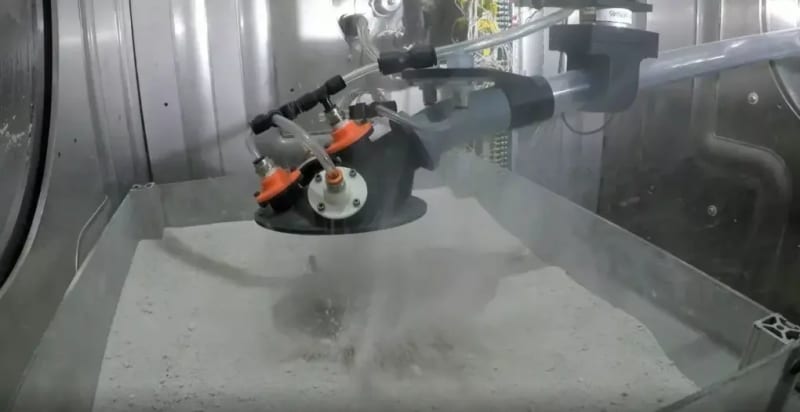
Interestingly, a sampler named PlanetVac, working on the same mechanism, was flown aboard Firefly Aerospace’s Blue Ghost lander, which touched down on the Moon in March 2025.
More about the MMX mission
The MMX mission is slated for launch at 3:41 pm EDT atop the H3 rocket from Japan’s Tanegashima Space Center. The spacecraft, consisting of a lander and a rover, will enter Martian orbit in August 2027 and will enter orbit around Phobos a month later. In early 2029, the spacecraft will release the 'Idefix' rover that will collect data on Phobos’s surface composition and provide information for the landing of the spacecraft using its four instruments.
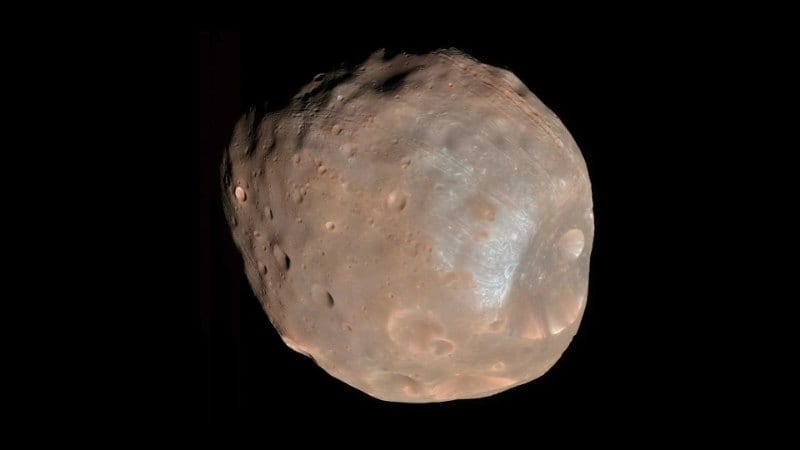
Once the sample is collected, the lander will lift off from Phobos and eventually release the return module, which will land on Earth in 2031 in Australia. The lander also has seven instruments that it will use to study Mars and Deimos from orbit on its way to Earth. Bringing samples to Earth is essential, as the sophisticated instruments in laboratories will reveal a lot more than instruments on a spacecraft.
More on Starlust
NASA tests Voyager's lunar lander against the extreme requirements of its upcoming Moon mission
'Only one chance': ESA's Rosalind Franklin rover twin navigates Mars-like conditions on Earth