The cosmos up close: 5 stunning James Webb Space Telescope images from 2025
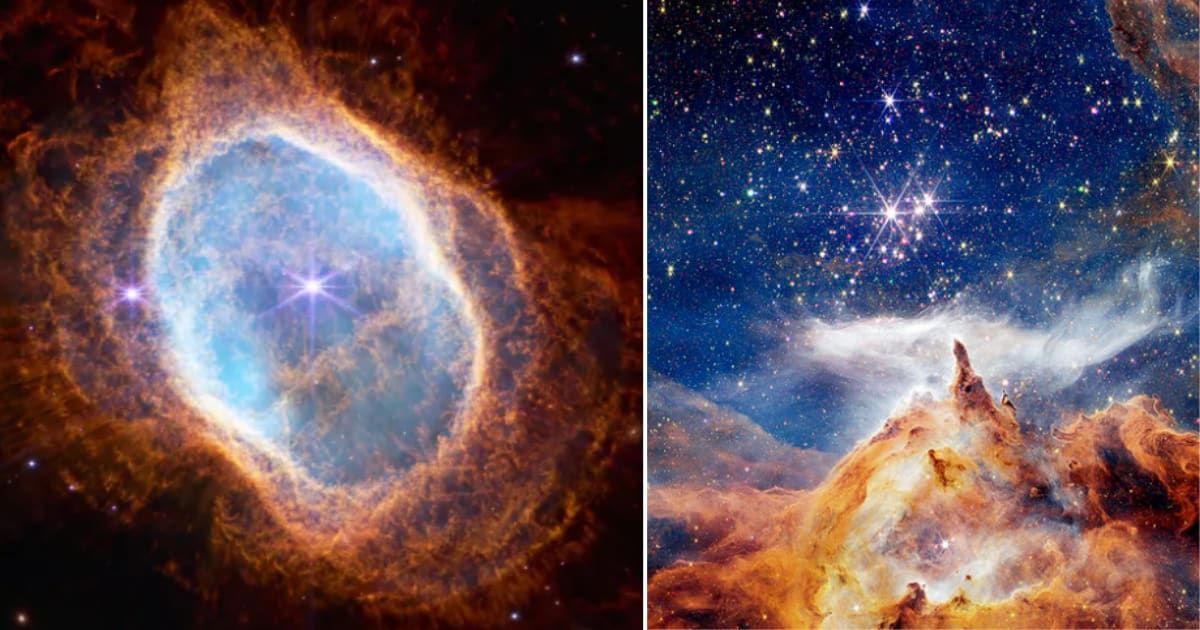
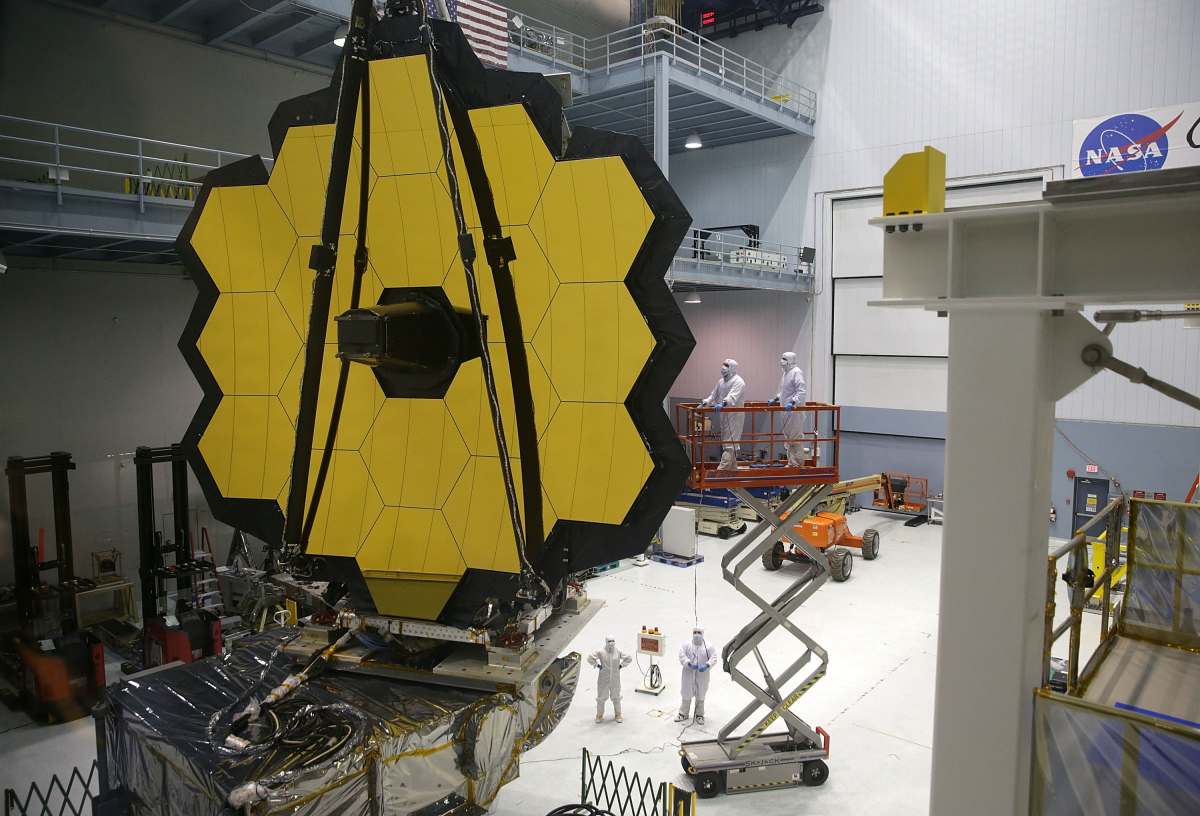
The James Webb Telescope, the largest telescope ever to be launched into space, is the result of an international collaboration involving NASA, the European Space Agency (ESA), and the Canadian Space Agency (CSA). It was hitched upon an Ariana 5 rocket from ESA's Spaceport in French Guiana on December 25, 2021. It then travelled to a gravitationally stable point known as the second Lagrange point (L2), about 1.5 million km from Earth, where it began operations. According to NASA, since then, it has been providing integral information to complement and extend the discoveries of the Hubble Space Telescope. It has also been steadily supplying a great deal of beautiful and often awe-inspiring imagery of our deep space. Here are 5 of the best images the Webb Telescope got hold of in 2025.
The Butterfly Star
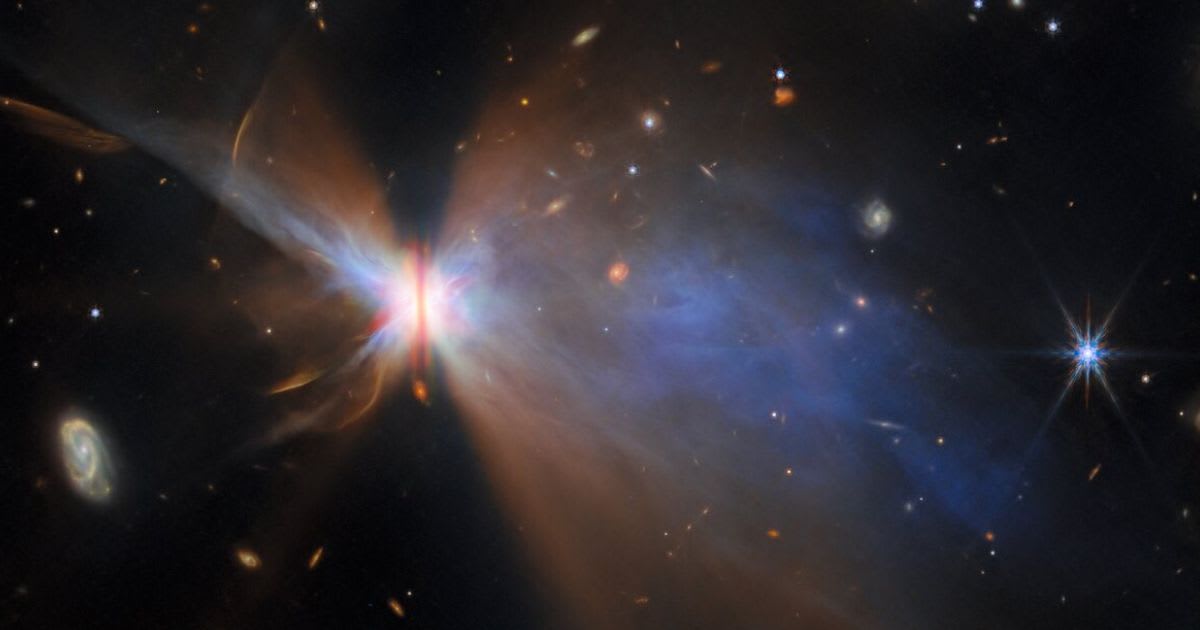
This image, published on 29 August 2025, captured a detailed new view of IRAS 04302+2247. It shows a planet-forming disc, which is around 525 light-years away in the Taurus star-forming region. According to the ESA, the Webb Telescope has allowed scientists to study the dust grains inside discs like this, which helps them further understand the earliest stages of planet formation. Webb found that the disc of IRAS 04302+2247 is roughly 65 billion km wide, which easily dwarfs our solar system. From Webb's viewpoint, this disc is edge-on, appearing as a dark line of dusty gas. This edge-on view shows how thick the disc is and how dust settles into a dense layer that helps planets form. This disc also hides away the bright star, allowing two faint clouds on either side to be seen. These glowing reflection nebulae gave IRAS 04302 its nickname, the Butterfly Star.
The Red Spider nebula
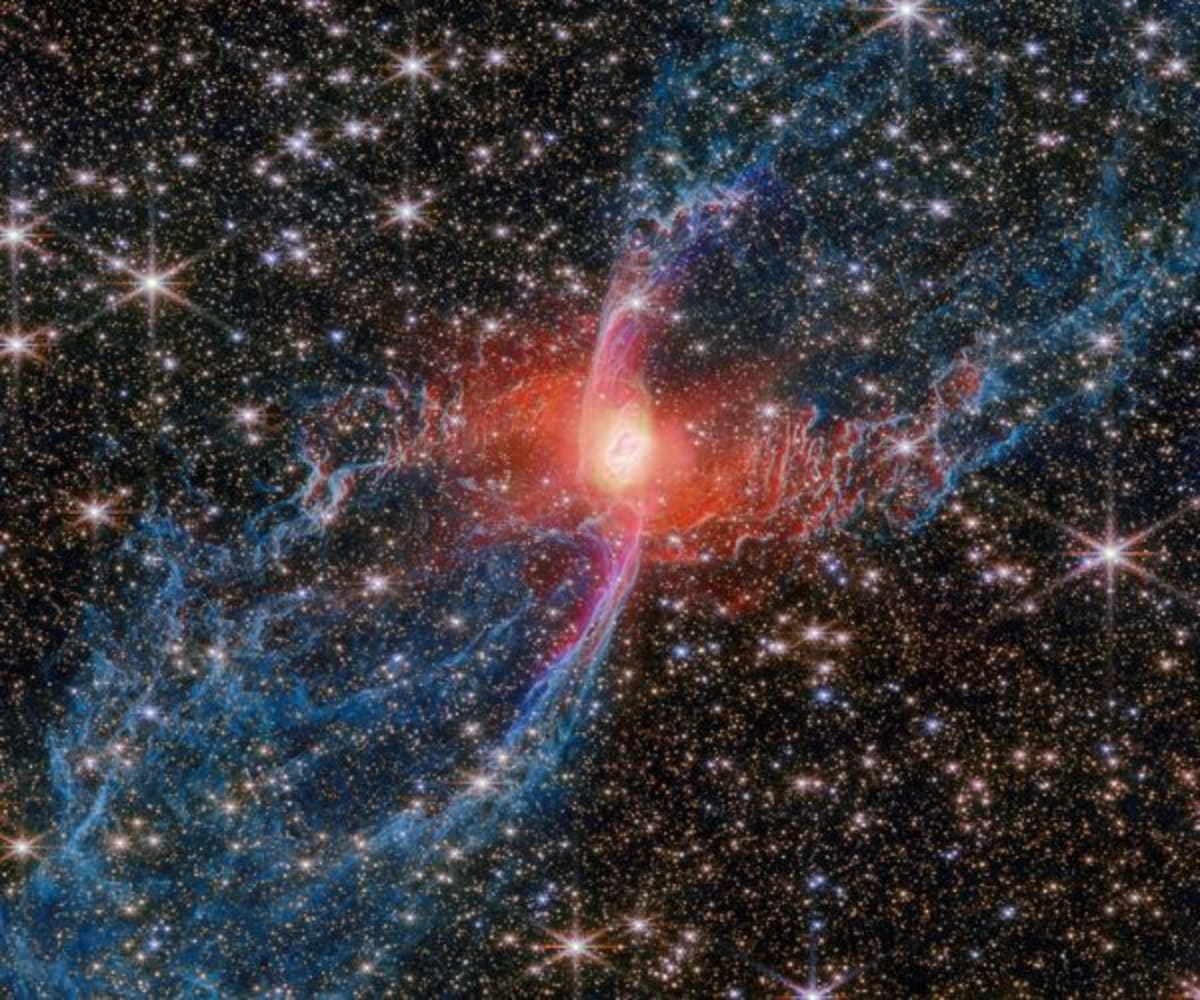
The James Webb Telescope captured a striking new image of NGC 6537, also known as the Red Spider Nebula, that was published on 28 October 2025. The ESA states that using its Near-Infrared Camera (NIRCam), Webb revealed finer details that had never been seen before in this planetary nebula, set against a background filled with thousands of stars. At the center of this nebula, the central star can be seen, which is glowing brighter than its surrounding webs of gas. The star might appear blue in optical images but appears red in Webb's infrared vision, revealing hot dust, likely arranged in a disc, around it. Although only one star is visible, scientists believe a hidden companion may exist and could help explain the nebula’s narrow waist and wide outflows. Webb also revealed the nebula’s long lobes, which form the spider’s “legs.”
A star-forming spiral
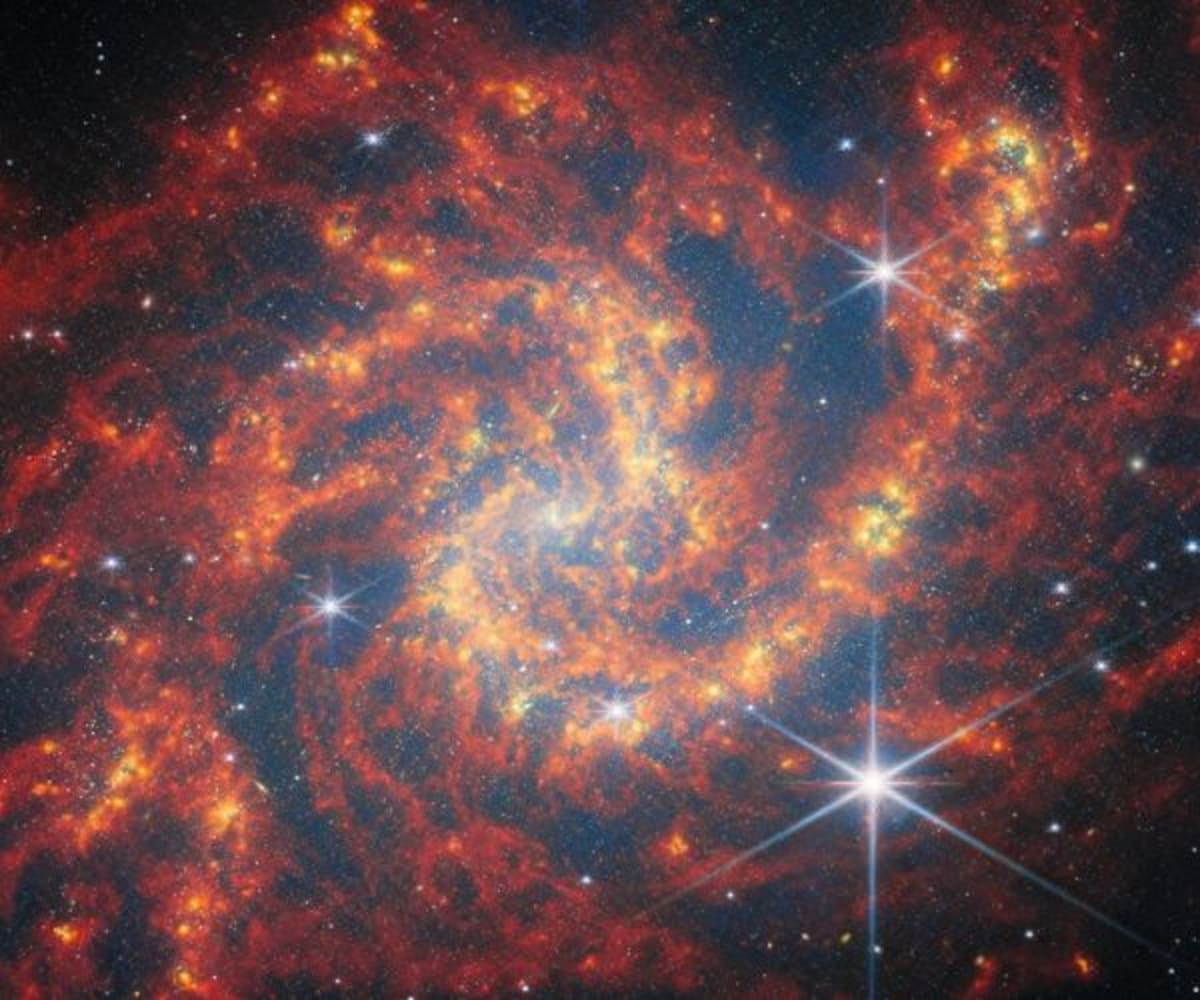
Located approximately 45 million light-years away from us and nestled in the constellation Canis Major, the spiral galaxy NGC 2283 was also imaged by Webb. Released on 28 February 2025, this image, according to the ESA, was created using the James Webb Telescope's Near-InfraRed Camera (NIRCam) and Mid-InfraRed Instrument (MIRI). Six images were taken in a span of 17 minutes using different infrared filters. These filters highlighted the galaxy's stars, clouds of hydrogen gas that were heated by young stars, and special molecules called polycyclic aromatic hydrocarbons. This particular observation was a part of a program that was studying 55 nearby star-forming galaxies.
A dusty dynamic disc
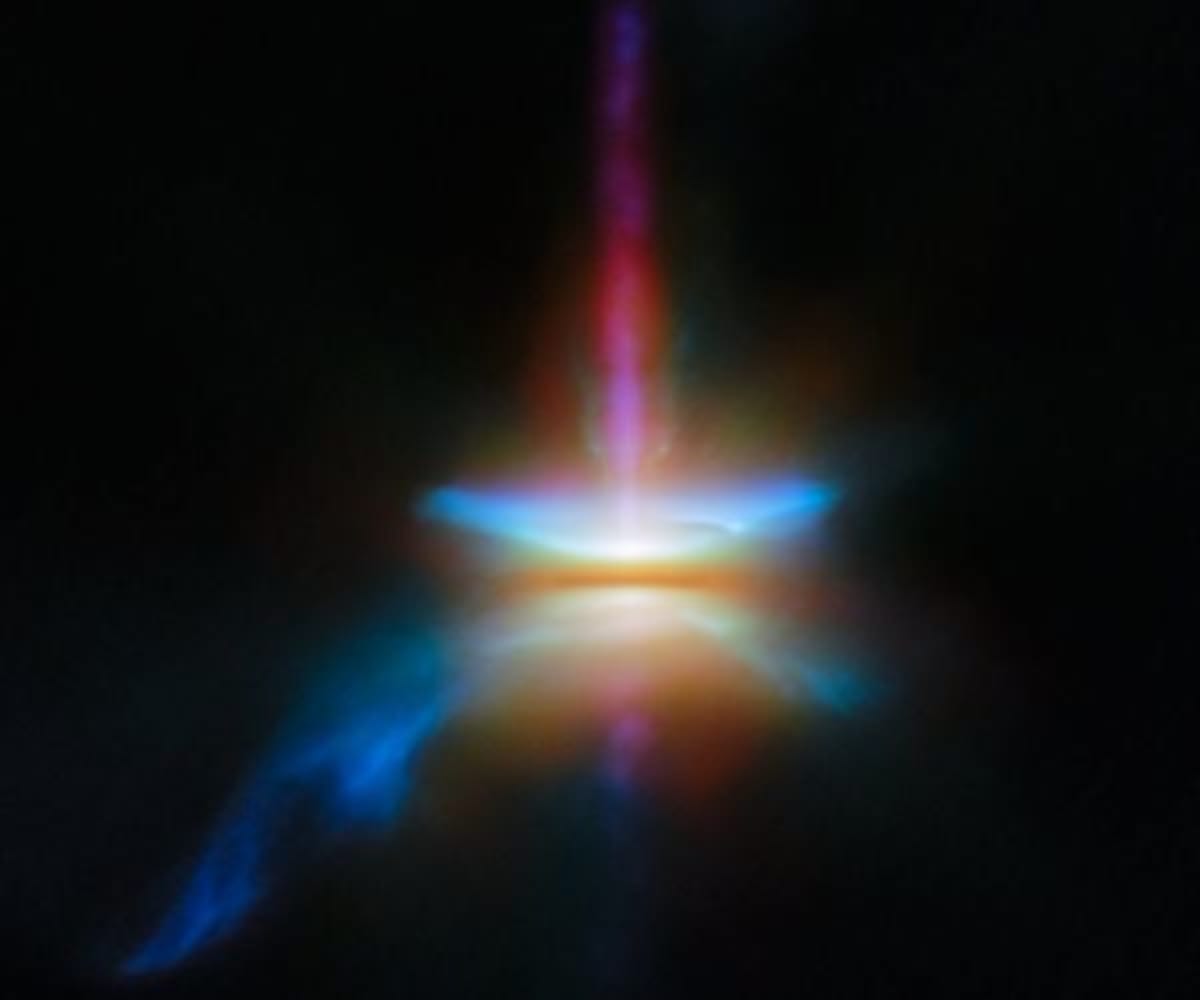
This image was published on 4 February 2025. It shows the HH30 in one of the finest resolutions. The HH30 is an edge-on protoplanetary disc that is surrounded by jets and disc winds. The ESA says that it is located in a dark cloud called the LDN 1551, located inside the Taurus Molecular Cloud. The disc present there is responsible for blocking the central star from view but is lit up by the surrounding material. It is valuable for astronomers because it is a classic example of an edge-on disc; seeing it from this angle helps them decipher how dust grains move and settle.
An Einstein ring
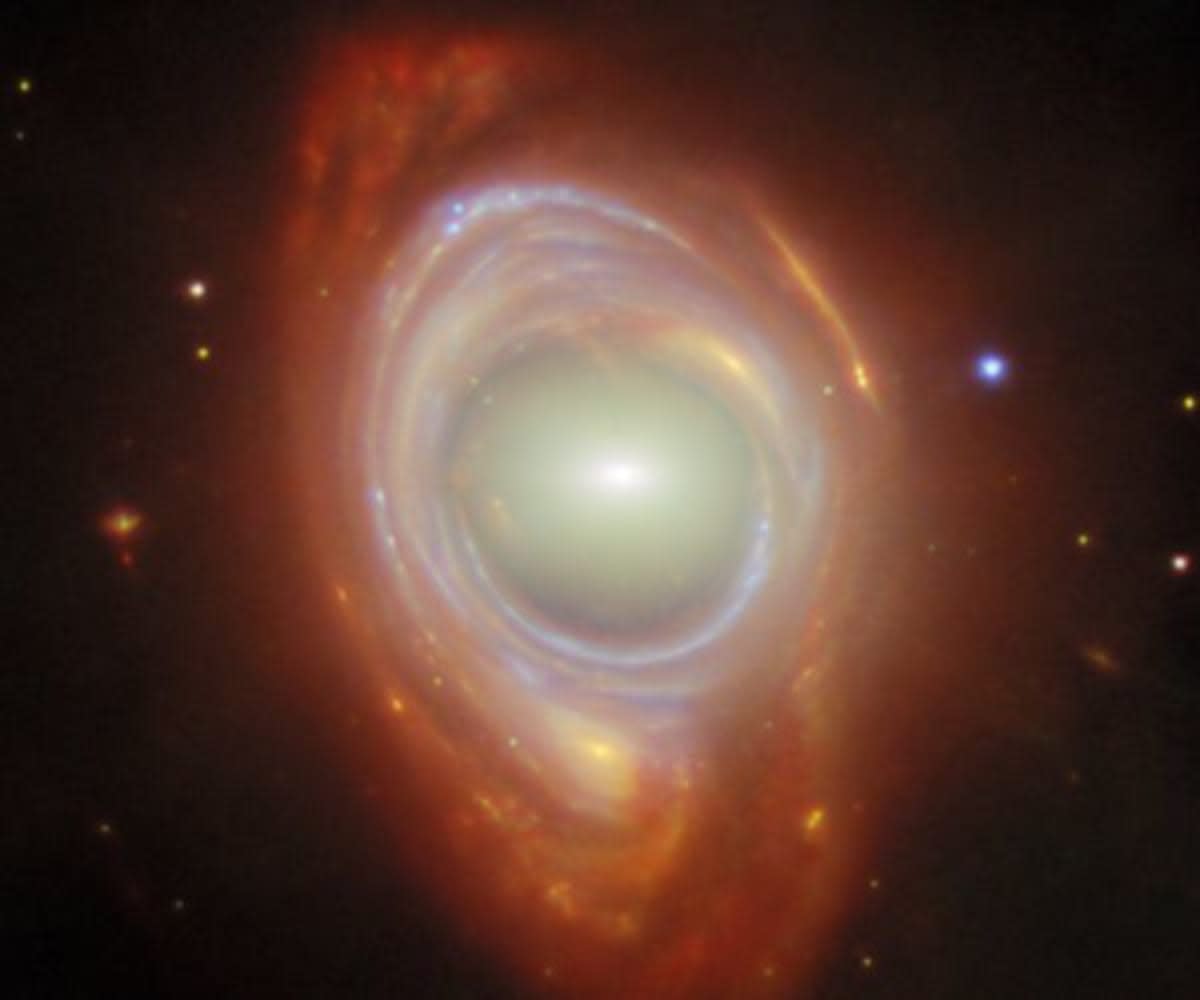
A rare phenomenon known as the Einstein ring was captured in the image released on 27 March 2025. ESA says that the image was made by combining data from the James Webb and Hubble Space Telescopes. At a cursory glance, it looks like an ordinary galaxy that is a little oddly shaped. It, however, is actually two galaxies far apart from each other. The closer one sits in the center, the more the distant galaxy appears like a ring wrapped around it. This occurs when the light from a faraway object is lensed or bent around another massive object because of the bending of spacetime, the very fabric of the universe, by mass.
More on Starlust
NASA's PUNCH captures stunning footage of 'time-traveling' Comet Lemmon (C/2025 A6)
Hubble Telescope spots mysterious collisions in nearby star system echoing our solar system's birth