How did black holes from the early universe grow so big so fast? A new study provides an answer
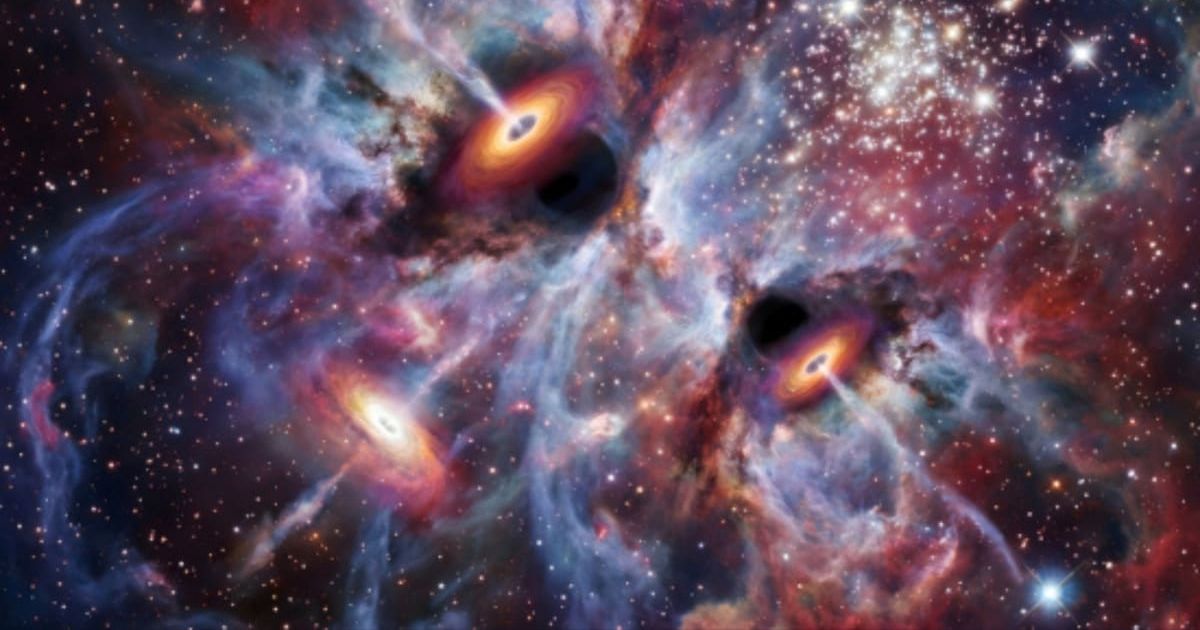
Ever since it began its operations in 2022, the James Webb Space Telescope has come across supermassive black holes from the early universe that had grown too big, too fast to be explained by existing theories. Now, a new study published in Nature Astronomy has come up with an explanation—the black holes were hungry and had a massive buffet laid out in front of them.
“We found that the chaotic conditions that existed in the early universe triggered early, smaller black holes to grow into the supermassive black holes we see later following a feeding frenzy which devoured material all around them," explained Daxal Mehta, a PhD candidate at Maynooth University and the lead author of the study, in a statement. "We revealed, using state-of-the-art computer simulations, that the first generation of black holes – those born just a few hundred million years after the Big Bang - grew incredibly fast, into tens of thousands of times the size of our Sun." When black holes devour matter faster than usual, the dense and gaseous environment enables bursts of "super-Eddington accretion."

The speed is so incredible that it should sweep away the matter with the light emission, but it continues to eat. The results of investigating this process revealed a 'missing link' between the first stars and the supermassive black holes that came later. These black holes were so small that they were not expected to grow into the massive black holes at the center of early galaxies. "What we have shown here is that these early black holes, while small, are capable of growing spectacularly fast, given the right conditions," Mehta added.
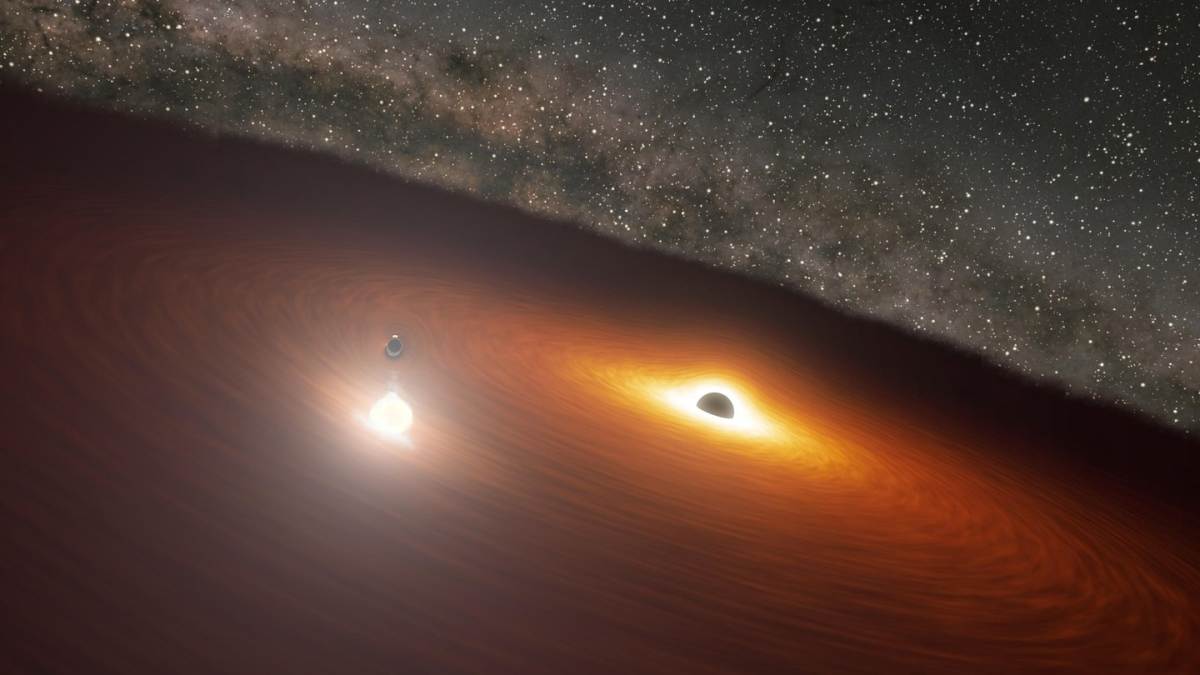
There are two kinds of black holes: the "heavy seed" and "light seed" types. The former kind begins life as a massive black hole, up to one hundred thousand times the mass of our Sun at formation. The latter starts small and is only ten to a few hundred times the mass of our sun and grows to become supermassive. Astronomers thought that the heavy seed types were needed to explain the existence of supermassive black holes at the center of most large galaxies. "Now we're not so sure," said Dr. John Regan of MU's Physics Department and research group leader. “Heavy seeds are somewhat more exotic and may need rare conditions to form."
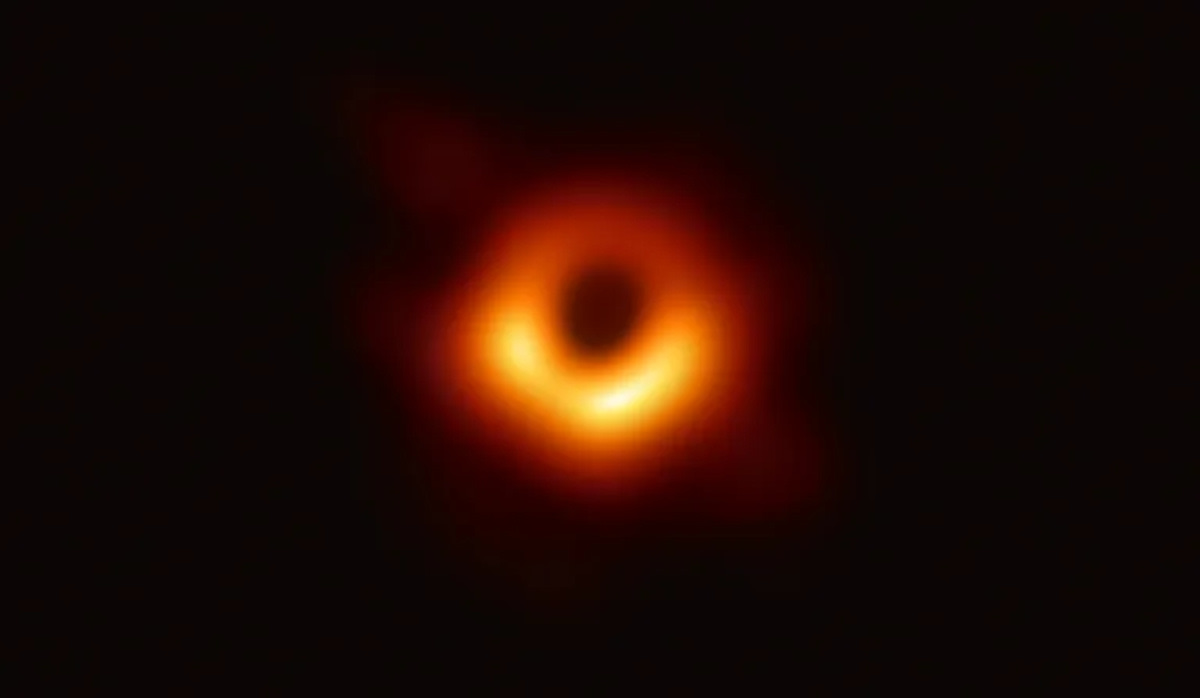
The simulations to study the black holes showed that typical stellar mass black holes are capable of growing at extreme rates in the early universe. This new study revolutionizes our existing understanding of the origins of black holes and also highlights the significance of high-resolution simulations in revealing the early universe's secrets. "The early universe is much more chaotic and turbulent than we expected, with a much larger population of massive black holes than we anticipated, too," stated Dr. Regan.
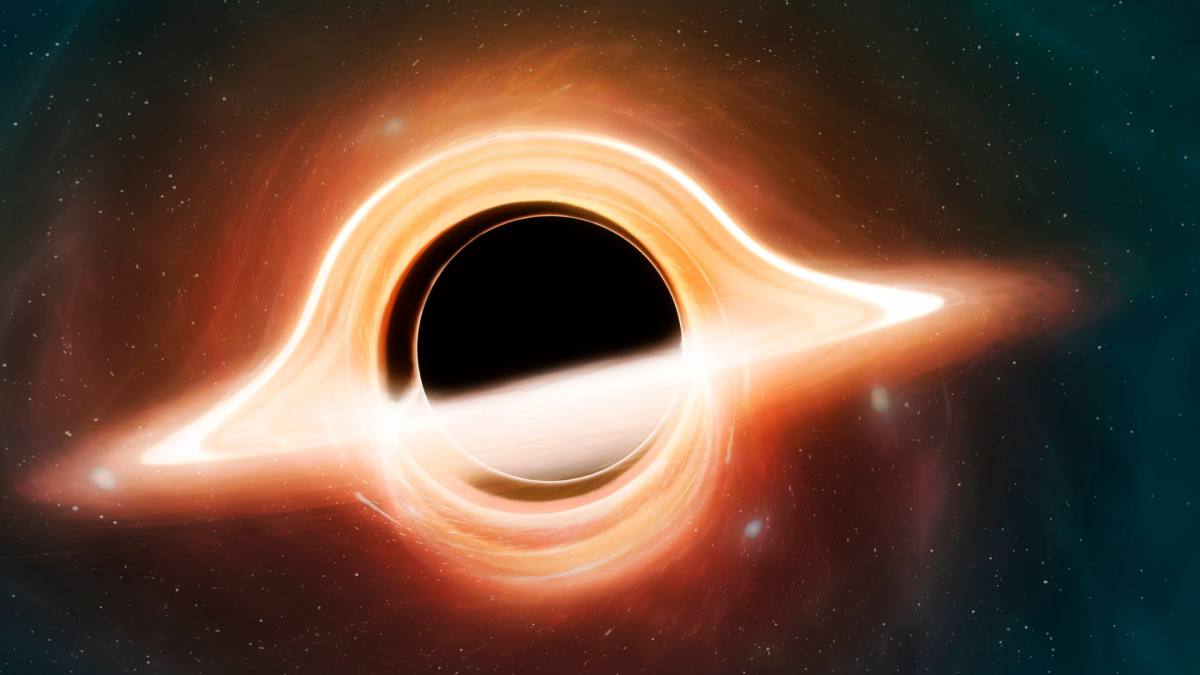
The results of this study will have huge implications for future investigation into black holes and their characteristics. One major influence this might have is on the joint European Space Agency-NASA Laser Interferometer Space Antenna (LISA) mission that is scheduled to launch in 2035. Dr. Regan highlighted how this future mission might make gravitational wave observations that can detect “the mergers of these tiny, early, rapidly growing baby black holes."
More on Starlust
Can stars form near supermassive black holes?
Astronomers witness supermassive black hole waking up from a long slumber for the first time