Extraordinary Moon features to spot during the Cold Moon 2025—with or without binoculars

This December's Cold Moon is also a Supermoon and will turn full on the 4th of the month.
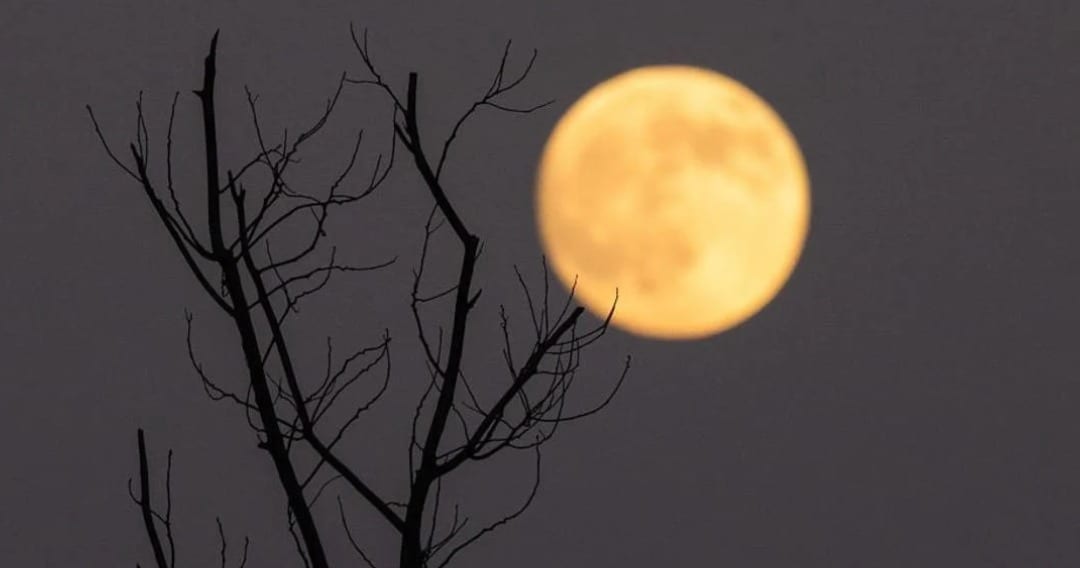
An airplane flies near the full moon as tree branches are seen in the foreground during the Mid-Autumn Festival on October 6, 2025, in China (Representative Cover Image Source: Getty Images | Photo by Cheng Xin)

The final month of the year 2025 begins with the Cold Moon, the second-biggest full moon of 2025 and a “supermoon,” according to Forbes. Expected to turn full at 8:20 a.m. EST on Thursday, December 4, 2025, the Cold Moon is named so for the chilly temperatures at this time of the year in North America. It will reach higher into the sky than any other full moon, and if the weather permits, you'll be able to catch a wealth of its features with binoculars, telescopes, and even with the naked eye.

The full Strawberry Moon sets behind the Statue of Liberty on June 4, 2023, in New York City. (Representative Photo by Gary Hershorn / Getty Images)

The Cold Moon will look full both the night before and after December 4, but the best time to watch it in North America will be at moonrise during dusk on December 5, according to Forbes. Try to find an elevated location, such as an open field or a coastline with a clear view of the eastern horizon. As for the features you need to look out for during the event, we've curated a list based on recommendations by NASA’s Daily Moon Guide.
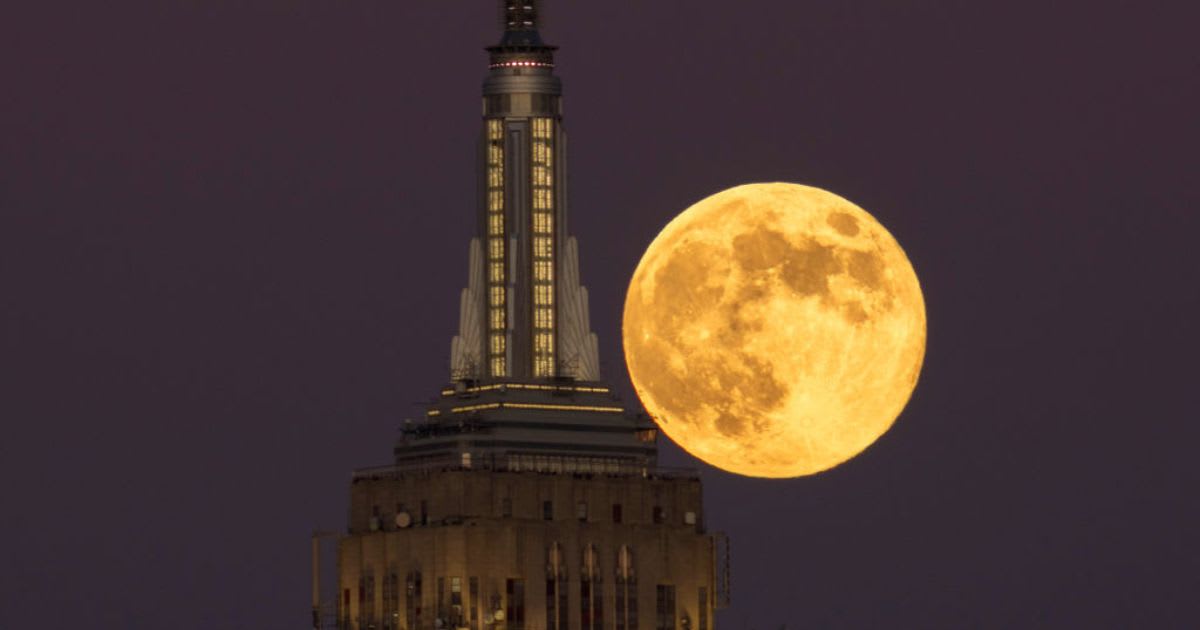
The full Beaver Supermoon rises behind the Empire State Building in New York City as the sun sets on November 15, 2024 (Representative Image Source: Getty | Gary Hershorn)

What can be seen with the naked eye?

Mare Imbrium: Known as the "Sea of Rains," this 697-mile-wide lava-filled impact basin is the second largest mare on the near side of the Moon.

Mare Vaporum: The small, circular mare, also referred to as the "Sea of Vapors," has just one solitary crater, Manilius, on its east. 

Mare Fecunditatis: The "Sea of Fertility" impact basin was the first site of automated sample return by the Soviet Luna 16 probe in 1970.
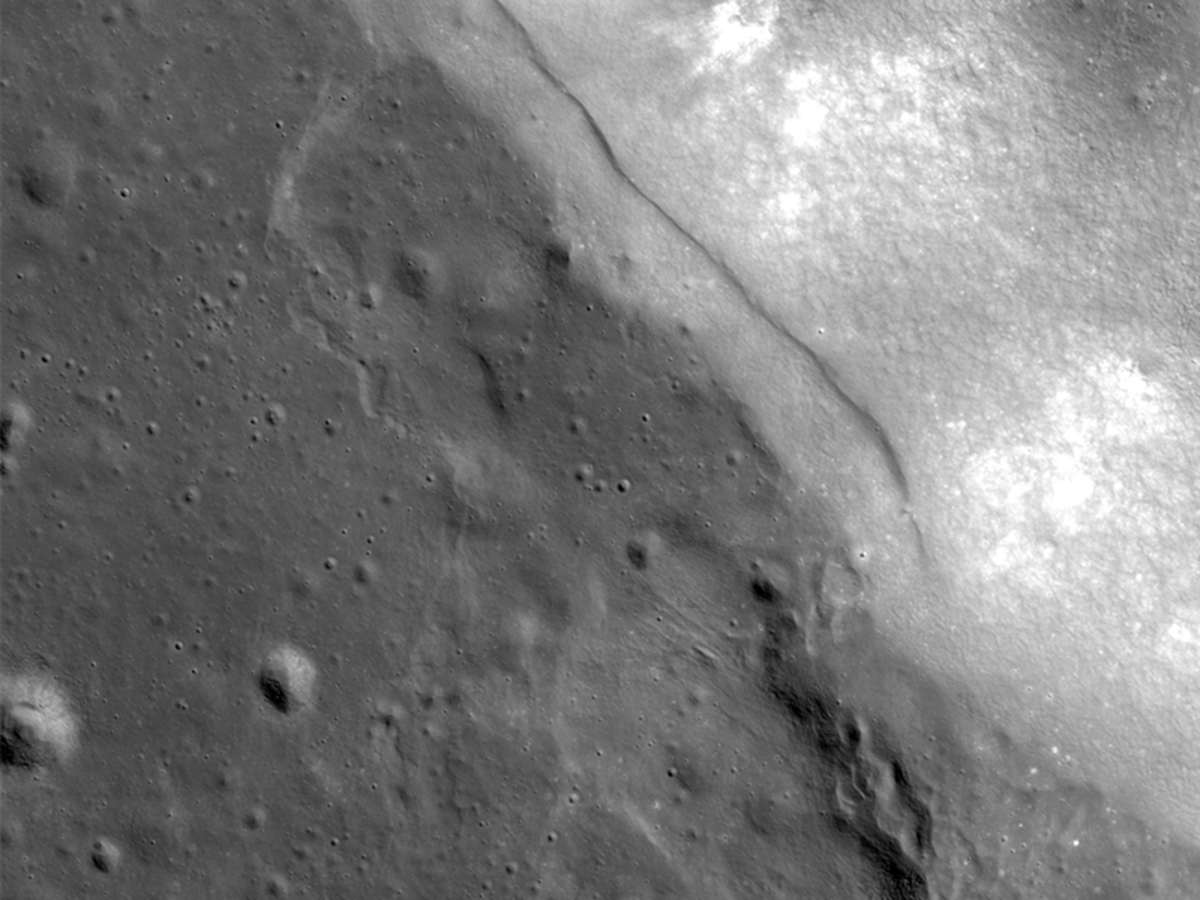
Close-up view of a mountain within Mare Imbrium as taken by NASA's Lunar Reconnaissance Orbiter. (Image Source: NASA/GSFC/ASU)

Mare Crisium: Covering more than 109,000 square miles of the surface, the "Sea of Crises" is about the size of Nevada.

Kepler Crater: This impact crater has ejected material extending more than 185 miles. The impact event was so strong that it distributed material from great depth around the crater.
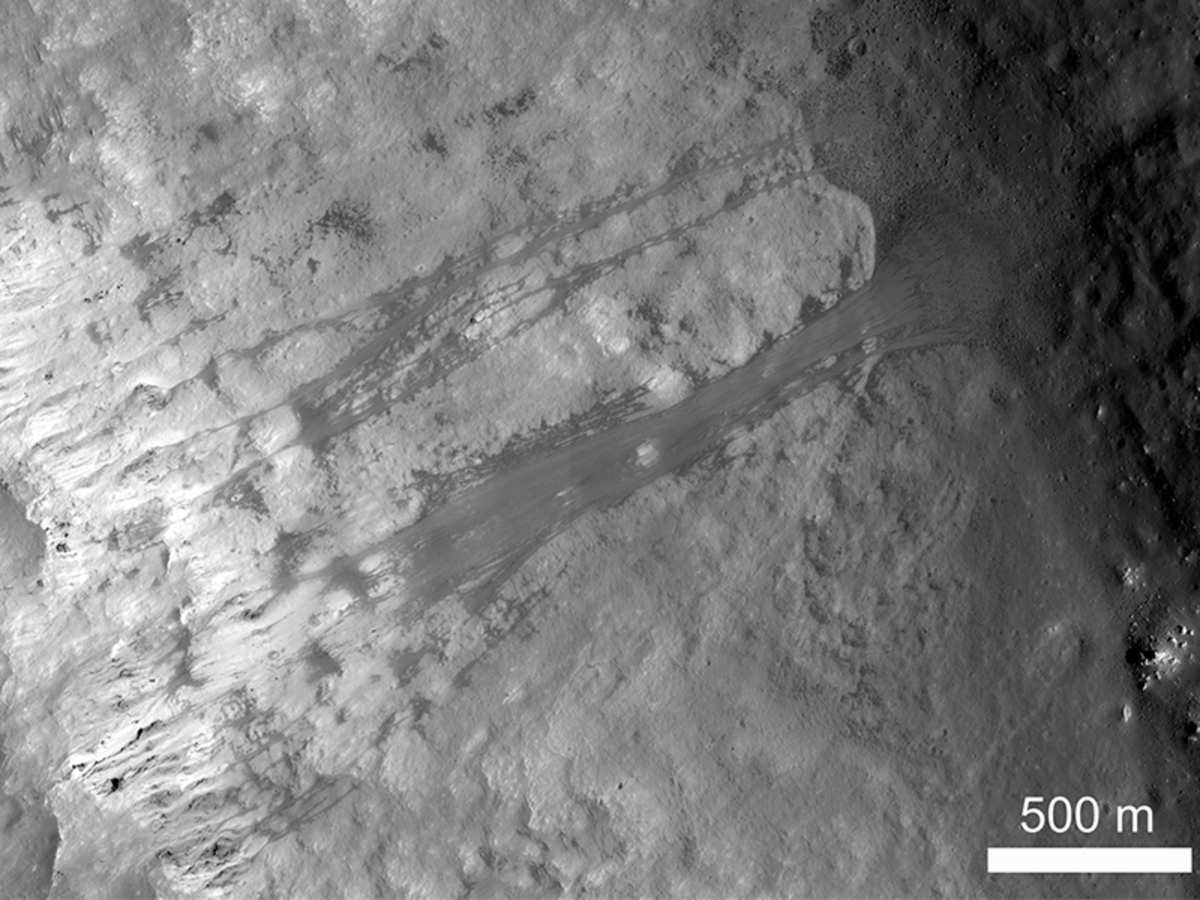
A landslide of rocky debris cascades down Kepler crater's inner wall and onto its floor in this Lunar Reconnaissance Orbiter image. (Image Source: NASA/GSFC/ASU)

Looking at the Moon through binoculars

Archimedes Crater: This crater has a basalt-laden floor and has a diameter that is 3/4th the size of Washington, DC.

Alphonsus Crater: The sites of volcanic eruptions on this 68-mile impact crater are marked by fractures, or rilles, and smaller, dark-haloed craters.

Gassendi Crater: This 68-mile impact crater has both mountains and fractures, with a network of the latter from magma rising from below the surface.
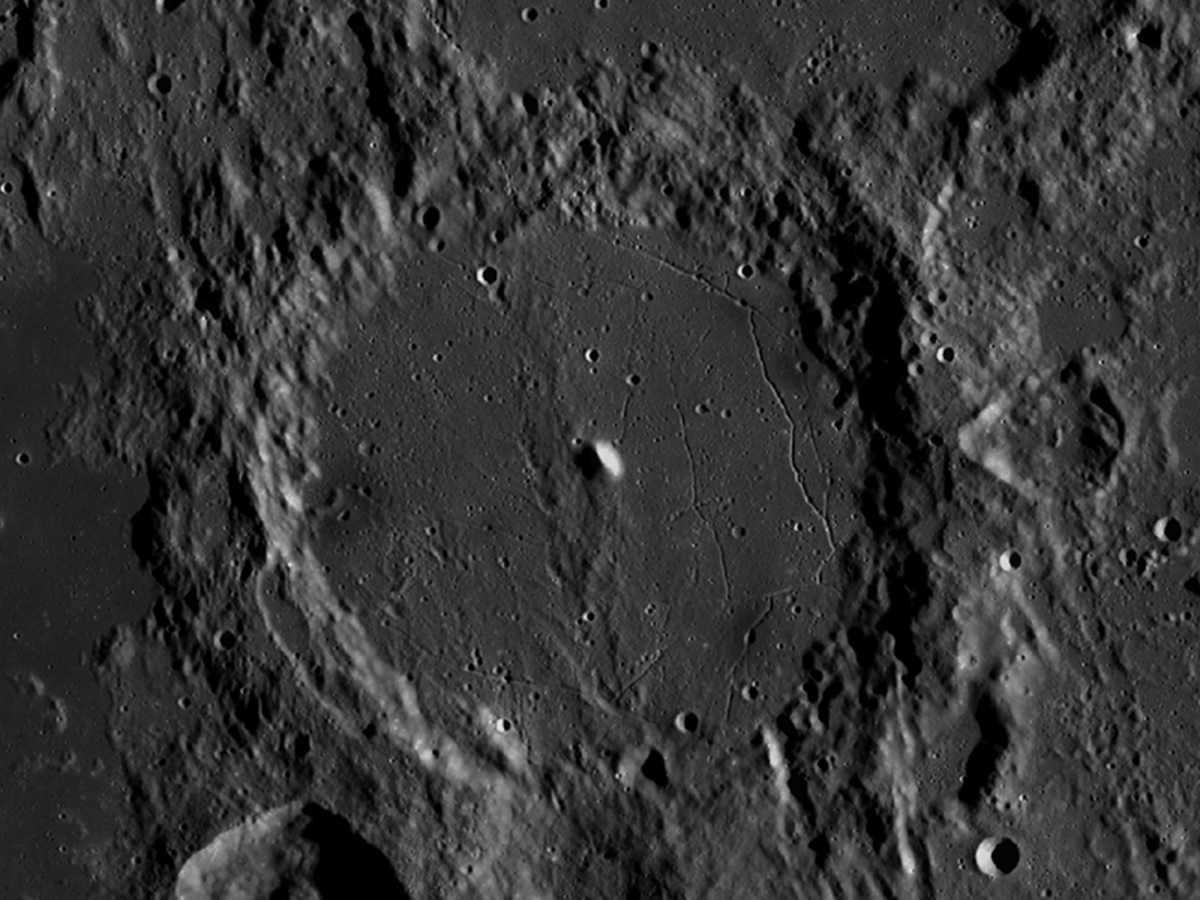
Alphonsus is an ancient impact crater on the eastern end of Mare Nubium. (Image Source: NASA/GSFC/ASU)

Clavius Crater: This 140-mile crater is the third largest on the Moon's near side and is one of the oldest at 4 billion years, with confirmed presence of water molecules.

Mare Frigoris: Located in the outer rings of the huge, flat region called Oceanus Procellarum, the "Sea of Cold" is fairly faint and best viewed at full moon.
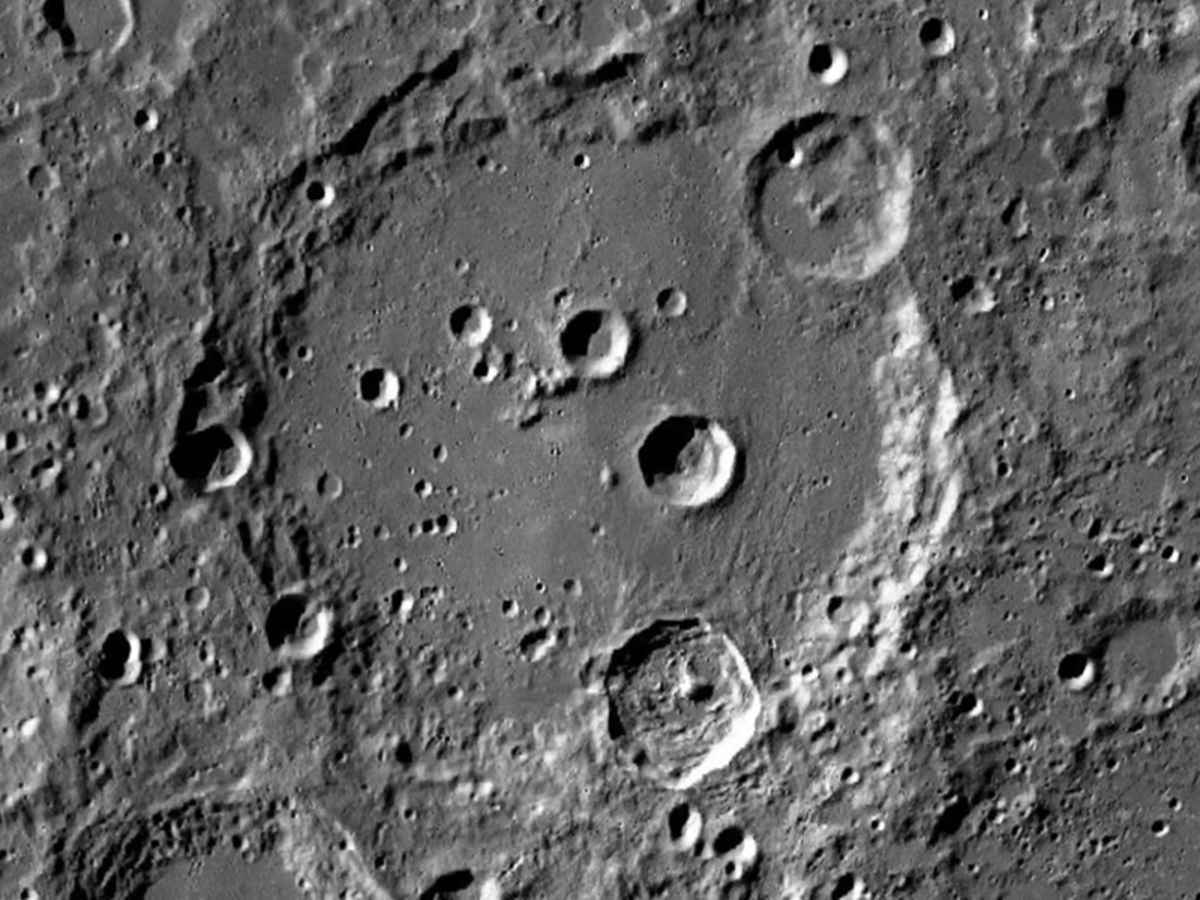
Clavius is one of the larger craters on the Moon. It can be found in the Moon's southern lunar highlands. (Image Source: NASA/GSFC/ASU)

The views that a telescope can offer

Rima Hyginus: This is a graben, or a section of crust that collapsed when two parallel faults pulled apart. It has proof that the Moon was geologically active.

Apollo 12: This is the site where the Apollo 12 crew landed in Oceanus Procellarum on November 19, 1969.

Descartes Highlands: North of the crater Descartes is where Apollo 16 landed in 1972, and scientists found samples with proof of impacts.
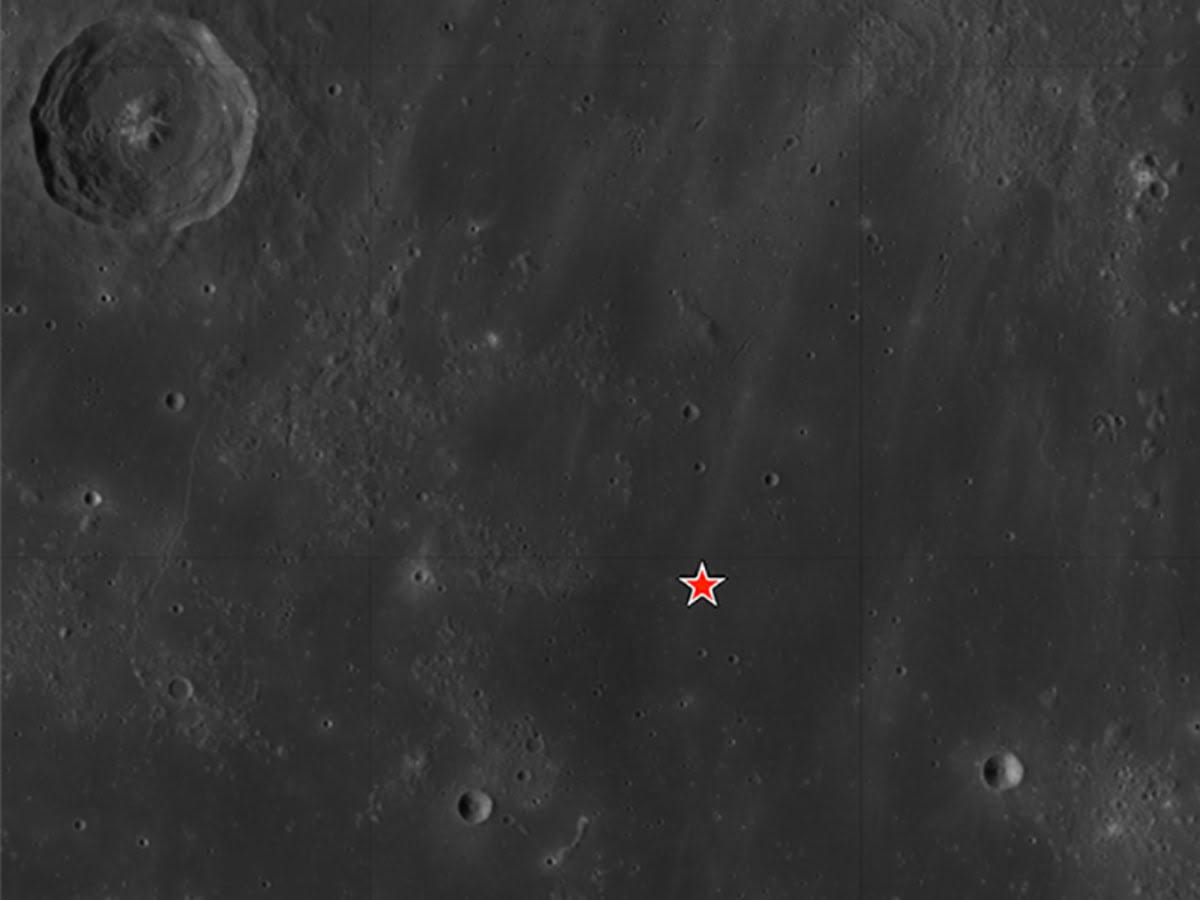
The Apollo 12 landing site (Image Source: NASA/GSFC/ASU)

Apollo 17: The Taurus-Littrow Valley, in a small diamond-shaped valley with mountains around, is the site of the last Moon landing in the Apollo program.

Reiner Gamma: All identified lunar swirls formed in areas of local magnetic fields, and this is the best example of delicate, bright, and dark bands across local patches.
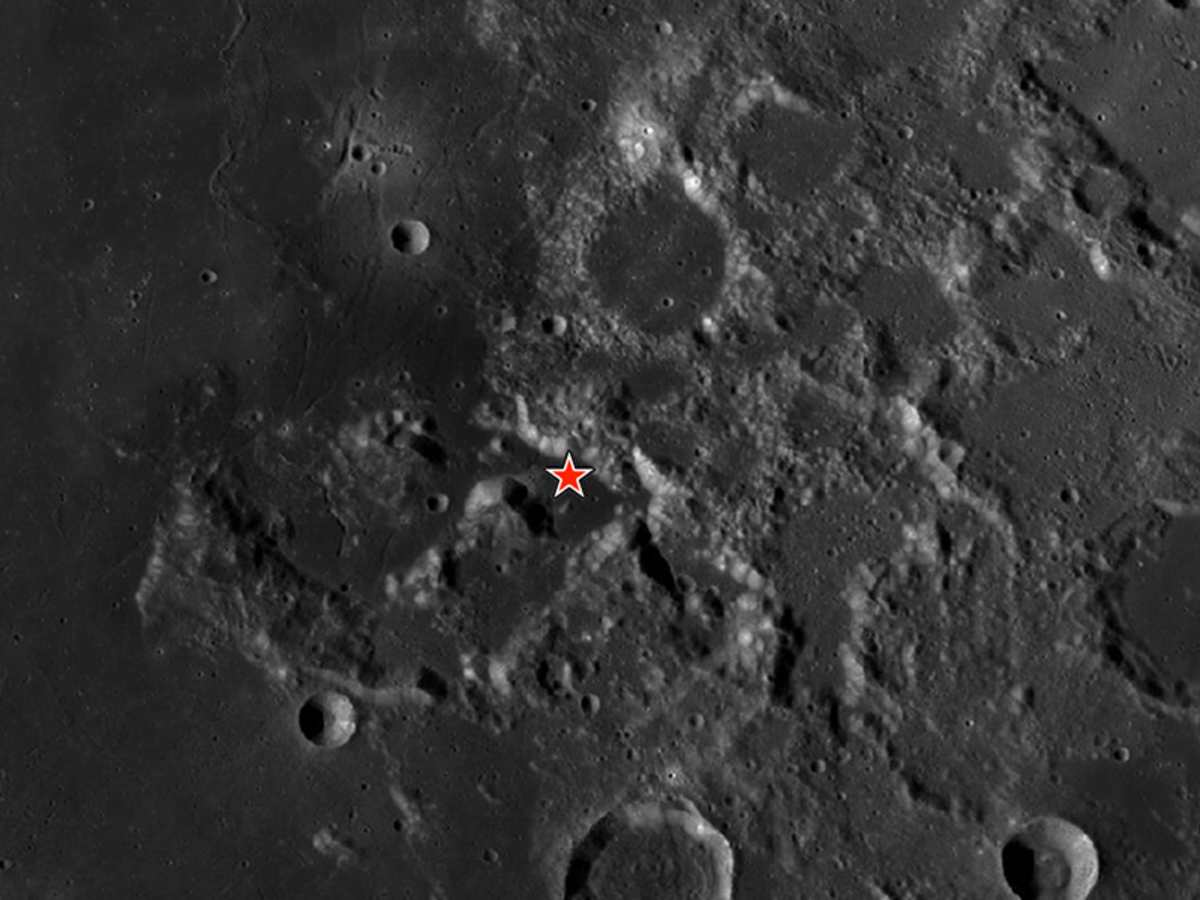
Apollo 17 landed in Taurus-Littrow Valley, a valley deeper than the Grand Canyon. (Image Source: NASA/GSFC/ASU)

More on Starlust

7 fascinating features of the Moon that would make your stargazing night perfect
Cold Moon 2025: When and how to see the December Supermoon

MORE STORIES

A minor, but well-directed CME erupted on the Sun on Monday, August 3, 2026.
14 hours ago
Total solar eclipses rank among the rarest sights in the sky. Here's what makes them so hard to catch.
2 days ago
The comet is named after German astronomer Wilhelm Tempel, who discovered it on July 4, 1873.
7 days ago
The bright Moon may spoil visibility, but skywatchers can still try their luck.
7 days ago
These dancing bands of light have inspired both folklore and extensive research by scientists.
7 days ago
NASA has said that the experiments are to study the Sun’s corona and the impact of the temporary darkness of our skies on the atmosphere.
7 days ago
Despite thunderstorms and rain across much of the US, these 5 states could offer clear views of Buck Moon.
Jul 28, 2026
By following a set of simple guidelines, you can begin to capture stunning views of the full face of the Moon.
Jul 28, 2026
The position of the Moon in its orbit around Earth will give it a stunning coppery-red color and the western hemisphere is best placed to view it. 
Jul 28, 2026
We've tracked eclipses for thousands of years. Here's all you need to know about this phenomenon.
Jul 27, 2026