Exceptionally detailed map of the sky reveals over 13 million radio sources across the universe
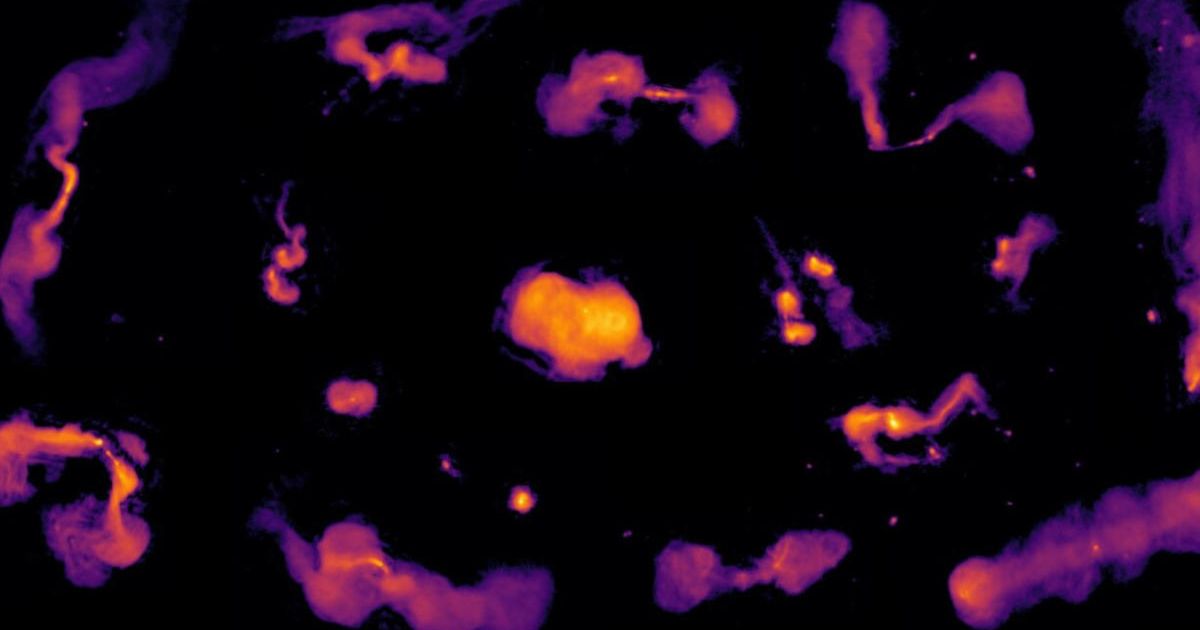
A newly published map of the northern skies has catalogued 13.7 million sources of radio signals, representing various deep-sky objects and their features. Part of an Astronomy and Astrophysics manuscript titled ‘The LOFAR Two-metre Sky Survey VII. Third Data Release' (LoTSS-DR3), the map is composed of data collected over a decade. The data was collected via a vast network of radio sensors dotted across Europe called LOFAR (Low Frequency Array), which was designed and built by ASTRON in the Netherlands. These stations spread across thousands of miles act as a giant, singular telescope and help look at the universe in ways visible light just can’t.

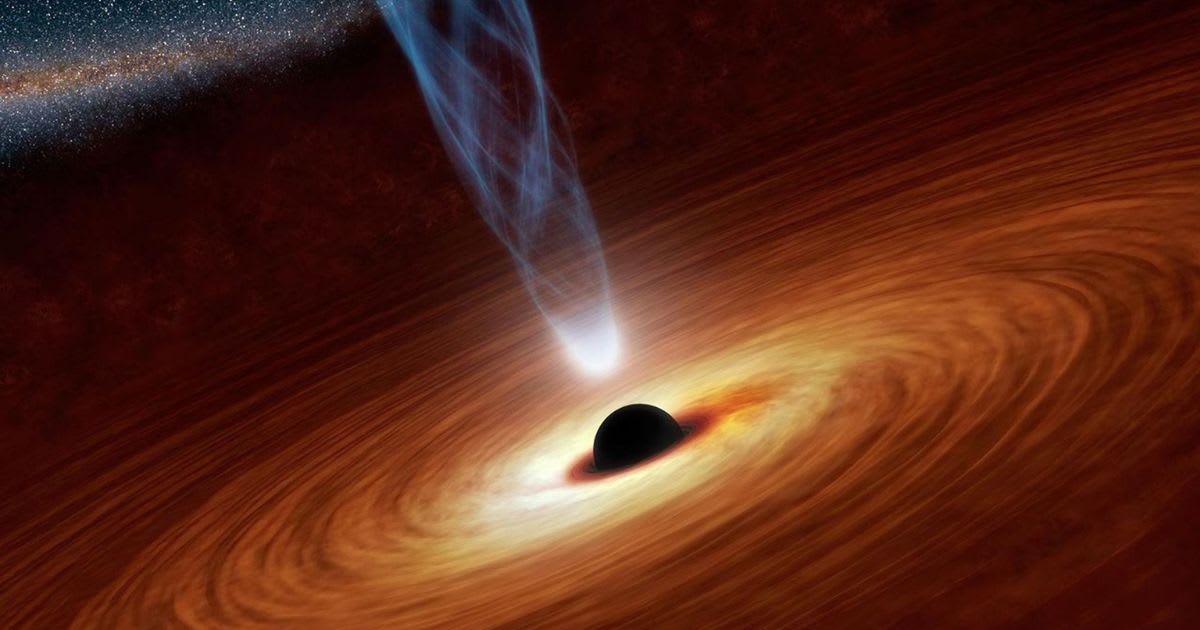
A huge part of the detected radio emissions has been found to be coming from relativistic particles moving through magnetic fields. This will enable scientists to look into phenomena such as jets from supermassive black holes and galaxies going through extreme star formation. "We can study a diverse population of supermassive black holes and their radio jets at different stages of their evolution, showing how their properties depend not only on the black hole itself, but also on the galaxy and environment in which it resides," explained Professor Martin Hardcastle of the University of Hertfordshire, UK, in a statement.
Some of the other features this radio map is said to have shed light on are galaxies that are merging into clusters, remains of faint supernovae, and stars that are actively producing flares and interacting with other celestial bodies around them. Not only is the survey offering new insights into how various cosmic structures are born and evolve and how particles are accelerated to extreme energies, but it is also ensuring that the most sensitive wide-area radio maps of the universe are publicly available.
The data powering this new map of the universe encapsulates 88% of the northern sky and measures 18.6 petabytes (1 petabyte equals a million gigabytes). Because of the enormity of this data, processing it took 20 million core hours of computing time. Speaking of the scale of the data and the international cooperation that made the map a reality, Dr. Timothy Shimwell, lead author and astronomer at ASTRON and Leiden University, Netherlands, said, "This data release brings together more than a decade of observations, large-scale data processing and scientific analysis by an international research team.”
Largest Ever Radio Sky Survey Maps the Universe in Unprecedented Detail #lofar https://t.co/GpLA7yfugF pic.twitter.com/Itox1wu6J2
— AstronomieNL (@AstronomieNL) February 19, 2026
The future holds the promise of even more detailed studies, with LOFAR in the middle of an upgrade to LOFAR 2.0, with the collaboration planning to build upon LoTSS-DR3 and make good use of the 2x increase in survey speed of the new instrument. “With LOFAR2.0’s doubled sensitivity at very low frequencies, we look forward to ultimately extending the high-resolution survey capability to the lowest frequencies accessible from the surface of the Earth,” said Michiel Brentjens, the senior observatory scientist at ASTRON who is leading the LOFAR2.0 commissioning efforts.
More on Starlust
Scientists unveil the clearest image of the dark universe yet: 'The dream has come true'
NASA's Hubble Space Telescope detects a faint galaxy that is almost entirely dark matter