Watch: ESA’s Jupiter-bound JUICE spacecraft snapped cruising past Earth during latest flyby
The European Space Agency’s (ESA) JUICE spacecraft successfully completed its third Earth flyby late last month and is now heading towards Jupiter at a greater velocity. The probe whipped past our planet on September 28 from a distance of around 5,370 miles for a ‘gravity assist’ that corrected its course using minimal fuel. The maneuver also provided an opportunity to test out JUICE’s instruments before its science observations begin.
A successful Earth flyby improves Juice’s course to Jupiter. Earlier today, @ESA_Juice flew just 8640 km above the Indian Ocean and snapped these images with its onboard monitoring cameras. 1️⃣Africa, by Juice monitoring camera 2️⃣Madagascar, by Juice NavCam 3️⃣Moon, by Juice NavCam
— ESA Science (@esascience) September 28, 2026
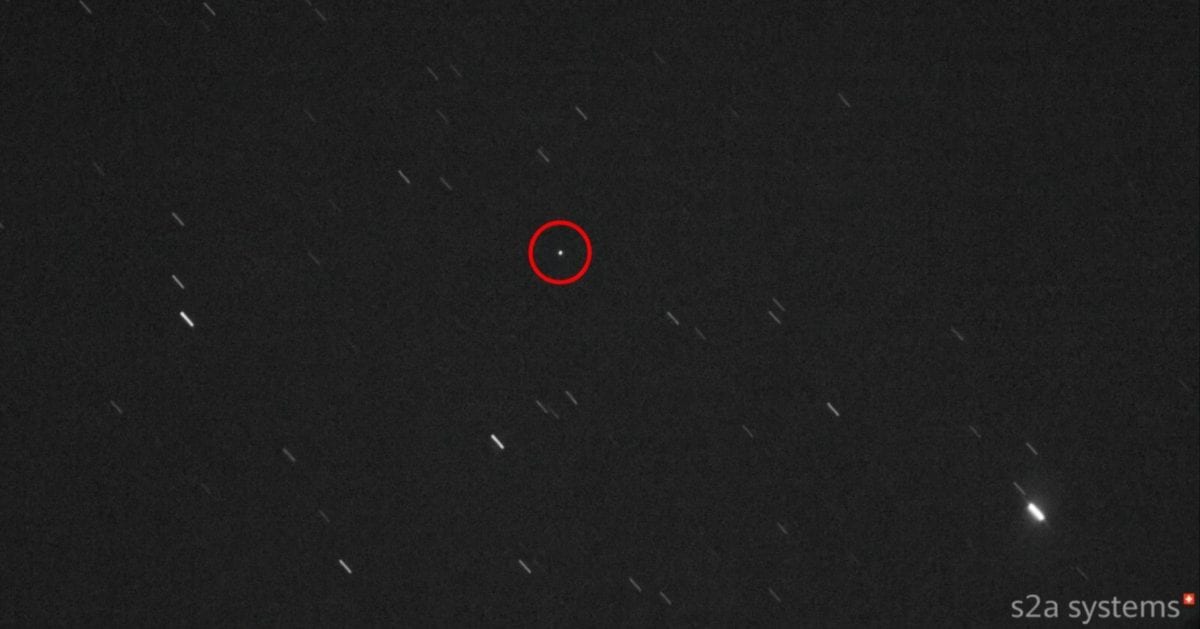
While ESA has shared pictures of Earth captured during the flyby, we also have visuals of the spacecraft itself as it flew over the Indian Ocean. The imagery was released by space situational awareness company s2a systems in the form of a timelapse video captured about 38 minutes prior to JUICE’s closest approach to Earth. In the video, the spacecraft appears as a tiny dot moving against the background of stars. The company collects imagery of satellites and spacecraft using its network of ground-based optical telescopes in Switzerland and Australia.
A short clip of JUICE's Earth flyby, recorded about 38 minutes before closest approach. @ESA_JUICE https://t.co/HEYnpwpA7m
— s2a systems (@s2a_systems) September 28, 2026
This was the third planetary assist sought by JUICE since its launch in April 2023. The first was the lunar-Earth flyby for a breaking maneuver in August 2024, followed by a Venus flyby in August 2025, when it received a velocity boost and a refined trajectory. It is scheduled to return for one more Earth flyby in January 2029 before reaching Jupiter in July 2031. During the latest flyby, engineers calibrate and validate the spacecraft’s instruments for the third time since the 2024 lunar-Earth flyby and observations of the comet 3I/ATLAS last year.
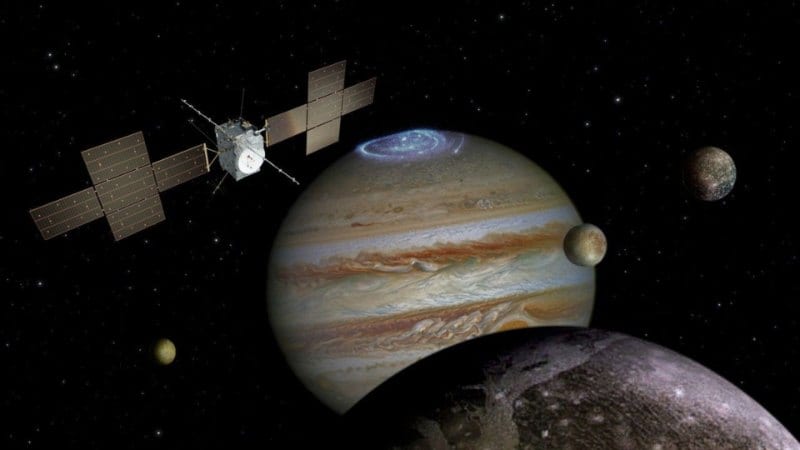
“During this flyby, calibration activities were prioritised based on their relevance to preparing the instruments for their work at Jupiter, while also considering whether an opportunity is unique or can be scheduled later in the journey,” JUICE project scientist Claire Vallat said in a statement. Short for Jupiter Icy Moons Explorer, JUICE is designed to study Jupiter and its moons Ganymede, Europa and Callisto. Apart from investigating Jupiter’s complex environment, it will examine the possible oceans of liquid water underneath these moons' icy crusts and provide invaluable insights into the evolution and habitability of icy worlds around the gas giant. According to ESA, the spacecraft will perform 35 flybys around the said moons during its multi-year science phase.
More on Starlust
ESA's Mars Express reveals how the most visually striking cloud on the Red Planet forms
ESA mission to study Didymos: Hera approaches DART target, prepares for 93-minute deceleration burn