ESA-China's Smile mission hit by Vega-C rocket technical problem, launch pushed to May 19
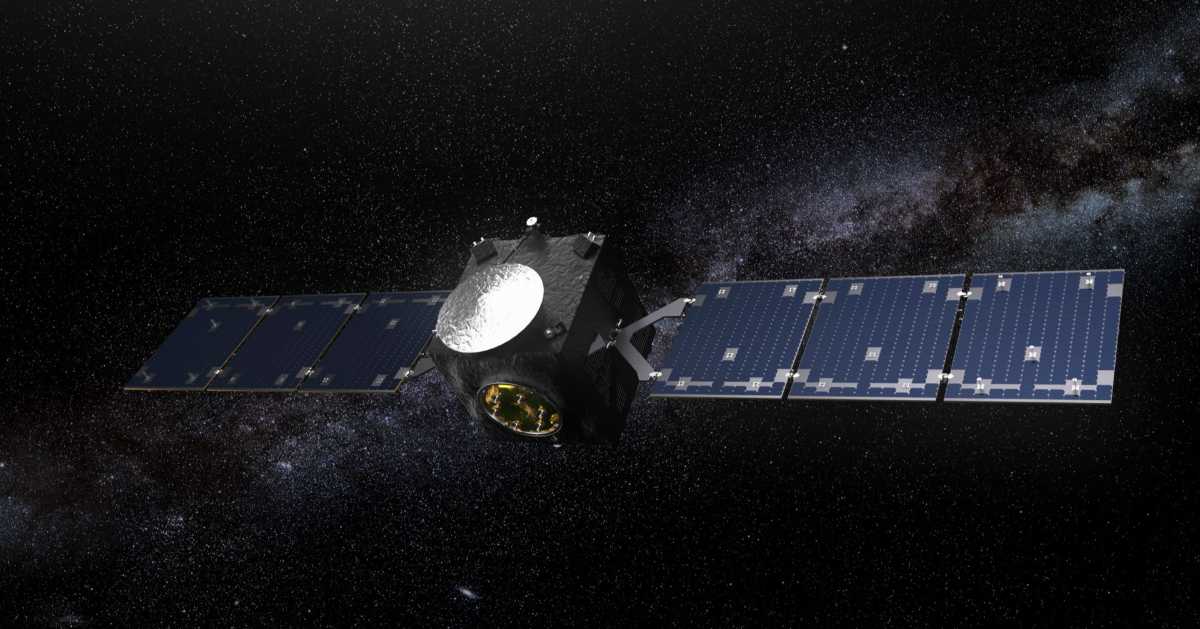
The ESA-China Smile mission’s launch has been pushed to May 19, 2026, at 05:52 CEST / 04:52 BST / 00:52 local time from Europe’s Spaceport in French Guiana. The initial launch date of April 9 was scrapped after a technical issue with the Vega-C rocket carrying the satellite. ESA confirmed that the delay was a precautionary measure taken to deal with a problem on the production line of a Vega-C subsystem component. The issue was reportedly discovered after full launcher integration (VV29).
🚀 #Smile is set to launch on 19 May 2026, at 04:52 BST / 05:52 CEST, on Vega‑C #VV29 from Europe’s Spaceport, to study how Earth responds to solar activity.
— European Space Agency (@esa) April 24, 2026
🔗https://t.co/Wx0kdFpXUg@Avio_Group @CAS__Science @esascience @ESA_transport @EuropeSpacePort pic.twitter.com/H3gJ4PY6Rp
The Italian launch services provider Avio had first announced the postponement of the Smile mission on April 5. Avio halted the launch to conduct further investigations into the issue and ensure that the Vega-C rocket is fully flight-ready. While the issue has been sorted and the new May 19 launch date has been agreed to by all partners of the European-Chinese mission, the exact nature of the problem hasn’t been publicly disclosed. Following relevant checks by the supplier, ESA confirmed that the spacecraft and rocket remain stable and safe.
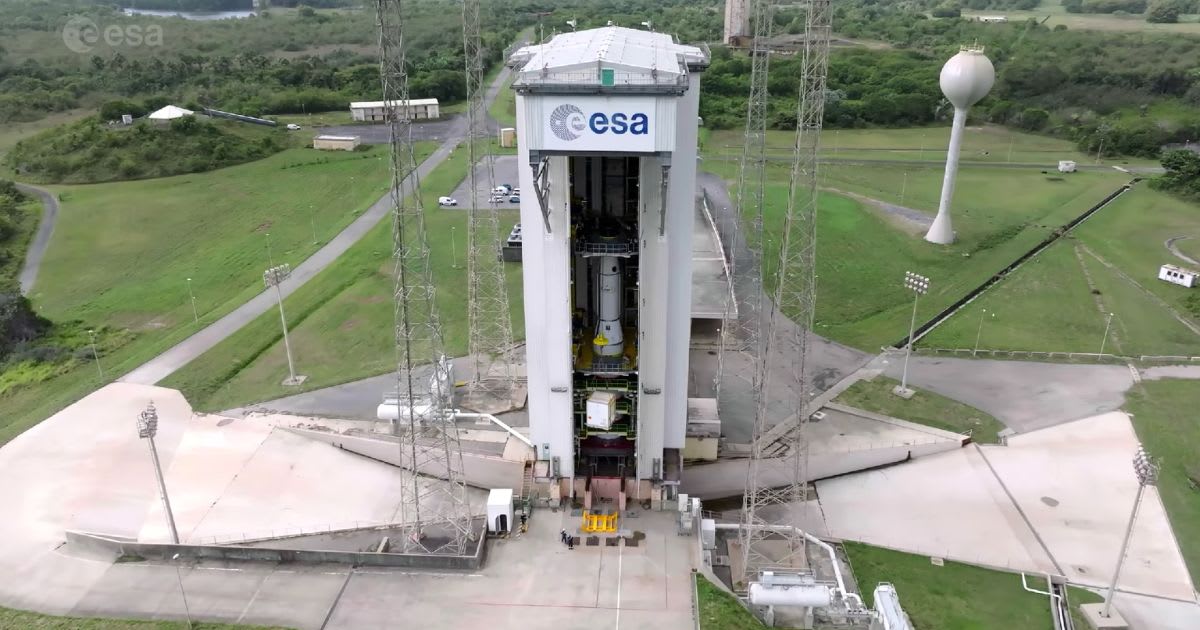
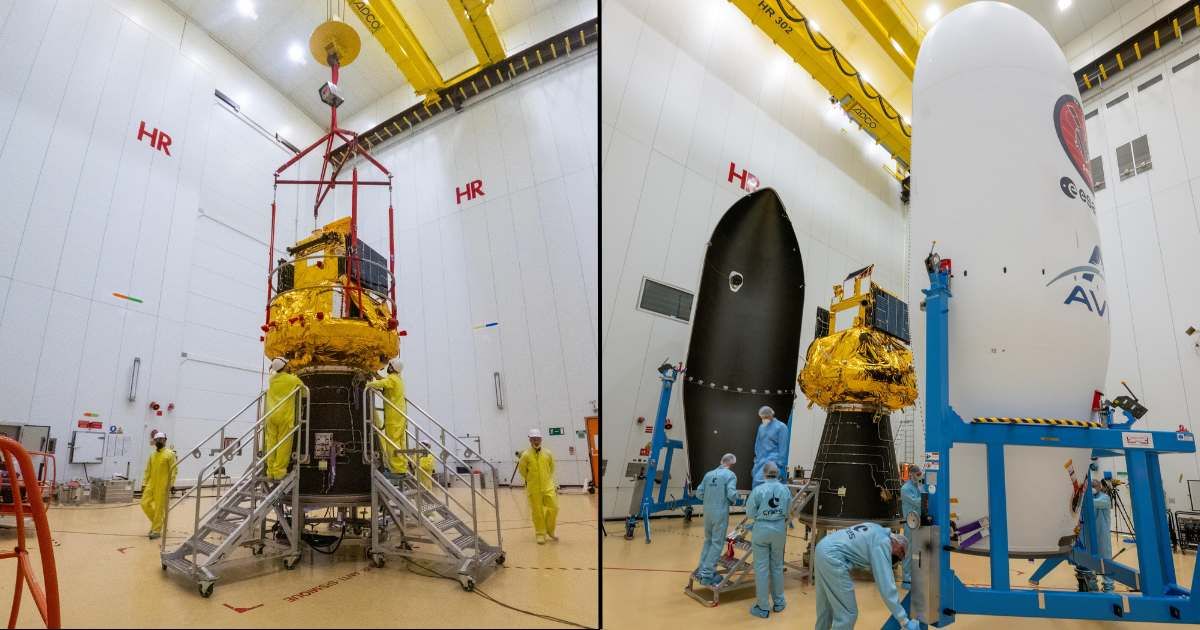
At the moment, launch preparations are underway at Europe’s Spaceport in French Guiana with final integration complete. ESA confirms that the spacecraft was already fueled in March, integrated with the Vega-C rocket adapter, and enclosed inside the rocket fairing. Earlier in mid-February, the P210C first stage was transferred from the Booster Storage Building to the ZLV launch pad. Notably, this is Avio’s first Vega flight after its split from Arianespace. This month, the final stacking of the payload took place.
#SMILE (or 'Solar wind-Magnetosphere-Ionosphere Link Explorer') is still 4 years away from launch, but scientists are already using @esascience satellites, such as @ESA_XMM and @ESA_Cluster, to pave the way for this pioneering European-Chinese mission 👉https://t.co/GgI1hYFRkt pic.twitter.com/4UTlpgh2MW
— European Space Agency (@esa) August 29, 2019
Once launched, the Smile mission will study the Earth's magnetosphere and how the planet responds to solar wind and radiation using its four science instruments. The soft X-ray imager (SXI) will make the first X-ray observations of Earth’s magnetic field, and the ultraviolet imager (UVI) is a camera that can continuously observe auroras for up to 45 hours at a time. The joint mission between the European Space Agency and the Chinese Academy of Sciences will help scientists better understand solar storms, geomagnetic storms and predict space weather.
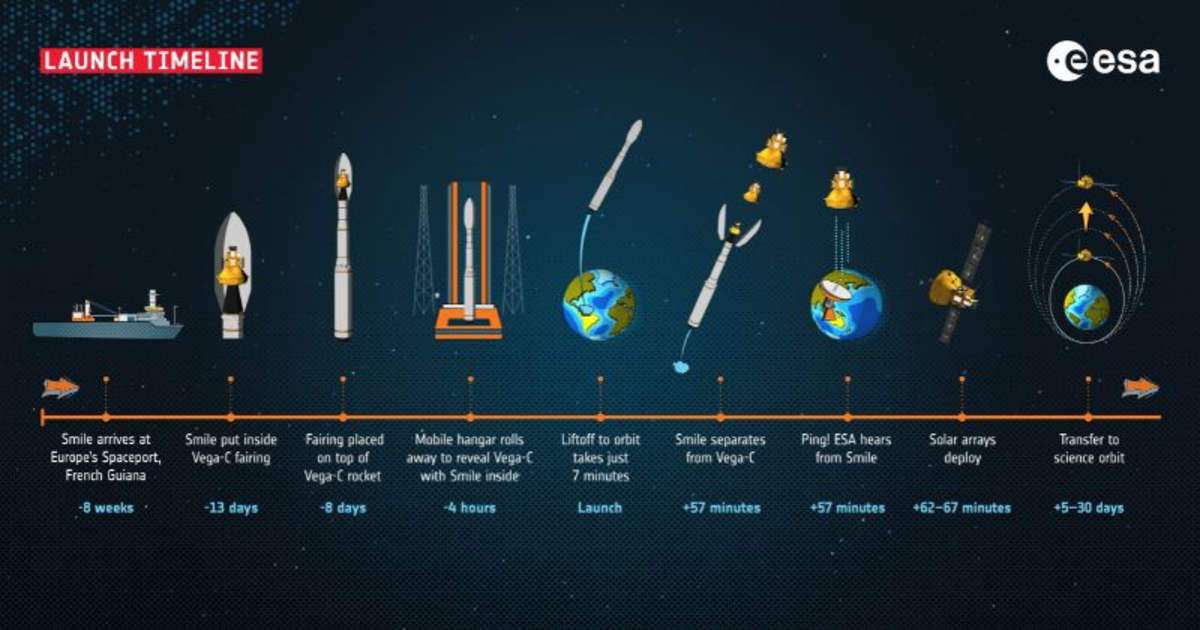
During its scheduled launch on May 19, the Vega-C rocket’s four stages will separate sequentially. The Smile satellite is expected to be deployed into a low-Earth orbit, 57 minutes after liftoff. Mission success would be confirmed around an hour after launch when the solar arrays deploy. Following 11 engine burns over 25 days, the spacecraft will bring itself to its final, egg-shaped orbit — going 121,000 km above the North Pole to collect data and 5,000 km above the South Pole to return it to ground stations. Smile, short for Solar wind Magnetosphere Ionosphere Link Explorer, is part of ESA's Cosmic Vision programme that aims to study how the solar system works.
More on Starlust
ESA–China's Smile mission launches April 9 to study how Earth reacts to solar wind
ESA confirms solar eclipse-generating Proba-3 satellite is 'alive' after a month of silence