Solar Orbiter cracks one of the Sun's secret codes by tracing origins of superspeed electrons
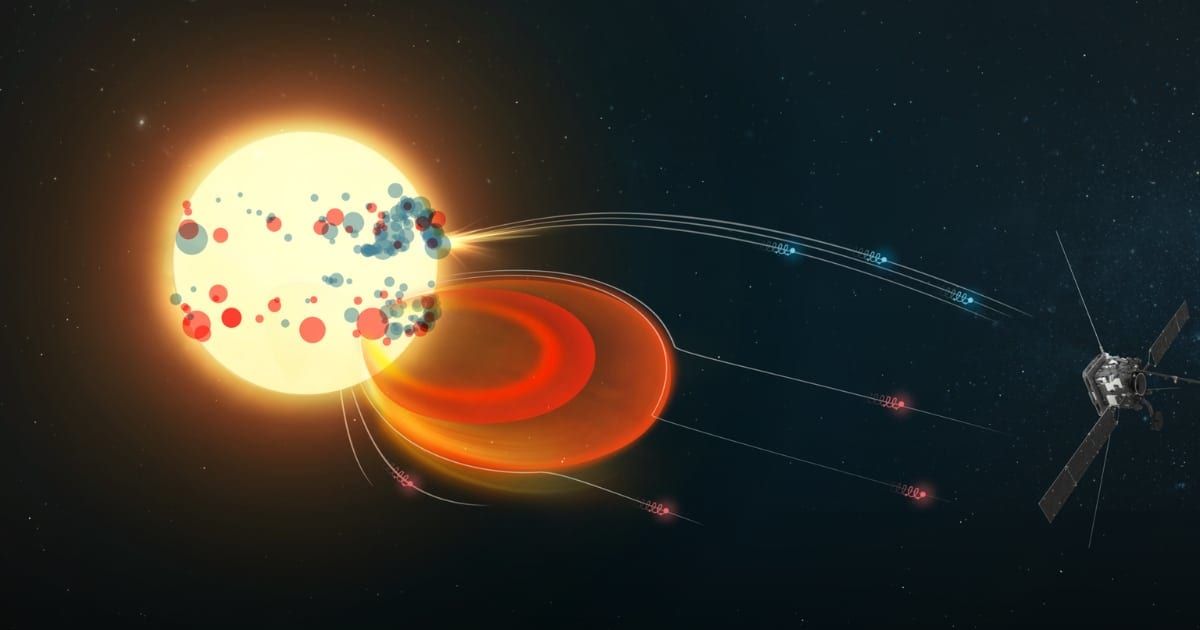
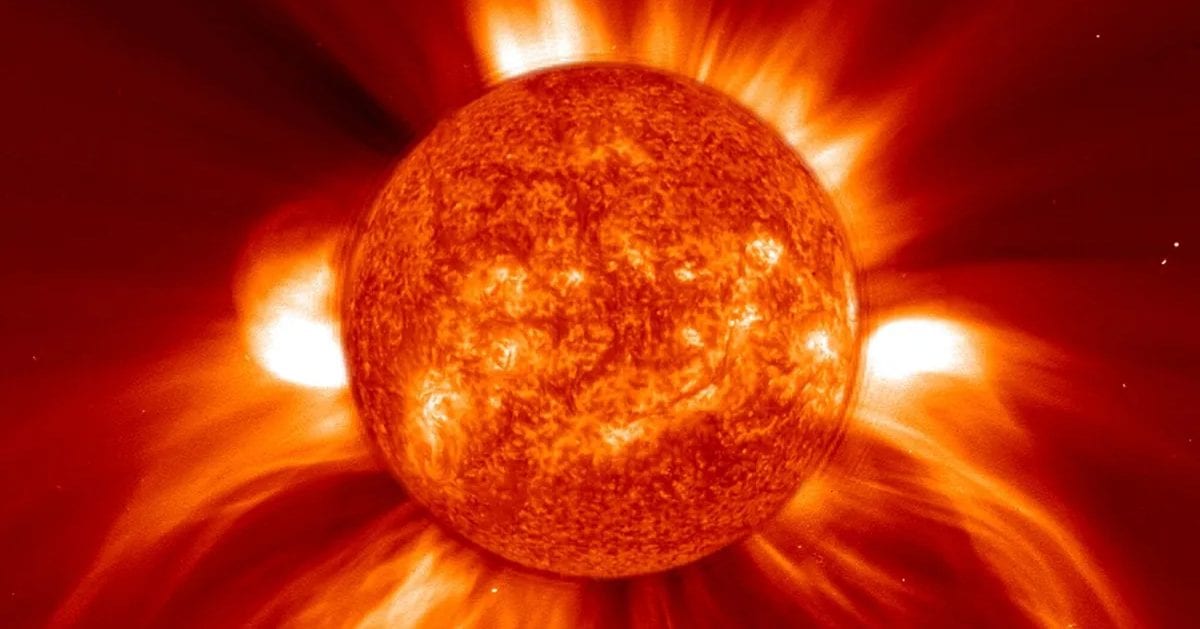
The European Space Agency's Solar Orbiter mission has uncovered a crucial link between the Sun's energetic electron streams and their solar origins. Researchers have successfully categorized the flood of super-fast electrons, revealing that these particles originate from two distinct types of solar outbursts: intense flares and large coronal mass ejections (CMEs), as per the European Space Agency.
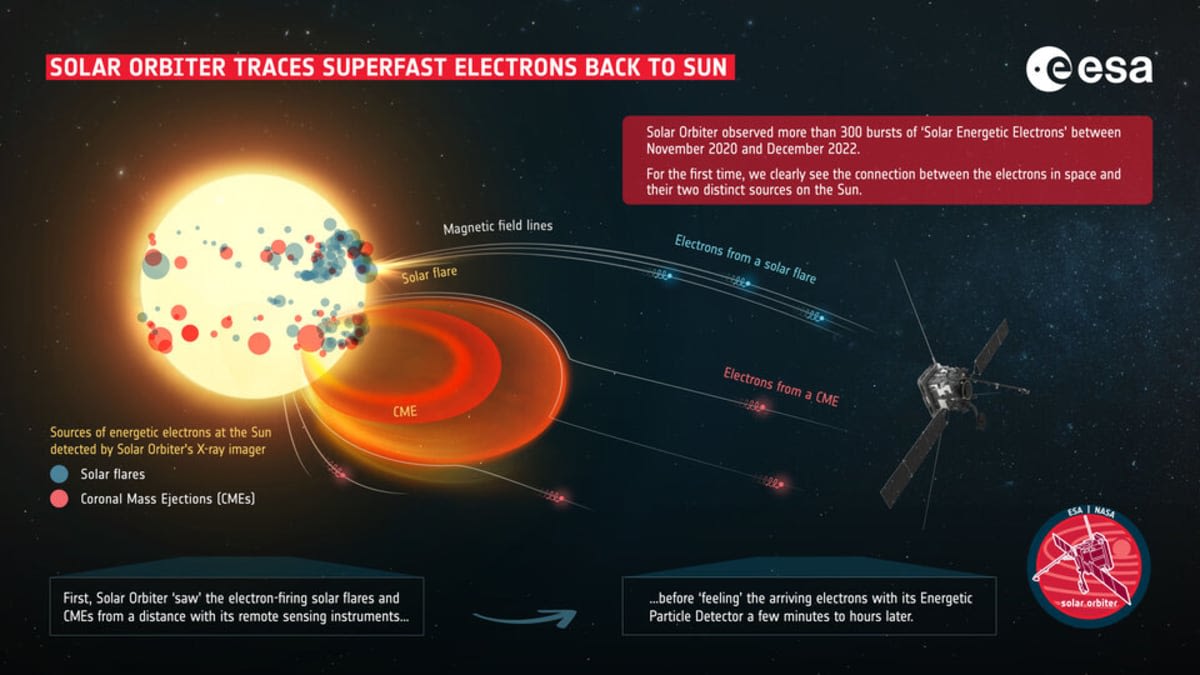
The Sun is the most powerful particle accelerator in our solar system, and it regularly launches streams of high-energy electrons into space. These particles, known as Solar Energetic Electrons (SEEs), can travel at nearly the speed of light. Now, thanks to the Solar Orbiter, scientists can trace these electrons back to their source on the Sun's surface.
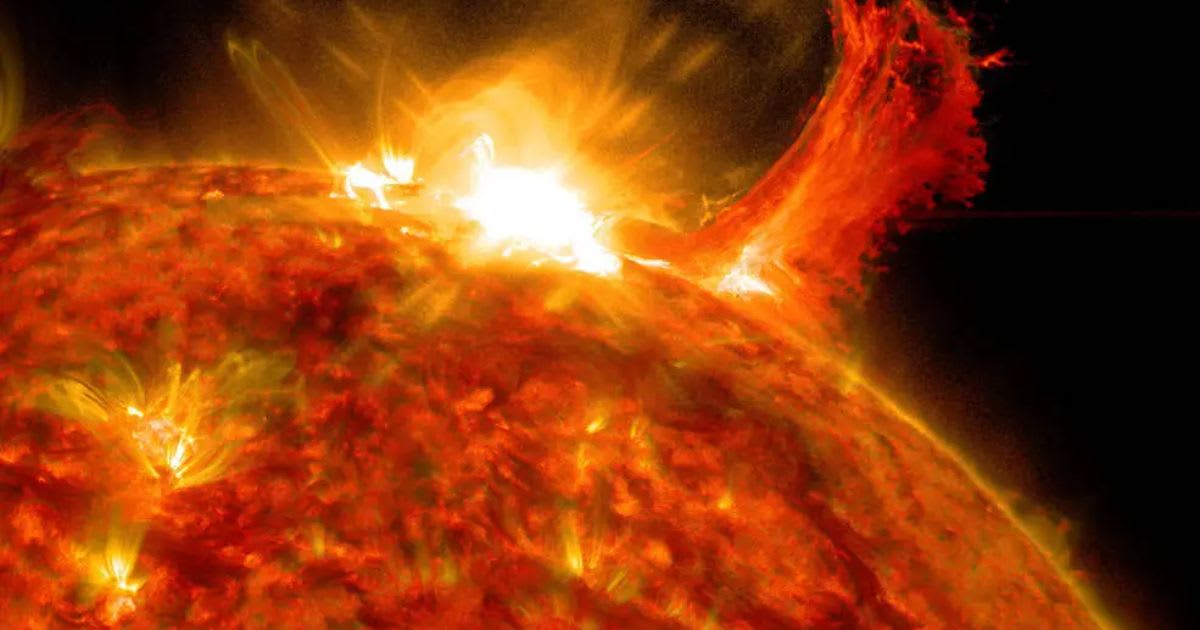
A recent study, led by Alexander Warmuth of the Leibniz Institute for Astrophysics Potsdam (AIP), revealed a clear division between "impulsive" and "gradual" particle events. Impulsive events are brief, powerful bursts of electrons linked to solar flares, which are explosions on smaller patches of the Sun's surface. Gradual events, in contrast, are associated with the much larger CMEs, massive eruptions of hot gas from the Sun’s atmosphere that release a broader swell of particles over longer periods.
"We see a clear split between 'impulsive' particle events, where these energetic electrons speed off the Sun’s surface in bursts via solar flares, and 'gradual' ones associated with more extended CMEs," Warmuth stated. The Solar Orbiter's unique proximity to the Sun allowed researchers to analyze hundreds of these events in their "pristine" early state. This unprecedented view, along with data from eight of the mission’s ten instruments, enabled the team to create the most comprehensive catalog of SEE events to date.
Before this study, scientists knew that two types of SEE events existed, but the connection to their solar sources was unclear. Solar Orbiter's ability to observe more than 300 events between November 2020 and December 2022 provided the necessary data to definitively link the particles to their specific origins. Co-author Frederic Schuller of AIP explained that the spacecraft flew directly through the electron streams using its Energetic Particle Detector while simultaneously observing the corresponding solar activity. This combined approach, along with gathering data about the space environment between the Sun and the spacecraft, made the breakthrough possible.
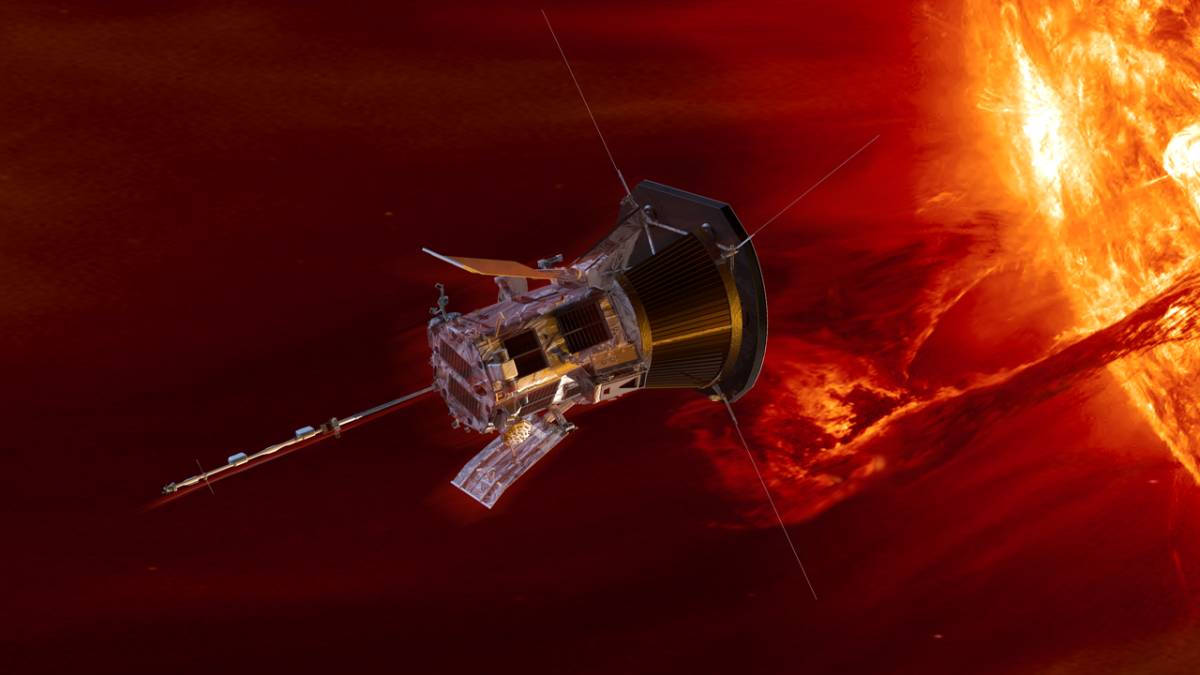
The mission also shed light on why there is often a time lag between a solar event and the detection of its associated particles. According to co-author and ESA Research Fellow Laura Rodríguez-García, this delay is due to the electrons being scattered and disturbed by turbulence and the Sun's magnetic field as they travel through space. The findings are critical for improving space weather forecasting, which is essential for protecting astronauts and spacecraft. The research highlights the greater threat posed by CMEs, which tend to hold more high-energy particles and are therefore more damaging. As the ESA prepares for its future missions, Vigil and Smile, the knowledge gained from the Solar Orbiter will be instrumental in further understanding and predicting the Sun's behavior and its impact on Earth.
More on Starlust
First-ever images of the Sun’s south pole captured by Solar Orbiter spacecraft
Highest-resolution images of solar flare and coronal loops captured by Inouye Solar Telescope
Next solar superstorm could hit Earth harder than ever, scientists explain why