Groundbreaking finding: Objects near black hole Sagittarius A* are orbiting safely, not falling in after all
An international team of researchers observed four highly intriguing 'dust objects' using the ERIS instrument at the Very Large Telescope facility in Chile.
UPDATED DEC 1, 2025
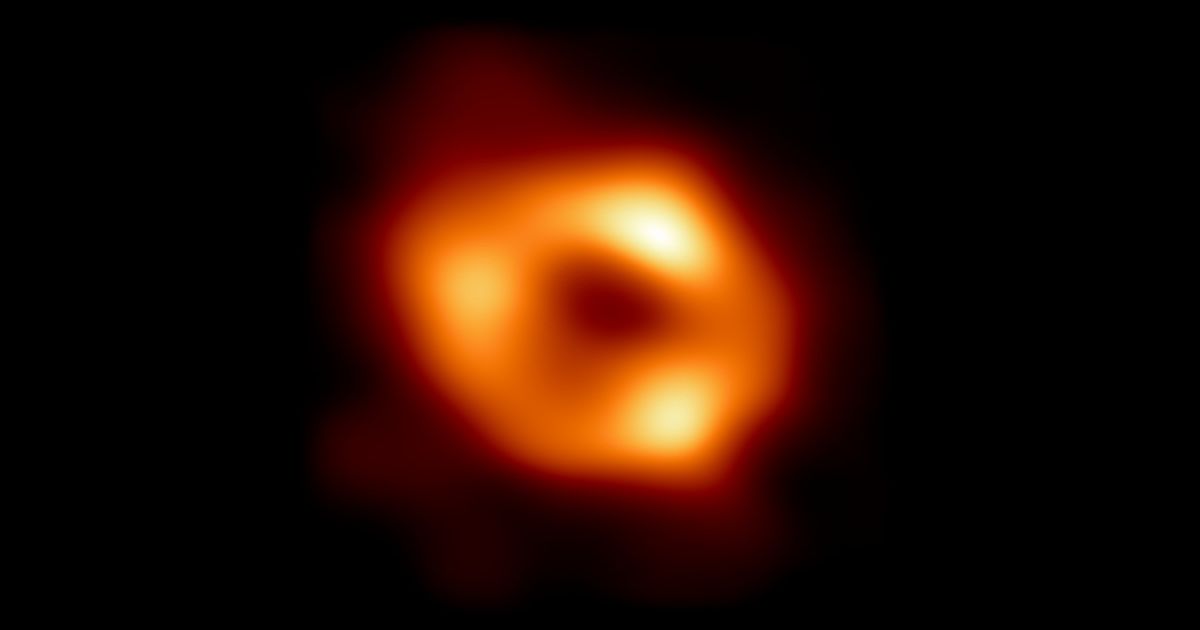
In this handout photo provided by NASA, this is the first image of the supermassive black hole at the centre of our galaxy, with an added black background to fit wider screens (Image Source: Getty | Photo Credit: NASA)

A new, groundbreaking study has now overturned a long-standing belief concerning the supermassive black hole at the hub of the Milky Way, known as Sagittarius A*, or Sgr A*. New high-resolution observations show that several celestial objects previously thought to be on their way to be swallowed up by the black hole are actually maintaining surprisingly stable orbits, according to the University of Cologne

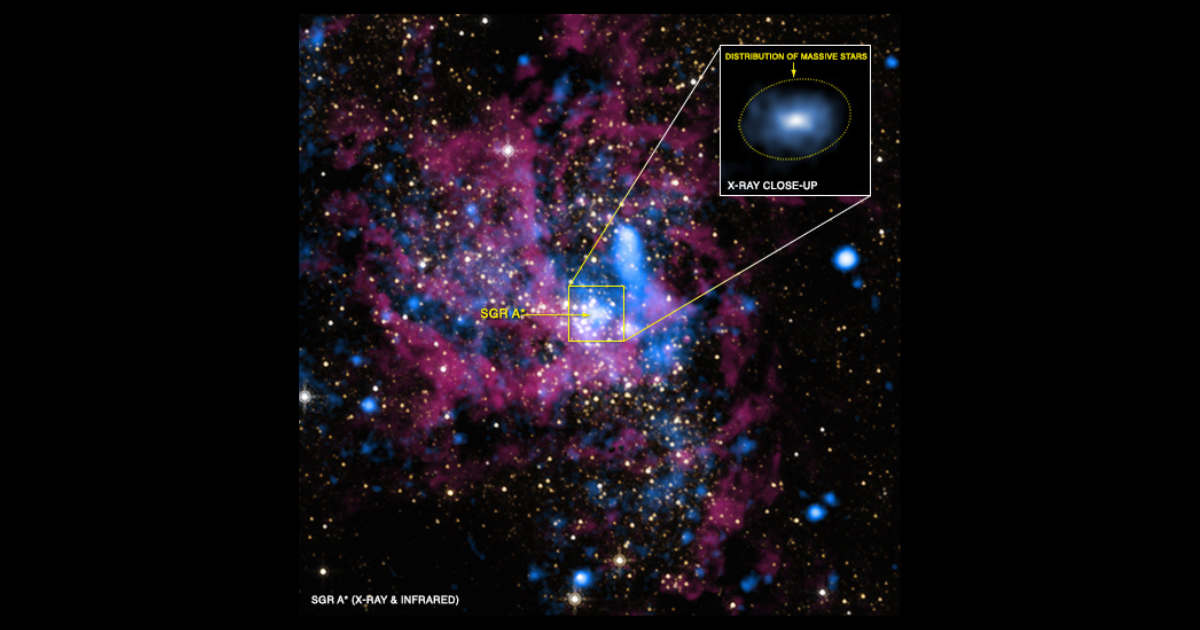
Image of the Milky Way and a close-up of  Sagittarius A*. It was made by combining X-ray images from Chandra and infrared images from Hubble. (Resized and set against a black background by Starlust Staff) (Image Credits: X-ray: NASA/UMass/D.Wang et al., IR: NASA/STScI)
Image of the Milky Way and a close-up of Sagittarius A*. It was made by combining X-ray images from Chandra and infrared images from Hubble. (Resized and set against a black background by Starlust Staff) (Image Source: X-ray: NASA/UMass/D.Wang et al., IR: NASA/STScI)

An international team led by Dr. Florian Peißker of the University of Cologne used the  Enhanced Resolution and Spectrograph (ERIS) instrument at the Very Large Telescope (VLT) facility in Chile for the study, which observed four curious celestial bodies referred to as 'dusty objects.' The most talked about was G2, which was considered a fragile cloud of gas that was assumed to have been stretched out and destroyed (a process termed 'spaghettification) by Sgr A*'s great gravity. However, the new ERIS observations revealed G2 is tracing a stable and predictable path. This stability strongly suggests that G2 is not just a gas cloud, but that it harbors a star inside its dust. It is also a confirmation that our Milky Way can be surprisingly stable.
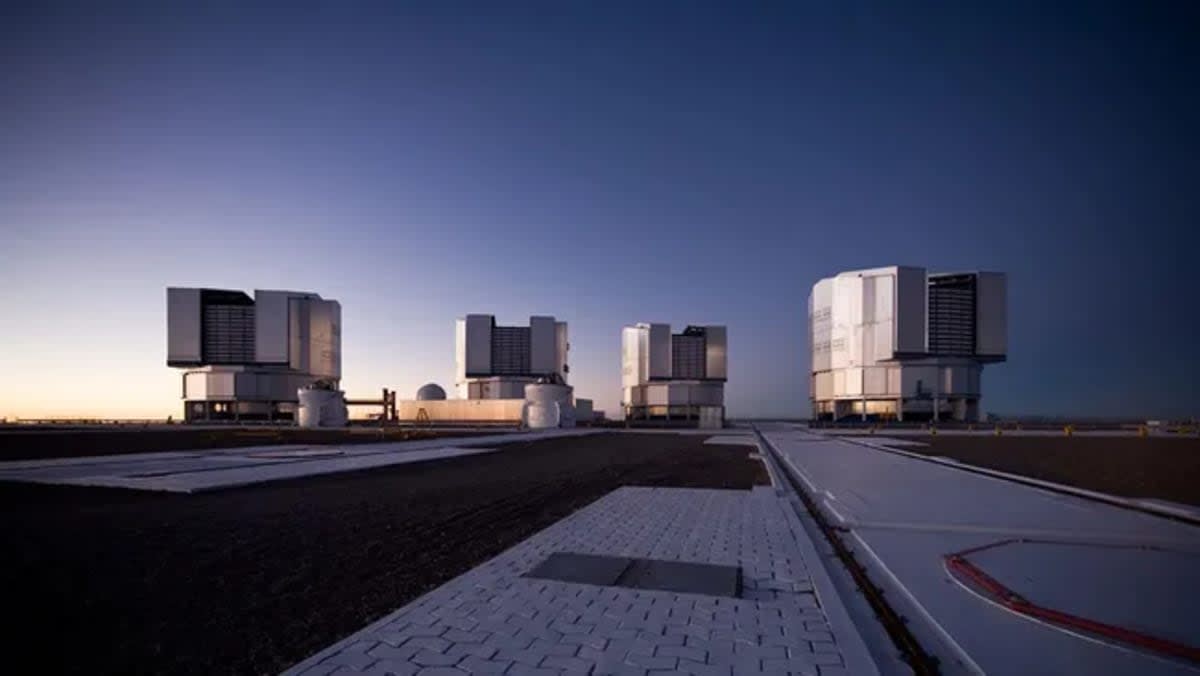
The VLT's four unit telescopes (Image Source: H. H. Heyer | ESO)
The VLT's four-unit telescopes (Image Source: H. H. Heyer | ESO)

It also followed the D9 binary star system: a pair of stars that closely orbit Sgr A*. The stars in D9 were known to be suffering incredible gravitational stresses that should, in theory, be causing the two stars to merge; the ERIS observations, however, confirmed the system remains intact and stable. 
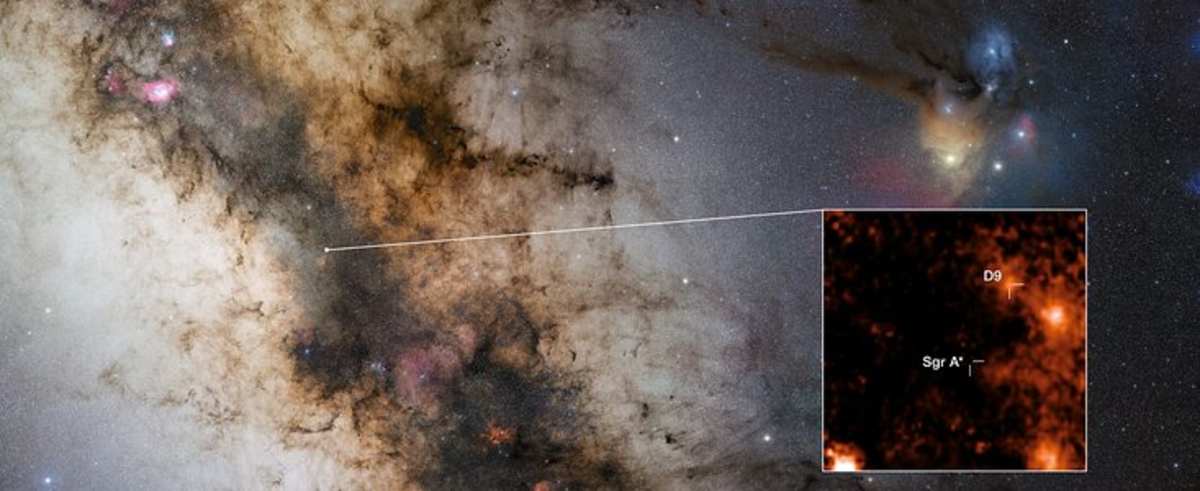
An international team of researchers has detected a binary star orbiting close to Sagittarius A*, the supermassive black hole at the centre of our galaxy (Image Source: ESO)

Objects X3 and X7 are also orbiting Sgr A* robustly, thus proving they are much tougher than previously predicted by theoretical models. “The fact that these objects move in such a stable manner so close to a black hole is fascinating,” Dr. Peißker stated. “Our results show that Sagittarius A* is less destructive than was previously thought. This makes the centre of our galaxy an ideal laboratory for studying the interactions between black holes and stars.” 
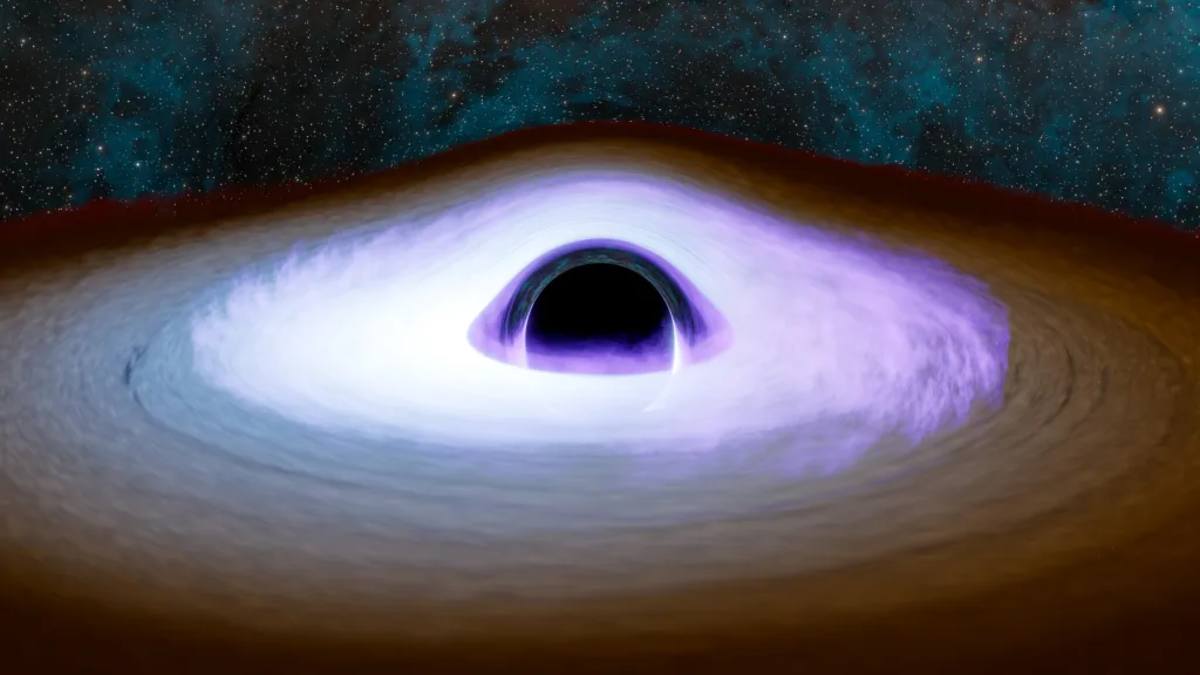
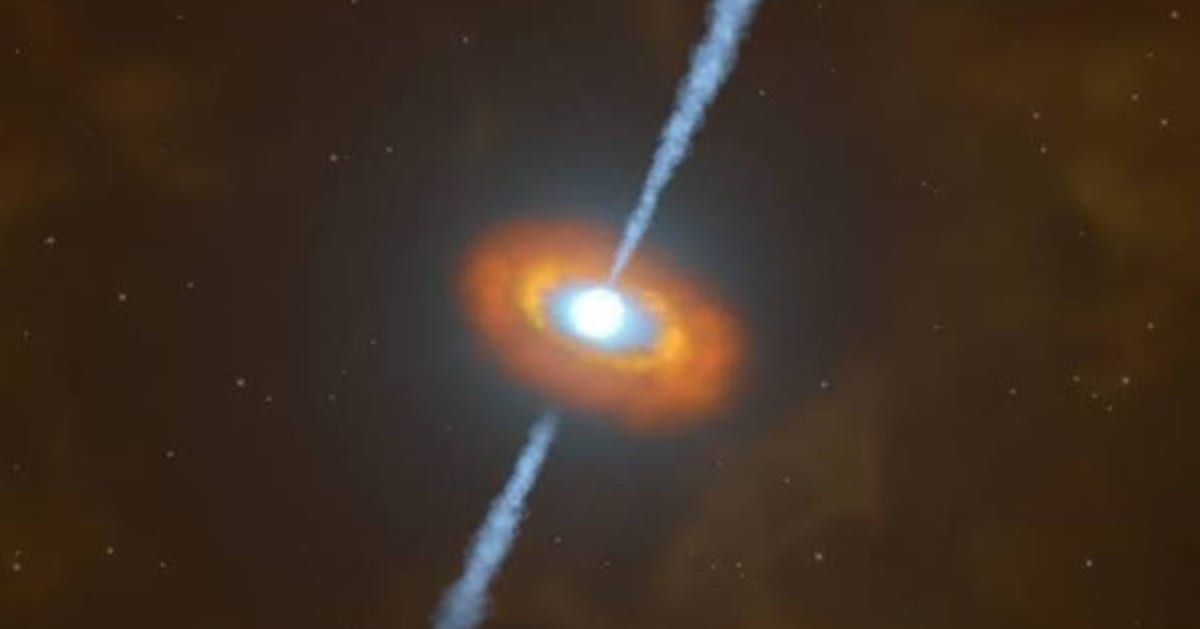
This illustration of material swirling around a black hole highlights a particular feature, called the “corona,” that shines brightly in X-ray light (Image Source: NASA/Caltech-IPAC | Robert Hurt)

Results, which have been published in the journal Astronomy & Astrophysics, show that the center of our galaxy is a complex, dynamic region capable of both destroying and even stimulating the creation of such exotic objects. Scientists plan to use future observations from ERIS and the forthcoming Extremely Large Telescope, ELT, to continue monitoring these resilient celestial bodies.
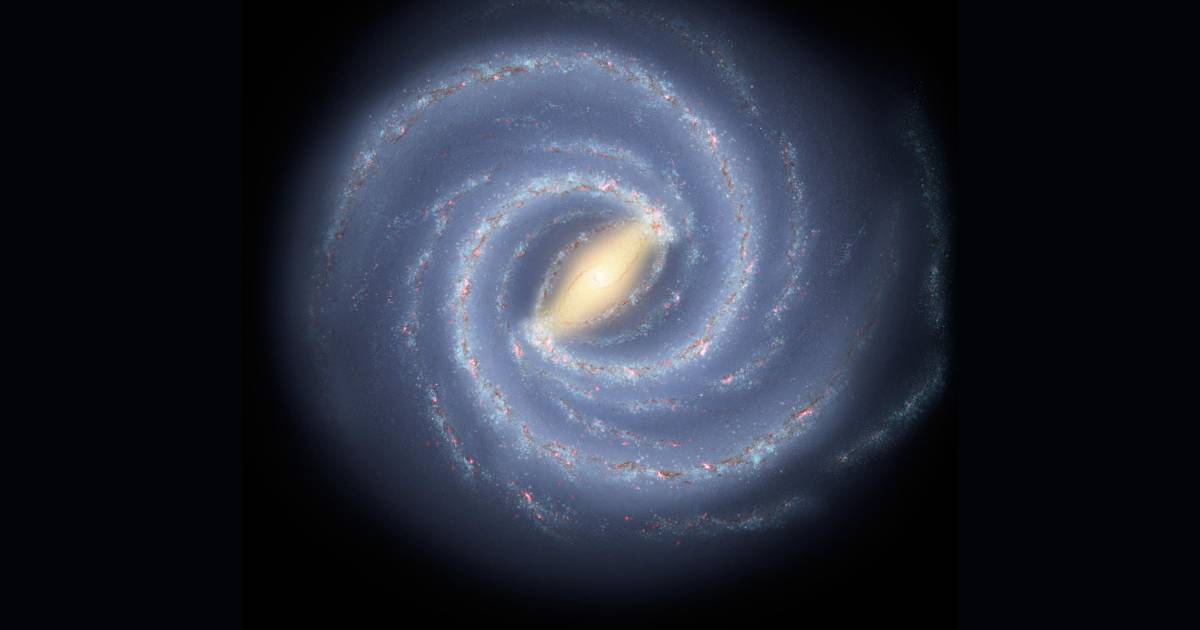
Using infrared images from NASA's Spitzer Space Telescope, scientists have discovered that the Milky Way's elegant spiral structure is dominated by just two arms wrapping off the ends of a central bar of stars (Cover Image Source: NASA/JPL-Caltech)
Using infrared images from NASA's Spitzer Space Telescope, scientists have discovered that the Milky Way's elegant spiral structure is dominated by just two arms wrapping off the ends of a central bar of stars (Image Source: NASA/JPL-Caltech)

The Milky Way had long been known to host a supermassive black hole at its core, but until 2022, it had never been directly observed. That changed when the National Science Foundation-funded Event Horizon Telescope, or EHT, released the historic picture of Sagittarius A*, or Sgr A*. A black hole is a region in space where the gravitational pull is so strong that absolutely nothing, not even light, can escape its pull. The point of no return, or where the escape velocity exceeds the speed of light, is called the event horizon. While the name suggests an empty void, a black hole is actually a huge amount of matter crammed into a small area. Because light cannot escape, a black hole appears literally black. However, scientists can still study them. 

More on Starlust

James Webb Telescope finds potentially record-breaking black hole from early universe
ESA’s Euclid telescope provides remarkable insights into formation of galaxies and supermassive black holes

MORE STORIES

The data suggest this small, super-hot world is shrouded in a thick layer of gas, likely hovering above a planet-wide ocean of magma.
3 hours ago
The region around black holes was not thought to be conducive to star formation, yet research proved otherwise.
21 hours ago
The discovery, validated by a separate European team led by the University of Exeter, may offer fresh insight into interactions between planets and binary star systems.
1 day ago
During its 1986 observation of the planet in the first and only flyby, the spacecraft measured a surprisingly strong electron radiation belt.
2 days ago
Previously, the most ancient supernova ever confirmed dated back to when the universe was 1.8 billion years old.
2 days ago
NASA's Fermi telescope was the first to identify the highly unusual cosmic explosion.
3 days ago
An international team of astronomers conducted a ten-day observation of the NGC 3783 black hole using mainly the XRISM space telescope.
3 days ago
A nova is a massive, temporary star explosion caused when a dense white dwarf star pulls material from a nearby star, setting off an uncontrolled nuclear reaction.
5 days ago
A team of computational astrophysicists has developed a simulation that explains the behavior of matter around black holes.
7 days ago
A study has also concluded that the interior of 3I/ATLAS is rich in metal, which could challenge our current understanding of comet formation.
Dec 5, 2025