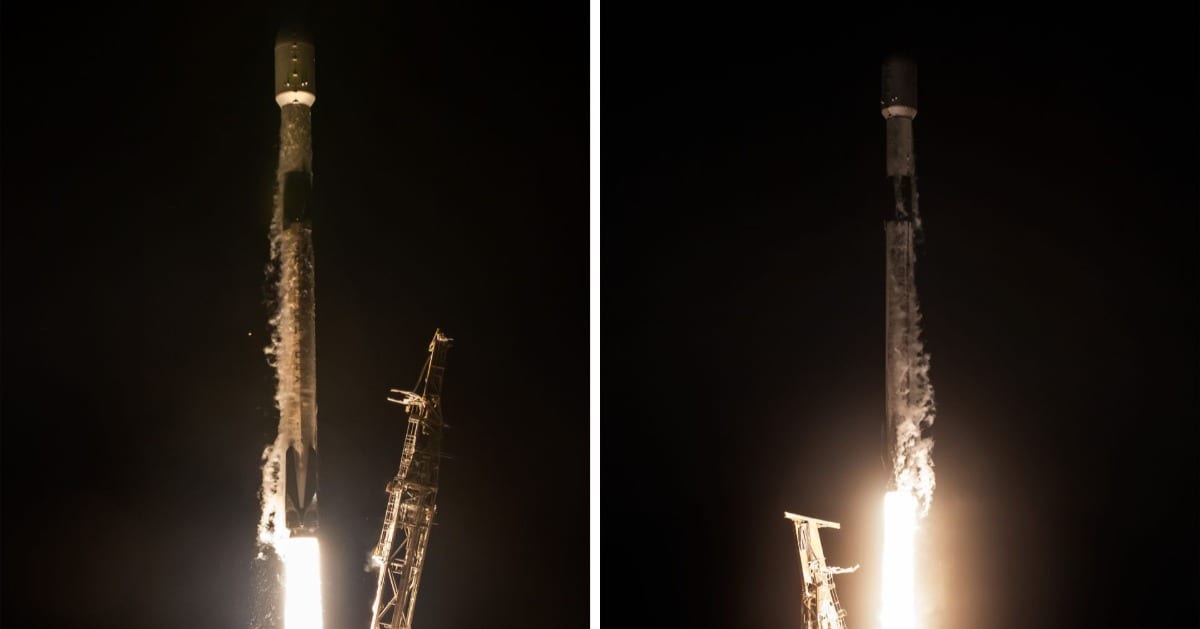
NASA’s car-sized Dragonfly rotorcraft gets its cameras installed, set for July 2028 launch to Titan
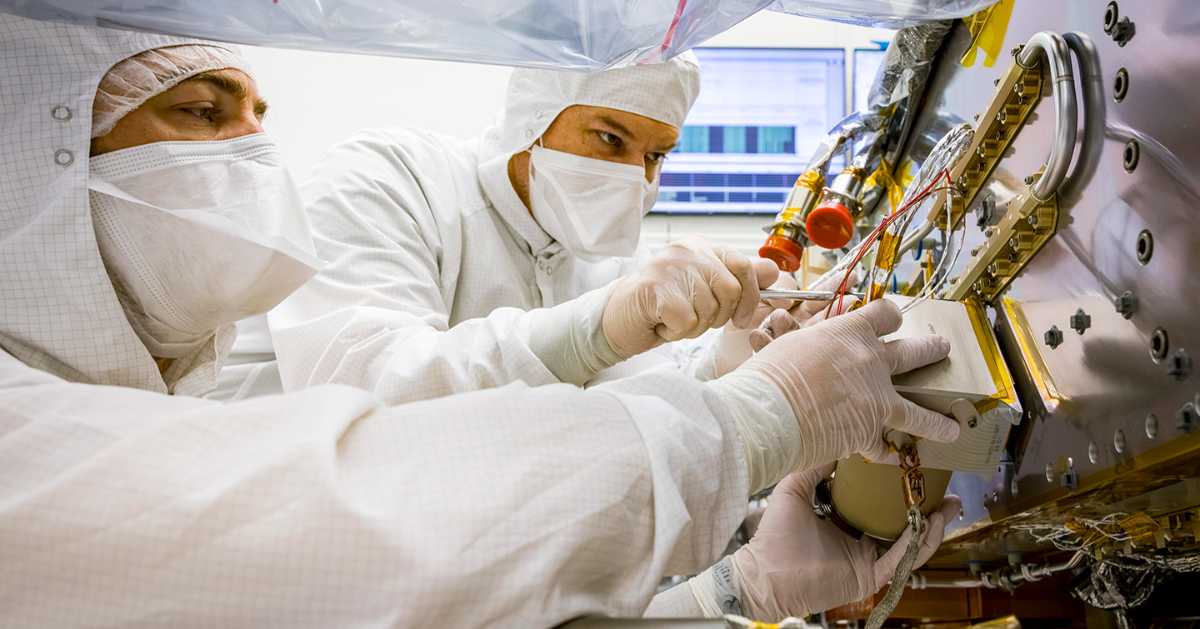
Technicians at the Johns Hopkins Applied Physics Laboratory (APL) in Laurel, Maryland, have installed DragonCam—a seven-camera science imaging suite for the Titan-bound Dragonfly rotorcraft. Developed and built by Malin Space Science Systems, each camera was installed in its insulated housing, tested, and integrated into the rotorcraft by mid-November. "Seeing these cameras become part of the Dragonfly lander is an exciting milestone that brings us another step closer to this unprecedented exploration," said Dragonfly Principal Investigator Elizabeth Turtle at APL in a statement.

Thanks to DragonCam, Dragonfly will be able to provide scientists with some never-seen-before views of Titan's landscape during flight and even when it's on the ground. The suit features two forward-mounted cameras—a wide-angle camera (WAC) and a medium-angle camera (MAC)—two downward-facing WACs, a pair of WACs on the sides of Dragonfly, and a high-resolution microscopic imager. The latter will enable detailed views of Titan's regolith from up close, which will help guide Dragonfly's drill—known as DrACO (Drill for Acquisition of Complex Organics). "We’ll be collecting materials at multiple sites across Titan, and the images from the cameras will help us relate the samples to Titan’s broader landscape and piece together the story of its geology," stated Carolyn Ernst, the DragonCam Instrument Scientist at APL.
Check out the cameras here 👇 https://t.co/BjcdM5tBPJ
— NASA Solar System (@NASASolarSystem) November 24, 2026
An array of light-emitting diodes (LEDs), which cover the light spectrum from the infrared to the ultraviolet, will gather information about the color of surface materials, allowing scientists to make inferences about their composition. This may even facilitate the identification of organic molecules during Titan's long night (lasting eight Earth days) that fluoresce under UV light. Of course, the LEDs will also allow scientists to see Titan the way human eyes do. The spacecraft's WACs will also work in conjunction to create panoramic pictures of Dragonfly's surroundings, while its downward-facing cameras will help select good landing sites when in flight. The forward WAC will provide a 90-degree field of view, and the forward MAC will image part of that field of view in high resolution. These capabilities will allow Dragonfly to see ahead in a way similar to how human eyes work together to create a perception of depth.
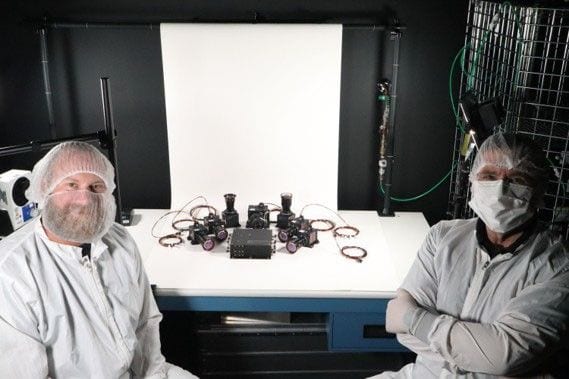
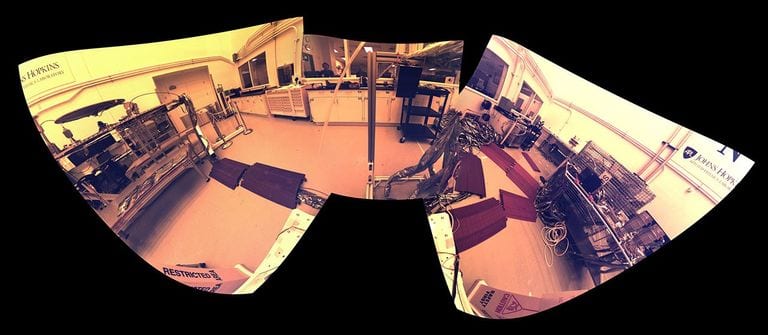
The San Diego, California-based Malin Space Science Systems, which developed and built DragonCam, has a history of providing cameras for NASA missions. The company's contributions include the Lunar Reconnaissance Orbiter Camera instruments and the Mastcam-Z camera system on board the Perseverance rover. "We are extremely pleased to have delivered the DragonCam cameras,” said Michael Ravine, the DragonCam development manager and Dragonfly co-investigator from Malin. "Now, to have them on the Dragonfly spacecraft, taking images, it’s so much easier to picture how they will work on Titan. These will be our eyes to see and explore this whole new world." Dragonfly's forward- and side-facing cameras captured a panoramic view of the clean room at APL (see the image below) on November 9.
Next up, Dragonfly will see the installation of the DraGNS (Gamma-ray and Neutron Spectrometer), DraGMet (Geophysics and Meteorology), DraMS (Mass Spectrometer), and DrACO, which are yet to arrive at APL. The mission is slated to embark on its journey in July 2028 and will reach Titan by late 2034.

One of the reasons why scientists are so interested in the moon is that it is the only one in our solar system with a substantial atmosphere. What's more, the atmosphere there is mostly composed of nitrogen and some methane—two ingredients that can eventually lead to the formation of complex organic (carbon-rich) compounds that can settle on the surface. Scientists are eager to find which compounds are present on the moon, and if they are similar to the ones that seeded life here on our planet.
More on Starlust
NASA's Dragonfly rotorcraft will launch to Saturn's moon Titan in 2028: Here's how you can tag along
Heat shield for NASA's Dragonfly mission undergoes thermal testing in New Mexico desert