Russia may launch nuclear-armed satellite into orbit as soon as December, reports warn

Russia could launch a satellite carrying a nuclear weapon before the end of this year, Western intelligence agencies have warned. The satellite named 'Sputnik-S' has reportedly been stored in Moscow for years, and it may launch as soon as December. The information is based on a report by German public broadcasters NDR and WDR and Munich-based newspaper Süddeutsche Zeitung, which cite intelligence gathered by multiple agencies, including the German Armed Forces and Federal Intelligence Service.
The reports have raised serious concerns for the safety of functional satellites, the International Space Station (ISS) and China's Tiangong Space Station, as a nuclear detonation in space would be indiscriminate. Not only could it destroy satellite networks of Russia, its allies, and its rivals, but it could even endanger the lives of ISS residents, including Russian cosmonauts. SpaceX’s Starlink network has provided an advantage to Ukraine, helping the nation stay connected to the internet and operate drones in its war against Russia. The Russian weapon may also spell trouble for SpaceX’s Starshield, which is Starlink's military-grade counterpart being built for intelligence gathering and communication for the Pentagon.

If Russia does launch the satellite, it will also be a violation of the Outer Space Treaty, which bans the deployment of weapons of mass destruction in space. While Russia is a party to the treaty, along with the U.S., it vetoed a draft UN Security Council resolution in 2024, which sought to reaffirm the ban. Moreover, in a public report on challenges to security in space released in October, the U.S. Military's Defense Intelligence Agency (DIA) had already highlighted Russia’s plan to launch a nuclear warhead-carrying satellite and its devastating results. “A space-based capability such as this could cause rapid and sudden loss or degradation of thousands of satellites operated by countries and companies around the world, as well as to the vital communications, navigation, scientific, meteorological, commercial, and national security services they provide,” the report said. It also warned that a nuclear detonation could leave behind radiation belts that could last for years and damage satellites that were only partially disabled.

It is worth noting that the U.S. has also deployed weapons in orbit, a fact the Space Force admitted to in September, but their nature remains unspecified. Besides, there’s technically no prohibition on deployment of conventional weapons in space per the Outer Space Treaty.
Russia’s response to the report
Russia has categorically denied that it’s planning to launch such a satellite and rejected the report. During a daily briefing, Kremlin spokesman Dmitry Peskov told reporters, per The Moscow Times—“We haven’t seen the report. But there are so many ‘alleged’ and ‘possible’ claims in it, attributed to who knows whom, that it’s certainly hardly worth taking them seriously.”
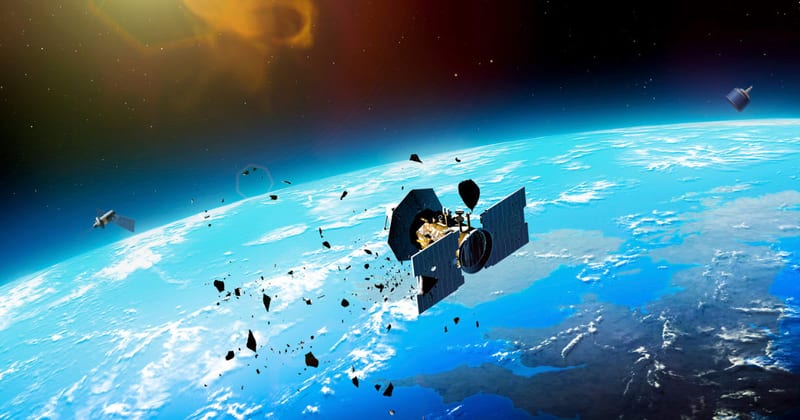
Members of the North Atlantic Treaty Organization (NATO), however, are taking the report seriously and calling out Moscow for the ‘escalation.’ “The news reports about Russia planning to have a nuclear presence in space is not new, but this doesn't make it less shocking," said German Chancellor Friedrich Merz. "It shows the extent to which Russia is apparently prepared to escalate the situation."
More on Starlust
NASA’s car-sized Dragonfly rotorcraft gets its cameras installed, set for July 2028 launch to Titan