'Only one chance': ESA's Rosalind Franklin rover twin navigates Mars-like conditions on Earth
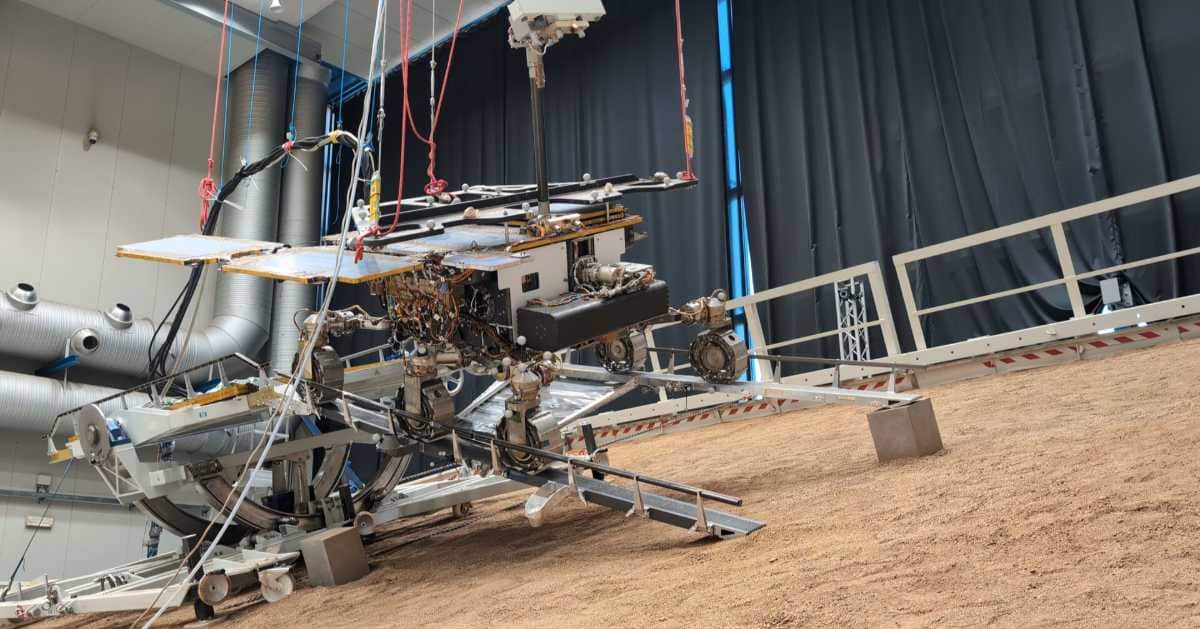
ESA's Rosalind Franklin rover, scheduled to launch in 2028, must first safely reach the Red Planet's surface before it can search Mars for signs of past life. So, to prepare, teams from the mission's prime industrial contractor, Thales Alenia Space, put Amalia, a full-size model of the rover, through a rigorous two-month test campaign, which saw it negotiate simulated Martian conditions.
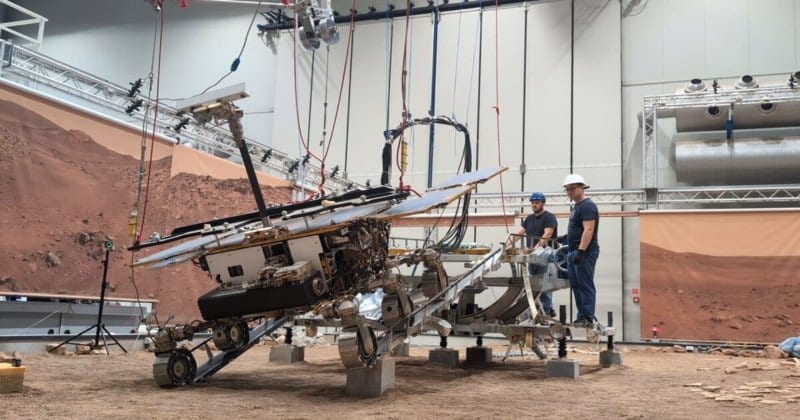
One major obstacle the rover will face after landing is finding a safe way off its platform. This could be difficult if rocks or steep slopes at the landing site block an exit ramp. The Rosalind Franklin rover has two pairs of ramps on its landing platform, one at the front and the other at the back. If the obstacles block the exit on one side after landing, the rover can use the ramps on the other side to descend.
“Because we will have to rely only on orbital images, we won’t know exactly what the conditions around the rover will be after landing. Depending on where and how we land, one of the exits could be blocked by rocks or slopes. The first and most crucial decision of all will be which direction to drive down,” Eric Zekri, ESA’s ExoMars rover team leader, said in a statement. “On Mars, we will only have one chance. Once we egress, there is no way back, so we have to get it right,” he added.
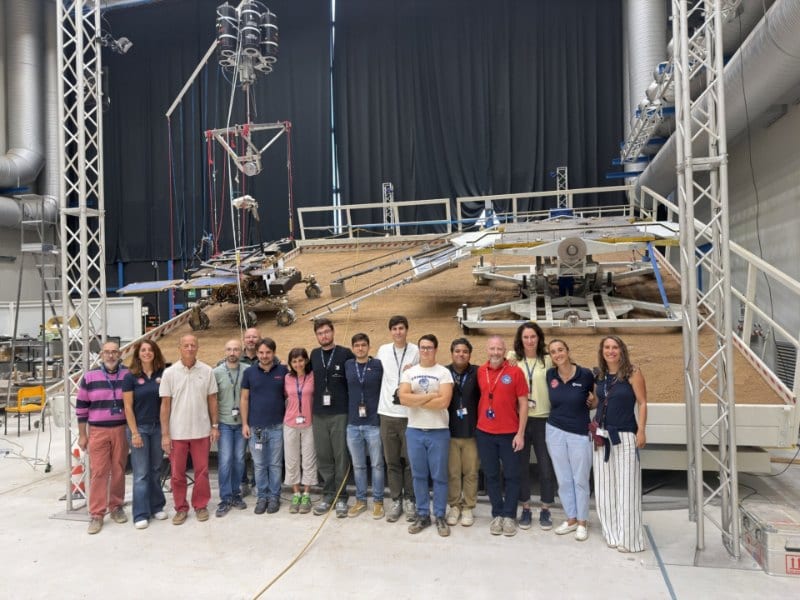
For the purpose of the test campaign conducted at aerospace engineering company ALTEC's facilities in Turin, Italy, the teams had a hydraulic platform tilt the lander and the rover by 20 degrees to simulate the latter's tilted descent onto the Martian surface. Since Mars' gravity is approximately one-third of Earth's, a lifting device was used to support two-thirds of the rover's weight. Amalia completed more than 20 drives. Engineers also left the ramps, which were developed by the Polish space company Astronika, on both sides of the lander open. Each ramp is around three meters long and made of aluminum, with a honeycomb pattern designed to give the rover's wheels a better grip.
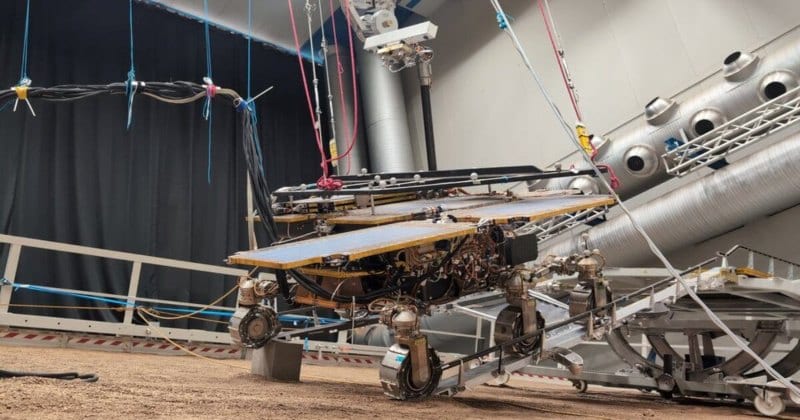
“It is incredibly rewarding to see the rover driving off the platform successfully in such challenging conditions and in a Mars-like scenario. The excellent performance of the ramps reflects the quality of the design, taking us another important step closer to the Martian surface,” said Chiara Lombardi, an ExoMars rover and lander interface engineer.
Searching for signs of past life
ESA's Rosalind Franklin rover will carry a drill that can dig up to two meters below the surface and collect samples to analyze them inside an onboard laboratory. Scientists think samples obtained from beneath the surface could have relatively higher chances of containing biomarkers, as they are better protected from radiation and photochemistry than those on the surface. The rover's mission to Mars is planned to begin in 2030.
Rosalind Franklin mission launch date
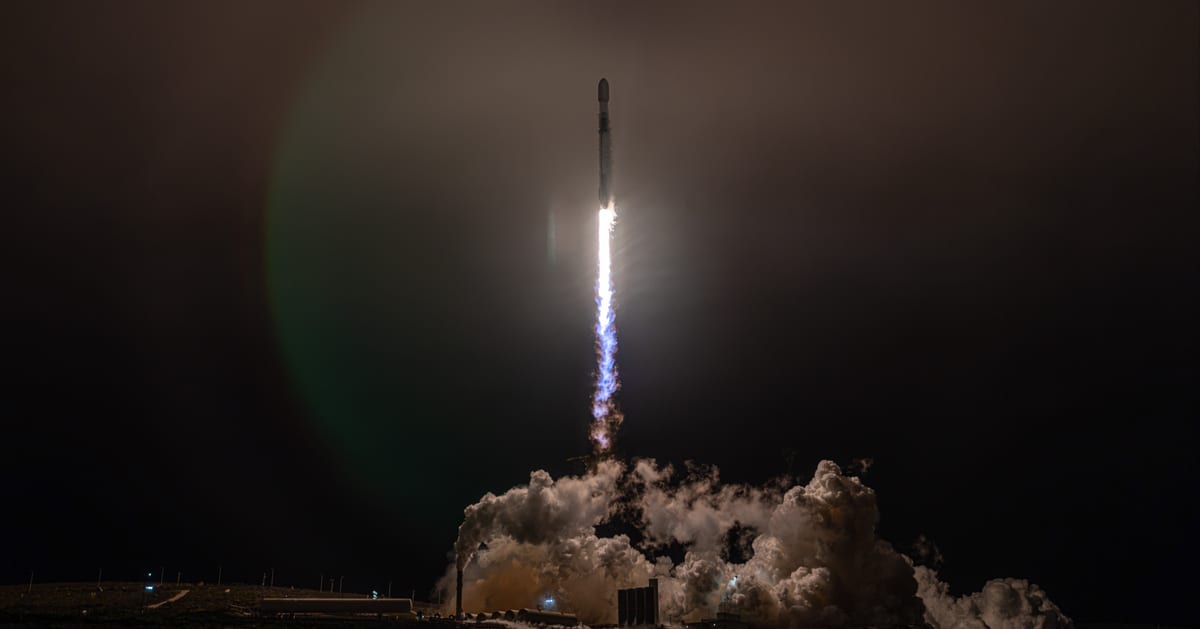
The much-awaited mission will be launched atop SpaceX's Falcon Heavy rocket from Launch Complex 39A at NASA’s Kennedy Space Center in Florida, no earlier than late 2028.
More on Starlust
ESA’s Hera spacecraft gets first glimpse of target asteroid Didymos that was hit by NASA
ESA's Mars Express reveals how the most visually striking cloud on the Red Planet forms