Blue Origin suffers setback despite first successful landing of reused New Glenn rocket booster
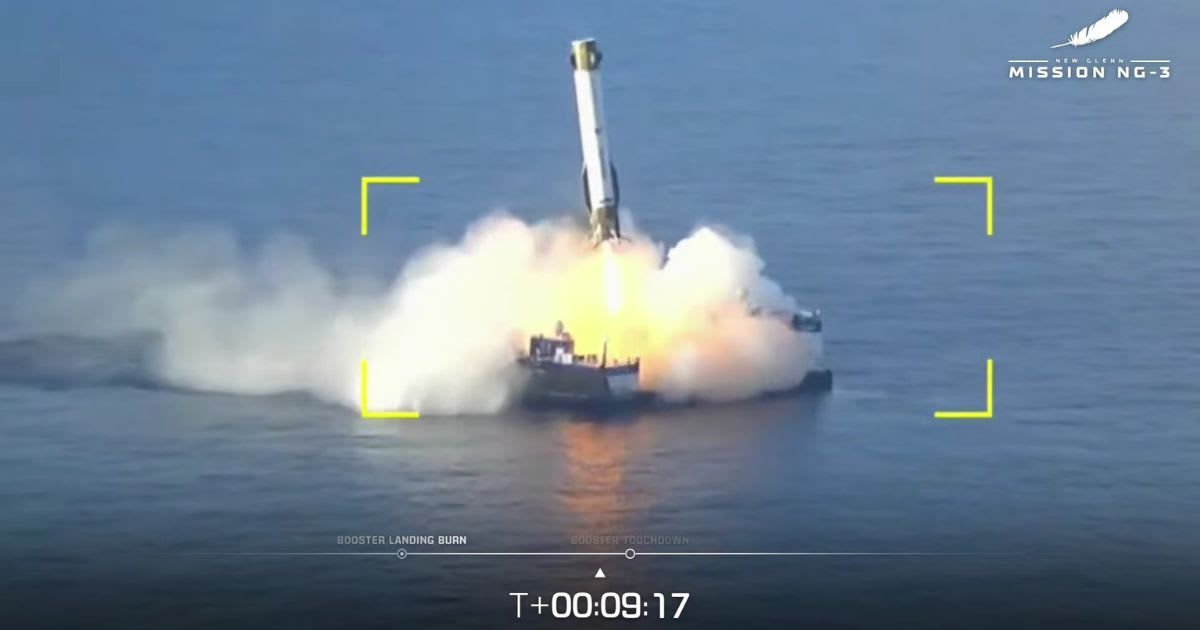
Blue Origin had a mixed day in the office over the weekend, achieving the first successful landing of a reused New Glenn booster, but ending with an upper-stage issue that left its payload in the wrong orbit. All eyes were on the rocket’s third mission (NG-3), with the Jeff Bezos-owned company competing with Elon Musk’s SpaceX in the heavy-lift launch market. The New Glenn rocket lifted off from Cape Canaveral at 7:25 a.m. ET on Sunday, April 19, and the “Never Tell Me the Odds” booster returned and landed around 10 minutes later.
Standing 321 feet tall, Blue Origin’s New Glenn rocket began its slow ascent, igniting its seven methane-fueled BE-4 engines, each producing over 500,000 pounds of thrust. The first stage (booster) shut down and separated three minutes into the flight, as the upper stage continued using two BE-3U engines. The booster went on a downrange parabolic arc — briefly reaching space — before it steered itself toward the designated “Jacklyn” droneship landing platform in the Atlantic Ocean. Two braking burns later, the rocket successfully completed its touchdown on the platform.
NG-3 Update: We have confirmed payload separation. AST SpaceMobile has confirmed the satellite has powered on. The payload was placed into an off-nominal orbit. We are currently assessing and will update when we have more detailed information.
— Blue Origin (@blueorigin) April 19, 2026
This successful first reuse landing comes after the booster had previously flown earlier in November 2025, on New Glenn’s second mission. However, Blue Origin could not celebrate the booster recovery for long, as the mission’s payload — AST SpaceMobile's BlueBird 7 satellite — failed to reach the correct orbit. The communications satellite successfully separated and powered on, but it ended up in a lower-than-planned orbit, according to an official statement from AST. The giant BlueBird 7 satellite is part of AST’s next-gen Block 2 constellation, designed to connect directly to smartphones from space. Also, the spacecraft reportedly features the largest commercial communications array (around 2,400 sqft.) in low Earth orbit.
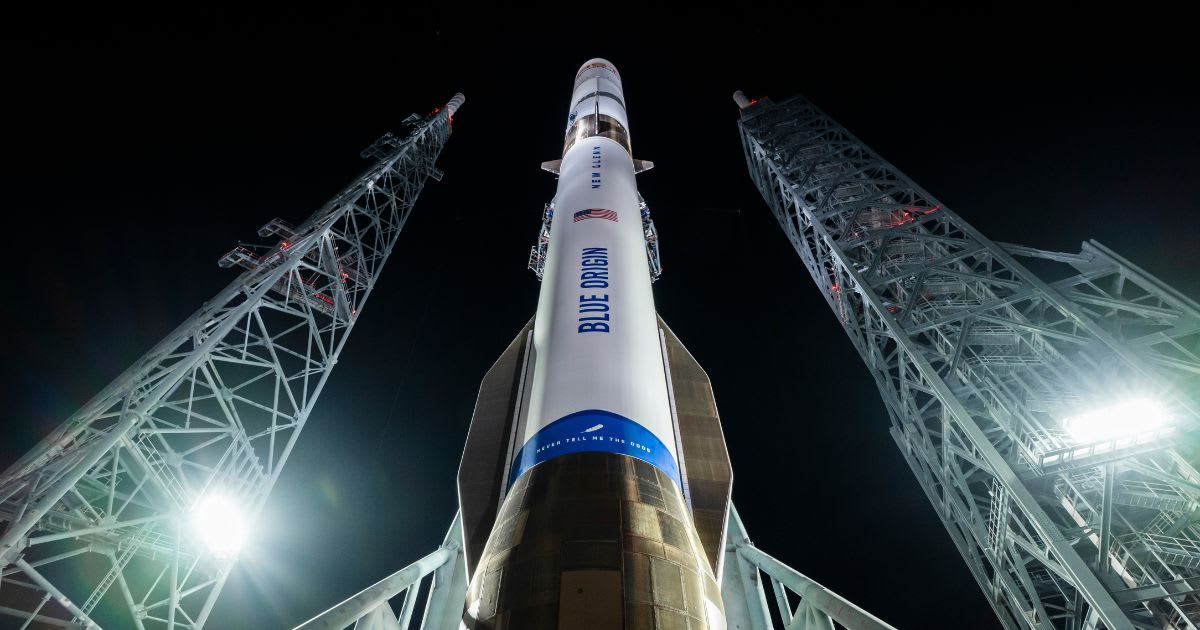
Owing to this upper stage setback, the satellite will have no choice but to deorbit, which is a significant setback for Blue Origin, despite acing the reuse landing test that was arguably harder to achieve than simple payload deployment. Booster reusability was just one half of NG-3’s goal. The New Glenn rocket was built to serve the commercial launch market’s heavy payloads, which means their reliable delivery is a must for further progress. The rocket includes a 23-foot payload fairing capable of carrying large or multiple satellites.
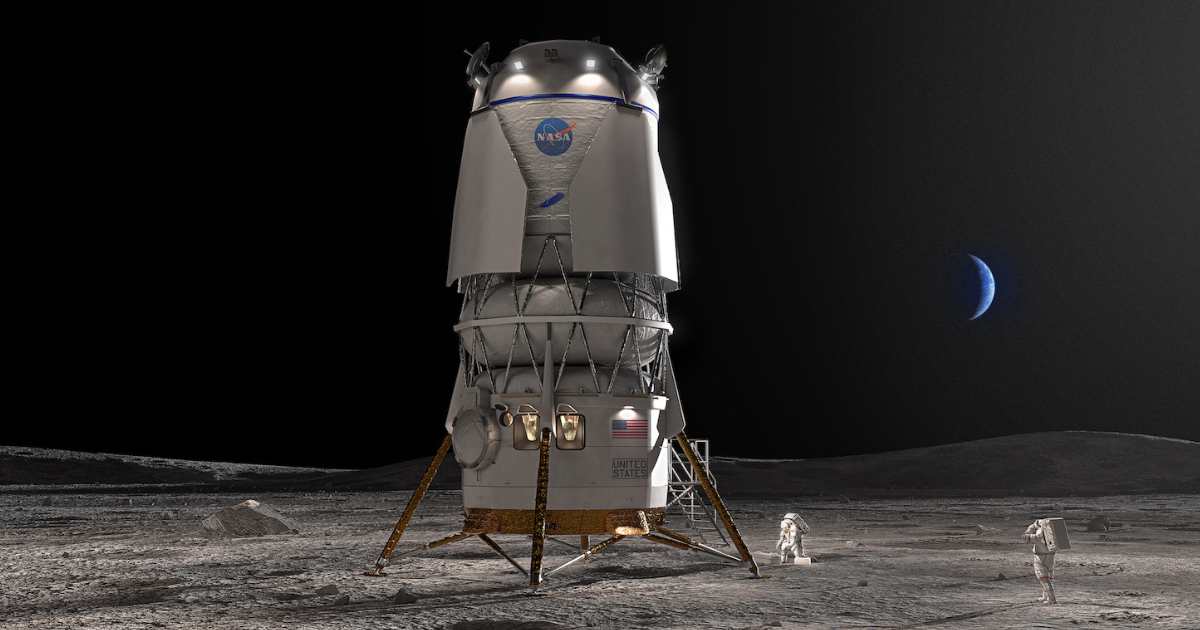
Blue Origin will aim to get back on its feet as quickly as it can, and capitalize on the successful booster landing’s momentum instead. Matching Falcon 9’s rapid reuse and launch frequency is likely to be one of the mission’s overarching goals. Of the two previous New Glenn missions, only NG-2 landed its first-stage booster, while the first launch reached orbit but failed to land the booster. NASA’s upcoming Artemis missions will put both Blue Origin and SpaceX’s lunar landers to test. The Bezos-owned company is also working on the more powerful New Glenn 9x4 super-heavy variant.
More on Starlust
Blue Origin announces major New Glenn upgrades as rivalry with SpaceX intensifies
Blue Origin joins SpaceX in the orbital data center race, aims to launch over 50,000 satellites