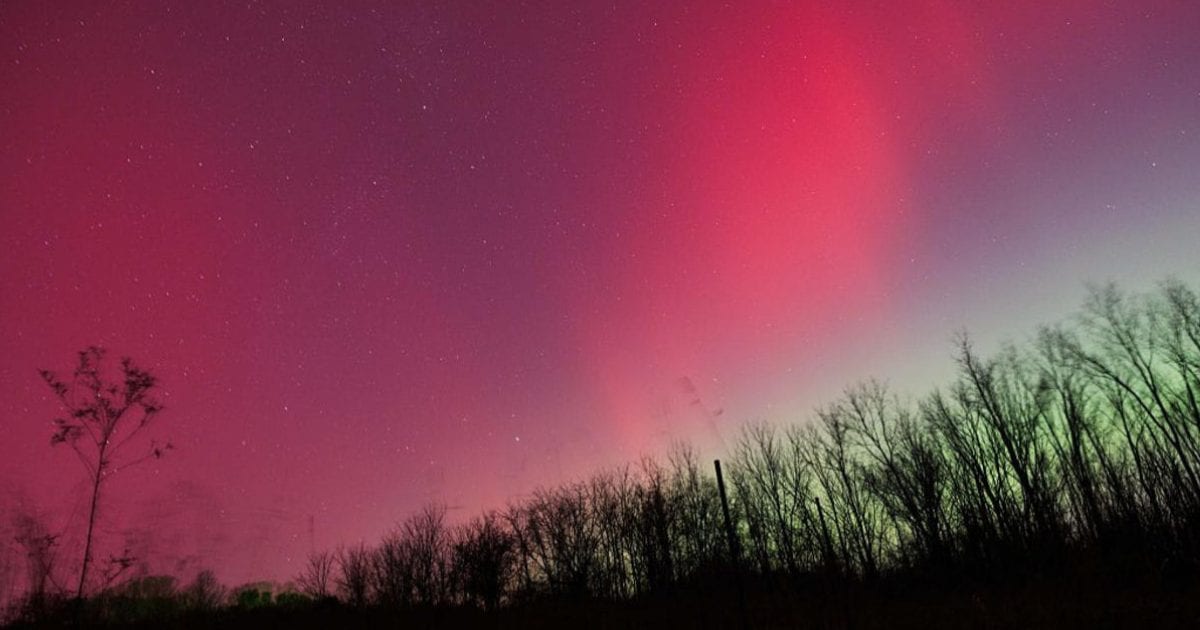
Auroras forecast to light up skies over a dozen states on November 6-7, including New York and Wisconsin
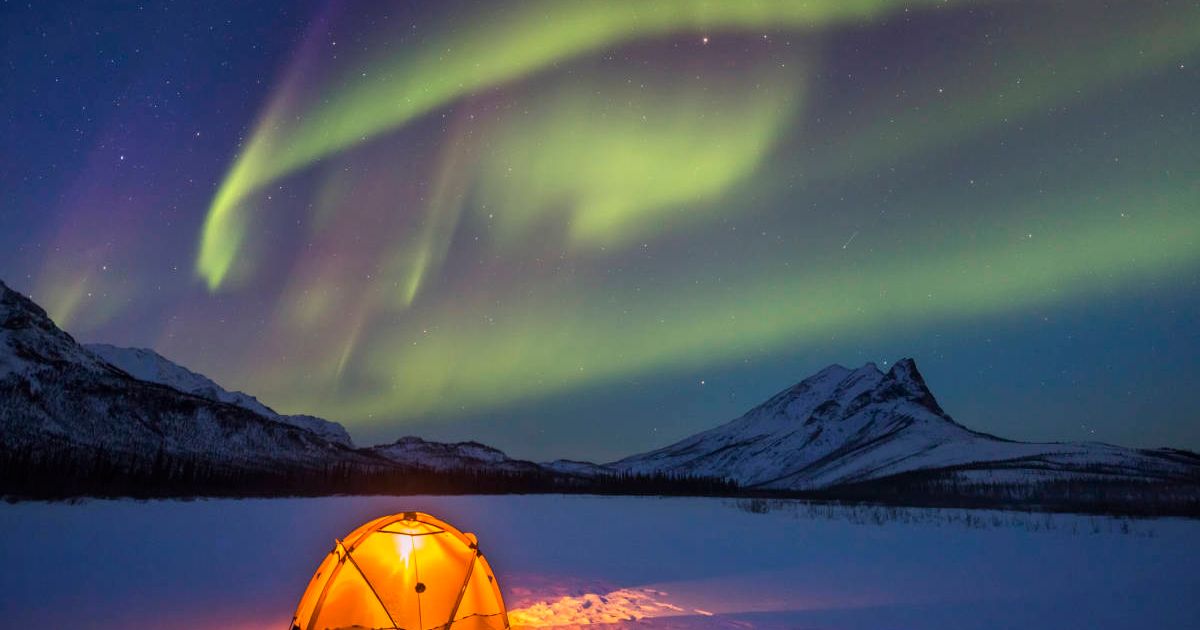
A powerful solar event is poised to strike Earth, prompting space weather forecasters to issue a G3 (Strong) storm watch for the November 6 and 7 UTC days, as per the Space Weather Prediction Center. A Coronal Mass Ejection (CME), a massive burst of solar material, is predicted to make an impact as early as Thursday evening, November 6 (EST). Forecasters have moderate confidence in the arrival window, spanning from Thursday evening through Friday morning.
While the CME's Earth-directed trajectory is reasonably certain, the ultimate strength of the resulting geomagnetic storm remains unconfirmed. Officials stress that the true intensity, dependent on the CME's speed, magnetic strength, and orientation upon arrival, can only be definitively measured once the cloud passes the solar wind observatory spacecraft positioned one million miles away at Lagrange Point 1 (L1). This preliminary G3 watch reflects the potential severity of the event. Immediate, sudden geomagnetic responses can follow the arrival of the CME's shock front, with more dramatic activity possible later if the embedded magnetic field aligns favorably with Earth's.
Thursday, November 6
The anticipated storm strength significantly increases the probability of Northern Lights (aurora borealis) visibility across high latitudes, according to the Space Weather Prediction Center. Residents across Alaska, Yukon, Northwest Territories, Nunavut, and the northern reaches of Canadian provinces (including Northern BC, Alberta, Saskatchewan, Manitoba, Ontario, Quebec, and Labrador) have the best chance of seeing the aurora directly overhead.
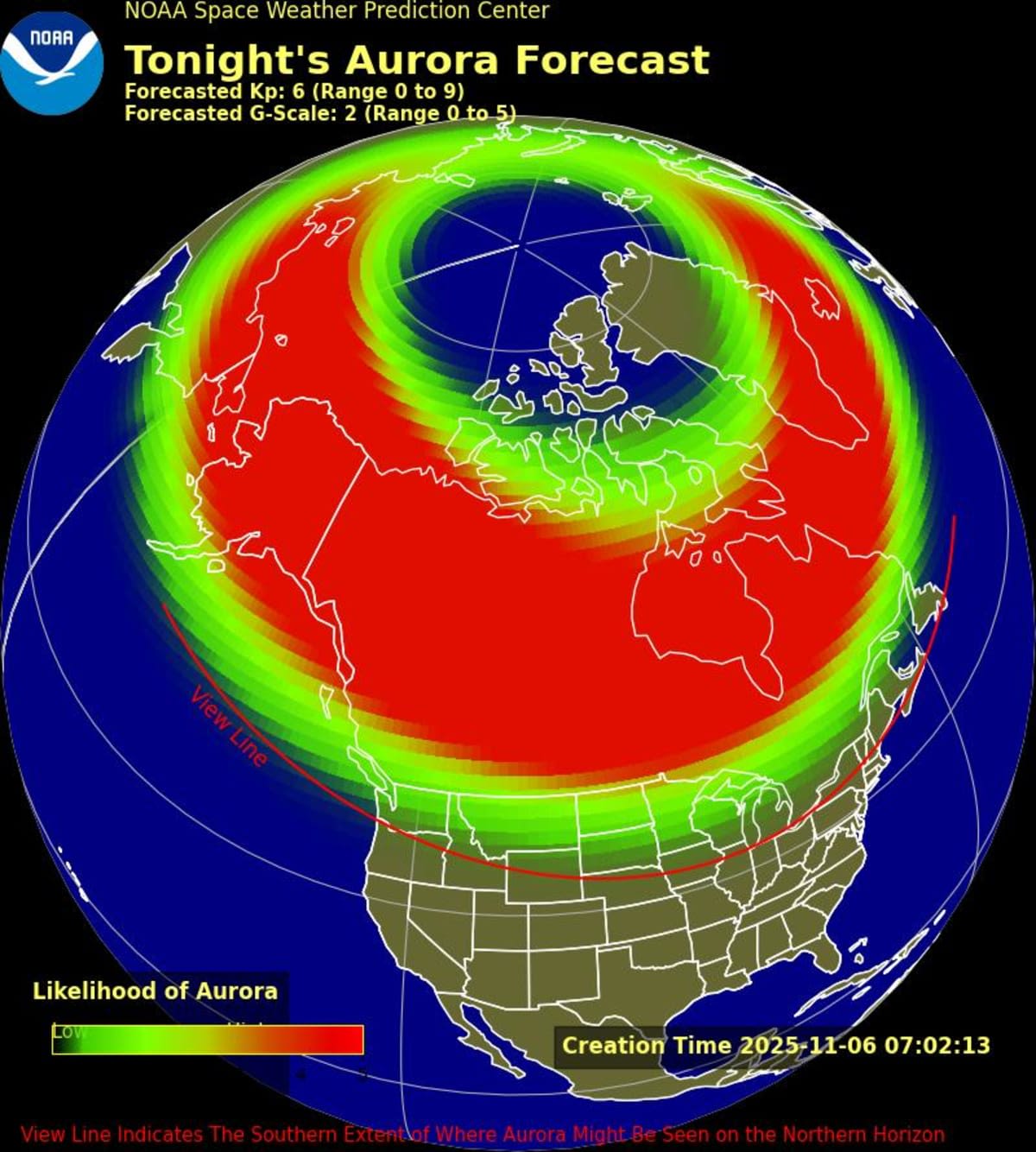
The lights may appear low on the northern horizon for areas just south of the main oval. This includes northern contiguous US states such as Washington, Idaho, Montana, North Dakota, Minnesota, Wisconsin, Michigan, and northern parts of New York, Vermont, New Hampshire, and Maine. Southern Canada (Vancouver, Toronto, Montreal) should also have a good viewing chance.
Friday, November 7
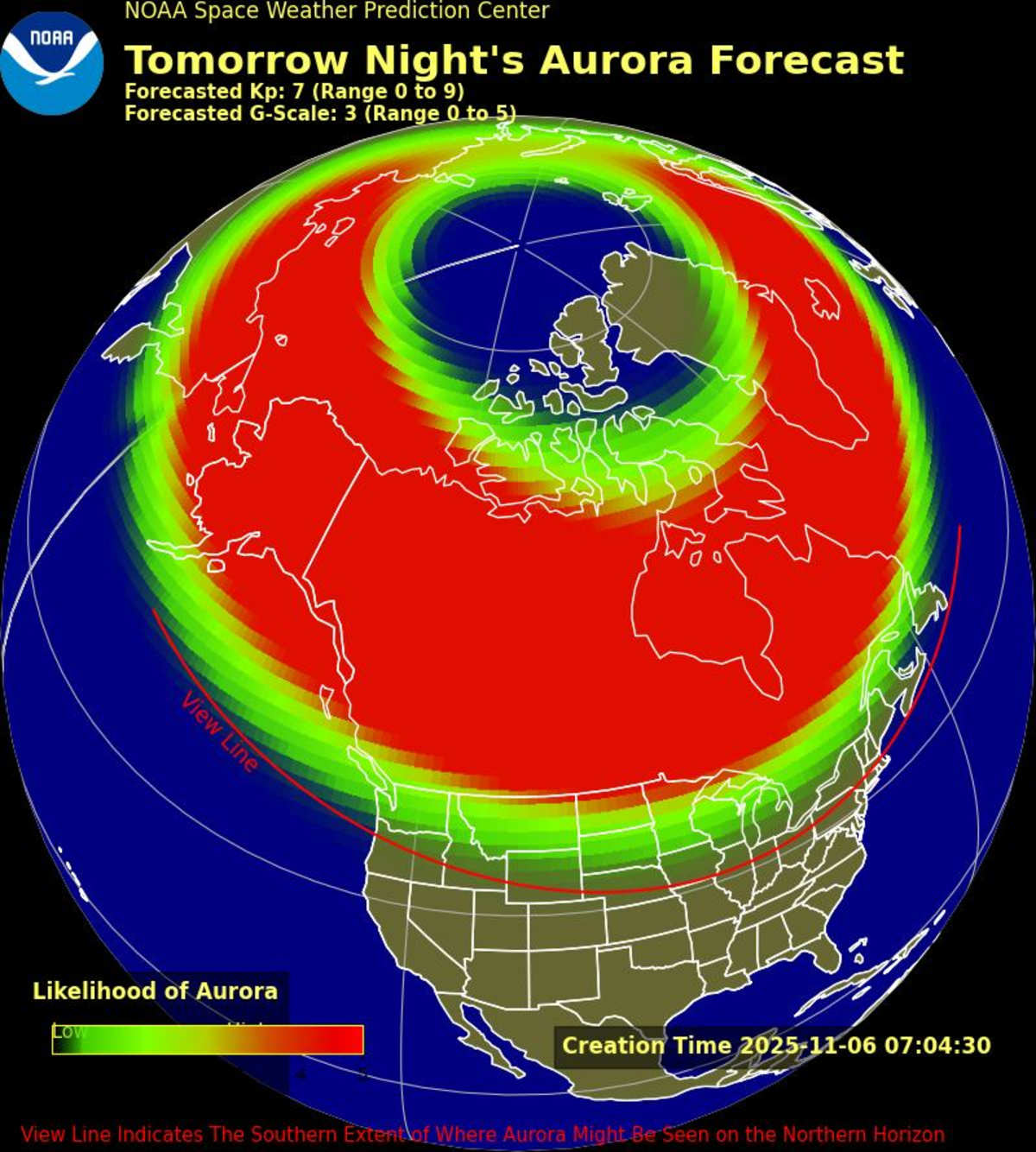
The visibility zone is expected to expand, bringing overhead auroral displays to nearly all of Canada (including major southern cities like Vancouver, Toronto, and Halifax) and the northern tier of US states such as Washington, Idaho, Montana, North Dakota, Minnesota, Wisconsin, Michigan, New York (northern half), Vermont, New Hampshire, and Maine. The aurora may dip lower, becoming visible near the northern horizon for states further south. This includes parts of Oregon, Northern California, Utah, Wyoming, Colorado, Nebraska, Iowa, and northern sections of Illinois, Indiana, Ohio, and Pennsylvania, potentially reaching the northern tip of New Jersey.
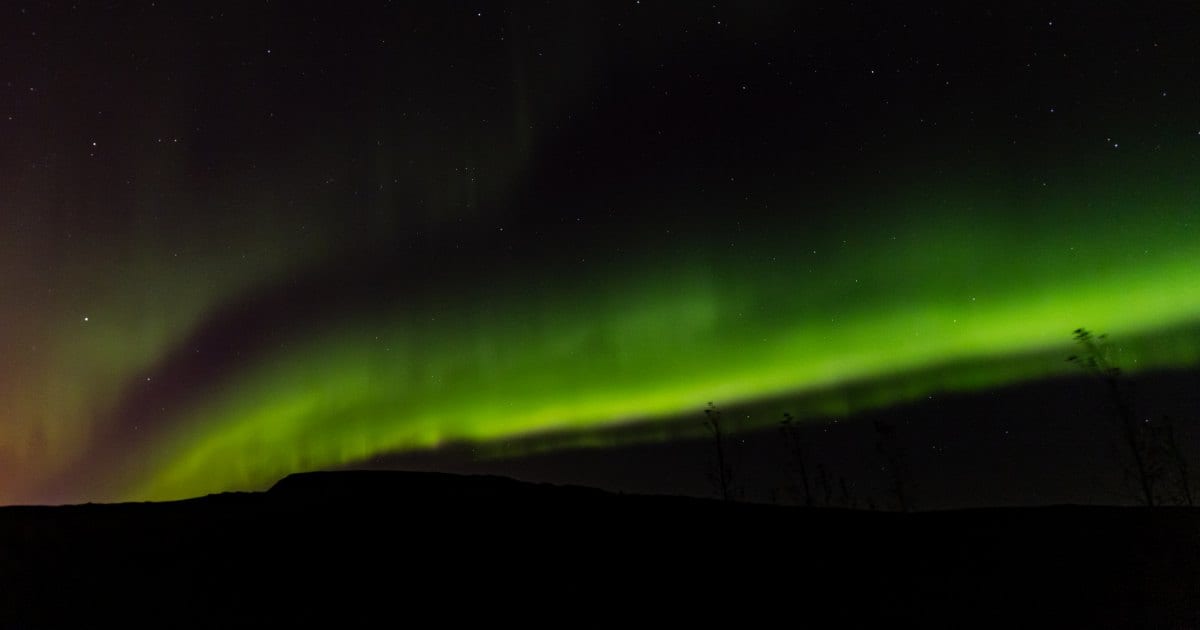
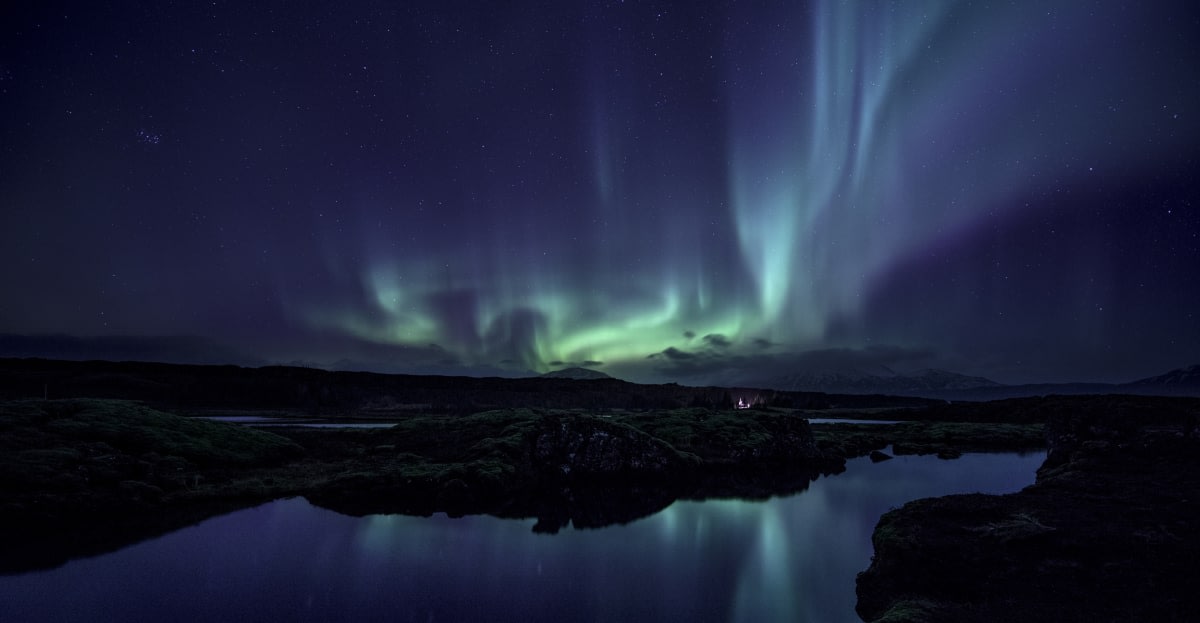
The spectacle of the Northern Lights (aurora borealis), and their southern counterpart, the aurora australis, is the highly visible result of a complex collision between the Sun's energy and Earth's magnetic field. This dramatic "space weather" event begins with the solar wind, a steady flow of charged particles constantly emitted by the Sun. While Earth's magnetic shield typically deflects this wind, a geomagnetic storm captures and releases a surge of energy. This energy causes charged particles to bombard our upper atmosphere, creating the dazzling aurora.
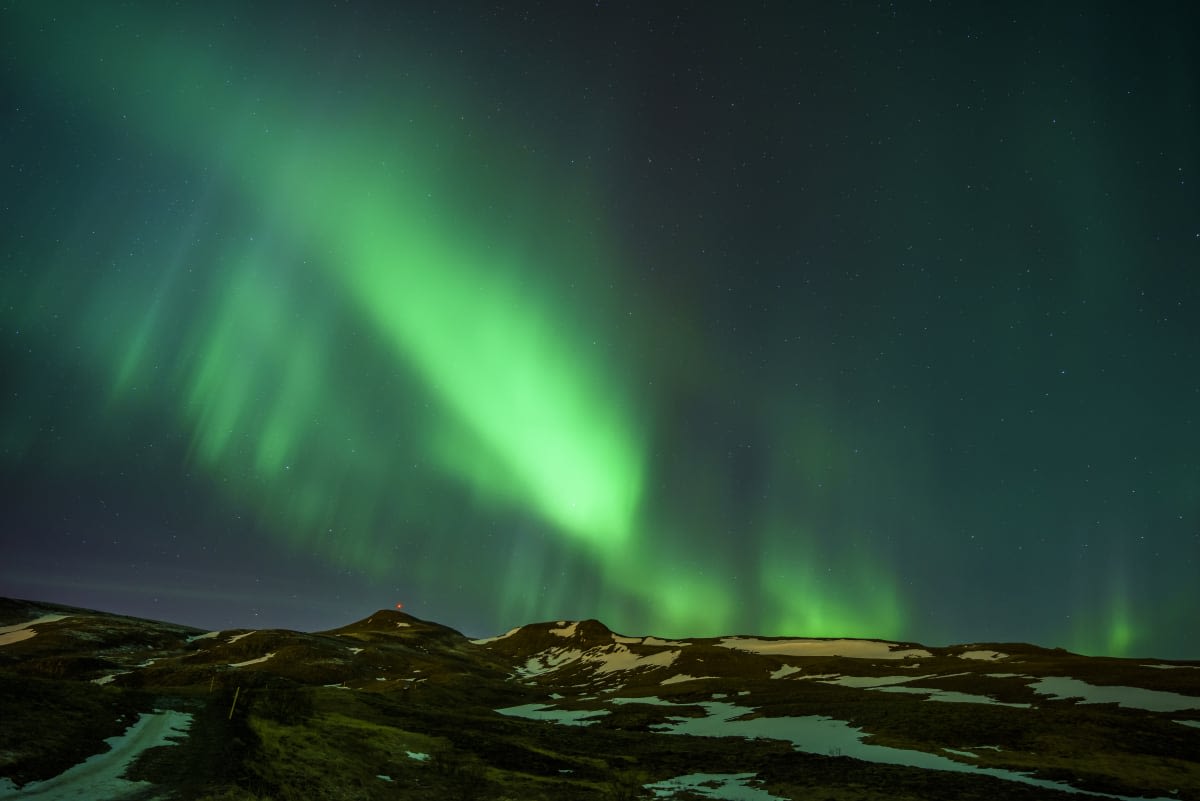
The aurora's vibrant, shimmering display is a reaction in the atmosphere. Energetic particles excite gas atoms and molecules, which then emit light. The color observed directly correlates with the type of gas and its altitude. Oxygen is responsible for the most frequent auroral hues: green typically appears between 60 and 120 miles (100–200 km) in altitude, whereas red emissions occur higher, above 120 miles (200 km).
More on Starlust
A G2-level geomagnetic storm helped skywatchers catch Northern Lights further south than usual
NASA's James Webb Telescope reveals glowing auroras and stormy skies on a starless alien world