Astroparticle physicist proposes to build an observatory on the Moon’s South Pole—here's why
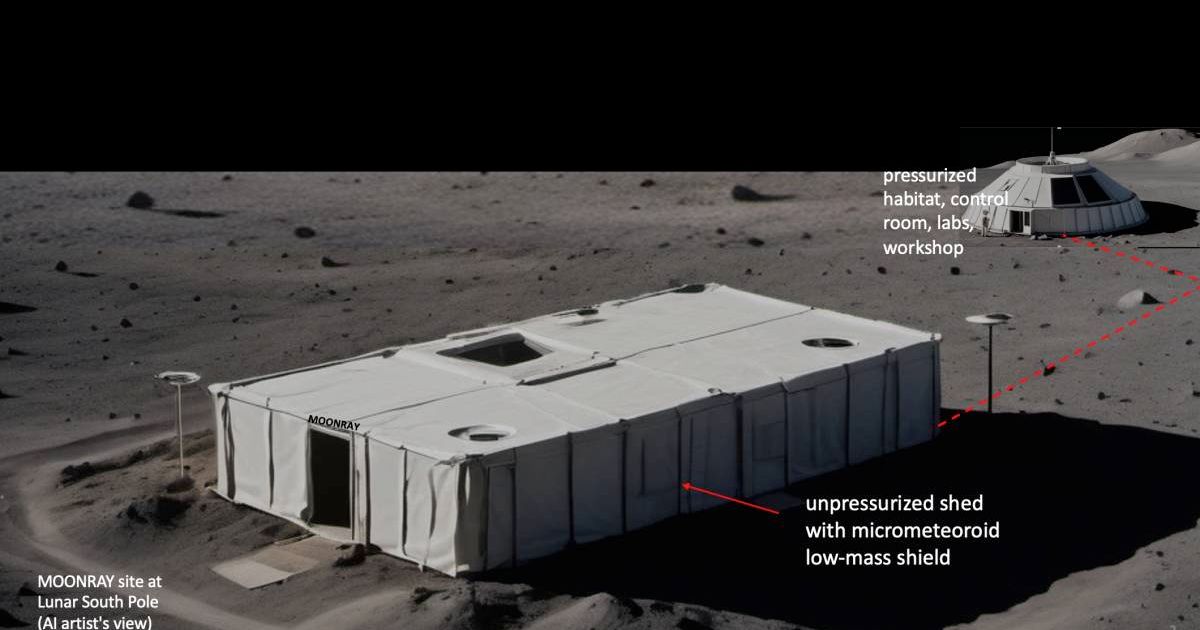
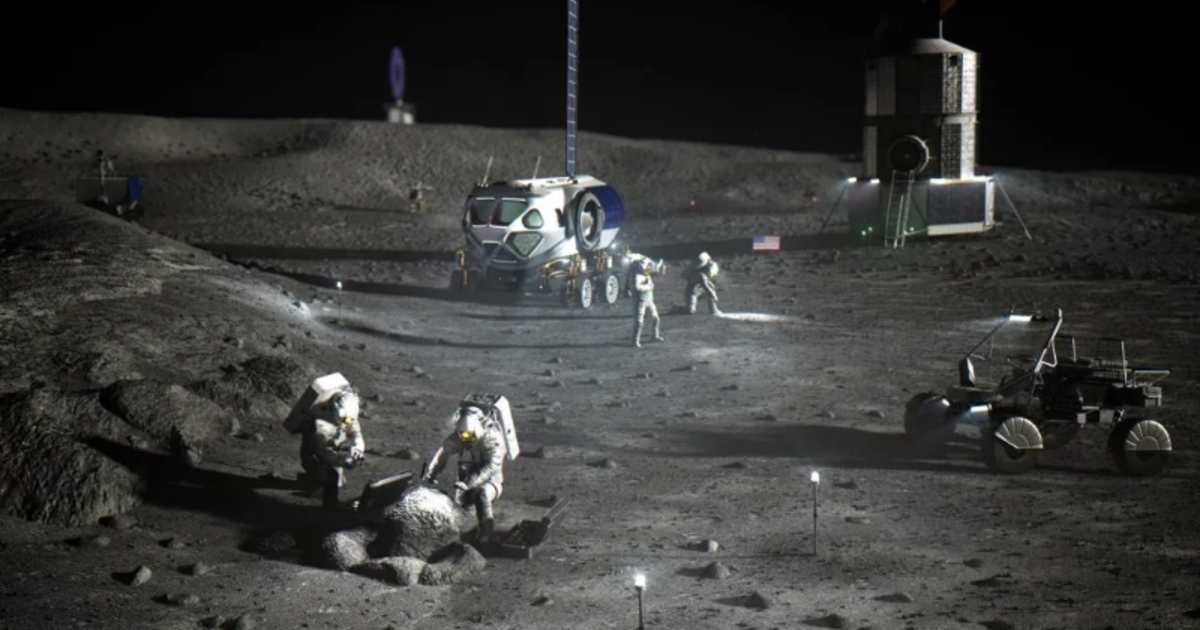
After the Artemis II mission, humans are one step closer to returning to the Moon. But this time, they plan to stay longer on the lunar surface. In fact, they aim to build a human base there. Some scientists are already looking even further ahead. One such scientist is Pier Simone Marrocchesi, an astroparticle physicist at the University of Siena in Italy, who has proposed building an observatory on the lunar South Pole. The idea is to create a facility capable of detecting charged particles (cosmic rays) and high-energy photons (gamma rays) that zip through space from distant stars, pulsars, and supernova explosions.

Cosmic rays interact in the terrestrial atmosphere, producing huge showers of particles. On Earth, the incoming particles are destroyed and not directly detected. Their identity must be inferred only indirectly by "ground instruments" observing the large showers, which introduces large systematic errors. The Moon, on the other hand, lacks an atmosphere, making it ideal for directly studying cosmic rays and gamma rays from the cosmos. “Therefore, a direct detection of the incoming cosmic ray is only possible above the atmosphere, particularly in space,” says Marrocchesi, who introduced the concept of the Moon observatory. “The Moon's atmosphere is practically zero, so the observatory would provide direct measurements from space, while being a 'ground observatory' on the lunar soil.” He spoke about his project, also christened as ‘MoonRay Concept’, in an exclusive interview with Starlust.org. He describes this concept in a paper published in Advances in Space Research.
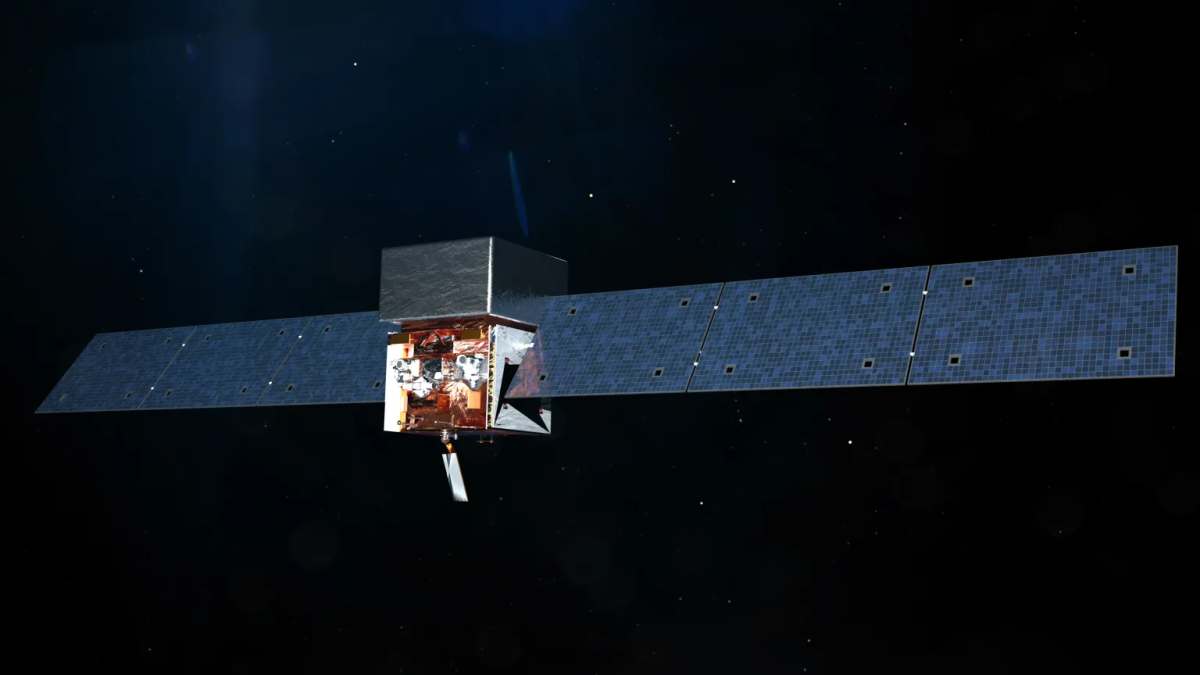
Existing observatories in low-Earth orbit have severe mass and power limits, their effective area is limited. After the end of FERMI-LAT operations, new observations of gamma-ray sources are needed, especially in the Southern Sky. “That's why MoonRay has been proposed to be located at the South Pole of the Moon,” Marrocchesi adds. MoonRay follows a modular approach whereby the observatory would be built by adding more towers to the array. Each tower is a stacked instrument that represents the building block of the array. The observatory will be built in a phased manner. “At each intermediate stage, there will be a sufficient number of towers to get significant science return,” he says.
The proposed observatory will have better energy resolution (at high energy) than FERMI and a comparable angular resolution. It all depends on the number of towers that will be made operational. “With a large array (from 100 to 256 towers) the effective area will surpass FERMI by a significant factor,” Marrocchesi describes. In principle, the observatory could detect gamma-ray signals emanating from active galactic nuclei and other sources, including the galactic center. “However, the Galactic Center will stay somewhat low at the horizon, particularly at the South Pole candidate sites that we have considered,” he explains. “The observatory is being designed to detect gamma-rays down to 5 degrees above the horizon, but of course this is quite challenging for the choice of the site (a flat plateau with no line-of-sight obstructions).”
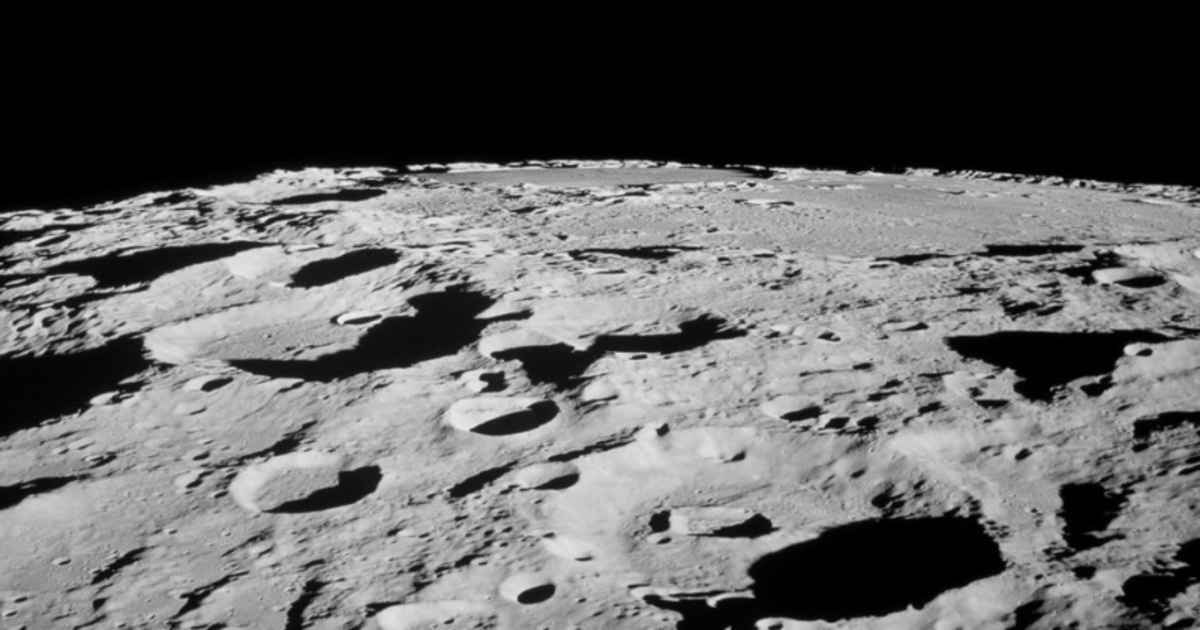
The day-night temperatures vary widely on the lunar surface. The site should be chosen on a sun-lit plateau near the rim of a crater and not in permanently shadowed regions. “Under these assumptions, thermal management is a common problem for all payloads. Heaters will be used. This requires power,” he points out. So, everything depends on the availability of enough power which is the first requirement for the habitats. A permanent lunar base will require a large power infrastructure. “Solar energy will certainly be used, but my guess is that in situ resource utilization (ISRU) will require nuclear energy,” he believes. “This type of energy can be used to extract air, water and metals by exploiting lunar regolith, the dusty outermost layer.”
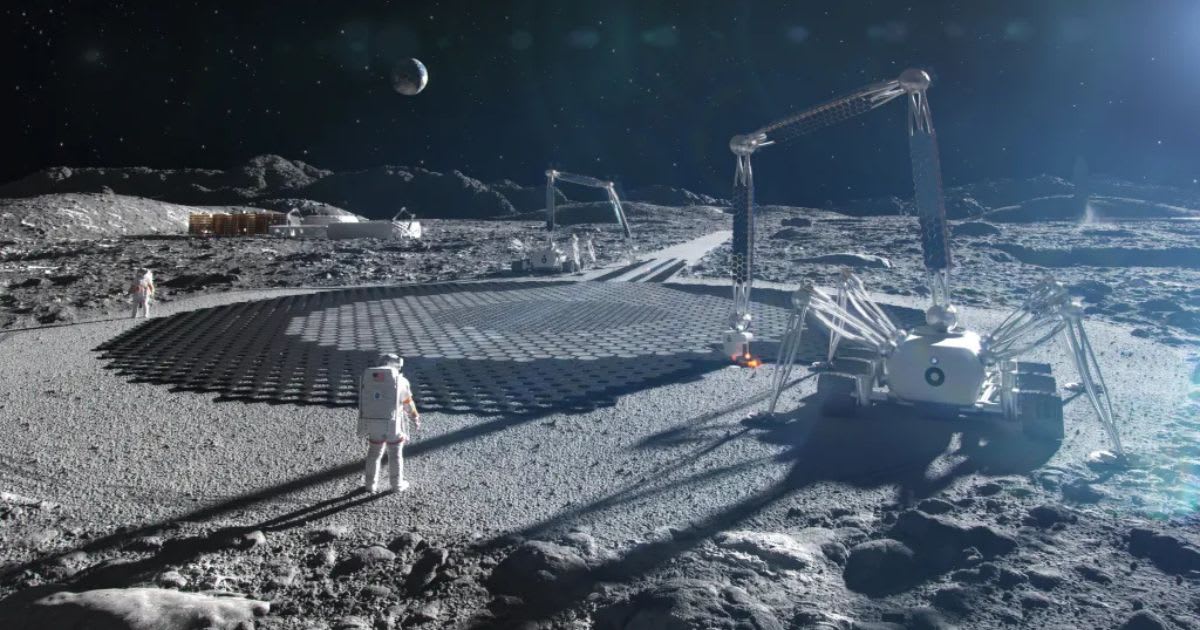
Some heavy-density absorbers could be manufactured with ISRU processing on the Moon. “Without them, the mass of each tower is limited and the whole instrument (except for the heavy absorbers) can be sent to the Moon at an affordable cost,” he notes. “However, the overall cost will be large, but modularity can allow a progressive deployment.” Once operational, the observatory could detect the violent phenomena that take place at the highest energies in our galaxy and beyond. “A combined investigation with charged cosmic rays and gamma rays is expected to advance our present understanding of the cosmos,” Marrocchesi concludes.
More on Starlust
Scientists send microscopic worms to space to aid future Moon missions