Astronomers discover supersonic filaments in high-speed gas cloud, offering blueprint for galaxy evolution
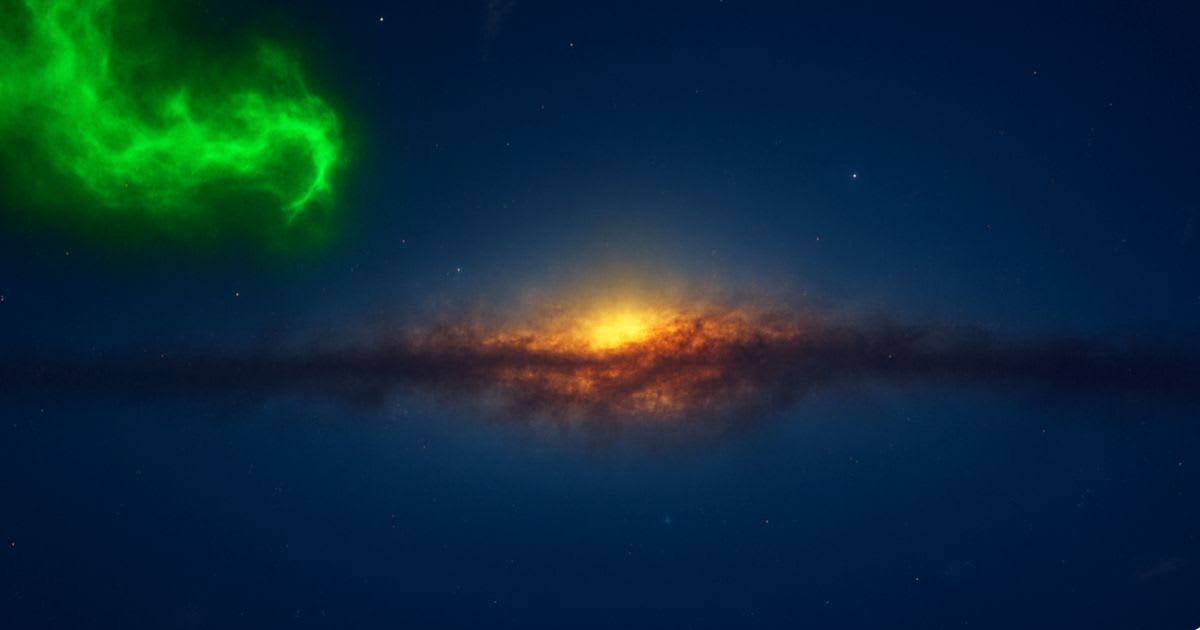
An innovative discovery by an international team of astronomers has revealed an intricate and highly dynamic network of supersonic filaments within a massive, fast-moving gas cloud in the Milky Way. This unprecedented insight into a very-high-velocity cloud (VHVC) provides a new understanding of how interstellar structures form, offering crucial clues about the early stages of galaxy evolution, as per the Chinese Academy of Sciences.
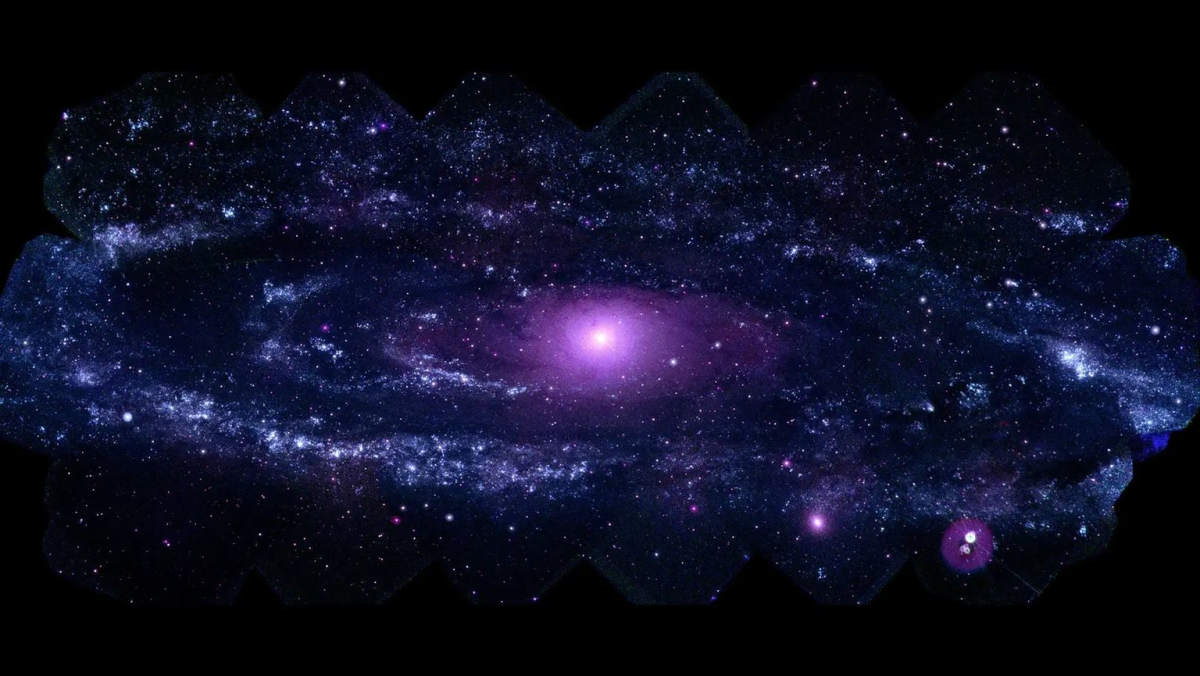
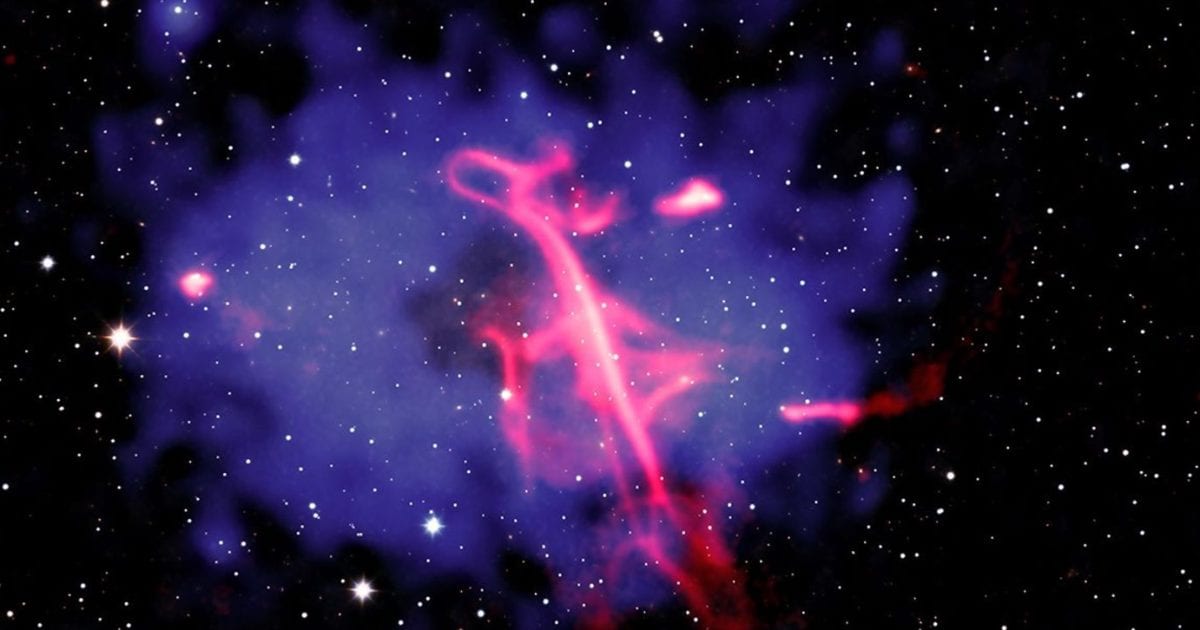
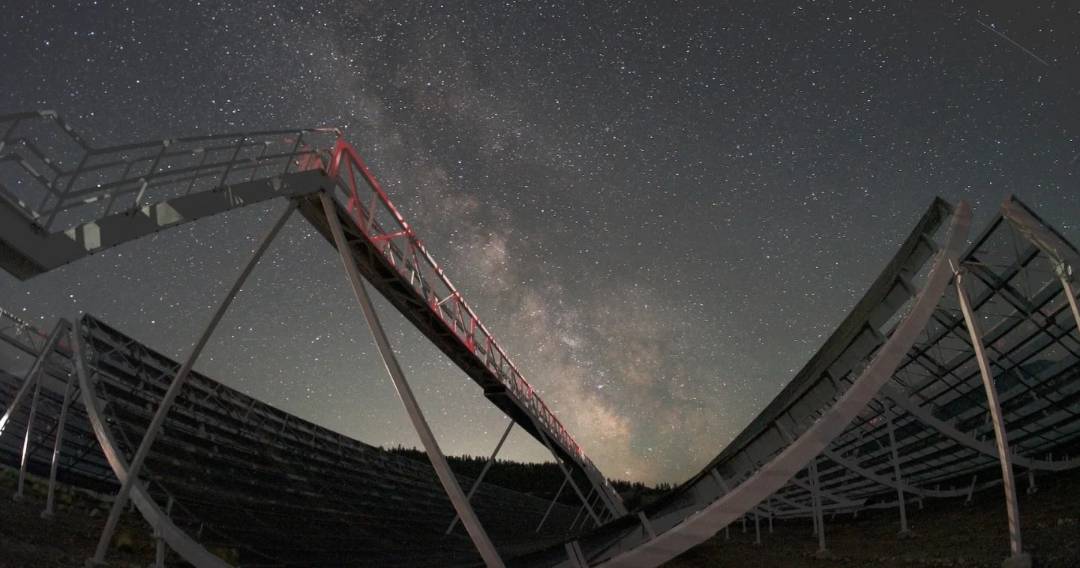
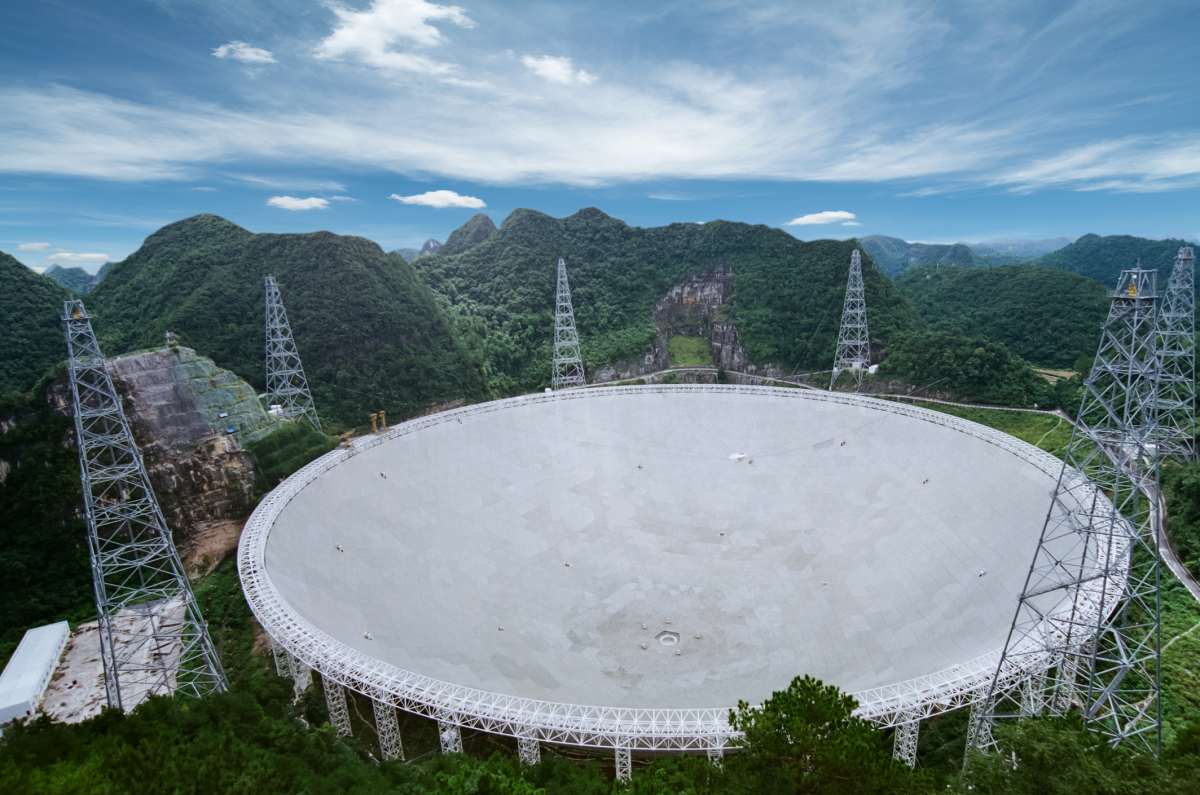
Using the Five-hundred-meter Aperture Spherical radio telescope (FAST), researchers from the Shanghai Astronomical Observatory (SHAO) of the Chinese Academy of Sciences and collaborating institutions focused on G165, a colossal atomic hydrogen cloud hurtling through space at approximately 300 kilometers per second. Located roughly 50,000 light-years from Earth and far above the galactic plane, G165 offers an unhindered perspective on interstellar cloud formation, free from the typical disturbances found in denser galactic regions.
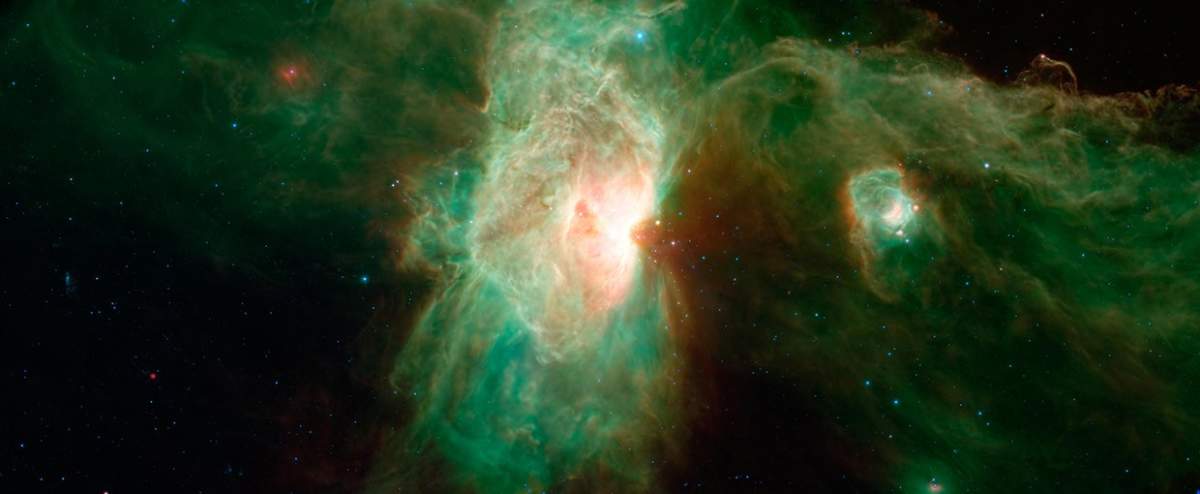
Unlike more common high-velocity clouds, which exhibit a mix of cold and warm gas, the new FAST data show that G165 is composed almost entirely of the warm neutral medium (WNM). This distinction suggests that VHVCs like G165 may represent a more pristine, earlier phase in the evolution of interstellar clouds. The most striking came from FAST's exceptional resolution, which unveiled that G165's WNM is far from the calm, featureless gas once assumed. Instead, it is supersonic and highly structured, characterized by a tangled web of filaments forming a multi-layered velocity pattern. These intersecting and twisting filaments create a three-dimensional lattice of gas, displaying clear signs of turbulence evident in the velocity data.
To decipher the underlying physics, the research team conducted magnetohydrodynamic simulations. The simulations confirmed that supersonic turbulence, in conjunction with magnetic fields, can naturally generate the observed filamentary structures and dynamic gas motions, even without the influence of gravity. This suggests that turbulence and magnetism alone could be sufficient to shape the initial structural framework of interstellar clouds.
This pivotal discovery, published in Nature Astronomy, shed new light on the behavior and organization of atomic gas in the quieter, outer reaches of our galaxy, according to Phys.org. It deepens our comprehension of how gas might eventually contribute to star-forming regions and the broader life cycle of matter within galaxies. By revealing the supersonic, filamentary nature of a WNM-diminated VHVC, this research opens exciting new avenues for exploring cosmic structure formation, particularly in environments where gravitational forces are not the primary drivers.
Adding another layer to our understanding of cosmic evolution, astronomers have recently announced the discovery of an extraordinary pristine galaxy, remarkably untouched for an astonishing seven billion years. This celestial anomaly, designated KiDS J0842+0059, acts as a "cosmic fossil" providing an unparalleled glimpse into the universe's early epochs, much like dinosaur fossils offer a window into ancient Earth life.
🚨 Frozen in Time: Astronomers Find Rare Fossil Galaxy
— History Content (@HistContent) June 30, 2025
Astronomers have unveiled KiDS J0842+0059, a galaxy locked in time for an astonishing 7 billion years—a true “cosmic fossil.” Located about 3 billion light‑years away, this massive, compact galaxy (~100 billion solar… pic.twitter.com/3Ek9krLsHh
Situated three billion light-years away, KiDS J0842+0059 represents a rare category of galaxies that have somehow escaped the relentless gravitational interactions and destructive collisions typical in the cosmos. Its unspolied condition makes it an invaluable "time-capsule" for researchers eager to study the formation and evolution of the earliest galaxy. While G165 offers insights into early gas structuring, KiDS J0842+0059 showcases how some galactic structures can remain remarkably stable and isolated over vast cosmic timescales.