Astronomers image rare Tatooine-like world orbiting two suns locked in 300-year cycle

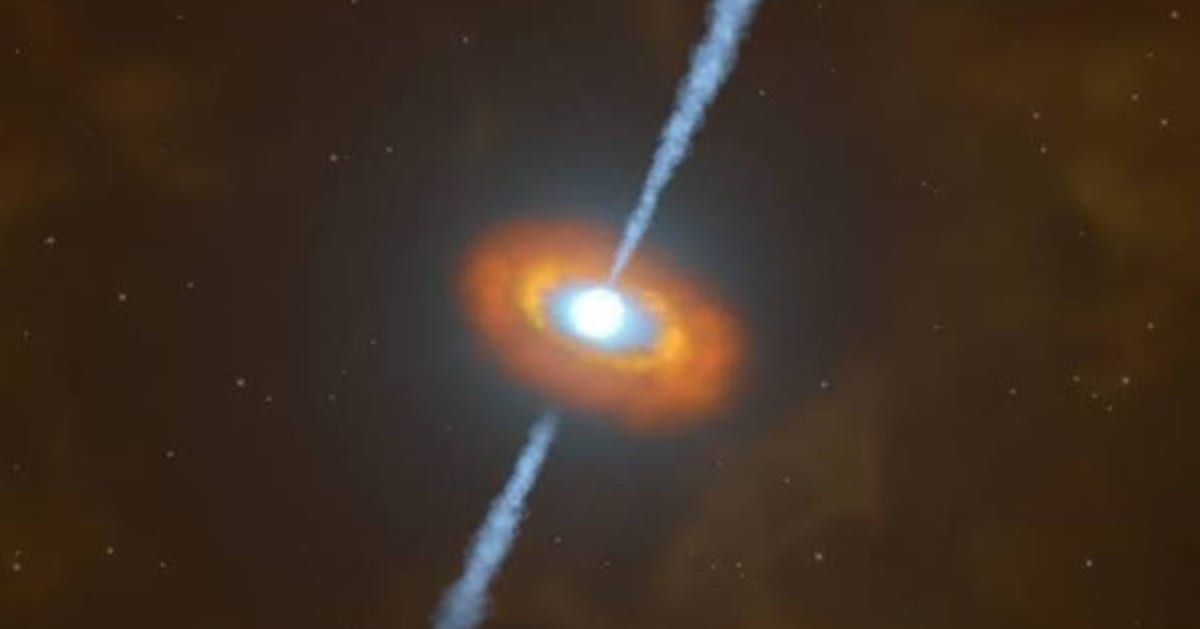
Astronomers have achieved a rare feat by directly imaging a massive exoplanet that circles two suns, much like the fictional world of Tatooine. The newly found world stands out with its orbit much closer to its binary stars than any other planet imaged in a binary system to date, according to Northwestern University. The discovery, by a team from Northwestern University, has been independently confirmed by a European team at the University of Exeter. It provides a unique window into how planets form and move when multiple stars share the stage.
The observed exoplanet sits six times closer to its twin suns than any other directly imaged planet bound to a binary. It is enormous, about six times the size of Jupiter, and young enough, at roughly 13 million years old, that it is still in possession of some of the heat from its birth. The system sits about 446 light-years away, a distance Jason Wang, a senior author and assistant professor of physics and astronomy at Northwestern, jokingly described as “not within our local solar neighborhood but like the next town over.”

The stars whirl around each other in a brisk 18-day orbit. Meanwhile, the giant planet makes a long, patient journey, taking roughly 300 Earth years to complete a single orbit around the pair. “Of the 6,000 exoplanets that we know of, only a very small fraction of them orbit binaries,” said Wang. "Imaging both the planet and the binary is interesting because it’s the only type of planetary system where we can trace both the orbit of the binary star and the planet in the sky at the same time."
The planet emerged during a reanalysis of older data from the Gemini Planet Imager taken between 2016 and 2019. The instrument had long been used to hunt for planets, but this object eluded previous analyses. Nathalie Jones of Northwestern and the lead author on the study first noticed a faint object steadily moving across the sky alongside its stars. A series of additional checks confirmed it was, in fact, a planet, and an unexpected but valuable reminder of why revisiting archived telescope data can often pay off, as mentioned by the outlet.

The study has been published in The Astrophysical Journal Letters, while the one by the Exeter team has been published in the journal Astronomy and Astrophysics. The team plans to continue to monitor the system. “We want to track the planet and monitor its orbit, as well as the orbit of the binary stars, so we can learn more about the interactions between binary stars and planets,” Jones affirmed. This find is important because it affords the first close look at a planet in such proximity to a binary system. Scientists can study its motion and, hence, test and refine theories to understand the interactions between planets and binary star systems better.
More on Starlust
Astronomers find potential 'Avatar' planet just 4.3 light-years away using Webb Telescope