NASA's James Webb Telescope spots 'super-puff' exoplanet leaking substantial volume of helium into space
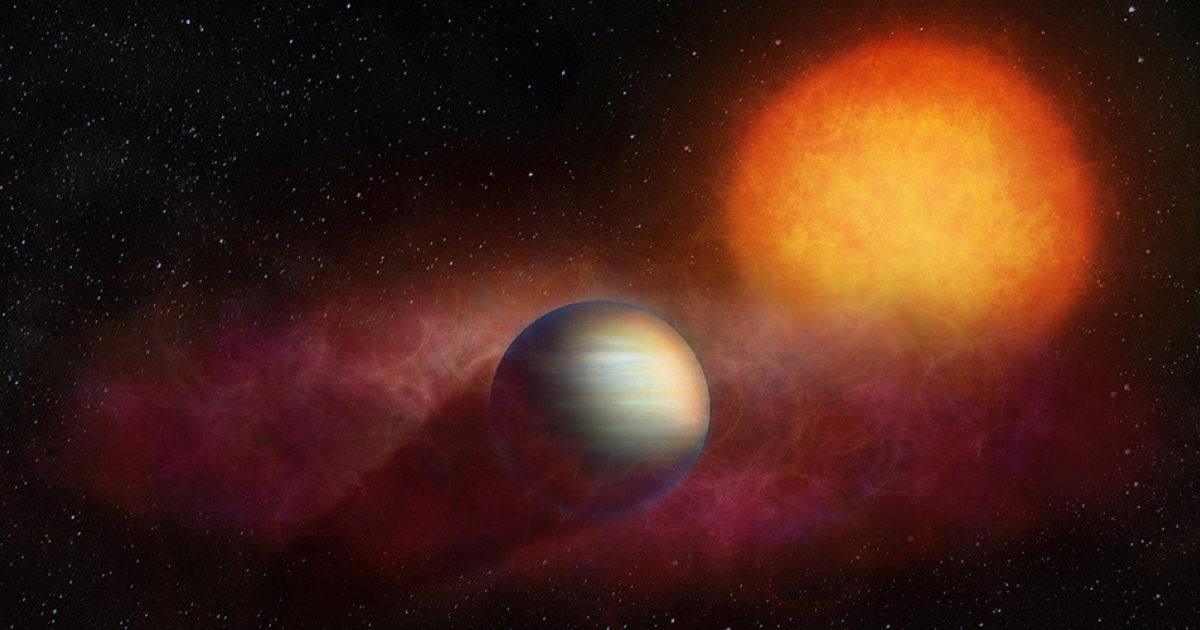
Enormous amounts of helium are evaporating from WASP-107b, an exoplanet belonging to the “super puff” category, a study published on December 1 in the journal Nature Astronomy confirmed. The research team, led by McGill University postdoctoral fellow Vigneshwaran Krishnamurthy, based the conclusion on the data furnished by NASA’s James Webb Space Telescope (JWST).
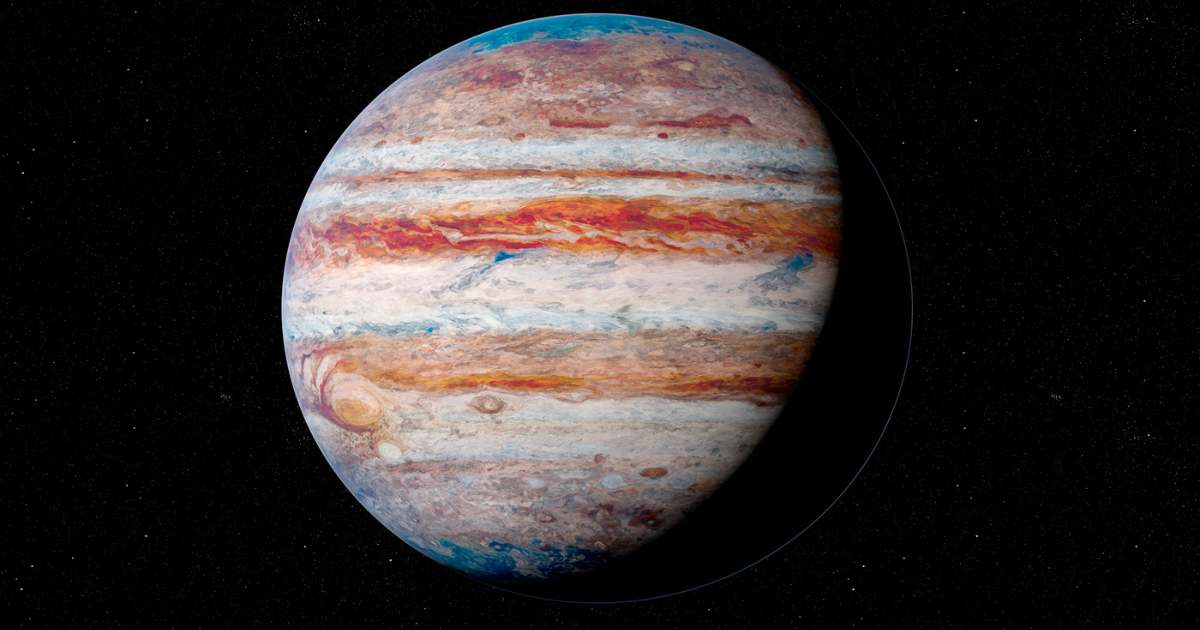
“The James Webb Space Telescope has captured helium escape from this planet for the first time, and it is the most confident detection of pre-transit helium absorption for any exoplanet,” said Krishnamurthy in a statement. Discovered back in 2017, WASP-107b has a diameter that is 94% that of Jupiter, yet it only has about 12% of the latter’s mass. That’s the reason why it is placed in the category called “super puffs,” which is a designation used for exoplanets with extremely low densities.
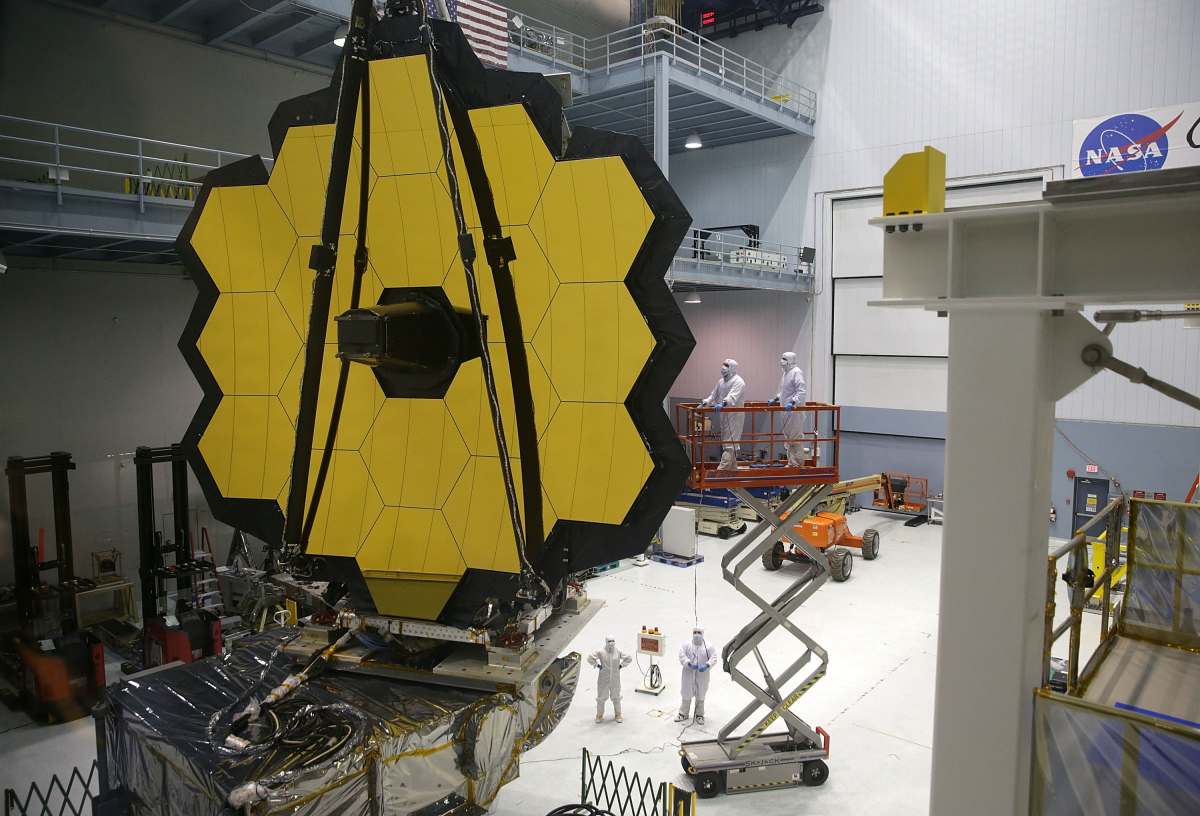
Thanks to the Near Infrared Imager and Slitless Spectrograph (NIRISS) onboard the JWST, the researchers detected a huge helium cloud (the exosphere) stretching to nearly 10 times the radius of the planet. Moreover, it’s also 1.5 hours ahead of WASP-107b along the planet’s orbital path. “Our atmospheric escape models confirm the presence of leading and trailing tails of helium streaming out of WASP-107b, both extending up to 10 times the planetary radius along the orbital motion,” said co-author Yann Carteret, who’s an atmospheric modelling expert from the University of Geneva.
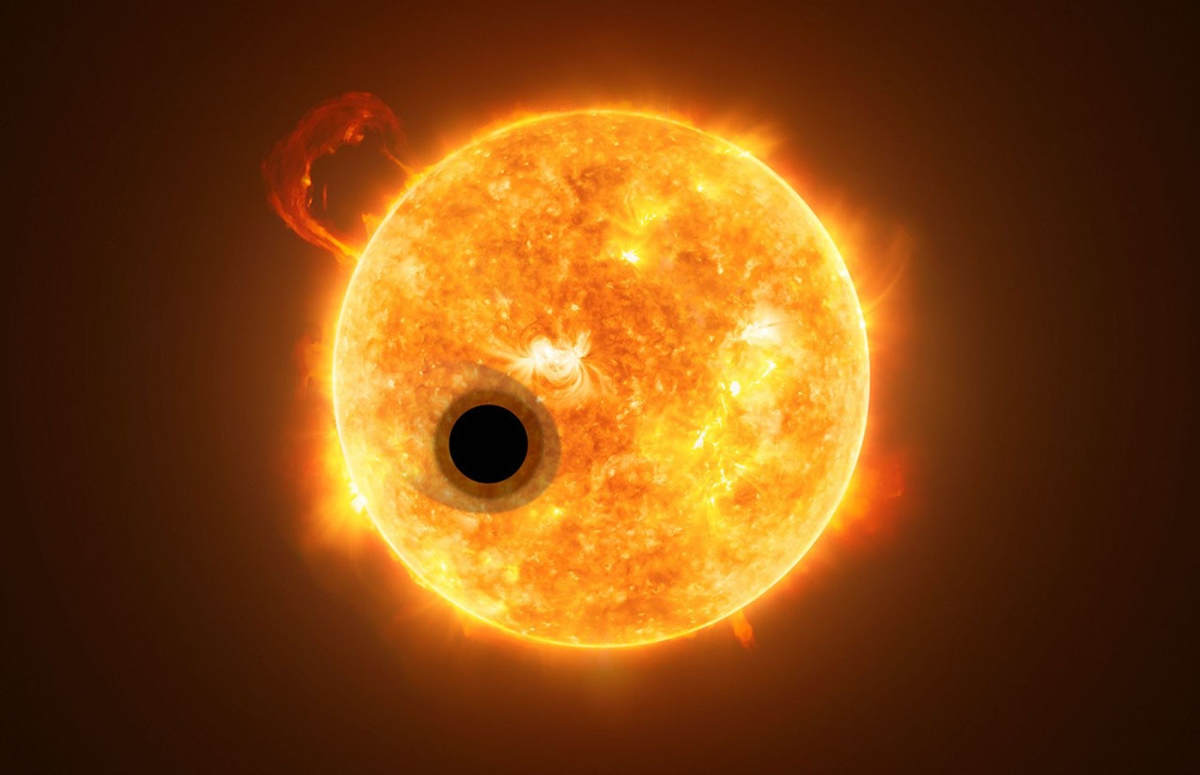
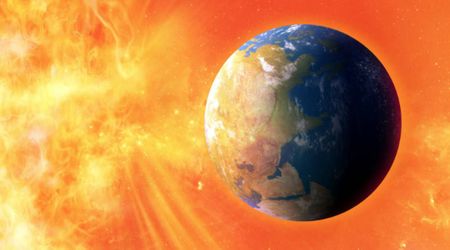
The researchers pin this atmospheric escape on the exoplanet’s usual proximity to its star. While our Solar System has gas giants like Jupiter situated farther away from the Sun than rocky planets, WASP-107b is seven times closer to its star than Mercury is to the Sun. This results in the heat stripping away its atmosphere. That being said, evidence also suggests that, like Jupiter and Saturn, the puffy exoplanet also formed farther away before gradually moving closer.
“The amount of oxygen in the atmosphere of WASP-107 b is larger than what we would expect if it formed on its current close-in orbit,” explained University of Chicago researcher Caroline Piaulet-Ghorayeb, who was responsible for modelling the NIRISS transmission spectrum. “The presence of another planet, WASP-107c, much farther out than WASP-107b, could have played a role in this migration.”

In fact, the JWST also found water on the planet, thereby adding more credibility to an earlier study facilitated by the Hubble Telescope. Traces of carbon monoxide, carbon dioxide, and ammonia were also detected. However, methane, which was suspected to be present in the planet’s atmosphere, and which the high sensitivity of the NIRISS should have easily picked up, was absent. According to Piaulet-Ghorayeb, this is an indication that the heat of the star must have triggered a “vigorous vertical” mixing which might have drawn up hotter, methane-poor gases from the depths of the planet’s atmosphere.

“On Earth, atmospheric escape is too weak to drastically influence our planet. But it would be responsible for the absence of water on our close neighbor, Venus,” noted Vincent Bourrier, a co-author of the study and senior lecturer at the University of Geneva. This makes understanding this phenomenon on planets like WASP-107b.
More on Starlust
James Webb Telescope finds potentially record-breaking black hole from early universe
NASA's James Webb Telescope reveals glowing auroras and stormy skies on a starless alien world