A powerful X-class solar flare just erupted from the Sun—Here's what to know about it
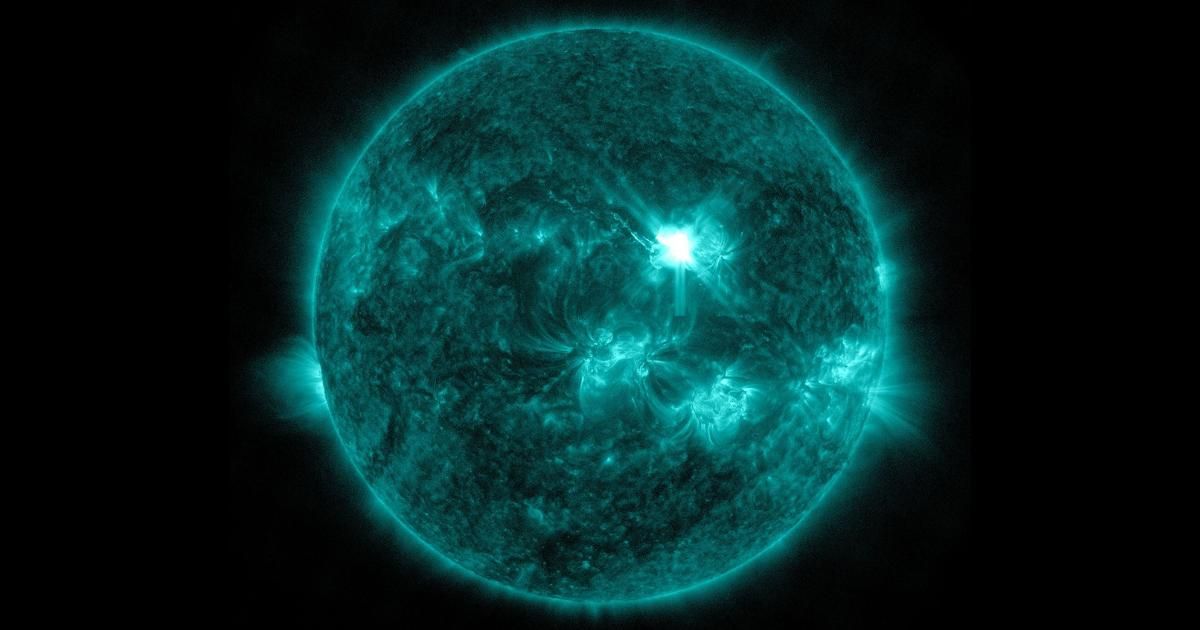
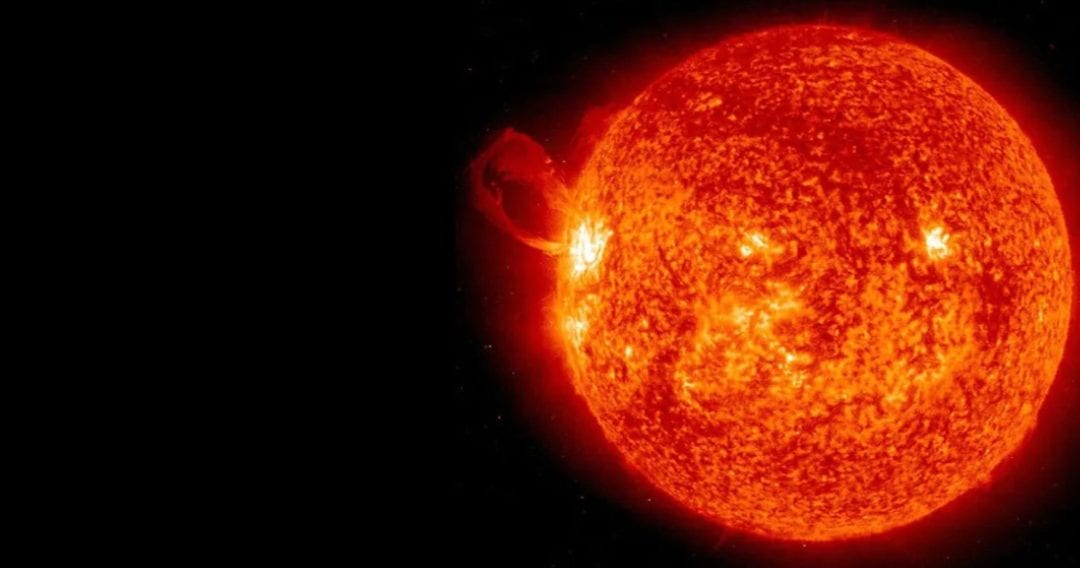
A powerful solar flare erupted from the Sun on Tuesday, briefly disrupting communications on Earth. The powerful flare, rated X1.1, originated from the Sun's Region 4479, and peaked at 4:50 p.m. EDT, according to the Space Weather Prediction Center (SWPC) of the National Oceanic and Atmospheric Administration (NOAA). The powerful flare was also captured by NASA's Solar Dynamics Observatory (SDO), which continuously monitors the activity of the Sun. Here's what we know about Tuesday's event.
The Sun emitted a strong solar flare on June 30, peaking at 4:50 p.m. ET. NASA’s Solar Dynamics Observatory captured an image of the event, which was classified as X1.1. pic.twitter.com/iIImHHtCok
— NASA Space Alerts (@NASASpaceAlerts) June 30, 2026
The flare, which was classified as an 'R3-Strong' event, immediately triggered widespread disruptions to radio signals used for communication on the side of Earth facing the Sun at the time. However, because this solar flare was an 'impulsive' one, its intensity rose and fell quickly, as per the SWPC: thankfully, unlike long-duration flares that can disrupt communications for hours, the impulsive nature of this solar flare meant that disruptions to radio signals in affected areas were relatively brief, lasting only a matter of a few minutes. Space.com reported that these disruptions affected parts of North America, with high-frequency radio users facing brief outages when the flare peaked.
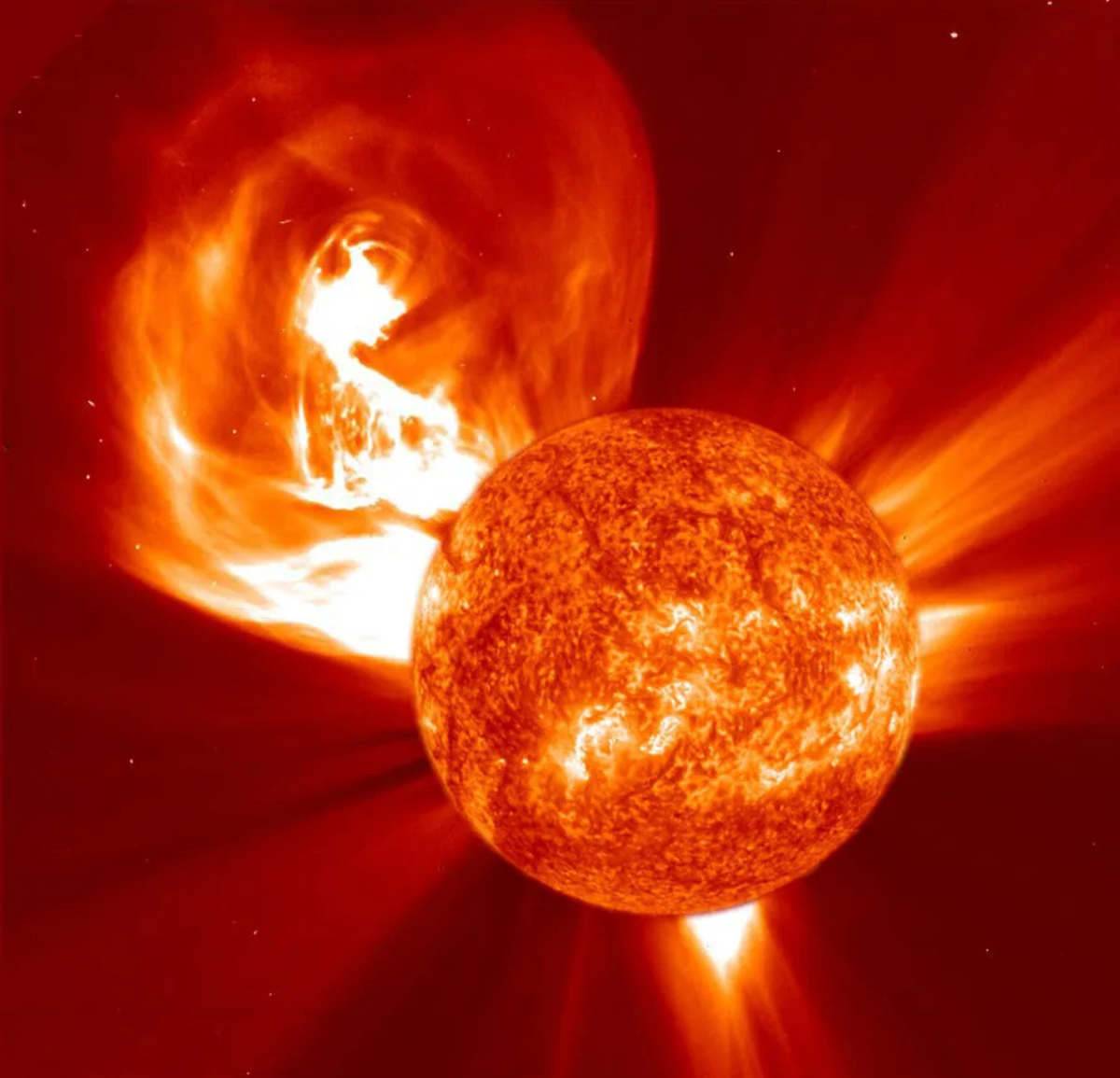
Scientists are currently analyzing the incoming imagery of the event to determine whether a coronal mass ejection (CME) was also launched alongside the flare. A CME is a massive cloud of plasma expelled by the Sun, and these often accompany powerful solar flares. Although one is not caused by the other, both solar flares and CMEs are the result of magnetic reconnection of plasma within the Sun. Further, the intensity of CMEs does not scale with the magnitude of solar flares, meaning that a massive solar flare can occur without any CME accompanying it, and vice versa. The 'X' classification of this solar flare also puts it in the most intense category: under the logarithmic classification system of solar flares, each letter class releases ten times more energy than the one before it. While lower classes of solar flares like A, B, and C have negligible observable effects, M-class solar flares can cause brief radio blackouts. X-class solar flares, meanwhile, represent the absolute highest level of dissipated energy, with the accompanying number specifying the exact strength within the class.

While solar activity has been known to threaten power grids, navigation signals, and astronauts in space, the effects of these eruptions are not always destructive. When a CME is Earth-directed, the incoming solar plasma interacts with our planet's magnetic field to trigger visual spectacles for skywatchers far outside the usual polar regions. Last month's trio of geomagnetic storms—which were accompanied by similar X-class flares—triggered auroras in more than 20 U.S. states. Strong CMEs like these can push the area where auroras can be viewed toward lower latitudes where they aren't likely to occur under normal circumstances.
More on Starlust:
In a rare feat, scientists captured the Sun just hours before a massive solar flare—and were stunned
Solar storms may be protecting Earth from even the strongest of cosmic rays