Why Sophie Adenot and Jessica Meir's US Spacewalk 99 fell behind schedule
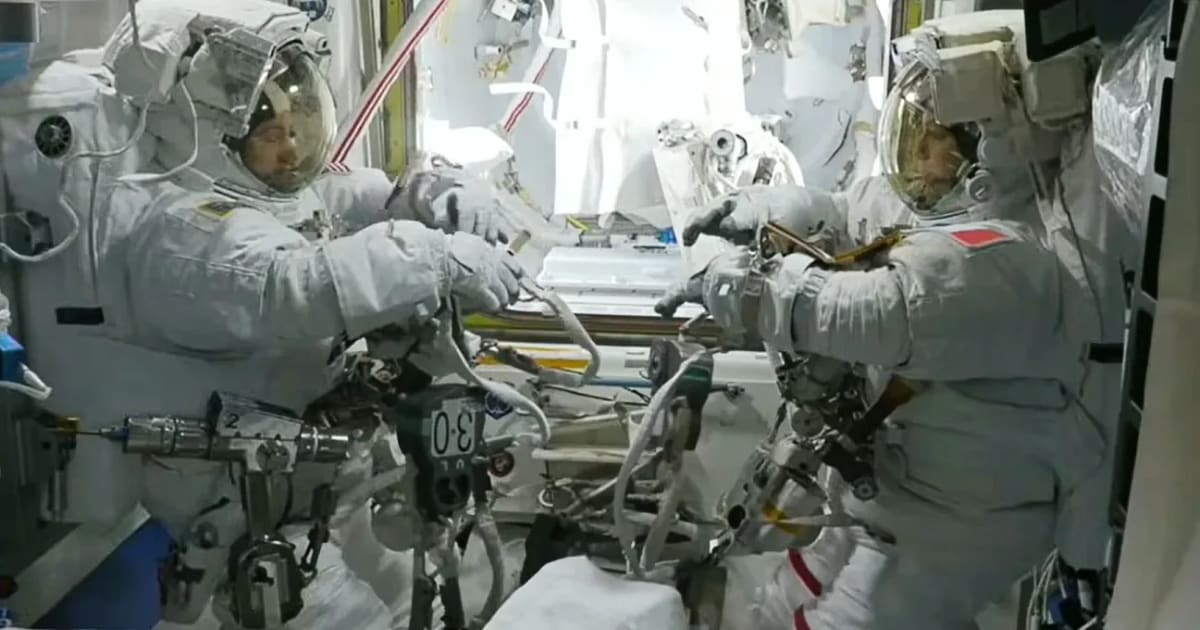
Some tasks planned for U.S. Spacewalk 99 have been pushed to a future extravehicular activity (EVA), NASA reported on Tuesday. Astronauts Jessica Meir and Sophie Adenot exited the International Space Station's Quest airlock at 8:40 a.m. EDT, just 10 minutes later than planned, but eventually fell behind schedule after having to address a number of issues during the spacewalk.
Astronauts Sophie Adenot of @ESA and Jessica Meir of @NASA set their suits to battery power and started their spacewalk at 8:40 a.m. EDT today. The duo will replace a navigational aid and work on a cosmic particle detector. More... https://t.co/bkPvJg4qcx pic.twitter.com/wqZJy2t3S6
— International Space Station (@Space_Station) September 1, 2026
Chief among those issues was reported by Adenot and concerned the lack of mobility that she was experiencing in her left shoulder joint. Upon taking a good look at Adenot's suit, Meir concluded that a harness of the glove heater may have been getting caught, resulting in limited movement in the shoulder joint. Adenot had also reported a similar issue with mobility during her previous spacewalk, which she performed with Anil Menon earlier this month. Fortunately, unzipping the joint seemed to resolve the issue, with the astronauts ending the spacewalk at 3:29 p.m. EDT. Just to be safe, however, Mission Control and the two spacewalkers decided that Meir should close the station hatch upon entry instead of Adenot.
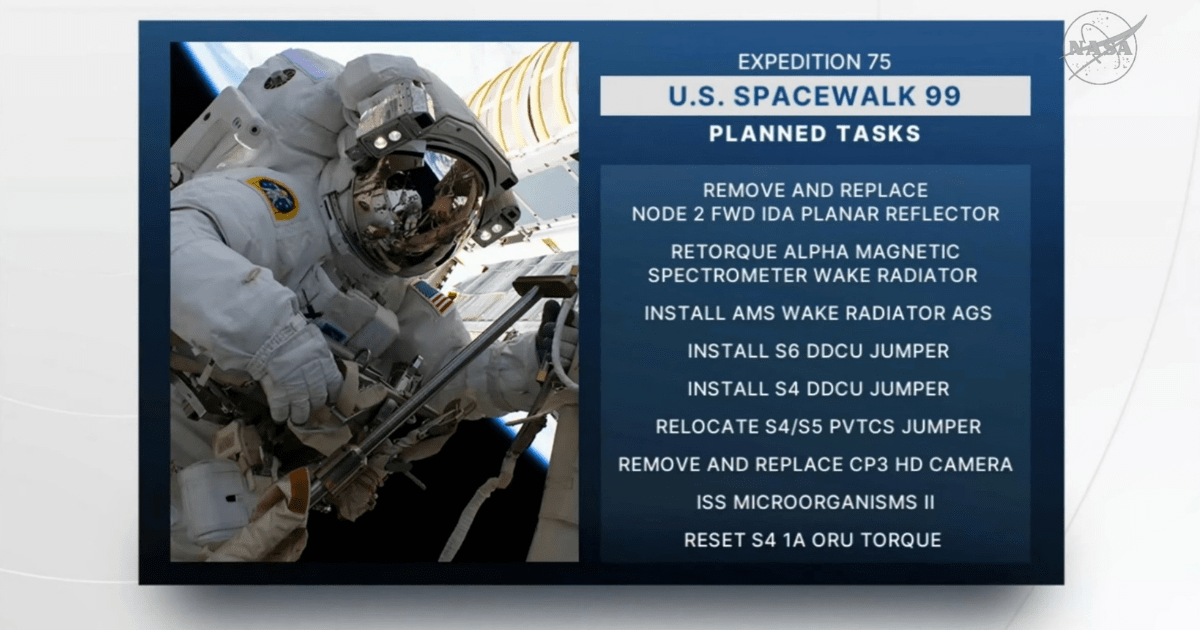
Just over four hours into the spacewalk, Meir, who is the current space station commander, also reported issues with tightening some bolts while working on the Alpha Magnetic Spectrometer—a science instrument for cosmic particle detection that needed preparatory work for future maintenance. Meir stated that there was some resistance in screwing in the bolts and attributed the problem to metal shavings coming out of the holes. Later, as the astronauts were preparing to close out the EVA, Adenot also reported a problem with her reel tether, but it was solved pretty quickly.
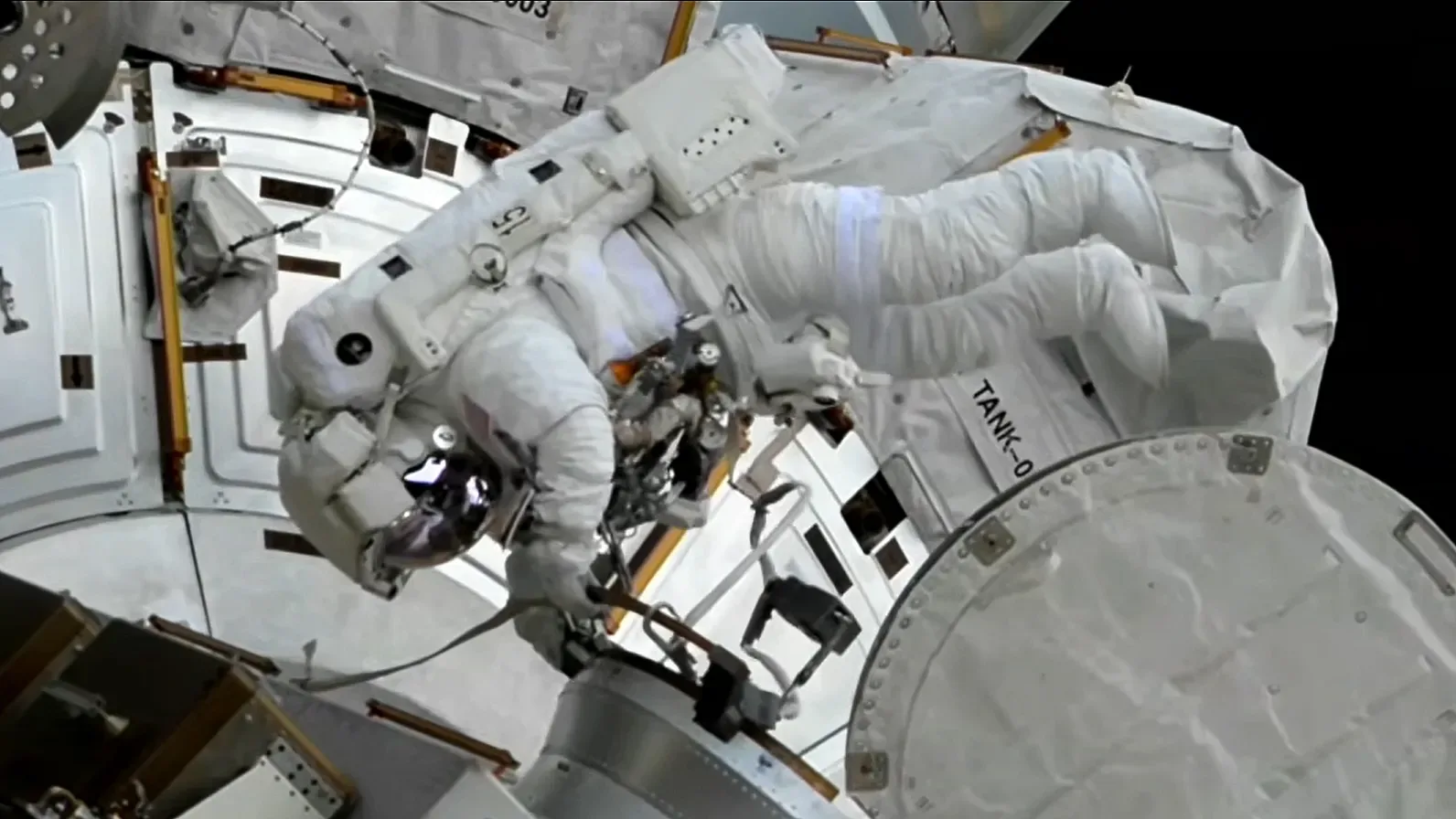
Despite these issues, the spacewalk was labeled as an overall success, as the primary objective of replacing a retroreflector located at the forward port of the Harmony module was completed. Known as a Node 2 FWD IDA planar reflector, it provides navigational support to incoming spacecraft during rendezvous and docking operations. In addition to this task, a high-definition camera was replaced on the station's truss, a total of 46 bolts were secured on the Alpha Magnetic Spectrometer, and the exterior of the station was swabbed for microorganisms.
Astronauts Sophie Adenot of @ESA and Jessica Meir of @NASA completed their spacewalk at 3:29pm ET today for navigation and science maintenance outside the orbital outpost. More... https://t.co/PXigdkuYXw pic.twitter.com/FkaupC1tOo
— International Space Station (@Space_Station) September 1, 2026
The tasks that have been moved to a future spacewalk include the installation of the few remaining jumper cables, with some already secured by Adenot, and the fastening of some bolts on the spectrometer, along with some other non-critical items. At the end of the spacewalk, controllers from the ground lauded the pair for their decision-making and teamwork, while Adenot was grateful to Meir for restoring her mobility. "Night and day, thanks for fixing that!" the first-ever French woman to perform a spacewalk exclaimed. Besides being the third spacewalk for Adenot and the seventh for Meir, this was only the sixth-ever all-female spacewalk outside the space station. Meir now ranks third on the all-time list of the number of spacewalks performed by NASA women, behind only Peggy Whitson (10) and Suni Williams (9).
More on Starlust
Why do astronauts train underwater before going on spacewalks?
US Spacewalk 95: NASA astronauts Jessica Meir and Chris Williams replace faulty Canadarm2 on ISS