Where is BepiColombo now? Live location, distance from Earth, Sun and Mercury

BepiColombo is a joint space mission by the European Space Agency (ESA) and the Japan Aerospace Exploration Agency (JAXA), sent to study Mercury, the closest planet to the Sun in our solar system. The mission was introduced to learn more about the planet and understand how it can exist despite its extreme temperatures.

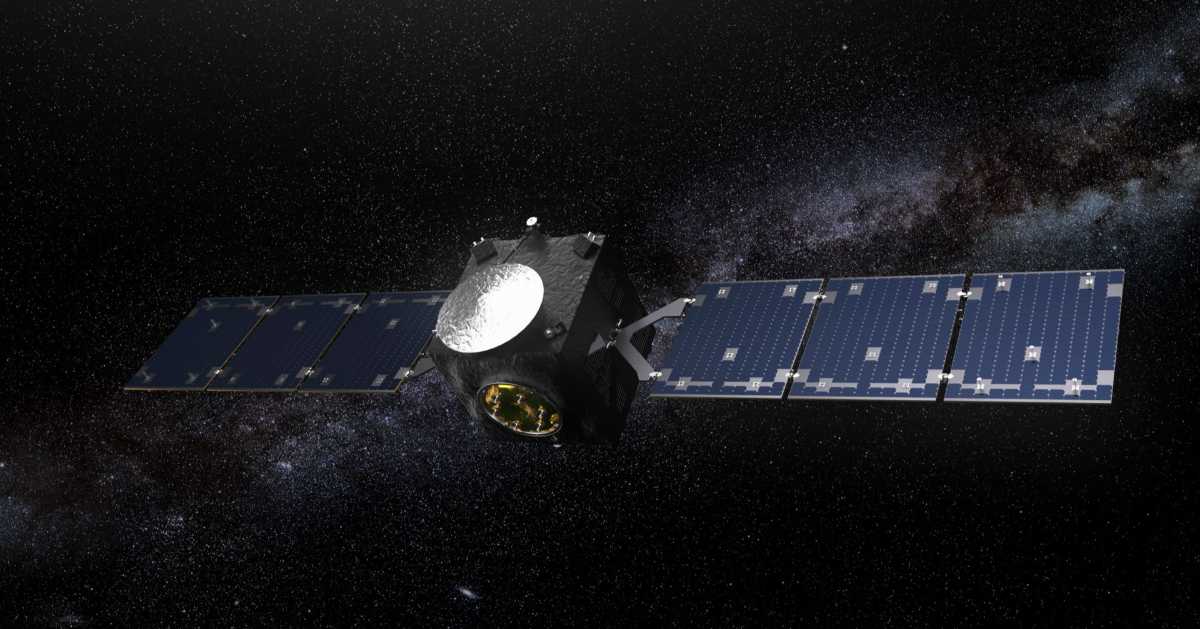
The joint space mission launched in October 2018 and has been travelling through the inner solar system. At launch, the composite spacecraft consisted of three parts: the Mercury Transfer Module (MTM), ESA's Mercury Planetary Orbiter (MPO), and JAXA's Mio. The two science orbiters are now heading together towards Mercury to study its surface, interior, magnetic field, and surrounding environment. During its journey, BepiColombo has completed nine planetary flybys, using the gravity of Earth, Venus, and Mercury to help adjust its path towards the planet.
How far is BepiColombo from Earth and Sun?
BepiColombo is over 203,709,065 km away from Earth, at the time of writing this article. On September 3, when the Mercury Transfer Module was separated from the science orbiters, it was 200 million km away from Earth. ESA's BepiColombo Spacecraft Operations Manager Ignacio "Nacho" Clérigo said, "Separating two spacecraft from 200 million kilometres away is not something we do every day."

The distance is not fixed, as BepiColombo and Earth are both continuously moving. That is why the exact distance between them keeps changing with time. The live tracker also shows that a signal from BepiColombo currently takes 681.50 seconds to reach Earth. This is about 11 minutes and 22 seconds, which means any communication between the spacecraft and Earth has a significant delay.
The two spacecraft used for the mission are also travelling deep inside the solar system, much closer to the Sun than Earth is. According to ESA's live tracker, on September 11, 2026, BepiColombo was 65,854,837 km away from the Sun. This distance also keeps changing as the spacecraft follows its trajectory towards Mercury.
How far is BepiColombo from Mercury now?
BepiColombo, after nearly eight years, is now in its final approach towards Mercury. On September 3, the Mercury Transfer Module (MTM) was successfully separated. This module helped the mission reach Mercury by providing the required power and solar electric propulsion. During the separation, BepiColombo was more than 3 million km away from Mercury.

As of September 11, 2026, BepiColombo was 1,910,877 km away from Mercury, according to ESA's live tracker. The mission is now in the Mercury arrival phase, which is one of the most important parts of its journey. After the MTM separation, the spacecraft will use its own engines to make the required changes to its path before entering Mercury's orbit.
BepiColombo's planned entry into Mercury's orbit is slated to take place on November 21, 2026. As of September 11, 71 days remained until this important step. But reaching Mercury's orbit does not mean that the science mission will start immediately. After reaching orbit, ESA's Mercury Planetary Orbiter (MPO) and JAXA's Mio will separate on December 9-10, 2026, while the main science phase is expected to begin in April 2027.
More on Starlust
ESA and JAXA's BepiColombo spacecraft begins Mercury arrival after 8 years in space
ESA and JAXA's BepiColombo to arrive at Mercury later this year after 8-year journey—what to know