Vega C rocket launches two ESA satellites—one of them can measure photosynthesis from space
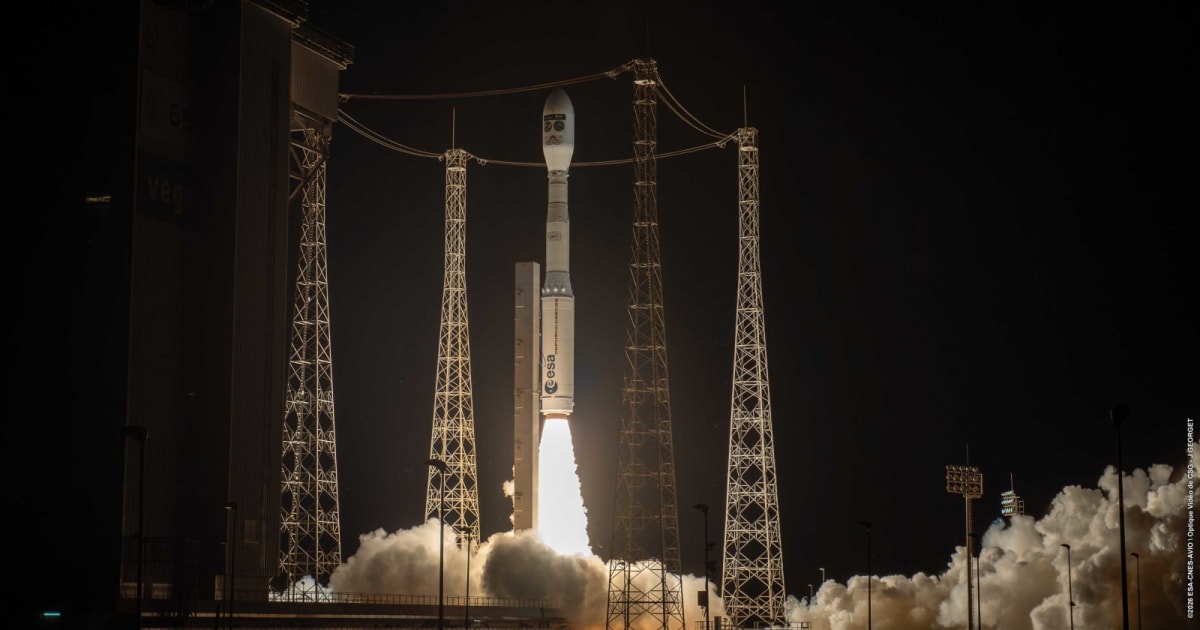
Two ESA Earth observation satellites—the FLEX Earth Explorer and the Copernicus Sentinel-3C—were launched together aboard a Vega C rocket at 9:21 p.m. EDT on Monday, September 14. The launch, which took place at Europe's Spaceport in Kourou, French Guiana, was managed by the Italian aerospace company Avio and was hailed by the ESA's Director of Earth Observation Programmes, Simonetta Cheli, as "the culmination of years of scientific innovation, engineering excellence and international cooperation."
Liftoff! 🚀 FLEX and Sentinel-3C are on their way. Vega-C #VV30 has departed Europe’s Spaceport carrying the two Earth observation satellites into orbit. https://t.co/Jm59afOfhW
— European Space Agency (@esa) September 15, 2026
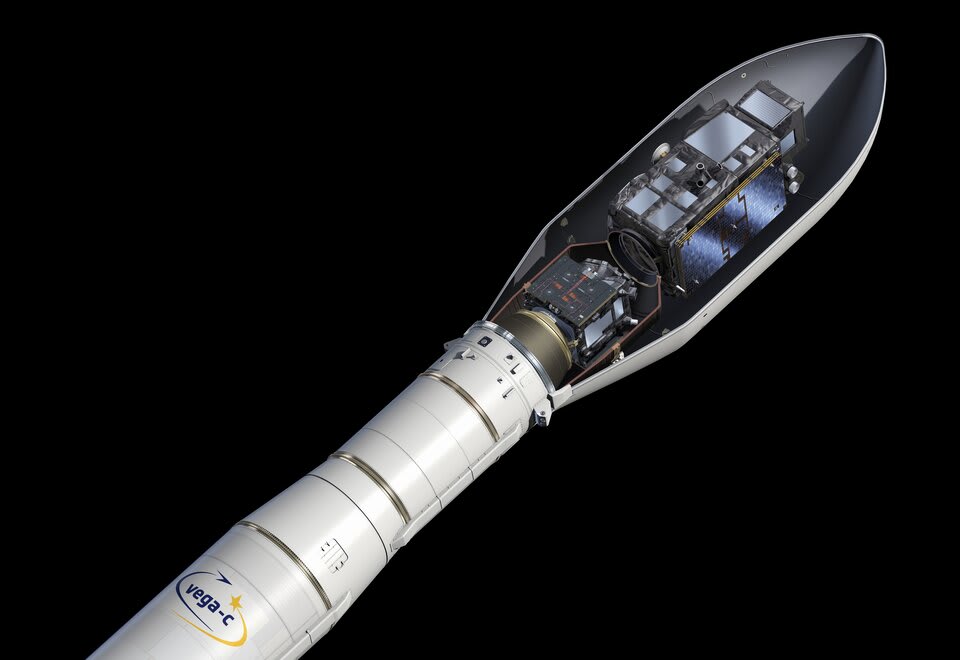
The two satellites, which could be stacked together inside Vega C's fairing thanks to a launch adapter called Vespa, were deployed at an altitude of about 820 kilometers (509 miles). Sentinel-3C, which was on top of Vespa, was the first to be injected into orbit, while FLEX's insertion into orbit followed about an hour later. "Preparing and launching two satellites together is no easy task," Cheli said. "My thanks go to the many experts who have contributed throughout both satellites’ development, testing and preparation for launch, and who have worked tirelessly to ensure that both satellites have reached orbit safely."
Once the deployments were complete, ESA's European Space Operations Centre in Germany received the first signals from both satellites, verifying the safe release of the satellites and the establishment of contact with ground control. Over the coming days, mission controllers will be performing early orbit checks on both satellites to monitor and verify whether all systems onboard are functioning properly.
✅ Signals acquired. FLEX and Sentinel-3C are in orbit and healthy.
— European Space Agency (@esa) September 15, 2026
Following launch on Vega-C, the two Earth observation satellites now begin commissioning. Together, they will advance our understanding of Earth's vegetation and support the continued monitoring of our oceans,… pic.twitter.com/QVcgpuXHzE
The eighth Earth Explorer mission developed by ESA’s FutureEO program, FLEX, will measure the photosynthetic activity of plants from space—something the ESA claims was not possible until now. Its Fluorescence Imaging Spectrometer will be able to capture the faint fluorescence released by plants during photosynthesis. These signals, which cannot be detected by the human eye, can be used to assess vegetation's efficiency in converting the Sun's radiation and carbon dioxide into energy—thereby providing a picture of vegetation health and the impact of environmental shifts on ecosystems. Besides allowing scientists to develop a better understanding of the global carbon cycle, the mission will support agricultural management and food security. "This is of particular relevance due to demand the growing world population is placing on the production of food," the ESA said.
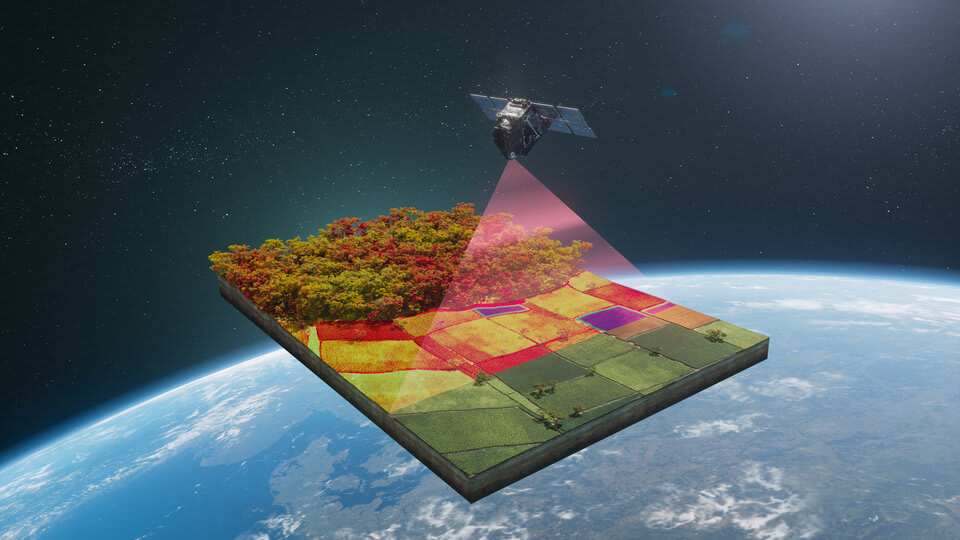
FLEX is supposed to work in tandem with the Copernicus Sentinel-3 series of satellites, of which Sentinel-3C is the third mission. Like its sister satellites Sentinel-3A and 3B, Sentinel-3C is equipped with a suite of cutting-edge instruments that will observe Earth's oceans, land, ice, and the atmosphere, gathering data on surface and ocean temperatures, vegetation, inland-water levels, and ice conditions, among other things. By pairing FLEX data with these complementary observations from Sentinel-3, scientists will get a clear, real-time picture of vegetation health and functioning on a global level.
More on Starlust
Nine flybys and six billion miles: ESA shares thrilling footage from BepiColombo's eight-year voyage